Connect with us

Environment

Climate Change Confab 2015: Respite For Mother Earth

Published

on

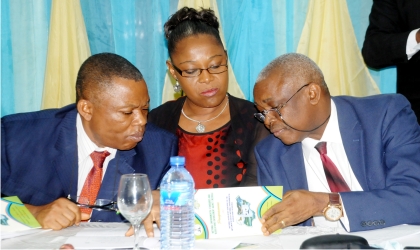
Representative of the Director-General, National Environmental  Standards and Regulations Enforcement Agency (NESREA), Mr Victor Ojogbo, Director, Inspection and Enforcement, Mrs Miranda Amachree and Director, Partnership Education, Mr Aniefo Akpabio, at the NESREA National Regulatory Dialogue on the Implementation of National Environmental Reulations in Nigeria, in Abuja recently.

Representative of the Director-General, National Environmental Standards and Regulations Enforcement Agency (NESREA), Mr Victor Ojogbo, Director, Inspection and Enforcement, Mrs Miranda Amachree and Director, Partnership Education, Mr Aniefo Akpabio, at the NESREA National Regulatory Dialogue on the Implementation of National Environmental Reulations in Nigeria, in Abuja recently.

The just concluded cli
mate change conference in Paris, France has demonstrated the commitment of the world towards tackling the incidence of global warming.
The conference which ended with landmark decisions also raised the hope of some countries, especially developing countries, of an end to climate change.
However, Environmentalists and other key stakeholders across the world believed that the key decisions reached at the conference will succeed, if there is enough political will by global leaders, especially major industrialized countries to implement them.
Tugged COP 21 the conference brought together Ministers of Environment from over 190 countries to discuss and find ways of addressing the issue  of climate change which is threatening the continued existence of mother earth.
Key decisions or goals reached include; reduction in green house emission by countries across the world “specially, countries agreed to keep global temperature below two degree Celsius.
“It also agreed to spend the sum of one hundred billion dollars yearly, starting from 2020 to help developing countries”.
French Foreign Minister, Laurent Fabious, who chaired the session, described the deal as a historic turning point.
On her part, South African Minister of Environment, Edna Molewa also described the deal as a major breakthrough for both developing and developed countries.
Molewa who spoke along with the Maltese Minister of Environment, said that  both developing and developed countries made commitment to save the earth from destruction.
She also described the deal as the  first ever approves climate change agreement as well as “a last chance to avet climate change”.
Meanwhile, Environmentalists say, the deal will work, if developed countries stop seeing pollution as an instrument that has commercial value.
A cross section of Environmental Right Activists who reacted to the conference decisions in an interview with The Tide, said that, the buck lies on the tables of developed countries to prove their commitment towards the survival of the earth.
According to them, the Paris conference will succeed, if developed countries stopped aiding and abetting industrial pollution, adding that previous conferences did not achieved results because of the narrow interest of some developed countries.
Dr Fidelis Allen, a lecturer in the Department of Political and Administrative Studies, University of Port Harcourt, who reacted on the outcome of the conference in an interview with The Tide, said that as long as developed countries see pollution as an instrument of commercial value,  the deal will not work.
According to him, “There are fears that developed countries have decided on market instrument on mode of addressing climate change.
“When you make pollution a commodity to be traded in the market, you will not want to cut pollution”, he said.
He said that until countries such as the United States of America, Britain, China and India, which are worst Green House emission countries are ready to cut pollution, the situation will continue.
According to him, “when you make money from pollution, every channels towards its reduction will be blocked”, adding that the concept of climate change is helping few.
capitalist countries who speculate over profit.         The University don however described the deal as a welcome development, especially the decision to keep global temperature below 2 degree Celsius in view of the danger that awaits humanity, if the temperature exceeded 2 degree Celsius.
He also commended the decision to set aside one hundred billion dollars to funding developing countries.
Dr Allen particularly urged Nigerian government to toe the line of COP 21 conference by stopping gas flaring in the country, stressing that this would go a long way to check the impact of pollution in the oil and gas sector producing areas of the country.
According to him, the activities of the fossil fuel industry is destroying the environment, adding that these can be seen in the areas of rising sea level which is threatening the existence  of coastal communities in the Niger Delta.
Another Environmental Right Activist, Mr John Akinnuba described the key goals reached at the conference as a welcome development but urged for its effective implementation.
Mr Akinnuba said that, the world has reached a stage where it can no longer run away from climate change, stressing that decisions reached must be effectively implemented to save Mother  Earth from destruction.
“I welcomed the decisions reached.  It will help the Earth, if key actors in the agreement are committed to its implementation”.
On his part, Mr Steve Obodoekwe who works with the Centre for Environment Human Right And Development (CEHRD) also expressed doubt on the willingness of developed countries to effectively implement decisions reached at COP 21 conference as previous conferences have failed to achieve results.
Mr Obodoekwe however said that, he welcomed the commitments and called on countries across the world to abide by it.
Others also spoke on the same vein.
However, following the French foreign minister’s description of the deals as “Historic Turning Point”, it is now left for countries across the world to be wholly committed and total in its implementation as it is only by so doing that we can save Mother Earth from the impending calamity.


Continue Reading

Environment

Stakeholders Unite To Build Greener, More Resilient In Kaduna

Published

on

The Kaduna State Government has begun a comprehensive review of its 2019 Environmental Policy to address emerging environmental challenges and strengthen sustainable development across the state.
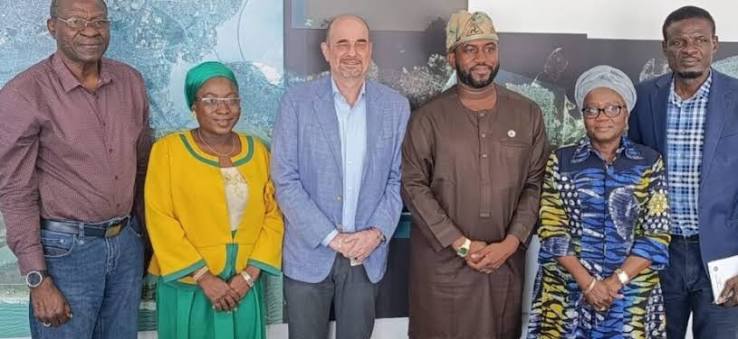
The initiative was announced by the Commissioner for Environment and Natural Resources, Malam Abubakar Buba, at a two-day stakeholders’ engagement organised under the Strengthening Peace and Resilience in Nigeria (SPRING) programme in Kaduna.
The Commissioner, represented by Ibrahim Zakari, described the policy review as both pivotal and dynamic, noting that it would help align Kaduna’s environmental framework with current realities and global best practices.
He explained that the engagement brought together a broad range of stakeholders, including government agencies, legislators, civil society organisations, private sector actors, academics, and non-profit groups.
According to him, the platform was designed to strengthen collaboration and inclusiveness in addressing environmental challenges affecting the state.
Key environmental concerns highlighted at the forum include pollution, global warming, overpopulation, unsustainable consumption, and wildlife crime.
The Commissioner noted that Kaduna is currently facing serious ecological challenges, including rapid urbanisation, poor waste management, and increasing pressure on natural resources.
He stressed that human activities, industrial pollution, and environmental neglect are contributing to the deterioration of air and water quality in the state.
Buba emphasised that the review process is not just procedural but a collaborative effort to ensure a stronger policy framework that protects natural resources and livelihoods.
He called for mainstreaming climate action into state planning, alongside improved strategies for water conservation and land restoration.
The Commissioner also urged greater inclusion of vulnerable groups, youths, and local communities in shaping environmental policies and interventions.
He reaffirmed that environmental protection is a shared responsibility and encouraged citizens to adopt environmentally friendly practices in their daily lives.
The Commissioner also reminded that effective policies depend on active participation and constructive input from all sectors of society.
He commended the SPRING programme and its partners, including the Foreign, Commonwealth and Development Office (FCDO), for supporting environmental sustainability and resilience efforts in Kaduna.
Also speaking, Mr Barau Emmanuel, State Representatives of the SPRING programme highlighted the link between environmental governance and conflict prevention, noting that effective resource management could significantly reduce tensions in vulnerable communities.
Emmanuel said the programme was supporting Kaduna State in developing policies that promote environmental sustainability while strengthening institutional capacity and community engagement.
In a presentation, Miss Gloria Kasang Bulus, Executive Director of Bridge That Gap Initiative and Coordinator of the Network of Civil Society in Environment (NCSE), highlighted ongoing efforts to improve Kaduna State’s access to adaptation finance.
She noted that partners are working with government and civil society to strengthen climate governance systems, improve project design, and enhance coordination mechanisms for attracting climate resilience funding.
Bulus explained that these efforts are essential in addressing climate-related vulnerabilities such as flooding, erosion, and environmental degradation affecting communities across the state.
She further stated that development partners are helping Kaduna establish a more structured and accountable framework for adaptation financing to ensure effective resource utilisation.
According to her, the push for adaptation finance is not only about securing funding but also about building systems that can manage and sustain climate resilience investments effectively.
She emphasised that Kaduna must be well-prepared to access both national and international climate finance opportunities in line with global best practices.
Participants further expressed optimism that the outcome of the engagement would lead to stronger environmental governance and improved resilience across the state.
The engagement is expected to produce key recommendations that will guide the final review and implementation of the Kaduna State Environmental Policy.
The Tidenews source reports that these recommendations are expected to shape a more responsive and inclusive environmental policy framework for the state.
The revised policy is anticipated to strengthen environmental governance, enhance climate adaptation measures, and contribute significantly to peace, stability, and resilience in communities across Kaduna State.
Continue Reading

Environment

Disaster: Society Urges FG To  Prioritise Ecological Challenges Across 36 States

Published

on

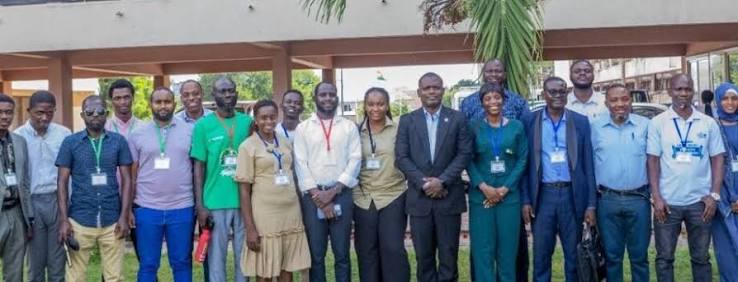
The Nigeria Environmental Society (NES) has urged the Federal Government to prioritise ecological challenges across the country to safeguard lives and property against flood disasters.
Dr Efegbidiki Okobia, National President of the society, made the call in an interview with the Newsmen on Wednesday in Abuja.
Okobia, who described ecological issues as administrative challenge, was reacting to the burden of ecological challenge in the country and efforts of Ecological Project Office (EPO) in addressing the challenge.
He said the challenge had not received the desired attention from the Federal Government.
He appealed to the Secretary to the Government of the Federation (SGF), Sen. George Akume, to look at all ecological projects currently at his table and forward same to President Bola Tinubu for approval.
“Some of the projects are underground water issues and shore in Lagos, Delta; shore challenges in River State, Akwa-Ibom and all over the country.
“These projects are on his table; we should give them attention. It is time for the SGF to look at the issues. Government should be proactive in addressing ecological challenges.
“It is not political. It is for the betterment of the Nigerian people, and that is all that we deserve at this moment,” he said.
He added “we have a critical challenge as a country with regards to environmental issues.
“While we agree that ecological challenges are mostly common around the South-East, we find that environmental issues regarding ecological pollution, underground water and others, are across the geopolitical zones of Nigeria.
“It is unfortunate that projects on ecological challenges have not been given attention by the government of the day.
“There are funds available for ecological projects and government needs to give environmental issues more attention,” he said.
The president, who acknowledged funds allocated to EPO annually to cushion ecological challenges across board, cautioned that the environment would fight back at the country’s failure to ensure judicious utilisation of such funds.
According to him, once the environment fights back at us, whatever investments we are doing as a people, as a country, will be wasted at the end of the day.
He frowned at the growing pattern of flood incidents across the country leading to loss of lives, properties, health challenges and displaced families.
Okobia, who described the menace as a huge loss to the country, attributed the challenge to poor attention of the Federal Government to ecological challenges.
Okobia, who cited the Lagdo Dam issue from Cameroon specifically, said that the Federal Government and Cameroon reached an agreement in 1970s to construct the dam.
He, however, said “while Cameroon completed the Lagdo Dam project in 1982, Nigeria did not complete the building of Dasin Hausa Dam.
“We have had two scenarios of flood. A major flood incident in 2012 from the Lagdo Dam and in 2022 another major flood.
“We do not know when the next one will happen.
“So, this is just sheer negligence and the government not prioritising issues that have to do with the environment because the flood affected over 30 states and lives were lost, families were displaced.
“So, it is a huge loss to us as a country. We should be able to manage this appropriately.”
The president urged state governments to wake up to the realities of ecological challenges ravaging the country.
The Tide source reports that environmental experts have alerted to worsening environmental degradation in South-South region and urged all tiers of governments to ensure proper utilisation of ecological funds to address the growing crisis.
They attributed the region’s challenges to both natural and human activities.
The Tide source reports that more than N109.5 billion ecological fund was disbursed between July 2023 and December 2025 across the 36 states to mitigate ecological challenges particularly flooding.
Between 2022 and 2023, a total of N39.62 billion was disbursed among 36 states of the federation.
Efforts to reach the management of EPO on how ecological funds allocated to the office are being utilised proved abortive.
Continue Reading

Environment

FG Urges Citizens To Prepare That Flood Will Affect 266 LGIn 33 States

Published

on

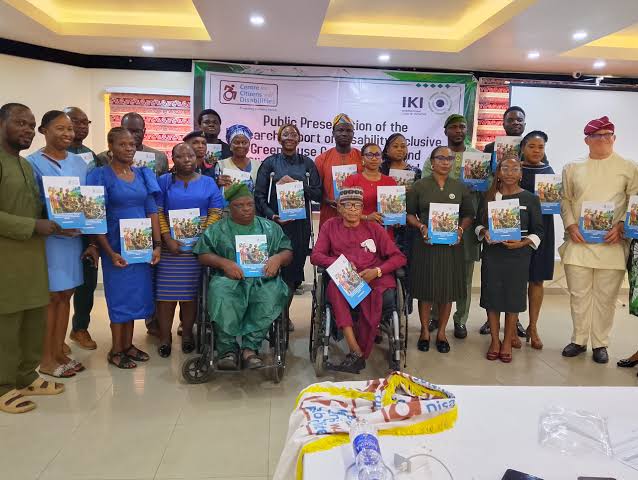
This was disclosed in a keynote address by the Minister of Water Resources and Sanitation, Engr Joseph Utsev, at the AFO public presentation at the Presidential Banquet Hall, Abuja, organised by the Nigeria Hydrological Services Agency, NiHSA, with the theme ‘Smart Water Resources Management: Moving from Oil to Water-Based Economy’.

Utsev acknowledged that early information saves lives, livelihoods, protects infrastructure, and reduces economic losses, saying that, as part of the Federal Government’s commitment to improving flood forecasts and preparedness, is the modernisation of the national hydrological monitoring networks.

The minister also said his ministry is strengthening collaboration with the Nigerian Meteorological Agency, NiMet, to ensure better integration of weather and water information, as it is critical for delivering reliable forecasts that support farmers, disaster managers, urban planners, and other key sectors of the economy.

He said AFO is therefore not just a scientific report, it is a call to action by all in terms of preparation ahead of the flood season, as early information saves lives, livelihoods, protects infrastructure, and reduces economic losses.

However, the minister acknowledged that forecasts alone are not sufficient if the information does not translate into action at the community level, which he said his Ministry is working with other relevant government agencies to mitigate the impacts of flooding.

Meanwhile, the 2026 AFO presentation had in attendance President Bola Tinubu, represented by the Minister of Environment, Balarabe Lawal.

Others present were the federal ministries: Water Resources and Sanitation; Livestock Development, Environment and Women Affairs.

Others include the Speaker of the House of Representatives, State Governments, Service Chiefs, development partners and the media.

He said: “The 2026 flood forecast presented today provides us with the following general highlights: High Flood Risk: 14,118 communities in 266 Local Government Areas (LGAs) in 33 States and FCT fall within the high flood risk areas. The States are: Abia, Adamawa, Anambra, Bauchi, Bayelsa, Benue, Borno, Cross River, Delta, Ebonyi, Edo, Enugu, Gombe, Imo, Jigawa, Kaduna, Kano, Kebbi, Kogi, Kwara, Lagos, Nasarawa, Niger, Ogun, Ondo, Osun, Oyo, Plateau, Rivers, Sokoto, Taraba, Yobe, Zamfara and the FCT.

“Moderate Flood Risk: 15,597 Communities in 405 LGAs, 35 states except Ekiti State, will experience moderate flood risk.

“Low Flood Risk: Incidences of minimal flood is expected in 923 communities in 77 LGAs in 24 States. The States are Adamawa, Anambra, Bauchi, Bayelsa, Benue, Borno, Cross River, Delta, Ebonyi, Edo, Jigawa, Kaduna, Kano, Kebbi, Kogi, Nasarawa, Niger, Ogun, Ondo, Osun, Oyo, Sokoto, Taraba and Zamfara.

“Flash and Urban Flooding: Flash and urban flooding are projected in major cities in the country due to high rainfall intensities, low attention to management of water facilities including drainage systems, waterways and lack of flood resilience structures. Cities such as Abakaliki, Abeokuta, Abuja, Asaba, Benin City, Birnin–Kebbi, Calabar, Ibadan, Kaduna, Kano, Lagos, Makurdi, Nguru, Onitsha, Oshogbo, Port Harcourt, Sokoto, Warri and Yola, among others are to experience these categories of flood incidence.

“Coastal and Riverine Flooding: Bayelsa, Cross River, Delta, Lagos, Ogun, Rivers and Ondo are to experience coastal flooding due to rise in sea level and tidal surge and this would impact on fishing, wildlife habitation and river navigation.”

He also emphasised that, “As we transition toward a water-based economy, we must recognize that water security is national security. Effective water governance will play a critical role in ensuring food security, supporting economic diversification, and improving the overall well-being of our citizens.”

However, the Minister called on State andand Local Governments including communities to start preparation to mitigate the impacts of the predicted flood.

“I therefore call on state governments, local authorities, disaster management agencies, farmers, and community leaders to carefully study the findings and advisories contained in this document and take the necessary steps to prepare for the coming flood season.

“Furthermore, we are encouraging state governments to integrate flood risk considerations into land-use planning, urban development, and infrastructure design.

“Floodplains must be properly managed, drainage systems must be improved, and communities must be empowered to adapt to changing climate conditions.

“Preparedness remains the most effective strategy for reducing flood risks. When we plan ahead, we protect lives, safeguard infrastructure, and preserve economic gains. Let us commit to building a safer, more resilient and more water-secure nation.”

Earlier, the Director General/Chief Executive Officer, Nigeria Hydrological Services Agency, Umar Ibrahim Mohammed, NiHSA, said the 2026 AFO aligns with the Renewed Hope Agenda in terms of economic diversification, infrastructure development, climate resilience, food security and sustainable water management.

Mohammed also explained that, “The AFO has evolved into an important national planning instrument that provides early scientific prediction of flood risks in the country, evidence-based guide for decision-makers and platform for emergency coordination among stakeholders.

“In producing this year’s forecast, the Agency undertook a comprehensive and data-driven process to provide tailored information for high-risk flood zones and flash floods in urban cities and towns.

“Building on the success achieved through AFO publications, we have upgraded from reporting flood forecast to Flood Risk Intelligence Architecture and from the traditional modelling to Hybrid AI-Integrated Modelling system to improve forecast reliability, reduce false alarms and improve the lead time accuracy.

“Not these alone, the modelling for the 2026 forecast have been conducted in-house. This marks a strategic shift toward enhancing capacity building, manpower development and institutional resilience.”

Continue Reading

Trending