
Business
Price Stability: Expert Commends CBN Over ‘Float’ Exchange Rate Mechanism

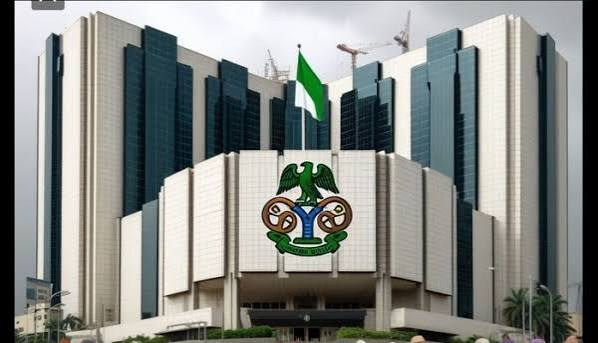
A financial expert, Mr Sewa Wusu, on Wednesday commended the Central Bank of Nigeria (CBN) for adopting the `float’ exchange rate mechanism to ensure price stability.
Wusu told The Tide source in Lagos that the measure would have positive effect on the economy in the medium and long term.
He said the float exchange rate mechanism adopted by CBN would help the naira to achieve its true value.
Wusu, Head, Research & Investment Advisory at Sterling Capital, Lagos, reiterated that float mechanism determined the value of the Naira through market forces.
The CBN in January embarked on some monetary measures to contain round-tripping, speculative demand, rent-seeking and spurious demands for foreign exchange.
The measures include the devaluation of the Naira, closure of the retail and wholesale Dutch auction windows, among others.
Wusu said the steps were positive in the sense that it had been able to control arbitrary opportunities and speculations.
The expert said that the major challenge of the country had been its dependence on revenue from crude, adding that the situation had placed the country’s potency to import at low ebb.
He said that if the economy had been diversified before now the Naira would have immediately found its true value.
Wusu said that a diversified economy allowed more foreign earnings into the country and reduced its demand for imports.
He noted that Nigerians would feel the impact of diversification in the next five to 10 years if the bottlenecks in the sectors were removed.
He also urged policy makers to be committed and have the political will to expand the economic base of the country.



Credit to Nigeria’s private sector rose to N83.26 trillion in June 2026 from N81.04 trillion in May, signifying a positive balance of N2.22 trillion month-on-month.
Year-on-year, the figure represents a nine per cent increase compared with the N76.13 trillion recorded in June 2025. The latest figures come as the CBN continues to balance efforts to control inflation with the need to support economic growth and expand credit to businesses.
The CBN data shows that credit to Nigeria’s private sector increased by approximately 2.74 per cent month-on-month between May and June 2026. Also, the CBN data noted that credit to the government fell slightly to N40.03 trillion from N40.38 trillion. Other assets, net, dropped to N10.76 trillion from N12.63 trillion.
The credit surge signifies sustained growth in lending to businesses and other private-sector borrowers during the month. The rise in private sector credit was recorded alongside an increase in net domestic credit, despite declines in credit to government and other assets.
Further analysis of the report says that compared with June 2025, private sector credit rose by about N7.13 trillion yea-on-year but net domestic credit increased by approximately N1.87 trillion during the month.
The CBN’s relatively tight monetary policy stance notwithstanding, more banks still loaded funds to the private sector within the period. The Monetary Policy Committee (MPC) of the Central Bank of Nigeria (CBN) held its 306th meeting on July 20 and 21.
The Committee reviewed recent developments in the global and domestic economies, assessed emerging risks to the outlook and considered their implications for monetary policy and retained all rates.
The Committee decided to retain the Monetary Policy Rate at 26.5 per cent; the Standing Facilities Corridor around the MPR at +50/-450 basis points and retain the Cash Reserve Requirement (CRR) for Deposit Money Banks at 45.00 per cent, Merchant Banks at 16.00 per cent, and non-TSA public sector deposits at 75.00 per cent.
The MPC decision means that credit extension in the private sector will likely continue to rise because of rising confidence in the sector and calls by stakeholders for banks to invest in the private scetor instead of government securities.


-

 News47 minutes ago
PH NBA Election: Committee Uncovers Over 500 Padded Names On Voters’ Register
-

 News47 minutes ago
RSG Moves To Eliminate Cervical Cancer
-

 News47 minutes ago
Tinubu, Atiku, Obi Top List Of Presidential Candidates Released By INEC
-
Sports25 minutes ago
INEC Seeks Media Partnership, Declares Readiness For Osun Guber Poll
-

 News47 minutes ago
Navy Busts Illegal Fuel Depot, Seizes 87,000 Litres In Rivers
-

 News47 minutes ago
Probe N6.79bn Police Funds, Missing Firearms, SERAP Tells Tinubu
-

 News47 minutes ago
Soldier, Police Officer Killed As Army Rescues Nine Abductees In Zamfara
-

 News47 minutes ago
RSMDC Not Established For Revenue Generation – Chief Judge