
Politics
Tambuwal: Not An Easy Road To Travel

When the speaker of the
House of Representatives, Animu Tambuwal dumped the ruling Peoples Democratic Party (PDP) on which platform he was elected and “ported” into the opposition party, the All Progressives Congress (APC), little did he know that the move would be a long walk to his travails and politics in Nigeria.
In October 28, 2014, Tambuwal had told the House at the close of its plenary session that he decided to defect to APC, after months of speculations, because the PDP he knows is no longer democratic, hence the need for change. Many saw Tambuwal’s defection as a betrayal of the highest order which must not go unpunished, at least to teach a lesson to Tambuwal and his likes for plotting to make PDP a laughing stock.
Prior to his defection, Tambuwal was accused of betraying the decision of PDP leadership when he reportedly took away the speaker’s job meant for another House member, Mulikat Akande-Adeola from South West zone, Nigeria, The PDP had anointed Akande-Adeola for the speaker’s job, but Tambuwal connived with the then ACN members in the House and skillfully manoeuvred election of the speaker to his favour: thus denying the South West a position of political reckoning zoned to it.
Since then, Tambuwal was seen as a rebel and a man that can’t be trusted and must be watched. At the turn of events in the PDP crisis, Tambuwal was fingered in the dance game that resulted in the defection of five PDP governors and a sizeable number of legislators to the APC.
Even more noticeable is the absence of Tambuwal at PDP caucus and stakeholders’ meetings
For instances, at the PDP North West meeting that endorsed President Goodluck Jonathan for the 2015 Presidency, Tambuwal among key members of the party, were conspicuously absent. The height of Tambunal’s sin of disobedience manifested when he was also absent at the PDP national working committee (NWC) meeting that okayed Jonathan for 2015 presidential race. The speaker’s comments concerning PDP position on certain issues, policies of federal government and the Presidency were visibly unbecoming.
After a long period of his ‘hide and seek’ game, Tambuwal eventually defected to APC on October 28, 2014 with smiles of victory and the reactions that followed his action were arguably understandable. The PDP asked Tambuwal to resign as speaker or be impeached. Government followed the threat with the withdrawal of security personnel attached to the office of the speaker. The PDP also set machinery in motion to compel its caucus in the House to reconvene on Tuesday, November 4,2014, instead of December 3 which the speaker had adjourned sitting of the House.
Sensing danger of his possible impeachment if the House reconvened that date, Tambuwal and his new party, APC promptly approached the court which ordered that the status quo in the House be maintained till further notice. With that court relief, Tambuwal dared the PDP and arrived at the National Assembly complex to declare open public hearings by two committees of the House.
The speaker who personally drove his official Range Rover SUV into the premises of the complex without security personnel was, however, shielded to the venues of the sittings by APC lawmakers led by the chairman, House committee on education, Aminu Suleiman.
Against all odds, there came the commotion at the National Assembly on November 20, 2014 as the plot to stop Tambuwal from entering the Assembly complex failed. It was a dishonourable scene to behold as honourable lawmakers who were prevented from entering through the gate reportedly exchanged hot words with the security and scaled the gate to the main complex. Riot policemen also tear-gased angry lawmakers who protested against the development.
Not only did APC described the action of the police as threat to democracy, it further called for the head of the police in Nigeria. While the Senators and House members fumed, the Presidency and Inspector-General of Police (IGP), Sulieman Abba justified the deployment of security operatives, saying it was to defend the constitution and prevent a breakdown of law and order.
The senior special assistant to the President on public affairs, Dr. Doyin Okupe, at a news conference, said it would be wrong for the public to assume that the IG acted on orders from the Presidency when the IG, as a very senior security officer has duties to defend and enforce the law.
Abba who appeared before the House committee on Police Affairs led by Usman Bello-Kurmo to explain why the police shut the gates of the National Assembly against lawmakers and also tear-gased them, did not help matters in Tambuwal’s travails as he (IG) did not recognise Tambuwal as speaker. The IG simply addressed him as “Alhaji Aminu Tambuwal”, a title that angered members of the House committee. Abba insisted that it would be “subjudice” for him to address Tambuwal as speaker or any matter relating to him so long as such matter was in court.
Though, members boiled with anger over IG’s attitude not to use the word “speaker” when referring to Tambuwal, they stormed out of the venue angrily and stopped Bello-Kurmo from shaking hands with Abba or seeing him off to the door. And the committee resolved that the discussions would not hold as long as the IG would not accord Tambuwal his due respect.
Just when everybody perhaps was thinking that time would heal the wound in the status of Tambuwal at the House, the speaker’s erstwhile party, PDP, had filed a fresh suit seeking an order compelling the speaker to declare himself as no longer fit to represent the Kebbe/Tambuwal Federal constituency at the lower chambers of the National Assembly.
The PDP’s suit re-opened the old wound even as the suit filed by Tambuwal seeking to stop his removal and subsequent declaration of his seat vacant on account of his defection to APC is pending in court.
But in the PDP’s suit which Justice Ahmed Mohammed had granted an ex parte application by the party to commence its suit against Tambawal, the office of the speaker, Tambuwal himself and the deputy speaker, Emeka Ihedioha are respondents to the suit. Relying on section 68 (1) (g) of the 1999 Constitution as amended, the PDP argued that “Tambuwal’s defection from the party which sponsored his election to the House amounted to losing his seat.
Under Section 68 (2) of the Constitution, the ruling party stated that it was mandatory for Tambuwal as speaker of the House to declare as vacant the Kebbe/Tambuwal seat, whose occupant had defected from the party that sponsored him to the House.
In the suit No. FHC/ABJ/CS/901/2014, “seeking an order of mandamus”, the PDP is praying for an order of injunction restraining Tambuwal from performing or continue to perform the function of the House speaker.
“In the alternative, an order of court compelling the 3rd respondent (Deputy Speaker Ihedioha) to declare the Kebbe/Tambuwal seat vacant by an order of mandamus in terms of relief (a) supra,” the PDP suit added.
While Tambuwal had too many legal questions arising from the PDP suit, to answer, another House member. Abidun Akinlade, added additional load to Tambuwal’s legal battle. In the suit No. FHC/ABJ/CS/871/2014, Akinlade (plaintiff) apart from seeking an order declaring Tambuwal’s seat vacant on account of his defection from the PDP, also sought a “judicial interpretation” of an earlier judgment of Justice Evoh Chukwu where it held that there was no division in the PDP.
From simple interpretation, the aim of the fresh suit is to justify the PDP’s stance that the defection of Tambuwal from PDP to APC on October 28,2014 was “illegal” and in breach of section 68(1)(g) of the 1999 constitution as amended.
Akinlade’s suit assigned to Justice E.S.J.Chukwu of Court 8, however, rattled Tambuwal who promptly petitioned the Chief Judge of the Federal High Court against the suit assigned to Justice Chukwu, claiming that “the presiding judge, Justice Chukwu, ESJ, having made a pronouncement on similar issues, in similar cases, decided by him, clearly shows that he has an iron-cast judicial position or opinion in respect of suit NO. FHC/ABJ/CS/871/2014, concerning me sir, which has been assigned to him.”
Tambuwal’s petition apparently forced Justice Chukwu to withdraw from the matter and returned the case file to Chief Judge for re-assessment to another judge.
But Tambuwal’s joy in forcing Justice Chukwu to withdraw from fresh anti-Tambuwal suit was momentory as the people of Kebbe/Tambuwal Federal Constituency in Sokoto State who are being represented by the Speaker at the House, on Monday, December 1, 2014, failed in their bid to become a party in a suit filed by Tambuwal himself to stop his removal from office and a member of the House.
The consitutents of Tambuwal, instead of seeking to be joined along with the speaker as palntiffs, had sought to be joined as co-defendants, but Justice Ahmed Mohammed, in his ruling dismissed the two separate applications filed in the name of the constituents, saying they are “unmeritorious”.
One thing leads to another. About two days after the “unmeritorious” suits were thrown out, Tambuwal’s constituents were back in court where they informed the court that they had filed separate applications seeking leave to appeal against the court ruling based on what they called “mixed law and facts”.
In addition to notices of appeal, the constituents also filed applications for stay of proceedings, and the development stalled the hearing of Tambuwal’s application seeking an order of court to jail the IG for allegedly flouting an order of the court.
While the legal battles last, Tambuwal also has an electoral burden in about eight weeks time, to take a political walk to Sokoto State to actualise his dream to be the next governor under APC platform.
Though intrigues, distractions, mischief, legal fireworks, political rivalry etc may be some of the features associated with Nigeria’s democracy, the truth remains that the rain started beating Tambuwal the day he went against the wishes of his erstwhile party (PDP) and the ruling party may have vowed to bring him down. Indeed, it is not an easy road for Tambuwal to travel on his political journey.
Samuel Eleonu
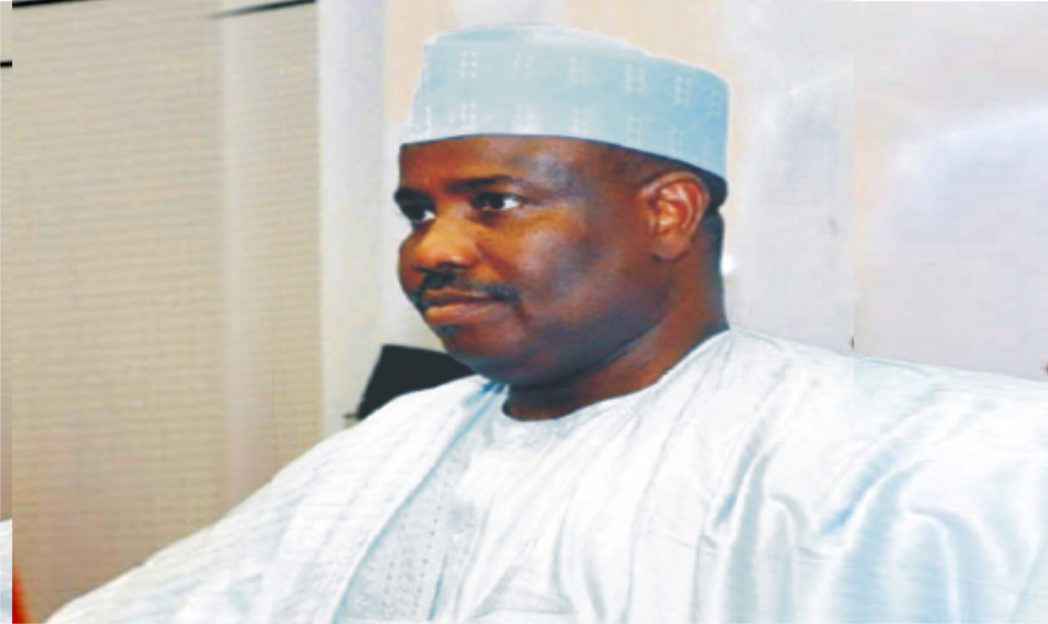
Aminu Tambuwal



The Independent National Electoral Commission (INEC) has extended the deadline for political parties to submit the list of candidates for the 2027 governorship and state Houses of Assembly elections from Saturday, August 8, to Tuesday, August 11, 2026.
The commission announced the extension in a statement issued on Saturday and signed by the National Commissioner and Chairman of its Information and Voter Education Committee, Mohammed Haruna.
According to INEC, the decision followed appeals by political parties for additional time to complete the submission process through the dedicated online portal.
“The submission window, which according to the revised Timetable and Schedule of Activities for the General Election was originally scheduled to close on Saturday, 8th August, 2026, has been extended to Tuesday, 11th August, 2026,” the commission said.
In a a related development, INEC announced the suspension of PVC collection in Osun State ahead of the August 15 governorship election.
The commission said voters who applied for replacement of lost, damaged or defaced Permanent Voter Cards would have until midnight on Sunday, August 9, to print downloadable copies of their cards.
The electoral body explained that the deadline was necessary to enable it compile data on downloaded PVCs and produce final statistics on the total number of cards collected ahead of the election.
INEC said PVC collection in Osun commenced at the Registration Area level from July 22 to 28, 2026, but was extended to July 31 following complaints about large crowds and difficulties experienced by voters at collection centres.
The exercise subsequently moved to the local government level and ran from August 1 to 7.
The commission also disclosed that replacement downloadable PVCs had been made available to voters in Odo-Otin and Ife Central Local Government Areas following the theft of cards during attacks on the two collection centres.
It stressed that the stolen cards could not be used to vote.
INEC reassured Osun residents of its preparedness for the August 15 governorship election.
“The commission reiterates that the stolen cards cannot be used to vote.
“INEC reassures the people of Osun State of its readiness to conduct a free, fair, credible and inclusive governorship election on 15th August, 2026,” the statement said.
The commission said the deadline, initially set for Saturday, 8 August, has been extended to Tuesday, 11 August 2026, following appeals from political parties for more time.
INEC also announced that the window for voters who applied to replace lost, damaged or defaced PVCs to download their replacement cards will close at midnight on Sunday, 9 August.
The move is to enable the commission compile final PVC collection figures ahead of the 15 August Osun governorship election.
INEC said replacement downloadable PVCs have also been provided to affected voters in Odo-Otin and Ife Central Local Government Areas after hoodlums carted away cards from two collection centres, stressing that the stolen cards cannot be used to vote.
The commission reaffirmed its readiness to conduct a free, fair, credible and inclusive election in Osun State.
Gov. Kefas made the remarks over the weekend at the Federal Medical Centre (FMC), Jalingo, during the flag-off of the second phase of the Renewed Hope Medical Outreach in Taraba State, organised as part of activities marking Prof. Yilwatda’s 58th birthday.
The governor commended Prof. Yilwatda for choosing to mark his birthday by providing medical care to people in need.
“What Professor Nentawe did is a powerful demonstration of what leadership should be,” Gov. Kefas said.
He assured that his administration would continue to support initiatives that complement government efforts to improve healthcare delivery and the wellbeing of residents.
Speaking at the event, Prof. Yilwatda called on Nigerian leaders to embrace the culture of giving and use their positions to touch the lives of the less privileged.
He said his decision to celebrate his 58th birthday in Taraba State was deliberate and informed by the needs of underserved communities, particularly people who face difficulties accessing healthcare because of distance and financial constraints.
According to him, the intervention followed a needs assessment and was extended across the three senatorial districts of the state.
He said the exercise commenced on August 3 at Takum General Hospital and covered the Federal University Teaching Hospital, Wukari; First Referral Hospital, Sunkani, Ardo-Kola Local Government Area; General Hospital, Bali; General Hospital, Gembu; and FMC Jalingo.
Prof. Yilwatda said the intervention provided medical services to thousands of beneficiaries, including people who required surgical procedures.
He said sustainable national development could only be achieved when strong institutions placed Nigerians at the centre of development.
“Leadership is about service,” he said, urging political and public leaders to make giving back to society an important part of their responsibilities.
He reaffirmed his commitment to serving Nigeria and its people, saying his personal vision was to make every day of his life useful to humanity.
“Every day that I live, the vision is: let it be useful to humanity,” he said.
The Taraba State Commissioner for Health, Dr. Bordiya Buma, commended the initiative, saying it was consistent with the Renewed Hope agenda and efforts to strengthen healthcare delivery in the state.
Dr Buma said the second phase followed the successful completion of the first phase, which was conducted simultaneously in six local government areas, with two LGAs selected from each of the three senatorial districts.
According to him, more than 10,000 patients were attended to during the first phase, including people with medical and surgical conditions.
He disclosed that 327 general surgeries, 71 eye surgeries and 575 dental procedures were carried out during the exercise.
The commissioner expressed appreciation to President Bola Tinubu for the Renewed Hope Medical Outreach and thanked Prof. Yilwatda for supporting the initiative and choosing Taraba State as a beneficiary.
The Minister of Health and Social Welfare, Prof. Muhammad Ali Pate, also commended Prof. Yilwatda for choosing Taraba State to mark his 58th birthday through a medical outreach.
Prof. Pate said making healthcare the centrepiece of the birthday celebration was significant because health affects everyone.
-

 News2 days ago
RSG Targets Nine Million Residents in Mosquito Net Distribution Campaign
-

 Oil & Energy2 days ago
Aiyedatiwa Signs New Electricity Bill
-

 Oil & Energy2 days ago
NLNG Commissions Research And Innovation Centre In RSU
-

 Maritime2 days ago
Marine Minister Commends President Tinubu On NPERA Bill Assent
-

 News2 days ago
KenPoly Holds Eight Convocations, August 29
-

 News2 days ago
RSG Begins Another Phase of Projects Commissioning Today
-

 News2 days ago
RMAFC Completes Revenue Sharing Review, Proposes New Pay
-

 Maritime2 days ago
NAGAFF Petitions IGP Over Alleged Maritime Police Harassment