
Business
NERC Commends PHED On CAPMI Implementation

The Nigerian Electricity Regulatory Commission (NERC) has commended the Port Harcourt Electricity Distribution Company (PHED) for adhering to the commission’s directive to ensure that all electricity consumers are metered.
Chairman of NERC, Sam Amadi, who made the commendation during the Commission’s Public consultation and fact finding mission on the Credited Advance Payment For Metering Implementation (CAPMI) in Port Harcourt on Thursday, said the commission was established to protect the interest of the Nigerian electricity consumer and said PHED was able to meet the deadline issued by the regulatory body to meter all its consumers.
Amadi who was represented at the event by the Commissioner, Government and Consumer Affairs, NERC, Dr Abba Ibrahim, said the CAPMI programme was introduced for low income earners to pay less than what they are currently paying for the same amount of electricity consumed.
He said NERC in June 2012 ordered all distribution companies to ensure that all consumers are metered and billed accurately, stating that the idea was to ensure that consumers pay what they consume and to ensure that electricity companies provide the Nigerian consumer with steady power supply and efficient customer services.
The commission’s boss, said the main purpose of CAPMI is metering, stressing that over 50 per cent of electricity consumers are not metered, and explained that the commission after enquiring years back set up a committee which submitted a comprehensive report, and made some recommendations.
According to him, based on the recommendations, the commission had to provide solution to move the electricity sector forward and insisted that all distribution companies must meter their customers within 18 months and that order was made on 1st June, 2012.
‘’ We promised electricity consumers that they will no longer pay for what they do not consume. Under the CAPMI programme customers will not pay in bulk to acquire a pre-paid meter as the cost has been reduced and spread across their tariff. Customers only have to pay an approved connection fee’’, he said.
He however said the CAPMI initiative will further ensure that consumers only pay for what they consume which at the end will bring an end to estimated billing, adding that it will open the power sector to private investors to improve power generation and distribution in the country.
Amadi however said, that NERC is the body that regulates electricity in the country and was established to protect the interest of the Nigerian electricity consumer, adding that the commission organized the occasion to find out if the order has being adhere to and respond to issues bothering on customers.
During the presentation on the Credited Advance Payment for Metering Implementation, (CAPMI) by NERC, Mr Anthony Essien explained that willing customers can be allowed to advance funds for the purchase and installation of pre-paid meters.
He said these advance payments are subsequently refunded through a rebate on fixed charge element of their electricity bills, adding that the introduction of CAPMI minimizes estimation billing and enhances revenue collection.
He however said NERC came up with the concept due to numerous customer complaints indicating a high level of dissatisfaction with the way they are billed by distribution companies, adding that the commission considers it expedient to explore other avenues of ensuring that customers are metered to eliminate wildly estimated bills.
However, the Port Harcourt Electricity Distribution Company (PHEDC) in its presentation at the event, said the company had to entered into a partnership with a commercial bank, Ecobank, to ensure that willing Consumers get pre-paid meters within 45 days
Engr. Godwin Orovwvororo said PHED has a policy to fully meter all her customer and end the abuse of estimated billing and reduced commercial losses.
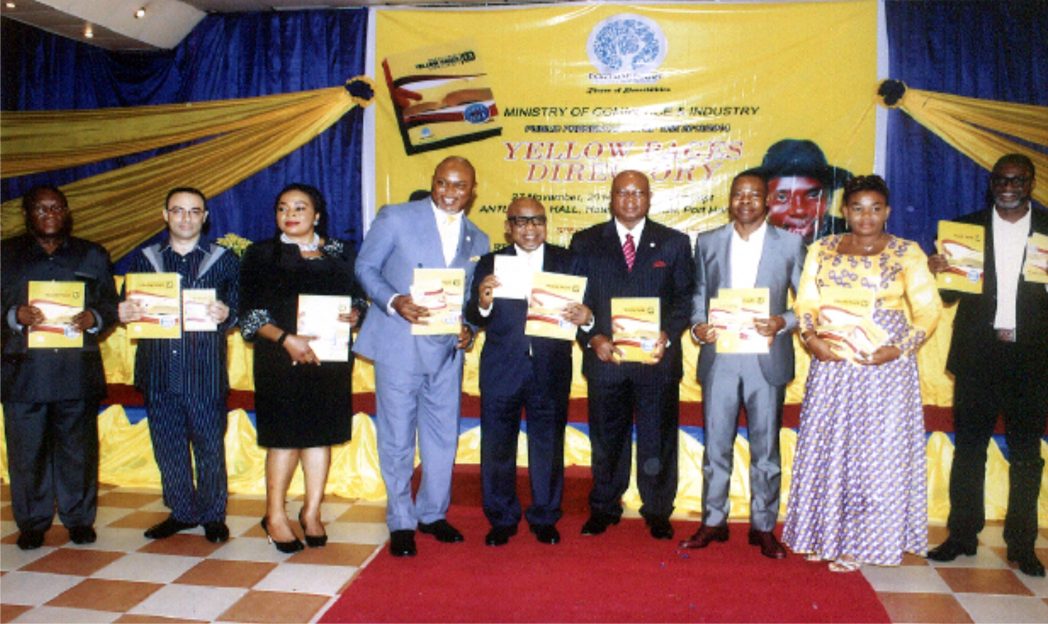
L-R Chairman, Civil Service Commission, Rivers State, Mr. Ngo Martyns Yellowe, Chief Nabil Saleh, GM, Radio Rivers, MS. Mediline Tador, Commissioner for Commerce and Industry, Hon. Chuma Chiny, M/D, Welted Ltd., Mr. Perro Egbe, Commissioner for Environment, Rivers State, Dr. Nyema Weli, Waste, Management, Rivers, Ade Adegun, Perm. Sec. Ministry of Commerce and Industry, MS. Kadilo Brown, Commissioner for Transport, Hon. George Tolofari during public presentation of the yellow page Directory, organised by commerce and industry ministry in Port Harcourt, recently. Photo: Egberi .A. Sampson



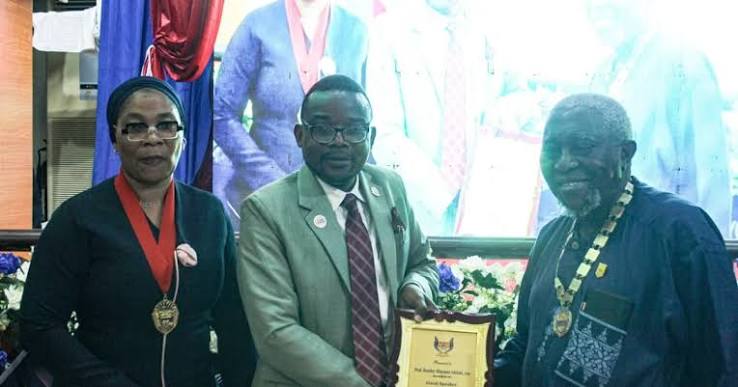
The NIM president also identified integrity, accountability, probity, honesty and efficiency as essential principles that needed to be strengthened in Nigeria’s workplaces and economy.
He argued that management failures extended beyond businesses to households and the wider society, making the promotion of sound management practices increasingly important.
Mustapha also renewed the institute’s call on the Federal Government to recognise 19 November as National Management Day, saying such recognition could strengthen its campaign for the United Nations to declare the date International Management Day.
The institute adopted 19 November for its annual celebration in 2016 to coincide with the birthday of Peter Drucker, widely regarded as the father of modern management.
Mustapha said the institute believed that official recognition by the Federal Government would strengthen its appeal to the United Nations to establish an international observance dedicated to the management profession.
The lecture featured Executive Director of the University of Lagos Business School, Prof. Sunday Adebisi, as guest speaker.
Other attendees included the Registrar and Chief Executive of NIM, Taiwo Olusesi, and a former president of the institute, Akinbayo Adenubi.

The Chief Executive Officer (CEO) of Moniepoint Microfinance Bank Babatunde Olofin, says transaction volume of the bank has hit one trillion naira daily.
Olofin said this at the unveiling of the bank’s North Central office in Abuja on Friday.
He said the bank also served a customer base of about 21 million and provided more than one million jobs in the country.
”Moniepoint is proudly Nigerian, owned by a Nigerian and managed by Nigerians.
?”With ?????????????????????our solid technologies and tailored-made products for businesses in Nigeria and retail customers as well, we are the bank to reckon with,” he said.
The CEO said the bank might be considering upgrade to a full-fledged commercial bank if the business required so.
According to him, this is a strategic decision which if the business requires it, we will communicate.
Fielding questions from newsmen, Edidiong Uwemakpan, the Vice-President Corporate Affairs of the bank, said the bank had been supporting agricultural activities to impact households.
”Moniepoint has always been hyper local and if you look at how we scaled our business, we understood how much Nigerians wanted to be able to interact with humans.
”From the very beginning, we built this distribution network of people that can be trusted, I think this is just an extension of our hyper-local strategy, getting closer to people,” she said.

-
News4 days ago
Parents Protest Scholarship Scheme Suspension At PAMO Varsity
-
 News4 days ago
US Hails Nigerian Military For Rescuing 125 Kidnap Victims
-
News24 hours ago
Bayelsa Boat Mishap: Tinubu Donates N250m As Death Toll Hits 29
-
News24 hours ago
Odu Pays Tribute To Late Chinwah, Describes Him As Courageous, Selfless Academic
-
Business4 days ago
Reps Raise Alarm Over N2trn Agricultural Loan Diversion
-

 Featured4 days ago
Presidents Xi, Trump, Putin Commit To Global Stability, Denuclearisation
-
Politics4 days ago
ADC Faults INEC’s Alleged Limited Capacity To Upload Election Result On IREV
-
Politics4 days ago
Tinubu Expands 2027 Campaign Tour To 19 States