
Politics
The Politics Of Boko Haram, Jonathan’s Declaration

Twenty-four hours before
President Goodluck Jonathan formally declared his intention to seek re-election as Nigeria’s president come 2015, there was a bomb blast at the assembly ground of Government Comprehensive School, Potiskum, Yobe State, in which no fewer than 47 students and three teachers were killed. The incident which also left about 98 school children and teachers injured, came hours after the Northern governors had called on the Presidency “to declare a total war and eliminate Boko Haram in our midst before the 2015 elections.”
The senseless war on Nigerians by terrorists that have claimed lives of innocent citizenry including the unborn, ordinarily should not be an issue of politics at any given time. As a matter of fact, an event of such dastardly act should provide a ground for reflection and action towards finding a permanent solution to the insurgency that has ravaged the nation in a manner that questions her peace and unity.
In the midst of security challenges imposed by domestic terrorists and their foreign allies, the government has remained a rallying point of hope; assuring the citizens that all is not lost in the fight against insurgency and terrorism. Even more heartwarming was the promise that “no matter how long it takes, the federal government will ensure that all those responsible for the senseless murder of so many promising youngsters and the continuing acts of terrorism across the country are brought to justice and made to pay for their atrocious crimes.”
Like any dastardly act of the insurgents, the bomb blast left the government and well-meaning Nigerians heart broken and agitating. “The war on Nigerians by terrorists without boundaries where men, women, children and even the unborn are victims speaks volumes of the agenda of the terrorists,” Senate President, David Mark said, while reacting to the Potiskum school blast that utterly betrayed sense of brotherhood.
From the operations of the insurgents and the harm done to the polity, the best option open to the leaders according to Northern governors is for them “to come together by partisan or non-partisan bases to encourage Mr President and the federal government to declare total war and eliminate Boko Haram in our midst before the 2015 elections,” especially against the background that “Boko Haram members are no longer terrorists, but rebels who have declared war against their country and have acquired illegal territories.”
Boko Haram is not a way of life. The sect’s senseless and ceaseless killings, apart from questioning the worth of brotherhood and sanctity of life, have gone a long way “in seeking to break the united Nigerians spirit by attacking the young who are the future of Nigeria.”
It may not be enough for government to condemn the almost daily rounds of violence, it must do the needful and urgently too, by being proactive in her actions against the insurgents to restore a fast waning public confidence on the ability and capacity of government to protect lives and property of the citizens.
The stand of the Northern governors that the federal government should now declare total war against Boko Haram clearly appears to contradict the mind sets of some Northern leaders who have encouraged government ab initio to be disposed to dialogue with Boko Haram. Asking government to come all out to crush Boko Haram cannot start and end with pushing the issue of security to government alone. It is a collective responsibility.
However, Jonathan’s declaration, a day after the blast at Potiskum, the fifth time in a little over one year in Yobe State, expectedly, attracted outrage from the All Progressives Congress (APC). The party, which described the timing of the declaration as callous and insensitive, said the event was akin to dancing on the graves of all victims of Boko Haram attacks, especially as it took after the bombing of school children in Yobe State.
The APC, in a manner of acting as a check to activities of Jonathan and his party, said since the president chose to celebrate a national tragedy, Nigeria should also be prepared to celebrate his electoral failure next year.
Between Jonathan and the security of Nigerians, APC believes that his administration has established a pattern of putting his political interest above the security and welfare of Nigerians who voted him into office. According to the party, “the Jonathan’s administration has nothing to show to justify its desire to seek re-election, because, his time in office has been marked by a reign of blood, tears, sorrow and the gnashing of teeth by Nigerians.”
Looking at the claims of APC as released by its spokesman, Lai Mohammed that “instead of the transformation that Jonathan promised Nigerians, he had delivered transmogrifications with unprecedented corruption, runaway unemployment, erasure of hope, total darkness even with millions of naira sunk into the power sector and trains that are grinding their way to a long-forgotten past of locomotives in an era of bullet trains,” what quickly comes to mind is that the opposition party is waiting for the smallest opportunity to call a dog a bad name with the aim of hanging it.
National Chairman of the APC, Chief John Odigie-Oyegun, agreed that Jonathan’s declaration was ill-timed. In a press briefing in Abuja, Odigie-Oyegun accused the Jonathan-led PDP administration of bogus claims, misrepresented facts and demonstrated a lack of empathy for the plight of Nigerians in the North East.
The press briefing provided a season of verbal missiles over claims made by Jonathan at his declaration. From the alleged promotion and sustenance of a culture of impunity and corruption to failure of Jonathan administration to “halt the march of terrorists daily inching nearer all of us,” the APC national chairman also accused the President of failing to empathise with hundreds of thousands of Nigerians who are internally displaced persons as a result of the occupation of their land by Boko Haram.
Hitting like never before, Odigie-Oyegun said, it was a grave act of insensitivity for the President and his party, to enagage in a jamboree barely 24 hours after the Potiskum bomb blast that claimed 50 lives, only to utter words and ‘minutes of silence’ that have no meaning to the victims.
But the PDP national publicity secretary, Chief Olisa Metuh, returned fire to fire to APC. He said the APC’s reaction to President Jonathan’s declaration was merely a product of the confusion and frustration such declaration has put the opposition party. He said the APC leaders, in their characteristic manner, instead of accepting the success already acknowledged by Nigerians, went into their usual shadowboxing and mischievous propaganda in a failed attempt to score a cheap political point.”
In a manner of ‘revenge is sweet,’ Metuh recalled that on the 20th of May 2014, there was a twin bomb blasts in the city of Jos, killing 118 people and wounding at least 56 others. Yet, he said the tragedy on the nation did not restrain the APC from holding its mega rally in Ekiti State, the next day, May 21, for the governorship campaigns of the then Governor Kayode Fayemi in which the entire top hierarchy of the APC, its national officers and governors were in attendance.
At the rally, Metuh said “the APC observed a minute silence in honour of fellow Nigerians mowed down in cold blood, before charging the atmosphere with usual insults and loathing acts of insensitivity, speaker after speaker.”
According to him, a lucid epithet on the APC defies the logic of an alternative, while exposing it as hypocritical and opportunistic. He also berated the APC for “always seeking to gain political capital from the insecurity challenges in the nation.”
Explaining why the President went ahead with his declaration, a day after the Potiskum bombing, the PDP spokesman said the move defied the expectations of the terrorists and their sponsors, adding that the President and his party stood with the mourning families, as his disposition, speech and mobilising of over 100,000 Nigerians in prayers at the event.
Be that as it may, the tragedy of the politics of Boko Haram and Jonathan’s declaration is that politicians now explore the legacy of “talk and 1 talk” or “dagger me, 1 dagger you,” rather than engage in acts that are healthy in solving the problem of terrorism; the trend of which has been a global phenomenon.
There is nothing wrong by the opposition party to come up with feasible plan on how best to tackle security challenges in the land. Afterall, the elders say when a house is on fire, the geckoes, rats, lizards among others join efforts to save the house from the inferno; lest when the house is destroyed, there will be no abode for them.
But to ask the President to take a walk out of the office as suggested by APC only shows “the desperation of politicians who have hidden agenda.” For anybody or party to rule, there must be Nigeria, and “when life throws you lemons,” Adedamola Are says, “you must be prepared to make lemonade from them.”
The major problem of insurgency in Nigeria is not because there is lack in the capacity or resolution to genuinely address the national challenges, but that of some Nigerians (particularly the elite class) being enemy to the country. Ayo Olukotun (The Punch, Friday, November 14, 2014) captures the scenario thus: Nigeria verus Nigeria.
Yes, corruption is endemic in Nigeria, prompting someone to describe corruption as Nigeria’s 37th State, but Olokutun says, “the problem with Nigeria is that its political class is double-minded about corruption; one hand condemning it verbally, but in conduct, employing it as a principle of statecraft to accumulate wealth and oil political machines.” According to him, “the Nigerian opposition, while keeping the party in power on its toes with regard to corruption, does not see the need to match its criticisms with examples of rectitude in its own domains.”
Some may argue that there is no hope for the country or that radical revolution can only address the accumulating mess, yet, it stands to reason that “Nigeria malaise is not exceptional in a global context.”
In the midst of national malady, Olukotun sees hope not self-depreciation, in the horizon. He said “the fact that we contained the Ebola scourge winning global applause in the process, suggests that we have untapped reservoirs of mastery and rejuvenation.”
What Nigeria requires is not doom day predictions, but building from her weaknesses and strengths. Hence, Olukotun concludes that “in this season of election, it will help if we no longer conceive of Nigeria as a country on the edge of terminal dissolution on account of its several challenges, but one that is capable of mounting and sustaining the kind of reforms that will unleash its greatness.”
The point should be made here that two things should define Nigerians’ response to prevailing situations in the country-patience and positive attitude in addressing the problems.
Samuel Eleonu
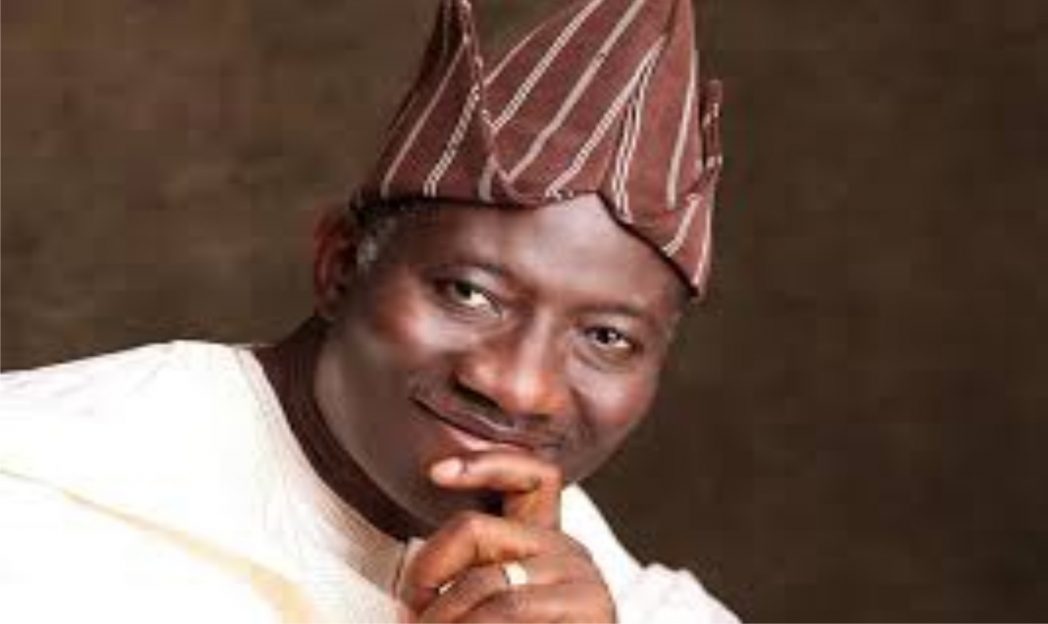
President Goodluck Jonathan




The Independent National Electoral Commission (INEC) has extended the deadline for political parties to submit the list of candidates for the 2027 governorship and state Houses of Assembly elections from Saturday, August 8, to Tuesday, August 11, 2026.
The commission announced the extension in a statement issued on Saturday and signed by the National Commissioner and Chairman of its Information and Voter Education Committee, Mohammed Haruna.
According to INEC, the decision followed appeals by political parties for additional time to complete the submission process through the dedicated online portal.
“The submission window, which according to the revised Timetable and Schedule of Activities for the General Election was originally scheduled to close on Saturday, 8th August, 2026, has been extended to Tuesday, 11th August, 2026,” the commission said.
In a a related development, INEC announced the suspension of PVC collection in Osun State ahead of the August 15 governorship election.
The commission said voters who applied for replacement of lost, damaged or defaced Permanent Voter Cards would have until midnight on Sunday, August 9, to print downloadable copies of their cards.
The electoral body explained that the deadline was necessary to enable it compile data on downloaded PVCs and produce final statistics on the total number of cards collected ahead of the election.
INEC said PVC collection in Osun commenced at the Registration Area level from July 22 to 28, 2026, but was extended to July 31 following complaints about large crowds and difficulties experienced by voters at collection centres.
The exercise subsequently moved to the local government level and ran from August 1 to 7.
The commission also disclosed that replacement downloadable PVCs had been made available to voters in Odo-Otin and Ife Central Local Government Areas following the theft of cards during attacks on the two collection centres.
It stressed that the stolen cards could not be used to vote.
INEC reassured Osun residents of its preparedness for the August 15 governorship election.
“The commission reiterates that the stolen cards cannot be used to vote.
“INEC reassures the people of Osun State of its readiness to conduct a free, fair, credible and inclusive governorship election on 15th August, 2026,” the statement said.
The commission said the deadline, initially set for Saturday, 8 August, has been extended to Tuesday, 11 August 2026, following appeals from political parties for more time.
INEC also announced that the window for voters who applied to replace lost, damaged or defaced PVCs to download their replacement cards will close at midnight on Sunday, 9 August.
The move is to enable the commission compile final PVC collection figures ahead of the 15 August Osun governorship election.
INEC said replacement downloadable PVCs have also been provided to affected voters in Odo-Otin and Ife Central Local Government Areas after hoodlums carted away cards from two collection centres, stressing that the stolen cards cannot be used to vote.
The commission reaffirmed its readiness to conduct a free, fair, credible and inclusive election in Osun State.
Gov. Kefas made the remarks over the weekend at the Federal Medical Centre (FMC), Jalingo, during the flag-off of the second phase of the Renewed Hope Medical Outreach in Taraba State, organised as part of activities marking Prof. Yilwatda’s 58th birthday.
The governor commended Prof. Yilwatda for choosing to mark his birthday by providing medical care to people in need.
“What Professor Nentawe did is a powerful demonstration of what leadership should be,” Gov. Kefas said.
He assured that his administration would continue to support initiatives that complement government efforts to improve healthcare delivery and the wellbeing of residents.
Speaking at the event, Prof. Yilwatda called on Nigerian leaders to embrace the culture of giving and use their positions to touch the lives of the less privileged.
He said his decision to celebrate his 58th birthday in Taraba State was deliberate and informed by the needs of underserved communities, particularly people who face difficulties accessing healthcare because of distance and financial constraints.
According to him, the intervention followed a needs assessment and was extended across the three senatorial districts of the state.
He said the exercise commenced on August 3 at Takum General Hospital and covered the Federal University Teaching Hospital, Wukari; First Referral Hospital, Sunkani, Ardo-Kola Local Government Area; General Hospital, Bali; General Hospital, Gembu; and FMC Jalingo.
Prof. Yilwatda said the intervention provided medical services to thousands of beneficiaries, including people who required surgical procedures.
He said sustainable national development could only be achieved when strong institutions placed Nigerians at the centre of development.
“Leadership is about service,” he said, urging political and public leaders to make giving back to society an important part of their responsibilities.
He reaffirmed his commitment to serving Nigeria and its people, saying his personal vision was to make every day of his life useful to humanity.
“Every day that I live, the vision is: let it be useful to humanity,” he said.
The Taraba State Commissioner for Health, Dr. Bordiya Buma, commended the initiative, saying it was consistent with the Renewed Hope agenda and efforts to strengthen healthcare delivery in the state.
Dr Buma said the second phase followed the successful completion of the first phase, which was conducted simultaneously in six local government areas, with two LGAs selected from each of the three senatorial districts.
According to him, more than 10,000 patients were attended to during the first phase, including people with medical and surgical conditions.
He disclosed that 327 general surgeries, 71 eye surgeries and 575 dental procedures were carried out during the exercise.
The commissioner expressed appreciation to President Bola Tinubu for the Renewed Hope Medical Outreach and thanked Prof. Yilwatda for supporting the initiative and choosing Taraba State as a beneficiary.
The Minister of Health and Social Welfare, Prof. Muhammad Ali Pate, also commended Prof. Yilwatda for choosing Taraba State to mark his 58th birthday through a medical outreach.
Prof. Pate said making healthcare the centrepiece of the birthday celebration was significant because health affects everyone.
-

 News3 days ago
RSG Targets Nine Million Residents in Mosquito Net Distribution Campaign
-

 Oil & Energy3 days ago
Aiyedatiwa Signs New Electricity Bill
-

 Maritime3 days ago
Marine Minister Commends President Tinubu On NPERA Bill Assent
-

 Oil & Energy3 days ago
NLNG Commissions Research And Innovation Centre In RSU
-

 News3 days ago
KenPoly Holds Eight Convocations, August 29
-

 News3 days ago
RSG Begins Another Phase of Projects Commissioning Today
-

 News3 days ago
RMAFC Completes Revenue Sharing Review, Proposes New Pay
-

 Maritime3 days ago
NAGAFF Petitions IGP Over Alleged Maritime Police Harassment