
Nation
THE STATES

Adamawa
The Adamawa State Government last Monday in Yola
began the distribution of cheques for various amounts to victims of 2011 post-election violence in the state.
Speaking at the ceremony, the acting Chairman of the Post-Election Violence Committee, Alhaji Mohammed Hajuji, urged the victims to appreciate what they got from government as the gesture was to assist them but not as compensation.
He said the state government received N420 million from the Federal Government for the victims.
Hajuji, who did not give the number of victims to benefit from the exercise, said it would be done on local government basis beginning with Yola North, with 52 victims. Some of the victims expressed gratitude to the government for the support.
FCT
The Nigerian Union of Teachers (NUT) last Saturday urged
the country’s former Heads of States to mediate in the protracted ASUU strike.
National President of the NUT, Mr Michael Olukoya, who made the call in Abuja during the celebration of the 2013 World Teachers’ Day. stressed that the lack of intervention by well-meaning Nigerians had made the industrial action to linger on.
Olukoya, however, appealed to the striking university lecturers to be sensitive to the constraints and efforts of the Federal Government and urged the Federal Government to do everything within its powers to end the protracted crisis.
He rejected plans to cede the management of primary education to local government councils, saying that such proposals portended a great danger to the development of the sector.
Olukoya commended the Federal Government for shelving its earlier idea to divest its ownership of Federal Government Colleges under a Public-Private Partnership arrangement and urged the Federal Government to initiate pragmatic efforts to restore the past glory of unity colleges and other secondary schools across the country.
Kaduna
Jema’a Local Government Council of Kaduna State has in
augurated a 25-member Committee on Peace and Security in its bid to check further breach of peace in the area.
Inaugurating the committee on Saturday in Kafanchan, the Chairman of the council, Mr Daniel Amos, urged the members to be resolute in the delivery of their mandate.
He said that the recent civil unrest witnessed in the council informed government’s decision to establish the committee with members drawn from the 12 wards.
The chairman said the committee was also expected to liaise with security agents and report suspected persons involved in the sale and consumption of illicit drugs.
Kano
The Kano State Government last Saturday pledged to de
velop orchards on 370 hectares of land to combat desert encroachment.
The state’s Commissioner for Environment, Alhaji Abdullahi Abbas, said in Kano that the pilot schemes had commenced in Makoda, Danbatta and Gabasawa local government areas.
Abbas said the vegetable orchards were planted to empower the owners of the acquired lands adding that government would provide security guards to protect the orchards and forests against destruction and illegal tree felling.
The commissioner said it was the wish of the present administration to meet the African Union’s protocol on the eradication of poverty and empowerment of citizens through the reduction in desert encroachment in the Sahel.
Kogi
Members of the PDP Youths Alliance in Kogi State have
lauded the transformation agenda of President Goodluck Jonathan.
The group acknowledged the efforts of government in the area of job creation, through which jobs had been created for some of them.
In a communiqué issued at the end of its meeting last Sunday in Lokoja, the goup said that youths across the six geo-political zones constituted the major beneficiaries of government programmes .
Kwara
The Kwara State Independent Electoral Commission
(KWASIEC), has concluded the training of 200 facilitators ahead of the local government election scheduled for October 26 in the State.
Chairman of the Commission, Dr. Uthman Ajidagba, said in Ilorin last Saturday that the training was part of efforts to achieve successful polls.
Represented by Mr AbdulRauf Ajao, the Commissioner in charge of Administration, Ajidagba added that the commission would recruit and train 3000 ad hoc staff before the election.
The leader of the facilitators and Dean Faculty of Education, University of IIorin, Prof. Adekunle Oloundare, assured KWASIEC that they would leave up to expectation in the discharge of their assignment.
Lagos
A member of the Lagos State House of Assembly, Mr
Rotimi Olowo, has said that the country will not break up as a result of the National Conference.
Olowo, who is Chairman, House Committee on Works and Infrastructure, made the assertion in an interview in Lagos last Sunday.
According to him (APC-Shomolu I), if the conference is properly handled it will bring about justice, development and fairness to the citizenry.
The lawmaker added that people must be well represented in order to carry them along to move the country forward and urged the advisory committee to see every Nigerian as one and not to treat any tribe or ethnic group as minority.
Ogun
The Federal Road Safety Commission (FRSC) has said that
one person was found dead while 22 others sustained various degrees of injuries in a lone accident on the Abeokuta-Lagos expressway on Saturday.
The FRSC Unit Commander in Ogun, Mr Fatai Bakare, told newsmen in Ewekoro that the accident occurred at about 11 a.m around Awowo village in Ewekoro Local Government Area.
Bakare said the accident involved a white Toyota Hiace passenger bus marked (Lagos) BDG 307 AG and disclosed that the occupants of the bus were family members and friends who were heading for a wedding at Ojota in Lagos State.
The commander, who attributed the cause of the auto crash to over-speeding, explained that the driver lost control and it somersaulted. ‘’One female occupant died while 14 other females and eight male occupants sustained varying degrees of injuries,” he said.
Ondo
The Chairman of Global Fleet Group, Mr Jimoh Ibrahim,
has commiserated with the Ondo State Government over the death of Mr Deji Falae, a Commissioner for Tourism in the state in a plane crash last Thursday in Lagos.
Ibrahim condoled with the government while speaking with journalists on Sunday at his Igbotako residence, Okitipupa Local Government Area of Ondo State.
Ibrahim, the Publisher of the National Mirror Newspapers, said that the news of the crash came to him as a rude shock and a big surprise and described the late Falae, as a talented young man, whose life was cut short.
Oyo
The National Hajj Commission of Nigeria (NAHCON) said
on Monday it had transported 65,151 out of 66,000 Nigerian prospective pilgrims to Saudi Arabia for this year’s Hajj ahead of the Oct. 14 Arafat day.
National Commissioner in charge of Operations, Alhaji Abdullah Muhktar, announced in a telephone interview in Ibadan on Monday that the commission transported the pilgrims in 134.
Muhktar said the deadline for transportation of pilgrims to Saudi Arabia was Oct. 9, ahead of the Arafat and assured that the remaining pilgrims would be transported to Saudi Arabia before the close of Saudi’s airspace.
The spokesperson for the Commission, Alhaji Uba Mana, said that the balance of 849 pilgrims would be transported before the close of Saudi airspace today.
Plateau
The Paramount Ruler of Mwaghavul, Mangu LGA in Pla
teau, State, Mr Nelson Bakfur, has called on the people of the area to donate race horses to boost and uplift the Mwaghavul culture.
Bakfur who made the call last Saturday in his palace in Kerang when he received a horse donated by one of his subjects, Mr Samuel Puukat, an Abuja-based businessman said the dearth of horses in the Mwaghavul during festivals was “very glaring and disturbing’’.
Earlier, Puukat said the donation was in response to the call by the leadership of the National Mwaghavul Development Association and pledged to do his best to keep and sustain the Mwaghavul culture.
The National President of the Mwaghavul Development Association, Dr Stephen Hirse, thanked Puukat for remembering his place of origin and donating the horse.
Sokoto
Catholic Bishop of Sokoto Diocese, Bishop Hassan Kukah,
last Saturday called on parents to intensify the teaching of their children about sound morals, as part of efforts to promote a better society.
The cleric who made the call in Sokoto at “The Children’s Day with the Bishop’’ Forum, organised by the Sokoto Catholic Diocese, stressed that children must have good moral upbringing at a very early age.
“It is only by so doing that the children would be responsible for the common good of the society, while contributing positively to nation building,’’ he said.
Kukah also called on the children to remain steadfast in prayers for God’s guidance and for the country to overcome its current security challenges.
Zamfara
A Talata Mafara High Court in Zamfara State last Monday
sentenced one Abdullahi Abubakar, 37, to death by hanging for the murder of his step-daughter.
The convict was arraigned in August, 2008 for putting a poisonous substance, suspected to be ‘Germaline’ in his step-daughter’s food, which led to her death.
Justice Bello Gummi said the convict intentionally and with the knowledge that death or grievous bodily injury would be the probable consequence of his action, poisoned his step-daughter, whose name was given as Suwaiba.



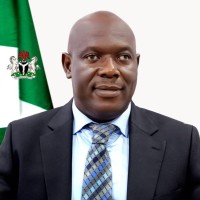
The Hydrocarbon Pollution Remediation Project (HYPREP) has commemorated the 15th anniversary of the release of the United Nations Environment Programme (UNEP) Environmental Assessment Report on Ogoniland, reaffirming its commitment to restoring the environment and improving the livelihoods of affected communities.
In a statement signed by the Project Coordinator, Prof Nenibarini Zabbey, to commemorate the anniversary, HYPREP described the anniversary as a significant milestone in Nigeria’s environmental restoration efforts, noting that the project has made remarkable progress in implementing the recommendations of the landmark UNEP report released on August 4, 2011.
The UNEP report had revealed extensive oil pollution across Ogoniland, severe environmental degradation, and serious public health risks resulting from decades of petroleum operations. It also recommended an initial $1 billion fund to commence the cleanup of the affected communities.
According to HYPREP, the Federal Government formally launched the Ogoni clean-up in 2016, while the Project Coordination Office was established in 2017 to drive the implementation of UNEP’s recommendations.
Zabbey said the current administration has continued to prioritise the project under the Renewed Hope Agenda.
Providing an update on the cleanup, the Project Coordinator disclosed that 30 of the 65 contaminated sites identified by UNEP have been fully remediated, while work is ongoing at several medium- and high-risk locations. It also stated that more than 1.5 million mangrove seedlings have been planted as part of what it described as the world’s largest restoration of oil-degraded mangroves, with over 1,000 hectares of shoreline already rehabilitated.
Zabbey further revealed that 49 Ogoni communities have been connected to potable water schemes through multiple water projects and booster stations aimed at providing safe drinking water across the region.
In the health sector, he said the 100-bed Ogoni Specialist Hospital in Kpite and the 43-bed Cottage Hospital in Buan are nearing completion, adding that several existing health facilities have been upgraded with modern medical equipment, while five ambulances have been donated to improve emergency healthcare services. The Project Coordinator also disclosed that a three-year human health biomonitoring study is being conducted in collaboration with the World Health Organization’s International Agency for Research on Cancer (IARC).
On economic empowerment, Zabbey stated that the Project has created more than 8,000 direct jobs and trained thousands of Ogoni youths and women in various vocational and technical skills, including software development, cybersecurity, aviation, commercial diving, seafaring, mechatronics, and creative arts. The project also reported awarding scholarships to more than 1,000 students, providing grants to small businesses, and supporting persons living with special needs through skills acquisition programmes.
The statement further highlighted ongoing legacy projects, including the Ogoni Power Project and the Centre of Excellence for Environmental Restoration, which it said is about 96 per cent complete. HYPREP also welcomed the recent designation of the Ogoni Wetland as a Ramsar Site of International Importance and pledged to continue promoting biodiversity conservation and sustainable management of the ecosystem.
Marking the anniversary, Zabbey said the progress achieved over the past 15 years demonstrates the collective commitment of government, development partners, stakeholders, and local communities to restoring Ogoniland. He called for renewed collaboration to sustain the cleanup effort, promote environmental sustainability, and support the long-term development of the region. 3
-

 News2 days ago
RSG Targets Nine Million Residents in Mosquito Net Distribution Campaign
-

 Oil & Energy2 days ago
Aiyedatiwa Signs New Electricity Bill
-

 Maritime2 days ago
Marine Minister Commends President Tinubu On NPERA Bill Assent
-

 Oil & Energy2 days ago
NLNG Commissions Research And Innovation Centre In RSU
-

 News2 days ago
KenPoly Holds Eight Convocations, August 29
-

 News2 days ago
RMAFC Completes Revenue Sharing Review, Proposes New Pay
-

 News2 days ago
RSG Begins Another Phase of Projects Commissioning Today
-

 Maritime2 days ago
NAGAFF Petitions IGP Over Alleged Maritime Police Harassment