
Nation
PIB: Mark Slams Oil Firms Over Threats To Quit Nigeria

President of the Senate , David Mark has made it clear to Multi national oil companies operating in Nigeria that the federal government would never be swayed by intimidation and blackmail from them over the Petroleum Industrial Bill.
As if resounding. the Federal Government’ s determination to see to the actuallisation of the provisions of the PIB, the Minister of Petroleum Diezani Allison also urged stakeholders in the Oil and Gas Sectors not to politicize the Petroleum Industrial Bill (PIB), adding that the full implementation of the bill when it is passed into law would most likely take a number of years.
Senator Mark and the Petroleum Minister made these known in their remarks at the public hearing. on Petroleum Industrial Bill organized by Senate Joint Committees.
Mark in his key note address, noted that the PIB failed to scale through the 6th National Assemblies owing to spanners thrown here and there from those who never wanted the bill to see the light of the day. The Senate President explained that the PIB failed on the feet of allegations from some quarters that there are different versions of the bill in circulation.
His words: “The 6th National Assembly tried to pass the Petroleum Industry Bill, it failed to do so. For some inexplicable reason the bill moved up and down and at the end of the day we had several versions of the bill. “Sixth
National Assembly tried but failed to pass the bill due to proliferation of various versions of the bill. We are conscious of the fact that this bill must be a win-win situation for IOCs and FG.”
The Minister of Petroleum , pointed out that if such bill like PIB is personalized or politicized, it would amount to cheapening the effects and efficacy of such bill.
According to Mrs Allison Madueke, “This same law is for all Nigerians and of all parts of the country and that is the intent of the letter of the law which we hoped it will provide. It should be very clear that when we personalize or politicise bills of this magnitude and tremendous economic importance to the nation, then we have cheapened those bills and we have cheapened the effects and efficacy of such bills for the entire nation and the entire economy.
Her words: “We took as best practice the laws of those places like the United Kingdom, Malaysia and Norway and yet, we did not confer upon the Minister of Petroleum Resources in Nigeria the extent of powers that those countries have conferred on their ministers. So we actually mitigated about the powers of the Petroleum Minister.
“Full and efficient implementation of any law as robust as the PIB takes a number of years. You cannot pass or promulgate a bill into law overnight and that is quite obvious. But a complex one like the one in question with many facets takes a number of years for full implementation in all its ramifications.
“ By the time your National Oil Company is fully up and running, working seamlessly, we are talking about four, five or, six years down the road. By the time the other institutions and entities we look forward to, as delineated in this bill, are in full implementation and running as efficiently as we expect them to run, we are talking of six, seven years time down the road.
“By that time, President Goodluck Jonathan and the Petroleum Minister, Allison-Madueke, will not be in office. That is obviously clear. So this is not a bill that should be personalized or politicised. It was not put forward for that reason whatsoever; it was put forward for the benefit of the nation, the economy and all Nigerian people in whole, bearing in mind that we expect, in the next few years, to find oil or hydro-carbon in other parts of the country. In fact, that is what we are desperately trying to do, which means we diversify our hydro-carbon base completely.”
The Niger state government, represented by the Attorney General of the state , Abdulahi Bawa making a presentation on the Bill. expressed dissatisfaction with provision of 10 percent host communities fund in the bill and enormous power and authority granted a sitting Minister of Petroleum Resource .
The representative of state Governor of Niger State, said the most controversial provision of PIB 2012 is introduction of the Host Communities fund which is creating a fourth tier of Government to sharing of the revenue of the Federation.
Bawa said,” it is not justifiable to grant disproportionate powers over policy, regulatory and operational issues of the Petroleum Sector on sitting Minister as envisioned by the bill.”
Nigeria Extractive Industry Transparency Initiative, (NEITI) called for reduction of sitting Minister power as provided for in the bill saying that will create strong autonomous institutions that will promote effective governances and controls in the management of Nigeria Petroleum Resources.
NEITI added that appointments and removal of heads of institutions created by the bill should be with concurrence of the National Assembly.
On host communities Fund, the Transparency outfit argued that there should be complete conformity in the treatment of all communities located in minerals producing areas, including petroleum, it therefore recommend that the fund should function according to the same or similar mode that is provided for under the minerals and Mining Act.



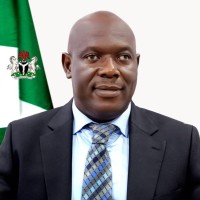
The Hydrocarbon Pollution Remediation Project (HYPREP) has commemorated the 15th anniversary of the release of the United Nations Environment Programme (UNEP) Environmental Assessment Report on Ogoniland, reaffirming its commitment to restoring the environment and improving the livelihoods of affected communities.
In a statement signed by the Project Coordinator, Prof Nenibarini Zabbey, to commemorate the anniversary, HYPREP described the anniversary as a significant milestone in Nigeria’s environmental restoration efforts, noting that the project has made remarkable progress in implementing the recommendations of the landmark UNEP report released on August 4, 2011.
The UNEP report had revealed extensive oil pollution across Ogoniland, severe environmental degradation, and serious public health risks resulting from decades of petroleum operations. It also recommended an initial $1 billion fund to commence the cleanup of the affected communities.
According to HYPREP, the Federal Government formally launched the Ogoni clean-up in 2016, while the Project Coordination Office was established in 2017 to drive the implementation of UNEP’s recommendations.
Zabbey said the current administration has continued to prioritise the project under the Renewed Hope Agenda.
Providing an update on the cleanup, the Project Coordinator disclosed that 30 of the 65 contaminated sites identified by UNEP have been fully remediated, while work is ongoing at several medium- and high-risk locations. It also stated that more than 1.5 million mangrove seedlings have been planted as part of what it described as the world’s largest restoration of oil-degraded mangroves, with over 1,000 hectares of shoreline already rehabilitated.
Zabbey further revealed that 49 Ogoni communities have been connected to potable water schemes through multiple water projects and booster stations aimed at providing safe drinking water across the region.
In the health sector, he said the 100-bed Ogoni Specialist Hospital in Kpite and the 43-bed Cottage Hospital in Buan are nearing completion, adding that several existing health facilities have been upgraded with modern medical equipment, while five ambulances have been donated to improve emergency healthcare services. The Project Coordinator also disclosed that a three-year human health biomonitoring study is being conducted in collaboration with the World Health Organization’s International Agency for Research on Cancer (IARC).
On economic empowerment, Zabbey stated that the Project has created more than 8,000 direct jobs and trained thousands of Ogoni youths and women in various vocational and technical skills, including software development, cybersecurity, aviation, commercial diving, seafaring, mechatronics, and creative arts. The project also reported awarding scholarships to more than 1,000 students, providing grants to small businesses, and supporting persons living with special needs through skills acquisition programmes.
The statement further highlighted ongoing legacy projects, including the Ogoni Power Project and the Centre of Excellence for Environmental Restoration, which it said is about 96 per cent complete. HYPREP also welcomed the recent designation of the Ogoni Wetland as a Ramsar Site of International Importance and pledged to continue promoting biodiversity conservation and sustainable management of the ecosystem.
Marking the anniversary, Zabbey said the progress achieved over the past 15 years demonstrates the collective commitment of government, development partners, stakeholders, and local communities to restoring Ogoniland. He called for renewed collaboration to sustain the cleanup effort, promote environmental sustainability, and support the long-term development of the region. 3
-

 News1 day ago
RSG Targets Nine Million Residents in Mosquito Net Distribution Campaign
-

 Oil & Energy1 day ago
Aiyedatiwa Signs New Electricity Bill
-

 Oil & Energy1 day ago
NLNG Commissions Research And Innovation Centre In RSU
-

 Maritime1 day ago
Marine Minister Commends President Tinubu On NPERA Bill Assent
-

 News1 day ago
KenPoly Holds Eight Convocations, August 29
-

 News1 day ago
RSG Begins Another Phase of Projects Commissioning Today
-

 News1 day ago
RMAFC Completes Revenue Sharing Review, Proposes New Pay
-

 Maritime1 day ago
NAGAFF Petitions IGP Over Alleged Maritime Police Harassment