
Nation
THE STATES

Gombe
Vice President Namadi Sambo has solicited the support of emirs and other traditional rulers in the northern part of the country for the Almajiri Model School scheme.
Sambo made the call in Gombe on Saturday when he visited the Emir of Gombe, Alhaji Shehu Abubakar, in his palace.
“I am happy to inform you that under the Almajiri programme, we plan to assign a lot of responsibilities to your council so that we will succeed in that direction.
“Mr President has stated that every Nigerian child has the right to education and we must educate every child.
“That is why that programme came from primary school project.
“It is very impressive, it is one of its kind and these are the types of programmes that other states should emulate so that we can achieve our objectives of educating every Nigerian child,’’ he said.
Kaduna
The Kaduna State Government has advised residents to report any incident of suspected Cerebrospinal Meningitis (CSM) in the state.
The government gave the advice when it announced a five-point prevention strategy against the outbreak of the disease.
The state Permanent Secretary in the Ministry of Health, Dr. Paul Dogo said that residents were being sensitised through public enlightenment on the preventive measures.
Dogo disclosed that adequate medical and health personnel including drugs and vaccines, had been mobilised to control, treat and manage the disease wherever an outbreak was reported.
He advised residents to report any suspicious outbreak of communicable diseases to the nearest health facility to prevent an epidemic.
Kano
The Kano State Government has warned residents of Kano metropolis against violating the monthly environmental sanitation.
The state Commissioner for Environment, Alhaji Abdullahi Abbas, gave the warning while addressing newsmen shortly after the exercise in Kano on Saturday.
“The environmental sanitation is for their own good hence the need for all Kano residents to come out and participate fully in the monthly exercise.
“This time around there is no police and mobile courts because we want to relax the enforcement due to the security situation in the state.”
He, however, urged the people of the state, particularly Kano residents and other major towns, to ensure full compliance with the order on restriction of movement during the exercise.
The Commissioner expressed satisfaction with the massive turn out of people in some areas within the metropolis.
Kebbi
The former Chief Justice of Nigeria (CJN), Justice Alfa Belgore, was on Saturday awarded the Garkuwan Bunza title, by the traditional institution of Bunza, his ancestral home in Kebbi.
The district head of Bunza, Dr Mustapha Bande, announced the award on Saturday in Bunza at the foundation laying ceremony of the multi purpose town hall complex in honour of the former Chief Justice of Nigeria.
Bande said the honour given to Justice Belgore was well deserved.
The Kebbi government would jointly execute the project with CITAR, an NGO on political awareness and sustainable human development.
Also speaking, Justice Belgore commended the NGO and the state government for the financial and human resources committed to building the complex in his honour.
He recalled that his parents migrated to Ilorin in 1858 to propagate Islamic knowledge and assured the people that he would continue to relate well with his ancestral home as well as partake in development efforts in the area.
He said the project would be completed and supported especially in the provision of facilities to ensure that it was beneficial to the people.
Kwara
Governor Abdulfatah Ahmed of Kwara on Friday said that the bomb attacks on some media establishments marked a dangerous trend in the act of terrorism in the country.
In a statement signed by his Chief Press Secretary, Alhaji Abdulwahab Oba, the governor described Thursday’s attacks on ThisDay newspaper office in Abuja and other media houses in Kaduna as “shocking and unfortunate’’.
He stressed that the mass media constituted the conscience of the nation and the fulcrum of free speech required for deepening the democratic culture in a society.
He said that the attacks represented another despicable and deplorable effort to silence popular expression by promoting hate and fear among the citizens.
Ahmed, nonetheless, urged the country’s journalists not to be despondent because of the emerging threats, stressing that they should remain committed to the ideals of journalism and good governance.
“On behalf of the good people of KwaraState, I commiserate with the management and staff of ThisDay, the NUJ, NPAN, NGEs, friends and families of the deceased on this occasion of national grief.
Nasarawa
Governor Tanko Al-Makura of Nasarawa State on Saturday assured the people that his administration would be prudent and accountable in respect of contract awards.
Al-Makura madethe statement while inaugurating some earth moving equipment for the construction of rural roads in parts of the state in Lafia.
He said the present administration in the state would distance itself from the past practice when contractors failed to deliver on contracts and collected money.
“We are going to take a full stock of all projects that have been awarded and those either completed, abandoned or uncompleted.
“My administration will not leave any stone unturned and will deal with anybody found guilty of siphoning government funds,’’ the governor said.
He said the construction of rural roads would start at Agyaragu–Kwara, in Nasarawa North Senatorial (Lafia) Zone and in Garaku in Nasarawa West Senatorial (Keffi) Zone through Dari-Amba-up to Basa.
He said the Nasarawa Central (Akwanga) Zone road construction would begin from Wamba through FarrinRuwa to Maman areas.
He said the state government bought the equipment in conjunction with the local government/development areas for the construction and rehabilitation of rural roads.
Ondo
An Ondo State governorship aspirant under the platform of the Action Congress of Nigeria (ACN), Dr Olu Agunloye, has called for stiff penalties for electoral offences.
INEC is to conduct the gubernatorial election on October 20.
Agunloye decried the absence of commensurate penalties for electoral offences.
“One of the symptoms of apathy was the faulty reward and penalty systems in Nigeria.
“People don’t get appropriate rewards for the good they do and no adequate penalty for offenders,’’ Agunloye said.
Agunloye, a former Minister of Power and Steel, was also of the view that voters’ apathy was on the increase in the country because electoral offenders were not prosecuted.
The aspirant also cited the absence of justice as bane to smooth electoral process, adding that where there was no justice; there could not be peace.
Plateau
The Plateau chapter of National Union of Local Government Employees (NULGE) has expressed satisfaction with the decision of the state government to deploy local government staff to their areas of origin.
The state President of the union, Mr Samson Mafuyai, told our source in Jos on Sunday that the union had “no objection’’ to the policy, adding that the policy would make the workers more productive.
“The state government has the right to bring up any policy, but we have tried to find out whether such policies are good.
“ We have asked government to explain their motives and hope such motives will be very convincing,’’ he said.
The government last Wednesday inaugurated a 16-member committee for the deployment of local government staff to their local government areas of origin.
The Secretary to the State Government, Prof Shedrack Best, who inaugurated the committee, said that the decision was based on the recommendations of a committee on civil service reforms.
Yobe
The Yobe Agency for the Control of HIV/AIDS (YOSACA) has distributed 60 sewing and 70 grinding machines to 130 beneficiaries to promote self-reliance among People Living with HIV and AIDS.
YOCASA’s Executive Director, Hjiya Farida Mamudo, on Friday in Damaturu said that the empowerment project was intended to engender self-employment and self-sufficiency among the group.
She said that the agency had trained 100 health workers on how to reduce the stigmatisation of those living with the disease, while facilitating their support and social integration.
However, Mamudo said that 200 agricultural extension workers and 100 commercial transport workers had been trained by the agency on HIV prevention strategies.
She noted that the agency had been providing people living with HIV and AIDS with skills and materials to enhance their wellbeing and economic status.



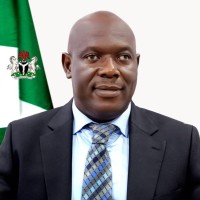
The Hydrocarbon Pollution Remediation Project (HYPREP) has commemorated the 15th anniversary of the release of the United Nations Environment Programme (UNEP) Environmental Assessment Report on Ogoniland, reaffirming its commitment to restoring the environment and improving the livelihoods of affected communities.
In a statement signed by the Project Coordinator, Prof Nenibarini Zabbey, to commemorate the anniversary, HYPREP described the anniversary as a significant milestone in Nigeria’s environmental restoration efforts, noting that the project has made remarkable progress in implementing the recommendations of the landmark UNEP report released on August 4, 2011.
The UNEP report had revealed extensive oil pollution across Ogoniland, severe environmental degradation, and serious public health risks resulting from decades of petroleum operations. It also recommended an initial $1 billion fund to commence the cleanup of the affected communities.
According to HYPREP, the Federal Government formally launched the Ogoni clean-up in 2016, while the Project Coordination Office was established in 2017 to drive the implementation of UNEP’s recommendations.
Zabbey said the current administration has continued to prioritise the project under the Renewed Hope Agenda.
Providing an update on the cleanup, the Project Coordinator disclosed that 30 of the 65 contaminated sites identified by UNEP have been fully remediated, while work is ongoing at several medium- and high-risk locations. It also stated that more than 1.5 million mangrove seedlings have been planted as part of what it described as the world’s largest restoration of oil-degraded mangroves, with over 1,000 hectares of shoreline already rehabilitated.
Zabbey further revealed that 49 Ogoni communities have been connected to potable water schemes through multiple water projects and booster stations aimed at providing safe drinking water across the region.
In the health sector, he said the 100-bed Ogoni Specialist Hospital in Kpite and the 43-bed Cottage Hospital in Buan are nearing completion, adding that several existing health facilities have been upgraded with modern medical equipment, while five ambulances have been donated to improve emergency healthcare services. The Project Coordinator also disclosed that a three-year human health biomonitoring study is being conducted in collaboration with the World Health Organization’s International Agency for Research on Cancer (IARC).
On economic empowerment, Zabbey stated that the Project has created more than 8,000 direct jobs and trained thousands of Ogoni youths and women in various vocational and technical skills, including software development, cybersecurity, aviation, commercial diving, seafaring, mechatronics, and creative arts. The project also reported awarding scholarships to more than 1,000 students, providing grants to small businesses, and supporting persons living with special needs through skills acquisition programmes.
The statement further highlighted ongoing legacy projects, including the Ogoni Power Project and the Centre of Excellence for Environmental Restoration, which it said is about 96 per cent complete. HYPREP also welcomed the recent designation of the Ogoni Wetland as a Ramsar Site of International Importance and pledged to continue promoting biodiversity conservation and sustainable management of the ecosystem.
Marking the anniversary, Zabbey said the progress achieved over the past 15 years demonstrates the collective commitment of government, development partners, stakeholders, and local communities to restoring Ogoniland. He called for renewed collaboration to sustain the cleanup effort, promote environmental sustainability, and support the long-term development of the region. 3
-

 News2 days ago
RSG Targets Nine Million Residents in Mosquito Net Distribution Campaign
-

 Oil & Energy2 days ago
Aiyedatiwa Signs New Electricity Bill
-

 Oil & Energy2 days ago
NLNG Commissions Research And Innovation Centre In RSU
-

 Maritime2 days ago
Marine Minister Commends President Tinubu On NPERA Bill Assent
-

 News2 days ago
KenPoly Holds Eight Convocations, August 29
-

 News2 days ago
RSG Begins Another Phase of Projects Commissioning Today
-

 News2 days ago
RMAFC Completes Revenue Sharing Review, Proposes New Pay
-

 Maritime2 days ago
NAGAFF Petitions IGP Over Alleged Maritime Police Harassment