
Nation
THE STATES

Bauchi
Alhaji Babayo Gamawa, the Deputy Governor of Bauchi State, says he will dedicate himself to the struggle for the creation of Katagum State if elected senator in 2011.
Gamawa, who wants to contest the seat for the Bauchi-North Senatorial District, made the pledge last Saturday in an interview with newsmen in Bauchi.
He said that if elected, he would devote 75 per cent of his time and energy in seeing to the creation of Katagum State.
Gamawa said that he made a lot of consultations on the issue with the speakers of state houses of assembly when he was speaker of the Bauchi State House of Assembly.
He said that he received encouraging words from the speakers and that many of them promised to support him in achieving the objective.
Borno
Borno State police command said on Sunday that it had arrested 13 suspects in connection to last week’s killings in Maiduguri.
Suspected Boko Haram militants had killed at least four individuals in separate attacks on Wednesday and Friday in Maiduguri.
But the command Police Public Relations’ Officer Mallam Lawal Abdullahi told newsmen in Maiduguri that 11 suspectswere arrested in connection with the Wednesday’s killing.
“I want to inform you that we have already made a number of arrests in connection with the killings.
Ekiti
A non-governmental organisation, WaterAid Nigeria has constructed 38 boreholes in Ekiti state as part of its efforts to ensure that people have access to safe water.
The Director of Justice Development Peace Initiative/WaterAid in the state, Rev. Fr. Raphael Aborisade said this at the weekend in Ado-Ekiti during a sensitization programme to mark the World Toilet Day.
Aborisade said the boreholes were constructed mostly in rural communities in Ikole, Ilejemeje and Ekiti South West local government areas.
FCT
Some applicants who did not meet the height requirement in the FRSC recruitment process were barred from taking part in the written test conducted by the corps in Abuja last Saturday.
Male applicants were required to be up to 1.7 metres while their female counterparts were expected to be up to 1.6 metres.
Those barred from the examination due to their height were seen in groups discussing their fate at the Mogadishu Cantonment, venue of the exercise.
However, reports that as at 11:30 a.m. some 1,800 out of the 5,400 cleared to write the test had done so with others on a long line waiting for their turn.
Kano
Most Food Vendors in Kano have yet to resume business, five days after the Eid-el-Kabir festival.
A survey conducted by our correspondent in the state capital revealed that the food sellers,many of whom hailed from other states of the federation, are still away,observing their Sallah break.
Our correspondents’ checks at Galadima Road, Audu Bako way,and the Sabon Gari market, found that most of the vendors’ stalls and other platforms remained desolate, due to the absence of the operators.
One of the operators, Hajiya Asiya Garba,told newsmen that she could not resume business now because she was still celebrating the Sallah.
Katsina
The Katsina Study Centre of the National Open University of Nigeria (NOUN) on Saturday matriculated 207 students admitted to study various courses at the centre.
Speaking at the occasion, Dr Kabiru Galadanchi, Manager of the Centre, said that out of the over 1,000 candidates that applied to study at the Centre, only 207 were given admission.
He attributed the situation to the mistakes made by most of the applicants in filling their application forms.
Kogi
A total of 150 students on Saturday matriculated at the Lokoja Study Centre of the National Open University of Nigeria (NOUN) for the 2009/2010 academic session.
The Centre Manager, Mr Theophilus Balogun, who made the disclosure to the newsmen in Lokoja at the 5th matriculation, said that similar ceremony took place simultaneously at the NOUN’s 40 study centres nationwide.
He identified the lack of physical structures and truancy by some facilitators as some of the challenges confronting the study centre.
Balogun urged the Federal Government to expedite action on the ongoing construction work in the centre, noting that lack of structures had forced them to use facilities at the Bishop Delise College.
Kwara
Kwara State Public Complaints Commission says a total of five hundred and seventy – nine (579)complaints werereceived between January and October 2010.
The Acting Durector of Investigation, Mr Caleb Bukoye disclosed this in an interview with newsmen last Sunday in Ilorin.
According to him, during the period the Commission has investigated and successfully resolved 324 complaints.
Bukoye urged members of the public to seize the opportunity provide by the federal government through the service of the Commission in getting their problems and complaints solved.
Niger
The National Agency for the Prohibition of Traffic in Persons and other related matters (NAPTIP) has said that a 58-year-old father, who allegedly impregnated his 14-year-old daughter is currently being detained.
The 58-year old farmer and the daughter were paraded before journalists on Nov. 15 by Deputy Police Spokesman, DSP Samuel Jinadu in his Ikeja office.
The police said that the man forcefully had canal knowledge of his daughter and has now delivered a baby girl from the relationship.
Ondo
The Ondo State Government on Saturday reiterated its commitment to sustain its zero tolerance for examination malpractice.
The state’s Commissioner for Education, Dr Pius Osunyikanmi, told newsmen in Akure that the state government had inaugurated an examination and ethics committee to monitor schools that engaged in malpractices.
He also said that disciplinary actions would be taken against any school involved in examination malpractice.
Osunyikanmi said that alreday, four schools had been banned from presenting candidates for public examinations for two years due to the high number of cheats recorded in that school.
Oyo
Some applicants, who turned up for the rescheduled test for recruitment into various positions in the Federal Road Safety Commission (FRSC), on Saturday in Ibadan, have described the exercise as discouraging.
Some of the applicants, who would not want to be identified, alleged that they were made to sit on bare floor and write the test on their laps.
They condemned the inadequate arrangement made by the FRSC authorities for the test, saying that the shoddy arrangement for the test had dashed their hopes on the recruitment exercise.
Some applicants also alleged that their names were removed from the list of those qualified to write the test after they had scaled through the physical exercise conducted for the recruitment.
Plateau
Dr Mohammed Ali Pati, the Executive Director of Primary Health Care and Development Agency (PHCDA), says polio has reduced from 356,000 cases earlier recorded to below 1,000 in Nigeria.
Pati disclosed this last Saturday at the Silver Jubilee Investiture of Rotarian Joseph Kigbu, as the new President of Naraguta Rotary Club, Jos.
“With the Government fight against the polio scourge in Nigeria, we have been able to reduce the over 356,000 cases to less than a thousand.
“Very soon, we shall totally eradicate polio in Nigeria more so that we have other non-governmental organisations such as Rotary and USAID behind us in the fight,” Pati said.



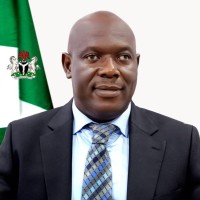
The Hydrocarbon Pollution Remediation Project (HYPREP) has commemorated the 15th anniversary of the release of the United Nations Environment Programme (UNEP) Environmental Assessment Report on Ogoniland, reaffirming its commitment to restoring the environment and improving the livelihoods of affected communities.
In a statement signed by the Project Coordinator, Prof Nenibarini Zabbey, to commemorate the anniversary, HYPREP described the anniversary as a significant milestone in Nigeria’s environmental restoration efforts, noting that the project has made remarkable progress in implementing the recommendations of the landmark UNEP report released on August 4, 2011.
The UNEP report had revealed extensive oil pollution across Ogoniland, severe environmental degradation, and serious public health risks resulting from decades of petroleum operations. It also recommended an initial $1 billion fund to commence the cleanup of the affected communities.
According to HYPREP, the Federal Government formally launched the Ogoni clean-up in 2016, while the Project Coordination Office was established in 2017 to drive the implementation of UNEP’s recommendations.
Zabbey said the current administration has continued to prioritise the project under the Renewed Hope Agenda.
Providing an update on the cleanup, the Project Coordinator disclosed that 30 of the 65 contaminated sites identified by UNEP have been fully remediated, while work is ongoing at several medium- and high-risk locations. It also stated that more than 1.5 million mangrove seedlings have been planted as part of what it described as the world’s largest restoration of oil-degraded mangroves, with over 1,000 hectares of shoreline already rehabilitated.
Zabbey further revealed that 49 Ogoni communities have been connected to potable water schemes through multiple water projects and booster stations aimed at providing safe drinking water across the region.
In the health sector, he said the 100-bed Ogoni Specialist Hospital in Kpite and the 43-bed Cottage Hospital in Buan are nearing completion, adding that several existing health facilities have been upgraded with modern medical equipment, while five ambulances have been donated to improve emergency healthcare services. The Project Coordinator also disclosed that a three-year human health biomonitoring study is being conducted in collaboration with the World Health Organization’s International Agency for Research on Cancer (IARC).
On economic empowerment, Zabbey stated that the Project has created more than 8,000 direct jobs and trained thousands of Ogoni youths and women in various vocational and technical skills, including software development, cybersecurity, aviation, commercial diving, seafaring, mechatronics, and creative arts. The project also reported awarding scholarships to more than 1,000 students, providing grants to small businesses, and supporting persons living with special needs through skills acquisition programmes.
The statement further highlighted ongoing legacy projects, including the Ogoni Power Project and the Centre of Excellence for Environmental Restoration, which it said is about 96 per cent complete. HYPREP also welcomed the recent designation of the Ogoni Wetland as a Ramsar Site of International Importance and pledged to continue promoting biodiversity conservation and sustainable management of the ecosystem.
Marking the anniversary, Zabbey said the progress achieved over the past 15 years demonstrates the collective commitment of government, development partners, stakeholders, and local communities to restoring Ogoniland. He called for renewed collaboration to sustain the cleanup effort, promote environmental sustainability, and support the long-term development of the region. 3
-

 News2 days ago
RSG Targets Nine Million Residents in Mosquito Net Distribution Campaign
-

 Oil & Energy2 days ago
Aiyedatiwa Signs New Electricity Bill
-

 Maritime2 days ago
Marine Minister Commends President Tinubu On NPERA Bill Assent
-

 Oil & Energy2 days ago
NLNG Commissions Research And Innovation Centre In RSU
-

 News2 days ago
KenPoly Holds Eight Convocations, August 29
-

 News2 days ago
RSG Begins Another Phase of Projects Commissioning Today
-

 News2 days ago
RMAFC Completes Revenue Sharing Review, Proposes New Pay
-

 Maritime2 days ago
NAGAFF Petitions IGP Over Alleged Maritime Police Harassment