
Nation
THE STATES

Adamawa
Dr Aliyu Shehu, Executive Director, Niger State Primary Health Care Development Agency (NSPHCDA) says many rounds of polio vaccines are not harmful to children.
Shehu told newsmen in Minna that parents should not be afraid because it boosts the child’s immunity.
“Many rounds of polio vaccination do not affect the child, they boost the immunity of the child.
“We have gone a long way to eradicate polio and we are succeeding and we will not want to fail, especially now that the country is being praised by the whole world,” he said.
Shehu called on parents to collaborate with the government on the fight against polio to make the country polio-free.
According to him, the agency will ensure that parents are educated before the next round of immunisation exercise.
Bauchi
Senator Iliya Audu, Resident Electoral Commissioner (REC) in Bauchi State, has urged CPC to resolve the crisis rocking the Bauchi chapter of the party.
Audu who made the call when members of the Caretaker Committee of the party paid him a courtesy visit in Bauchi on Tuesday said that the commission would support members of the party to enable them run its affairs smoothly.
The REC explained that the Electoral Act provided that all parties should notify the commission 21 days before holding any meeting.
Borno
The price of livestock has remained slightly stable in Borno State as the Eid-el Kabir celebration approaches, a survey conducted by our correspondent has shown.
Our correspondent who visited some livestock markets on Tuesday, reports that prices have either gone down or record marginal increases.
At Damboa market, a middle size ram which sold for N18,000 in June, goes for between N18,000 and N19,000, while the price of a big one has remained unchanged N30,000.
Similarly, a small size ram which sold for N12, 000 in June, is now selling for between N10,000 and N12,000 at the same market.
Ekiti
Governor Kayode Fayemi of Ekiti State says the House of Representatives’ resolution asking the Accountant-General of the Federation to stop further allocations to local governments in the state is advisory.
He said it was not binding on the state.
The House had at its sitting on Tuesday, passed a resolution that the AGF should stop allocations to the councils, following their dissolution by the governor.
The governor had dissolved the councils’ executives and legislatures, regardless of their three-year tenure which was still subsisting at the time he replaced Segun Oni.
Oni’s election was recently voided by the Court of Appeal in Ilorin.
The chairmen and councillors were elected on the platform of the PDP in December 2008 for a three-year tenure.
Fayemi’s Senior Special Assistant on Media, Mr Mojeed Jamiu, however told newsmen in Ado-Ekiti on Tuesday, that the resolution was not binding on the government since it was not a law.
Also reacting, former spokesperson of Afenifere, a pan-Yoruba socio-cultural organisation, Mr Dayo Adeyeye, said the resolution was aimed at making the government to respect the nation’s Constitution.
FCT
The National Committee on Job Creation says about 15 million jobs will be created in five years if its recommendations are fully implemented.
The Chairman of the Committee, Alhaji Aliko Dangote, made this known on Tuesday at the presentation of the report on job creation to the National Economic Management Team (NEMT) in Abuja.
He listed the recommendations to include massive overhaul of the national skills acquisition capacity to help facilitate job creation in the country.
“A key recommendation in our report is therefore the massive overhaul of our national skills acquisition capacity in order to better align the skills that our citizens have to the skills that the country needs to grow and develop.
“Central to this is the need to resuscitate structured, credible and respected vocational programmes to provide the skills that will fuel the growth of local industry and improve that attractiveness of vocational careers,’’ Dangote said.
He said the committee also recommended that core sectors such as agriculture and agro- allied, manufacturing, building and construction, should be adequately explored, adding that a deep examination of the small and medium industries would help to create jobs.
Gombe
The All Nigeria Peoples Party (ANPP) is now a united and indivisible family, its National Chairman, Dr Ogbonnaya Onu, said in Gombe State.
Onu told newsmen on Monday that his submission was based on the fact that members of the party had resolved their differences.
“With this, our members and the party are now poised to spring surprises in the coming elections,” he said.
Kwara
Dr Bukola Saraki has explained that he is in the presidential race to reform the country and place it among the comity of developed nations.
He told newsmen at Government House in Ilorin on Sunday that his administration would focus on commercial agriculture to make food abundant and secure.
He pointed out that with commercial agriculture, more employment opportunities would be created for the youths.
He said agricultural revolution would also help the country fight against over dependence on oil. “it is high time the nation diversified its sources of revenue.”
He promised to make graduates embrace self employment as against chasing scarce white collar jobs.
On the PDP primaries, the presidential aspirant urged the leadership of the party to ensure level playing ground for all aspirants.
Saraki warned that anything short of that would wreck the party, saying that he was optimistic of winning the primaries if a level playing ground is provided.
Lagos
The Anglican Bishop of Awori Diocese, the Rt. Rev. Akin Atere, on Monday cautioned against money politics, saying it would undermine democracy if unchecked.
Atere told newsmen in Lagos that politicians should woo the electorate with their records of achievements and not bags of money.
Atere also urged that political aspirants should not receive donations for their electioneering campaigns from the citizens to avoid being influenced by the donors.
He said that money politics had no place in a true democracy and that it should be avoided in 2011 by politicians who meant well for Nigeria.
The cleric spoke against the backdrop of the fundraising for President Goodluck Jonathan’s electioneering campaign.
Some groups including the Conference of Nigeria Peoples Party (CNPP) had criticised the fundraiser during which N450 million was realised.
However, the Goodluck-Sambo Campaign Organisation had said that nobody was allowed to donate more than a million naira at the event.
Niger
Nigerians should take personal hygiene seriously, Dr Mohammed Usman, Director Public Health, Niger State Ministry of Health, has advised.
Usman told newsmen that personal hygiene and proper environmental sanitation was key to prevention and control of most diseases.
“Take your personal hygiene seriously, personal hygiene and environmental sanitation is key to prevention and control of most disease. Prevention is better than cure,” Usman said.
He urged people at the grassroots to make use of the facilities at the primary healthcare centres, where most treatments are free.
Usman said in an effort to prevent malaria, the state had evacuated all the waste, cleared all drainages and brought back the environmental sanitation exercise days.
“After all this, we still give health talk to the people to educate them on how to take care of their health,” he said.
Usman added that the state had concluded plans to introduce ‘indoor-residual spray’ to complement the Long Lasting Insecticide-treated Mosquito Nets.
Ondo
The Ondo State Government has promised that 140 of the 150 rural transformation projects planned for the year will be completed by the end of November.
Mr Clement Faboyede, the Commissioner for Community Development and Cooperatives, told newsmen Tuesday in Akure that contractors handling the projects had been given six weeks to deliver them.
He said that N600 million was spent on 80 such pilot projects in 2009 in three local government areas.
Faboyede said that the N1 million approved for the second phase of the programme was grossly inadequate for the type of projects the communities were demanding, which were estimated to cost between N8 million and N20 million.
He, however, promised that in spite of the development, government was determined to give the communities what they asked for.
Plateau
A Don, Prof. Etannibi Alemika, has tasked Nigerian security agencies to be proactive in their strategies toward curbing violent conflicts.
Alemika was speaking at a workshop organised by Governance and Social Research Institute, Jos.
While blaming the elite for most of the nation’s crises, he challenged the security agencies to deal decisively with people responsible for any conflict no matter the status in the society.
“Experience has shown that most of the conflicts are caused by the rich and the influential; it is only they that stand to gain from such crises. “The ordinary person, who is concerned with making ends meet can never be the cause of any crisis,” he said.
Alemika advised the ordinary people against allowing themselves to be used by the rich as they would be abandoned thereafter.
He urged the people to strive to understand each other, saying that there was the need to discard religious or ethnic differences that could prove to be useful tools for the elite.
Taraba
The Pharmaceutical Society of Nigeria (PSN) has called on the Federal Government to fully harness the environment and natural resources available at the Mambilla Plateau in Taraba.
The President of PSN, Mr Azubike Okwor, made the call during a courtesy call on the Taraba acting Governor, Alhaji Sani Abubakar, on Monday in Jalingo.
He said such a step by the government would enhance pharmaceutical development and tourism.
He suggested the establishment of a National Hospital on the Mambilla Plateau because of its unique climate.
He said there was no point for Nigerians to seek medical treatment in China or in India when Nigerian pharmacists could develop the required drugs for production locally.
Responding, Abubakar stressed the importance of the society in the medical field, saying that “no meaningful healthcare delivery system will be successful without its members”.



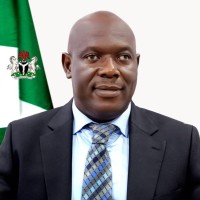
The Hydrocarbon Pollution Remediation Project (HYPREP) has commemorated the 15th anniversary of the release of the United Nations Environment Programme (UNEP) Environmental Assessment Report on Ogoniland, reaffirming its commitment to restoring the environment and improving the livelihoods of affected communities.
In a statement signed by the Project Coordinator, Prof Nenibarini Zabbey, to commemorate the anniversary, HYPREP described the anniversary as a significant milestone in Nigeria’s environmental restoration efforts, noting that the project has made remarkable progress in implementing the recommendations of the landmark UNEP report released on August 4, 2011.
The UNEP report had revealed extensive oil pollution across Ogoniland, severe environmental degradation, and serious public health risks resulting from decades of petroleum operations. It also recommended an initial $1 billion fund to commence the cleanup of the affected communities.
According to HYPREP, the Federal Government formally launched the Ogoni clean-up in 2016, while the Project Coordination Office was established in 2017 to drive the implementation of UNEP’s recommendations.
Zabbey said the current administration has continued to prioritise the project under the Renewed Hope Agenda.
Providing an update on the cleanup, the Project Coordinator disclosed that 30 of the 65 contaminated sites identified by UNEP have been fully remediated, while work is ongoing at several medium- and high-risk locations. It also stated that more than 1.5 million mangrove seedlings have been planted as part of what it described as the world’s largest restoration of oil-degraded mangroves, with over 1,000 hectares of shoreline already rehabilitated.
Zabbey further revealed that 49 Ogoni communities have been connected to potable water schemes through multiple water projects and booster stations aimed at providing safe drinking water across the region.
In the health sector, he said the 100-bed Ogoni Specialist Hospital in Kpite and the 43-bed Cottage Hospital in Buan are nearing completion, adding that several existing health facilities have been upgraded with modern medical equipment, while five ambulances have been donated to improve emergency healthcare services. The Project Coordinator also disclosed that a three-year human health biomonitoring study is being conducted in collaboration with the World Health Organization’s International Agency for Research on Cancer (IARC).
On economic empowerment, Zabbey stated that the Project has created more than 8,000 direct jobs and trained thousands of Ogoni youths and women in various vocational and technical skills, including software development, cybersecurity, aviation, commercial diving, seafaring, mechatronics, and creative arts. The project also reported awarding scholarships to more than 1,000 students, providing grants to small businesses, and supporting persons living with special needs through skills acquisition programmes.
The statement further highlighted ongoing legacy projects, including the Ogoni Power Project and the Centre of Excellence for Environmental Restoration, which it said is about 96 per cent complete. HYPREP also welcomed the recent designation of the Ogoni Wetland as a Ramsar Site of International Importance and pledged to continue promoting biodiversity conservation and sustainable management of the ecosystem.
Marking the anniversary, Zabbey said the progress achieved over the past 15 years demonstrates the collective commitment of government, development partners, stakeholders, and local communities to restoring Ogoniland. He called for renewed collaboration to sustain the cleanup effort, promote environmental sustainability, and support the long-term development of the region. 3
-

 News2 days ago
RSG Targets Nine Million Residents in Mosquito Net Distribution Campaign
-

 Oil & Energy1 day ago
Aiyedatiwa Signs New Electricity Bill
-

 Oil & Energy1 day ago
NLNG Commissions Research And Innovation Centre In RSU
-

 Maritime1 day ago
Marine Minister Commends President Tinubu On NPERA Bill Assent
-

 News2 days ago
KenPoly Holds Eight Convocations, August 29
-

 News2 days ago
RSG Begins Another Phase of Projects Commissioning Today
-

 News2 days ago
RMAFC Completes Revenue Sharing Review, Proposes New Pay
-

 Maritime1 day ago
NAGAFF Petitions IGP Over Alleged Maritime Police Harassment