
Nation
THE STATES

Adamawa
No fewer than 245 intending pilgrims are to perform this year’s Christian pilgrimage to Jerusalem from Adamawa.
The Executive Secretary, Adamawa State Christian Pilgrims Welfare Board, Mr Philibus Ishaku, made this known to newsmen in Yola on Monday
Ishaku said that the number was a great improvement on the 143 pilgrims that performed the exercise last year.
He said that arrangements had reached advanced stages for the exercise, as the airlift of the pilgrims was expected to commence on Oct. 28.
“Infact, we are almost done with preparations, as all prospective pilgrims had paid up and the state government had also approved the list of officials to accompany them,” Ishaku said.
The secretary said that there was a strong possibility that this year’s pilgrims from the North-East would be airlifted from the Yola Airport.
On the issue of pilgrims absconding, while in the Holy land, the executive secretary said that it only happened in Adamawa once and that the culprit was not an indigene of the state.
“And that is why we are very vigilant and thorough on those intending to perform the exercise from Adamawa,” he said.
Bauchi
Malam Musa Chibiyayi, an agricultural expert, has called on the Arable Crop Development and Marketing Company to buy surplus grains from Bauchi farmers to encourage them to produce more.
Chibiyayi, who is also the Special Adviser to Gov. Isa Yuguda on Agriculture, made the call on Tuesday in Bauchi in an interview with newsmen.
He expressed optimism that the state would record bumper harvest this year in view of the high amount of rainfall recorded in the state.
Chibiyayi said that the company might have to mop up the excess crops produced by farmers at a reasonable price to enable them break even.
Borno
Suspected Boko Haram sect members on Monday night attacked the Gamboru Police Station in the Maiduguri metropolis, leaving four policemen injured.
The attack came at a time serial killings by suspected members of the sect continued in Borno.
A police officer, who sought anonymity, told newsmen on Tuesday in the state capital that the assailants raided the police station at night on Monday with local explosives.
The Commissioner of Police in the state, Alhaji Ibrahim Abdu, confirmed the attack, but declined to comment further.
In July 2009, members of the sect, which is opposed to Western education and wants Shariah enforced, attacked a police station in the state capital during which five of them were killed by soldiers deployed to counter the insurgence.
Ekiti
To prevent post-harvest losses, members of the Cassava Growers Association in Ekiti have called on the state government to establish silos for the storage and preservation of their cassava products.
The Chairman of the association, Mr Joseph Akinjobi, made the call in Ado-Ekiti in an interview with the newsmen.
Akinjobi, who is also the Ekiti Chairman of the All Farmers Association of Nigeria (AFAN), said tonnes of cassava products were being wasted annually due to the lack of preservation facilities.
The association chairman also stressed the need for the state government to establish cottage industries where cassava farmers could sell their products.
He identified high production costs due to the high tractor hiring charges and the lack of farm inputs as some of the problems faced by his members during the farming season.
Akinjobi said that owing to these problems, farmers in the state were compelled to travel to neighbouring states such as Osun, Ondo, Kogi and Kwara to hire tractors.
FCT
The Federal Government said in Abuja on Monday that Nigeria and Burkina Faso bilateral relationship on defence cooperation would be strengthened.
Alhaji Murtala Yar’Adua, the Minister of State for Defence, said this while receiving Mr Yero Boly, the Minister of Defence of Burkina Faso in his office.
Yar’Adua said the relationship was premised on Burkina Faso’s role in mediating and settling disputes in some African countries.
Speaking earlier, Boly said the purpose of the visit was to strengthen bilateral relationship on defence cooperation between the two countries.
Jigawa
Gen. Aliyu Gusau, a former National Security Adviser to President Goodluck Jonathan, has donated N5 million to flood victims in Jigawa.
Gusau, a PDP presidential aspirant, presented a cheque for the amount when he paid a courtesy call on Gov. Sule Lamido in Dutse on Monday.
He said he was in the state to commiserate with the government and people of the state over the recent flood that ravaged the state.
He prayed God to stop the event from repeating and enjoined the people to take what happened as an act of the Almighty.
Responding, Governor Sule Lamido expressed appreciation to Gusau for the donation to the victims of flood.
Lamido promised to deliver the money to those affected by the flood.
Katsina
The Katsina State Government has released N9.6 million for disbursement to 335 victims of this year’s flood disaster in Katsina metropolis.
The state’s Commissioner for Justice and Chairman of the Disbursement Committee, Alhaji Muktar Ibrahim, disclosed this while launching the disbursement in Katsina on Monday.
He said the amount represented 40 per cent of the estimated loss incurred by the victims during the disaster.
According to him, the state government decided to assist the affected persons with 40 per cent of their total loss to alleviate their sufferings.
He called on the affected persons to use the money in re-constructing their damaged houses, disclosing that the state government was still planning to also assist them with grains.
Kebbi
Hajiya Asama’u Dakingari, the wife of Kebbi Governor, has donated relief materials worth N6.5 million to victims of flood in Gwandu and Argungu Emirates in Kebbi.
One of her assistants, Alhaji Ibrahim Jambali, made this known to the newsmen in Birnin Kebbi on Monday.
Jambali said the materials included 400 bags of rice, 300 bags of assorted grains, 300 mats and 300 mosquito nets.
Others are 300 pairs of slippers, 300 kettles, and 50 cartons of detergent, 80 cartons of soap, 200 blankets, 500 buckets and 200 textile materials.
He said the materials were distributed to the victims at their temporary resettlement centres in Argungu and Gwandu.
“Hajiya Asama’u Dakingari, during the visit, was told that about 12,000 people were rendered homeless and their farmlands and life savings lost in the disaster,’’ he added.
Our correspondent recalls that the Federal Government had donated N752 million to the victims. Some states, individuals and organisations had also visited and made donations.
Kwara
An apprentice tailor, Kabiru Yusuf of Agbo Oba area, Ilorin, was on Monday sentenced to two months imprisonment for stealing a handset.
The convict, 19, prior to his conviction, had pleaded guilty to the offence.
In view of his admission of the offence, the prosecuting police officer, Insp. Jimoh Kareem, prayed the court to give the accused ‘summary trial’, which was upheld.
Magistrate Abdullahi Bello sentenced the accused to two months in prison with an option of N500 fine.
The convict on September 28 stole a Nokia handset valued N3,500 belonging to one Edungbola Adeniyi of Ita Alamu, Ilorin.
The convict trespassed to where the owner parked his car on Coca-Cola Road, Ilorin and stole the handset put on the dashboard.
Niger
Umar Ma’ali, the Speaker of the Niger House of Assembly, has said that the assembly would support all efforts to promote girl-child education in the state.
Ma’ali said during the unvealing of the mascot for the state’s edition of the “Queen of Culture and Tourism” in Minna on Monday that the girl-child deserved the best in education.
The event was organised by Twani Global Concept in collaboration with the state’s ministry of culture and tourism.
He said the assembly was partnering with the executive arm of government to ensure that the girl-child suffered no form of discrimination.
“We are in partnership with the executive in this project and we shall ensure that no girl-child is discriminated against”, the speaker said.
Ogun
Four students of the Moshood Abiola Polytechnic, Abeokuta, on Tuesday appeared before an Abeokuta Chief Magistrate’s Court for their alleged involvement in cultism.
The students are Akinsanya Babatunde, Samuel Gbenga, Qudus Ayilara and Adewusi Yomi.
They are all facing a three-count charge of membership of an unlawful society as well as illegal possession of firearms and ammunition.
Prosecutor Paul Etusi told the court that the accused persons engaged themselves in the activities of an unlawful society, Eiye Confraternity, at Oloke junction in the Abeokuta metropolis.
He also alleged that they possessed two double-barrelled guns and 30 rounds of ammunition.
Etusi said the act was contrary to Section 4 and punishable under Section 5 of the Secret Cult (Prohibition and Special Provision Act), Laws of Ogun State, 2006.
Sokoto
Governor Aliyu Wamakko of Sokoto State has urged the Jonathan-Sambo Presidential Campaign Organisation to reach out to grassroots politicians instead of Abuja-based politicians to succeed.
Wamakko gave the advice in Sokoto on Monday while receiving Dr Sarki Tafida, the Chairman of the Organisation, saying Abuja politicians had nothing to offer as they were not with the grassroots.
Wamakko explained that Sokoto State had been the home of PDP and would remain so.



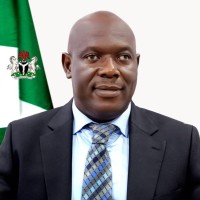
The Hydrocarbon Pollution Remediation Project (HYPREP) has commemorated the 15th anniversary of the release of the United Nations Environment Programme (UNEP) Environmental Assessment Report on Ogoniland, reaffirming its commitment to restoring the environment and improving the livelihoods of affected communities.
In a statement signed by the Project Coordinator, Prof Nenibarini Zabbey, to commemorate the anniversary, HYPREP described the anniversary as a significant milestone in Nigeria’s environmental restoration efforts, noting that the project has made remarkable progress in implementing the recommendations of the landmark UNEP report released on August 4, 2011.
The UNEP report had revealed extensive oil pollution across Ogoniland, severe environmental degradation, and serious public health risks resulting from decades of petroleum operations. It also recommended an initial $1 billion fund to commence the cleanup of the affected communities.
According to HYPREP, the Federal Government formally launched the Ogoni clean-up in 2016, while the Project Coordination Office was established in 2017 to drive the implementation of UNEP’s recommendations.
Zabbey said the current administration has continued to prioritise the project under the Renewed Hope Agenda.
Providing an update on the cleanup, the Project Coordinator disclosed that 30 of the 65 contaminated sites identified by UNEP have been fully remediated, while work is ongoing at several medium- and high-risk locations. It also stated that more than 1.5 million mangrove seedlings have been planted as part of what it described as the world’s largest restoration of oil-degraded mangroves, with over 1,000 hectares of shoreline already rehabilitated.
Zabbey further revealed that 49 Ogoni communities have been connected to potable water schemes through multiple water projects and booster stations aimed at providing safe drinking water across the region.
In the health sector, he said the 100-bed Ogoni Specialist Hospital in Kpite and the 43-bed Cottage Hospital in Buan are nearing completion, adding that several existing health facilities have been upgraded with modern medical equipment, while five ambulances have been donated to improve emergency healthcare services. The Project Coordinator also disclosed that a three-year human health biomonitoring study is being conducted in collaboration with the World Health Organization’s International Agency for Research on Cancer (IARC).
On economic empowerment, Zabbey stated that the Project has created more than 8,000 direct jobs and trained thousands of Ogoni youths and women in various vocational and technical skills, including software development, cybersecurity, aviation, commercial diving, seafaring, mechatronics, and creative arts. The project also reported awarding scholarships to more than 1,000 students, providing grants to small businesses, and supporting persons living with special needs through skills acquisition programmes.
The statement further highlighted ongoing legacy projects, including the Ogoni Power Project and the Centre of Excellence for Environmental Restoration, which it said is about 96 per cent complete. HYPREP also welcomed the recent designation of the Ogoni Wetland as a Ramsar Site of International Importance and pledged to continue promoting biodiversity conservation and sustainable management of the ecosystem.
Marking the anniversary, Zabbey said the progress achieved over the past 15 years demonstrates the collective commitment of government, development partners, stakeholders, and local communities to restoring Ogoniland. He called for renewed collaboration to sustain the cleanup effort, promote environmental sustainability, and support the long-term development of the region. 3
-

 News2 days ago
RSG Targets Nine Million Residents in Mosquito Net Distribution Campaign
-

 Oil & Energy2 days ago
Aiyedatiwa Signs New Electricity Bill
-

 Oil & Energy2 days ago
NLNG Commissions Research And Innovation Centre In RSU
-

 Maritime2 days ago
Marine Minister Commends President Tinubu On NPERA Bill Assent
-

 News2 days ago
KenPoly Holds Eight Convocations, August 29
-

 News2 days ago
RSG Begins Another Phase of Projects Commissioning Today
-

 News2 days ago
RMAFC Completes Revenue Sharing Review, Proposes New Pay
-

 Maritime2 days ago
NAGAFF Petitions IGP Over Alleged Maritime Police Harassment