
Sports
How It Went Wrong For France In S’ Africa

France’s trip to the World Cup has descended into something like a plot from a complex thriller, with the team’s on-field implosion against Mexico the catalyst for an off-field explosion last weekend.
The events of the past days dramatically lifted the lid on the France camp to reveal a grubby underside that is still made muddy by claim and counter-claim in the media.
From the time Raymond Domenech’s side arrived at their training base in Knysna, they have been surrounded by a veil of secrecy, very rarely expressing themselves freely to the media.
The team was locked away as tightly as possible for such a high-profile squad at an event of such magnitude, but even under such close supervision rumours started to spread of a distinct unease.
Domenech has never engendered a great love from the players of the national team, so it was little surprise that the media, who have nothing but contempt for a man who has routinely dodged their questions by answering in a ridiculously cryptic fashion over the last few weeks, were quick to smell blood.
Of course they were aided by allegations that Franck Ribery had conducted congress with a teenage prostitute in Paris just weeks before the World Cup.
And then there was William Gallas’ refusal to speak to the media in the build-up to the competition. His curtain of silence prevented the centre-back from explaining his grievance fully, though most pundits agree that it was instigated by Domenech’s decision to select Patrice Evra as captain.
Just 24 hours before Les Bleus’ opening game against Uruguay came further, and more serious, hints of trouble.
Florent Malouda reportedly had to be held back by Evra from his coach after a training ground disagreement. Domenech believed that ‘Flo’ was acting in too aggressive a manner, leading to the Chelsea player being axed to the bench against Uruguay, a game that was allowed to tamely drift to a scoreless draw and was crying out for the winger’s direct running.
Six days passed without obvious incident, but the fixture against El Tri in Polokwane would start to peel away the layers of protection surrounding l’Equipe de France.
For 45 minutes against Mexico, Les Bleus unsteadily matched their opponents, but after the half-time break there was a distinct change in mood. France’s players suddenly seemed less willing and less concentrated; as if someone had flicked an off button on their performance.
In the wake of the 2-0 loss, which has left France staring at the exit door, reports quickly revealed the events that went on in the bowels of the Peter Mokaba Stadium. Nicolas Anelka, a man not noted for his cool temperament, had a huge fall-out with Domenech.
“Go f*** yourself, you dirty son of a b****,” the media have reported the frustrated Chelsea striker, who later rejected a chance to apologise for the incident, to have said.
Evra has denied that these were the words used by his team-mate, but he has not denied that a ‘clash’ took place. How the media got wind, he only has one explanation.
“This comes from someone who is on the team and wants to hurt the team,” he told the media, explicitly using the word “traitor” to describe the unknown anarchist.
Suspicion clearly lingers around the France squad. Like a good murder mystery, many players, perhaps even staff, have motives, but no-one will shoulder the blame.
But the Anelka saga is not the only controversy to have arisen from the Mexico match. A band of mutineers (Evra, Gallas, Ribery and Thierry Henry), led by retired ace Zinedine Zidane, who was said to have controlled the dressingroom during Les Bleus’ run to the 2006 World Cup Final, is rumoured to have instructed Domenech to reshuffle his formation, dropping Yoann Gourcuff and Sidney Govou in the process.
The coach seemed to be giving the move some thought, but once he learned of Zidane’s influence, he reverted to his original plan.
Domenech, who gives up his post after the World Cup, disappeared on Saturday when he should have stood shoulder-to-shoulder with Evra and was labelled “the Invisible Man” by France Football. The stubborn 58-year-old has finally broken, though that seemed apparent from his countenance as Mexico overran his side.
While reports of unrest in squads are not uncommon, England are presently having to fend off such claims, the sheer scale of turbulence in the France squad is monumental. And this is not the end; there are more revelations to come, and more ugly twists in Les Bleus’ World Cup tale, which isn’t even officially over yet.
On Sunday, just a few minutes after taking the field for a training session at their Knysna base, captain Patrice Evra and fitness coach Robert Duverne became involved in an argument. Domenech stepped in and Duverne stormed away as the players walked off and boarded the team bus.
The coach returned moments later to read a statement from the squad to the assembled media. “All players without exception want to declare their opposition to the FFF decision to exclude Nicolas Anelka,” it said.
The statement added the players were angered the Anelka-Domenech row had become public and criticised the FFF “which at no time tried to protect the squad”.
France went ahead to lose 1-2 to South Africa in the last group match to crash out of the world cup without a victory.
Good luck Laurent Blanc, you have a huge job on your hands to rebuild trust amongst this fragmented squad as the coup de grace finally puts France out of their South Africa misery.



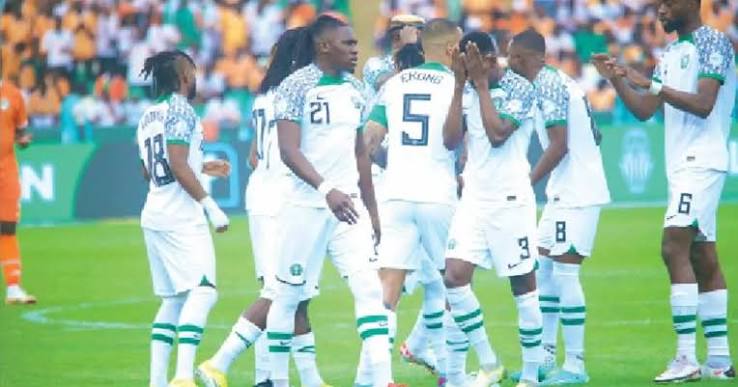
Nigerian football fans and former internationals may have finally joined the call on President Bola Ahmed Tinubu to save Nigerian football from the grip of the Nigeria Football Federation (NFF), demanding a complete overhaul and the resignation of the board following a series of national-team heartbreaks, including the Super Eagles’ failure to qualify for the 2026 FIFA World Cup, their second consecutive absence and the Super Falcons’ recent loss of an automatic qualification spot for the 2027 FIFA Women’s World Cup in Brazil.
Until now, football legend Segun Odegbami has been a lone voice in the vanguard of those calling on the Ibrahim Gusau-led NFF board to step aside. However, many ex-internationals, angered that the national embarrassment has now spilled over to the women’s team, have joined the call to “save our football.”
“We are demanding a total systemic clear-out and consequences at every tier of Nigerian football,” one of the former players said yesterday, pleading to remain anonymous to avoid “arrows” from what he described as desperate officials holding Nigerian football by the jugular.
Ahead of the September 27, 2026 elective congress of the NFF, scheduled to hold in Lafia, Nasarawa State, Chairman of the Advocacy for Nigeria Football Reforms Initiative, Prince Harrison Jalla, has also painted a gloomy picture of the future of Nigerian football.
Jalla’s position is in tandem with that of some aspirants who are also crying blue murder, alleging that the electoral procedure is skewed in favour of incumbent NFF President Ibrahim Musa Gusau to secure a smooth passage to a second term unopposed.
Jalla insisted that “all indicators are pointing to a gloomy picture for the future of Nigerian football, mainly due to administrative ineptitude, while the gladiators remain engrossed and fixated on the election.”
“The major crux of the election is the guidelines, which make it very difficult for other candidates to secure endorsements from across the six geopolitical zones to challenge Gusau.
“The NFF elective congress creates a skewed voting structure because [certain blocs] hold an overwhelming majority of the voting power, which critics argue marginalises key football stakeholders such as club owners, players, coaches, referees and sports writers.
“Out of the total delegates and voting structure, the 37 State FA chairmen form the primary voting bloc, making it difficult for independent candidates to win.
“This is so because of the marriage between the FA chairmen and the NFF. Most FA chairmen depend solely on the Federation for favours. Over time, during national and international engagements, the NFF uses such opportunities to reward the FA chairmen with trips and estacodes.
“They have been so compromised that no Jupiter would make them see reasons for a change. The system, therefore, heavily favours the incumbent leadership seeking re-election. That explains why they were in a hurry to pass a vote of confidence in the NFF leadership even when Nigerian football became topsy-turvy.
“As desperation has beclouded their reasoning, they have forgotten how low they have dragged Nigerian football.”
A cursory look at the catalogue of failures by Nigeria’s national teams will reveal this;
Super Eagles (Senior Men): Failed to qualify for the 2026 FIFA World Cup. Their campaign ended in agonising fashion in November 2025 during the CAF playoff final, when they lost 4–3 on penalties to DR Congo. This marked the second consecutive World Cup missed by the senior national team. Earlier, in January 2026, they were also eliminated from the 2025 AFCON via a penalty shootout.
Super Falcons (Senior Women): Suffered an early continental exit by losing 1–0 to Cameroon in the 2026 WAFCON quarter-finals. The defeat stripped them of an automatic ticket to the 2027 FIFA Women’s World Cup in Brazil, forcing them into an inter-confederation playoff route. Worse still, Banyana Banyana of South Africa stopped the Super Falcons with a 2-1 defeat in Morocco, marking Nigeria’s worst outing in the history of WAFCON.
Golden Eaglets (Men’s U-17): Failed to qualify for the U-17 AFCON and subsequently missed out on three consecutive FIFA U-17 World Cups — 2023, 2025 and 2026.
Flying Eagles (Men’s U-20): Missed both the 2026 U-20 AFCON and the FIFA U-20 World Cup.
Olympic Team (Men’s U-23): Failed to qualify for the 2023 U-23 AFCON, which directly resulted in their failure to qualify for the 2024 Paris Olympic Games.
An official NFF apology to the government and Nigerians was met with backlash, with fans dismissing it as “too little, too late” and “one apology too many”, while demanding actual resignations.
The current frustration among fans stems from what they regard as an unprecedented catalogue of systemic failures across all tiers of Nigeria’s national teams.
Segun Odegbami said the failures had become one too many.
“If you fail to take your team to the World Cup, you find out that more often than not, they vote you out or sack you.
“That’s the measure. If you have a coach who doesn’t do well, they sack him. If you have a player who is doing badly, you remove him.”
“These guys have not succeeded. They’re our friends; that’s the painful thing. We know ourselves. We are all in the business and, when we champion the fact that they should go, they make you an enemy.
“It’s not a personalised thing. They have failed and, if we go back to that route, we are going to fail as we have failed before,” he said.
The financial damage from missing recent major tournaments is equally devastating, with total losses estimated at between ?150 billion and ?300 billion in direct payouts and broader economic partnerships.
This continuous string of qualification failures has effectively choked off the federation’s primary revenue pipelines and left its local development initiatives starved of funds.
The economic wreckage breaks down across several critical areas. By failing to reach the expanded World Cup, the NFF forfeited a guaranteed baseline participation fee of $10.5 million, reportedly worth roughly ?15.5 billion.
This single tournament loss wiped out an amount equivalent to roughly 87 per cent of the NFF’s projected annual operational budget. Had the Super Eagles advanced beyond the group stage, the rewards would have risen above $12 million, while reaching the quarter-finals could have yielded up to $20 million in performance-related payments.
Early exits by the Super Falcons and the qualification failures of the youth teams, U-17, U-20 and U-23, mean the NFF has also missed out on vital developmental subsidies and travel grants normally provided by continental governing bodies.
Corporate organisations and major sports betting companies are scaling back their sponsorship valuations. Without global television exposure, the NFF cannot command premium rates for brand placement.
The federation also misses out on potential revenue from global jersey sales, training gear and licensed supporter memorabilia that normally spike around major tournaments.
By missing out on tournament participation, Nigeria also loses leverage to draw heavily from FIFA’s financial programmes aimed at upgrading domestic training academies and pitches.
Consecutive missed World Cups have further lowered the market value of the national team brand, making future broadcast and marketing rights significantly harder to sell at a premium.
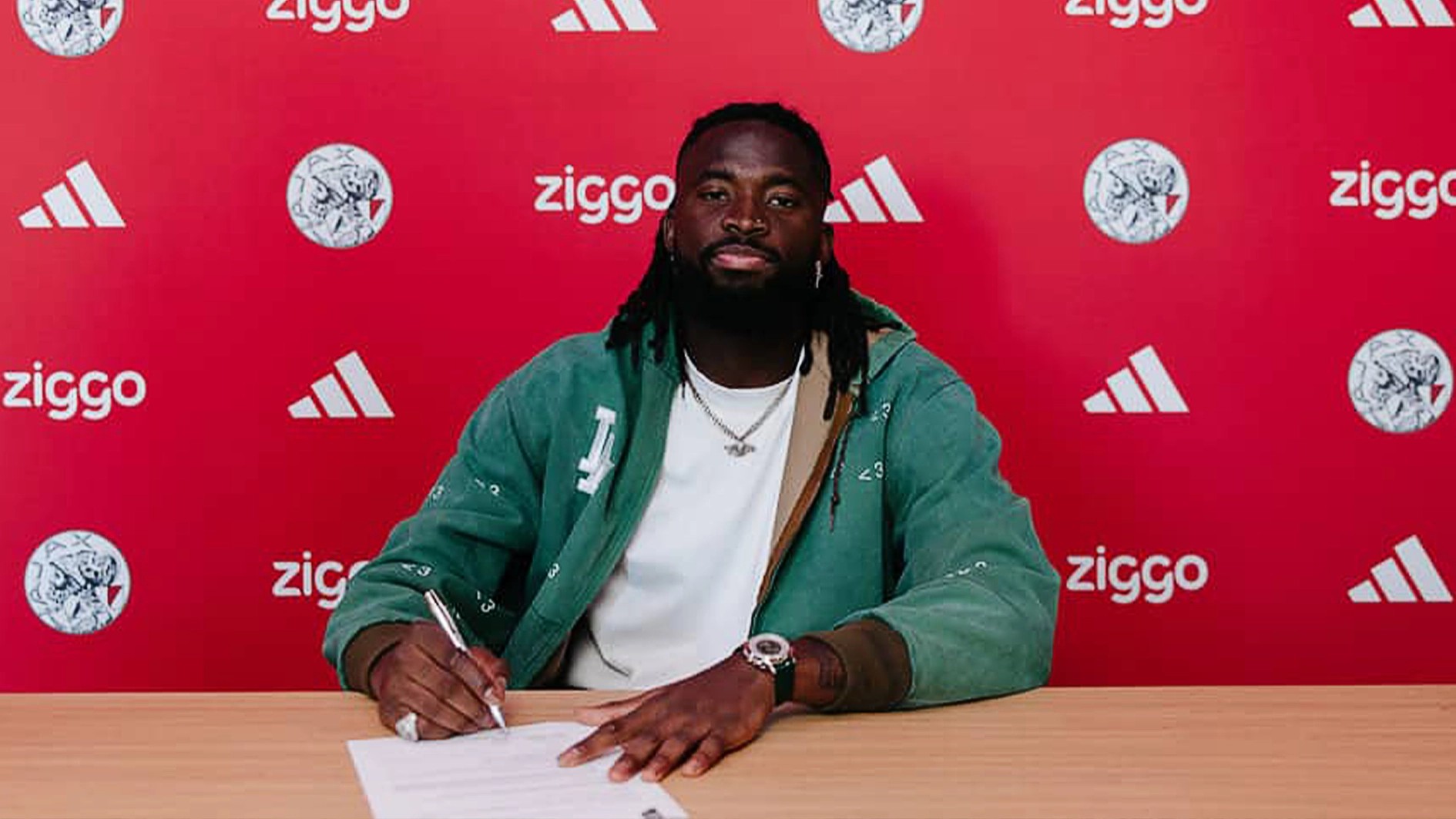
Former Ajax midfielder Hedwiges Maduro has praised Nigerian striker Tolu Arokodare, highlighting the forward’s strength and power and suggesting that he could prove valuable to Ajax in the Eredivisie.
Arokodare joined Ajax from Wolverhampton Wanderers on a season-long loan in July, with the Dutch club holding an option to make the move permanent.
He has already made an impact for his new side, providing an assist in Ajax’s 2-0 victory over PEC Zwolle in their opening Eredivisie fixture.
Maduro discussed Arokodare’s qualities during an appearance on ESPN’s Voetbalpraat, where he assessed how the Nigerian could complement Ajax’s attacking options.
He sees Arokodare as offering a different profile to Marcos Leonardo, particularly against opponents who defend deep and limit the space available for attacking runs.
Speaking about the Nigerian striker, Maduro highlighted his physical qualities and explained why he believes they could make him a valuable option for Ajax in the Dutch top flight.
“I think Tolu has something special, in terms of strength and power. I think he can be of real value in the Eredivisie,” Maduro said, as quoted by Ajax Showtime.
According to Maduro, the tactical demands of certain matches could make Arokodare’s physical presence an important option for Ajax, especially when opponents retreat towards their own penalty area.
He contrasted the situation with Leonardo, who he believes benefits from having space to make attacking runs. Maduro explained that when teams defend deep, those spaces become more difficult to find.
“Leonardo needs space. If teams drop back completely, where are you going to make those runs?
Then you get more use out of Tolu as a focal point to drop the ball,” he added.
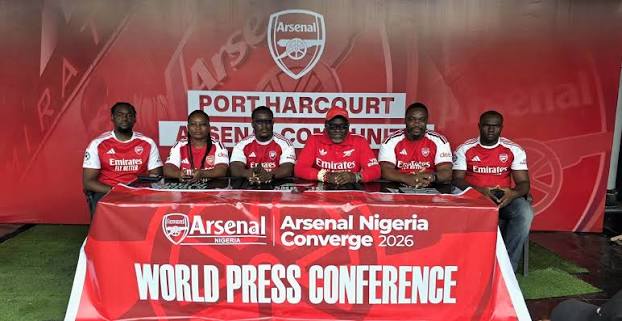
The Chairman of the Local Organizing Committee, LOC, of the Arsenal Nigeria Converge 2026, Ugochukwu Oputa, has said that over 25 states across Nigeria were involved in the second edition of the Arsenal Converge scheduled for Port Harcourt from August 14 to 16, 2026.
Oputa disclosed this on Sunday after the Converge meeting at the Ediz Wine Bar in Port Harcourt, Rivers State.
According to him, Arsenal’s popularity cuts across the nation, and the Converge is organized to provide a period for supporters to network, interact, and harmonize.
“Knowing how Arsenal’s popularity is spread across the nation, it became necessary that all the different supporters of Arsenal club across the country harmonize and create a particular period where we can meet, network and interact,” Oputa said.
He outlined the five-day schedule of activities to include
Press conference,
Environmental sanitation and community service at Mile 1 Market, Diobu, involving both visitors and residents, arrival, welcome and cocktail party. Others included Games Day, football competition and other fun activities at the Rivers State University football pitch, Community Shield watch party yesterday, where all Arsenal supporters’ groups met, interacted, and discussed the future of Arsenal, including plans for the 2027 hosting rights of the Converge.
Oputa added that this year’s Converge which was in Port Harcourt, had over 3,000 fans registered.
“Port Harcourt Arsenal Community is a recognized supporters’ club of Arsenal in London and we have over 25 states that participated in the Arsenal Nigeria Converge 2026,” he said.
Also speaking, a member of the Nigeria Arsenal Supporters Working Committee, Nsikak Ntia, said that what distinguishes Arsenal supporters is their offline community impact.
“What we are doing here in Port Harcourt is beyond football. It’s a family that is growing. We had over 3,000 to 4,000 people on Saturday at the Rivers State University that shared the confidence that Arsenal represents,” Ntia said.
He noted that the club’s motto, ‘Victoria Concordia Crescit’ – ‘Victory Through Harmony’ – is the bedrock of the group.
“The work that we do at Mile 1 Market is to help with environmental protection and increase what we do in society.
“We also have future plans to promote environmental protection and better ways to handle waste.
“These are things that are germane for our future, the future of our young people and generations unborn.
” It goes beyond football, it goes beyond banter, it goes beyond yapping at each other.
“That is what Arsenal Football Club is all about. Arsenal has the most well-organized supporters’ club in Nigeria and Africa’ he sated.
-

 News3 days ago
RSG Targets Nine Million Residents in Mosquito Net Distribution Campaign
-

 Oil & Energy3 days ago
Aiyedatiwa Signs New Electricity Bill
-

 Oil & Energy3 days ago
NLNG Commissions Research And Innovation Centre In RSU
-

 Maritime3 days ago
Marine Minister Commends President Tinubu On NPERA Bill Assent
-

 News3 days ago
KenPoly Holds Eight Convocations, August 29
-

 News3 days ago
RSG Begins Another Phase of Projects Commissioning Today
-

 News3 days ago
RMAFC Completes Revenue Sharing Review, Proposes New Pay
-

 Maritime3 days ago
NAGAFF Petitions IGP Over Alleged Maritime Police Harassment