
Nation
THE STATES

Bauchi
The Bauchi State Agency for the Control of HIV/AIDS, Tuberculosis, Leprosy and Malaria (BACATMA) has commenced investigations into the activities of a HIV positive herbalist allegedly spreading the virus to his female clients.
The harbalist had been sentenced to 24 years imprisonment by a Bauchi Shari’ah Court for allegedly spreading the virus.
Dr Rilwanu Muhammad, the Executive Secretary of the agency, told newsmen in Bauchi on Friday that the agency was disturbed by the development.
Sheikh Aliyu Sa’idu, a commissioner in the Bauchi State Shari’ah Commission, alleged that the convict, Magaji Ali, had been spreading HIV by luring his female clients into sex as part of the love potion to make their husbands love them.
The Islamic scholar alleged that “the herbalist not only sleeps with them, but also collects N5,000 as service charge and possibly infects them before delivering the love potion”.
He made the allegation in a lecture organised by the Islamic Health Students Association of Nigeria, School of Nursing and Midwifery, Gombe branch.
FCT
Nigeria’s achievements in the health sector would be showcased during the forthcoming meeting of World Health Assembly, Prof. Onyebuchi Chukwu, the Minister of Health, has said.
The Minister was speaking to newsmen on Thursday in Abuja at a briefing on the forthcoming assembly scheduled for Geneva, Switzerland from May 17 to May 21
“The meeting is an opportunity for us to showcase what we have achieved in the health sector since the last meeting.
“It will also allow the World Health Organisation (WHO) to understand the peculiar problems of some countries and to also decide how those countries could be helped,” he said.
He said that Nigeria had made a lot of achievements in eradicating guinea worm.
“We have continued to sustain the zero reporting of guinea worm. In the past fifteen months, Nigeria has not recorded a single case of guinea worm,” he said.
On polio, Chukwu said that the country has recorded only three cases this year.
“Since the beginning of this year, we have not recorded more than three cases of polio. The recent one was recorded last week.
“If you compare that with the 360 cases recorded between January and May last year, you will know that this is something encouraging,” he said.
The Minister, who said that a report on Nigeria’s performance in the health sector would be issued during the assembly, said that some protocols and resolutions would be adopted at the meeting.
Jigawa
The Jigawa Commissioner for Commerce and Industry, Alhaji Muktari Birniwa, says the Export Processing Zones (EPZ) established in Maigatari Local Government Area of the state is fully operational.
Birniwa, who disclosed this in an interview with newsmen on Wednesday in Dutse, said the state government had renovated all dilapidated buildings around the site.
He said that access roads, electricity, water and communications facilities were provided in the zone for effective and efficient commercial activities in the area.
The commissioner stated that two major firms were presently operating in the EPPS, including the state owned Tricycle Assembly Plant and Gum Arabic Company which were meant to export finished products to other parts of the world.
“Some American investors had visited the zone and did feasibility studies and indicated their interest to invest in the area,” he said.
Biennia stated that some companies had requested the government to establish immigration office in the area, to regulate and check the influx of people who would be doing business in the zone.
Kebbi
The International Fund for Agricultural Development (IFAD) has approved the release of N91.7 million for the Kebbi Community-Based Agricultural and Rural Development Programme (CBARDP).
Dr. Usman Shehu, the Programme Manager, Kebbi Agricultural and Rural Development Authority, disclosed this in a statement in Birnin Kebbi on Friday.
The statement said the fund would be utilised to build the capacity of rural communities for the period April 2010 to March 2013.
It said the three tiers of government and benefitting communities would contribute counterpart fund totalling N506 million.
“The approval was sequel to the mid-term review meeting between IFAD and the CBARDP officials on impact of the programme.
“The review indicated that the programmme had impacted positively on the social, economic and environmental aspects as it had improved the livelihoods and living conditions of the targeted communities”, it stated.
Kaduna
Farmers in Zaria and its environs have expressed concern over the delay in fertiliser distribution for the 2010 farming season.
Investigations revealed that farmers in the area had already started clearing their farmlands in readiness for planting.
A farmer, Alhaji Aliyu Africana, noted that the commodity usually arrived when farmers had already resorted to other alternatives.
“Most of us do not wait for the official fertiliser rather, we procure the commodity at the black market for use as at and when due.
“Nevertheless, I want to appeal to the state government to expedite action toward ensuring the availability of the commodity in good time”, Africana said.
Another farmer, Mahmud Alfa, noted that the delay was a source of worry not only to farmers but also to the society at large, as it might lead to poor yield.
He urged the state government to distribute the commodity to encourage farmers.
Niger
One person died in a communal clash over farmland between Gbasua and Ndafu communities in Mokwa Local Government Area of Niger on Wednesday, witnesses said.
Ten other persons suffered injuries in the clash, while a house was burnt and agricultural products destroyed, witnesses told newsmen in Minna.
Sources say that the dispute over the land began some years ago when a member of one of the communities allegedly encroached on the land leading to a protest from members of the other community.
Ondo
A driver attached to Mr Kole Bolodeoku, a member of the Ondo State House of Assembly, committed suicide on Thursday.
The lifeless body of the driver, who was simply identified as Dayo, was found hanging in his room at Fanibi layout, Akure.
A source said that the deceased was hail and hearty the previous day and had planned to drive his boss to the House on Thursday for a mourning session in honour of late President Umaru Yar’Adua.
Efforts to speak with Bolodeoku, who represents Ese-Odo constituency, proved abortive as he appeared too confused to talk.
Other residents in the area also wore mournful looks and refused to speak on the development.
Mr Adeniran Aremu, the state Police Public Relations Officer, who confirmed receiving a report of the the incident, said that investigation had commenced.
“It is true that Honourable Bolodeoku’s driver hanged himself early this morning and the command has swung into action to unravel the circumstance surrounding the death of the driver,’’ he said.
Oyo
The Oyo State Commissioner for Works and Transport, Alhaji Oyedemi Muslim, on Thursday in Ibadan warned residents against unauthorised cutting of roads.
Muslim gave the warning while briefing newsmen on activities to mark the third anniversary of Gov. Adebayo Alao-Akala’s government.
The commissioner also said anybody caught dumping refuse on the roads would be prosecuted.
He said government would no longer tolerate the blockage of drains with refuse.
Muslim further warned those washing vehicles on roads to desist forthwith as they would be arrested and prosecuted.
Other offences, according to the commissioner, include road side trading and hawking, illegal construction on road set backs and dumping of construction materials on roads.
He said those who illegally park or abandon their faulty vehicles on the roads would not be spared.
Plateau
As part of its peace-building efforts, the Military Special Task Force maintaining security in Plateau has commenced the provision of free medical services and water supply to communities in Jos.
The areas benefitting include Tudun Wada, Dogon Dutse, Dutse Uku, Rikkos and Angwan Rukuba areas.
It was gathered that no fewer than 500 patients are being treated daily in these areas by the Medical Corps of the 3 Armoured Division Hospital of the Nigerian Army, Jos.
Similarly, the Nigerian Army water tankers supply water in these areas which had suffered acute water scarcity for years.
Residents of these areas were seen trooping out to take advantage of these services, while people from other parts of the city also come, especially, for medical services.
Speaking to newsmen, on Friday, in Jos, the Commander of the hospital, Maj. Folarin Orolugbagbe, said the exercise was in the spirit of “civil-military cooperation”.



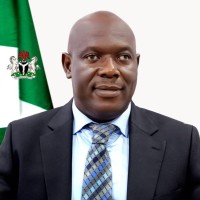
The Hydrocarbon Pollution Remediation Project (HYPREP) has commemorated the 15th anniversary of the release of the United Nations Environment Programme (UNEP) Environmental Assessment Report on Ogoniland, reaffirming its commitment to restoring the environment and improving the livelihoods of affected communities.
In a statement signed by the Project Coordinator, Prof Nenibarini Zabbey, to commemorate the anniversary, HYPREP described the anniversary as a significant milestone in Nigeria’s environmental restoration efforts, noting that the project has made remarkable progress in implementing the recommendations of the landmark UNEP report released on August 4, 2011.
The UNEP report had revealed extensive oil pollution across Ogoniland, severe environmental degradation, and serious public health risks resulting from decades of petroleum operations. It also recommended an initial $1 billion fund to commence the cleanup of the affected communities.
According to HYPREP, the Federal Government formally launched the Ogoni clean-up in 2016, while the Project Coordination Office was established in 2017 to drive the implementation of UNEP’s recommendations.
Zabbey said the current administration has continued to prioritise the project under the Renewed Hope Agenda.
Providing an update on the cleanup, the Project Coordinator disclosed that 30 of the 65 contaminated sites identified by UNEP have been fully remediated, while work is ongoing at several medium- and high-risk locations. It also stated that more than 1.5 million mangrove seedlings have been planted as part of what it described as the world’s largest restoration of oil-degraded mangroves, with over 1,000 hectares of shoreline already rehabilitated.
Zabbey further revealed that 49 Ogoni communities have been connected to potable water schemes through multiple water projects and booster stations aimed at providing safe drinking water across the region.
In the health sector, he said the 100-bed Ogoni Specialist Hospital in Kpite and the 43-bed Cottage Hospital in Buan are nearing completion, adding that several existing health facilities have been upgraded with modern medical equipment, while five ambulances have been donated to improve emergency healthcare services. The Project Coordinator also disclosed that a three-year human health biomonitoring study is being conducted in collaboration with the World Health Organization’s International Agency for Research on Cancer (IARC).
On economic empowerment, Zabbey stated that the Project has created more than 8,000 direct jobs and trained thousands of Ogoni youths and women in various vocational and technical skills, including software development, cybersecurity, aviation, commercial diving, seafaring, mechatronics, and creative arts. The project also reported awarding scholarships to more than 1,000 students, providing grants to small businesses, and supporting persons living with special needs through skills acquisition programmes.
The statement further highlighted ongoing legacy projects, including the Ogoni Power Project and the Centre of Excellence for Environmental Restoration, which it said is about 96 per cent complete. HYPREP also welcomed the recent designation of the Ogoni Wetland as a Ramsar Site of International Importance and pledged to continue promoting biodiversity conservation and sustainable management of the ecosystem.
Marking the anniversary, Zabbey said the progress achieved over the past 15 years demonstrates the collective commitment of government, development partners, stakeholders, and local communities to restoring Ogoniland. He called for renewed collaboration to sustain the cleanup effort, promote environmental sustainability, and support the long-term development of the region. 3
-

 News2 days ago
RSG Targets Nine Million Residents in Mosquito Net Distribution Campaign
-

 Oil & Energy2 days ago
Aiyedatiwa Signs New Electricity Bill
-

 Oil & Energy2 days ago
NLNG Commissions Research And Innovation Centre In RSU
-

 Maritime2 days ago
Marine Minister Commends President Tinubu On NPERA Bill Assent
-

 News2 days ago
KenPoly Holds Eight Convocations, August 29
-

 News2 days ago
RSG Begins Another Phase of Projects Commissioning Today
-

 News2 days ago
RMAFC Completes Revenue Sharing Review, Proposes New Pay
-

 Maritime2 days ago
NAGAFF Petitions IGP Over Alleged Maritime Police Harassment