
Nation
THE STATES

Bauchi
Residents of Bauchi metropolis said on Saturday that the planned return of former Vice President Atiku Abubakar to PDP might not be as rosy as his supporters thought.
Speaking to our correspondent Alhaji Shehu Ali, a political commentator, said that Abubakar might not find it easy in PDP because from all indications his reason for rejoining the party was not unconnected to his ambition to become the president of the country.
“Atiku will face a formidable task if he really wants to secure the PDP ticket for its presidential candidate in 2011.
“I say so because there are other prominent and strong personalities who also want to have the same opportunity as him.
“Because of his absence for a long time it will be difficult for him to have an automatic ticket to contest as president,” Ali said.
However, another resident, Alhaji Sulaiman Ibrahim, a political chieftain and a member of PDP, said that Abubakar left the party because he felt he was frustrated and from the look of things the frustrating elements were gone that was why he wanted to return to it.
He said it was due to problems he was facing in PDP that he left and created another party in the name of Action Congress (AC).
FCT
The Minister of Defence, Prince Adetokunbo Kayode, on Friday in Abuja said the Federal Government would redouble its commitment to the welfare of the armed forces.
Adetokunbo disclosed this while inspecting some projects, executed by the Nigerian Army Engineering Corps, through direct labour.
“The Acting President has given the mandate to support every effort to improve the welfare of all those in uniform. What I have seen today shows the need for government to redouble its commitment in this direction.
“I believe first of all, that the welfare of our men and officers is being taken care of by this approach of the Chief of Army Staff, and I want to urge all services to emulate this approach,” he said.
The minister said he had been briefed on assumption of duty in the new ministry that the services, especially the Nigerian Army had embarked on projects by direct labour.
“It appears strange and from what I have seen today I am impressed”, he added.
On his part, the Chief of Army Staff, Lt.Gen Abdulrahman Dambazau, said for each project carried out through direct labour, the army had spent not more than 10 per cent of what would have been spent through the award of contracts.
Dambazau added that the project that would have taken five years to complete were completed within one year by the army personnel through direct labour.
Jigawa
Jigawa Police Command has arrested three people who allegedly tried to defraud the state government, police public relations officer of the command, Assistant Supritendant of Police Abdu Jinjiri, said.
Jinjiri told newsmen in Dutse on Saturday that the suspects were Haruna Mustapha, Saidu Mustapha from Abuja and Mohammed Ali of Nassarawa Quarters
in Kano Metropolis.
Jinjiri said the suspects sent a text message to one Abuja-based business man, Alhaji Malami Shehu, requesting money to facilitate the procurement of a N3 billioncontract for the supply of fertiliser to the state government.
The suspects claimed that the Chief of Staff, Government House, Dutse, Alhaji Aminu Ringim, was aware of the contract.
Luck ran out of the suspected criminals when Shehu called Ringim to verify the story.
The police were immediately alerted and the three suspects were arrested.
At the time of filing this report the Jinjiri said the criminals were in police custody for full and further investigation on the matter.
Kaduna
Alhaji Shehu Idris, the Emir of Zazzau, on Friday urged religious and traditional leaders to redouble effort to promote religious tolerance, trust and understanding among their followers.
Speaking at a quarterly meeting with religious leaders and traditional rulers in his palace in Zaria, the emir described peace as a vital ingredient for socio-economic growth.He explained that no religion preached violence, hence the need for leaders to show the fear of God Almighty by promoting peace and unity among the people.
He called on traditional rulers and religious leaders to complement the efforts of the Kaduna State Government toward sustaining the prevailing peaceful atmosphere in the state.
The emir urged the Ulama (religious leaders) to adopt a means of finding solution to the differences among various religious groups and advised youths against thuggery.
In their contributions, Sheik Abubakar Imam-Ikara, Sama’ila Dakace and Alhaji Garba Ra’is restated their commitment to a peaceful society.
They described the meeting as a way of strengthening peace and harmony among the people of Zazzau Emirate and the state as a whole.
Kebbi
The Campaign Organisation of Gov. Saidu Dakingari of Kebbi for the 2011 election, has announced the removal of its chairman, Alhaji Muhammed Kwasara.
A statement by the Assistant Public Relations Officer of the organisation, Nasiru Masama, in Birnin Kebbi on Friday, said the removal was because of Kwarasa’s crowded schedule, which had not allowed him to pay required attention to the project.
It noted that Kwasara was also a Senior Special Adviser on Special Duties to Dakingari.
The statement named Alhaji Kabiru Sani as the new chairman of the organisation.
Speaking on his appointment, Sani said he would promote the achievements of Dakingari toward a successful re-election in 2011.
He appealed to supporters of the party to remain committed to the effort to re-elect the governor.
Lagos
The Chairman, Ikosi-Isheri Local Council Development Area (LCDA), Mr Kunle Soname, said his administration would assist voluntary organisations to train youths in the area.
Soname told newsmen in Lagos on Saturday that the council would support the groups with funds and logistics in training their members.
“We have written to schools and landlords of places where these groups meet to allow them free assess and also to give them other forms of support,’’ he said.
According to him, letters have also been written to all private and public primary and secondary schools within the LCDA to encourage students to belong to any one of the voluntary associations.
He said that head teachers and principals of public schools had been directed to set aside a day in the week for students to participate in the activities of the voluntary associations.
“Our intention is in line with the aspirations of the state governor to integrate voluntary associations into the re-orientation programme for youths and children in the state,’’ he said.
Our correspondent reports that 65 under-10 pupils of Caleb International Schools, Magodo, were inducted into the Nigerian Red Cross Society in March.
Another 100 pupils from five public schools within the LCDA were inducted into the Boys Scout and Girls Guide associations as part of the re-orientation programme.
Niger
The Chief Imam of Umaru Majigi Central Mosque, Bida in Niger, Sheikh Adamu Liman-Yakatun, has urged Nigerian Muslims to give their children both western and Islamic education.
Liman-Yakatun spoke on Friday in Bida at the graduation ceremony of 20 students of Imam Aliyu Quranic School.
He said by acquiring western and Islamic education “ Muslims can contribute meaningfully to national development.
“We cannot endeavour to contribute our own quota to the socio-economic development of Nigeria if we neglect the pursuit of both western and religious education.”
Liman-Yakatun also called for the education of girls like their male counterparts to facilitate national development.
“Women are the mothers of the society just as they mould the character of our children and as such they should be adequately educated to face that challenges,” he said.
The proprietor of the school, Malam Usman Aliyu, emphasised the need for parents to complement the effort of the government in funding education.
Osun
Mr Sina Mohammed, Special Adviser to Gov. Olagunsoye Oyinlola on Project Monitoring, on Friday scored contractors handling projects in the state low.
Inspecting some projects on Friday, the special adviser said the contractors were now taking advantage of the ending phase of the present political dispensation to do shoddy jobs,
The tour followed a call on government by the affected communities to make the contractors to be committed to their jobs.
Mohammed expressed dissatisfaction with the shoddy jobs done by the contractors, in spite of the fact that they had been properly mobilised to enable them perform well.
The special adviser expressed disappointment with the renovation work being carried out at the Maternal and Child Health Wards of the Comprehensive Health Centre at Ikire.
Mohammed, who is also the Chairman of State and Local Government Capital Project Monitoring Committee, was at Iwo, Ede, Ejigbo and Osogbo to assess projects.
He described the quality of work done in Ikire as unacceptable and directed that the contracting firm should not be paid until the defects were rectified.



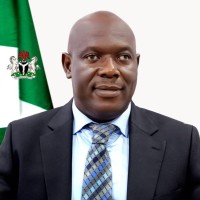
The Hydrocarbon Pollution Remediation Project (HYPREP) has commemorated the 15th anniversary of the release of the United Nations Environment Programme (UNEP) Environmental Assessment Report on Ogoniland, reaffirming its commitment to restoring the environment and improving the livelihoods of affected communities.
In a statement signed by the Project Coordinator, Prof Nenibarini Zabbey, to commemorate the anniversary, HYPREP described the anniversary as a significant milestone in Nigeria’s environmental restoration efforts, noting that the project has made remarkable progress in implementing the recommendations of the landmark UNEP report released on August 4, 2011.
The UNEP report had revealed extensive oil pollution across Ogoniland, severe environmental degradation, and serious public health risks resulting from decades of petroleum operations. It also recommended an initial $1 billion fund to commence the cleanup of the affected communities.
According to HYPREP, the Federal Government formally launched the Ogoni clean-up in 2016, while the Project Coordination Office was established in 2017 to drive the implementation of UNEP’s recommendations.
Zabbey said the current administration has continued to prioritise the project under the Renewed Hope Agenda.
Providing an update on the cleanup, the Project Coordinator disclosed that 30 of the 65 contaminated sites identified by UNEP have been fully remediated, while work is ongoing at several medium- and high-risk locations. It also stated that more than 1.5 million mangrove seedlings have been planted as part of what it described as the world’s largest restoration of oil-degraded mangroves, with over 1,000 hectares of shoreline already rehabilitated.
Zabbey further revealed that 49 Ogoni communities have been connected to potable water schemes through multiple water projects and booster stations aimed at providing safe drinking water across the region.
In the health sector, he said the 100-bed Ogoni Specialist Hospital in Kpite and the 43-bed Cottage Hospital in Buan are nearing completion, adding that several existing health facilities have been upgraded with modern medical equipment, while five ambulances have been donated to improve emergency healthcare services. The Project Coordinator also disclosed that a three-year human health biomonitoring study is being conducted in collaboration with the World Health Organization’s International Agency for Research on Cancer (IARC).
On economic empowerment, Zabbey stated that the Project has created more than 8,000 direct jobs and trained thousands of Ogoni youths and women in various vocational and technical skills, including software development, cybersecurity, aviation, commercial diving, seafaring, mechatronics, and creative arts. The project also reported awarding scholarships to more than 1,000 students, providing grants to small businesses, and supporting persons living with special needs through skills acquisition programmes.
The statement further highlighted ongoing legacy projects, including the Ogoni Power Project and the Centre of Excellence for Environmental Restoration, which it said is about 96 per cent complete. HYPREP also welcomed the recent designation of the Ogoni Wetland as a Ramsar Site of International Importance and pledged to continue promoting biodiversity conservation and sustainable management of the ecosystem.
Marking the anniversary, Zabbey said the progress achieved over the past 15 years demonstrates the collective commitment of government, development partners, stakeholders, and local communities to restoring Ogoniland. He called for renewed collaboration to sustain the cleanup effort, promote environmental sustainability, and support the long-term development of the region. 3
-

 News2 days ago
RSG Targets Nine Million Residents in Mosquito Net Distribution Campaign
-

 Oil & Energy2 days ago
Aiyedatiwa Signs New Electricity Bill
-

 Maritime2 days ago
Marine Minister Commends President Tinubu On NPERA Bill Assent
-

 Oil & Energy2 days ago
NLNG Commissions Research And Innovation Centre In RSU
-

 News2 days ago
KenPoly Holds Eight Convocations, August 29
-

 News2 days ago
RMAFC Completes Revenue Sharing Review, Proposes New Pay
-

 News2 days ago
RSG Begins Another Phase of Projects Commissioning Today
-

 Maritime2 days ago
NAGAFF Petitions IGP Over Alleged Maritime Police Harassment