
Nation
Enugu, Ebonyi, Anambra Get Covid-19 Vaccines

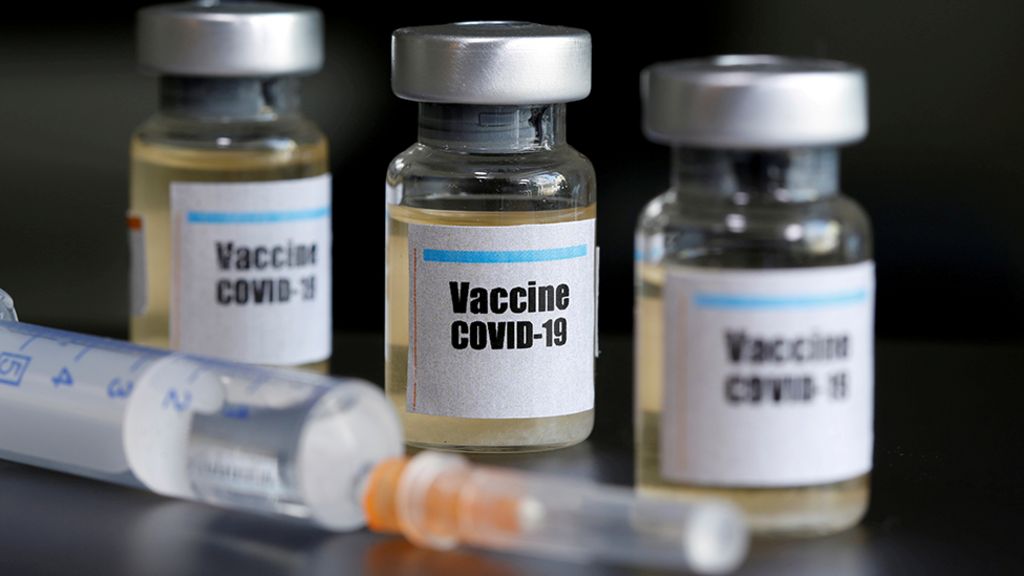
Enugu, Ebonyi and Anambra state governments last Wednesday, took delivery of the first batch of Oxford-Astra Zeneca COVID-19 vaccines from the National Primary Health Care Development Agency (NPHCDA), at the Akanu Ibiam International Airport, Enugu.
The vaccines for Enugu State, which arrived the Enugu airport about 2:50pm, through Allied Air, were received on behalf of the state government by the Commissioner for Health, Dr. Emmanuel Ikechukwu Obi, the Permanent Secretary of the Ministry, Dr. Ifeanyi Agujiobi, the Executive Secretary, Enugu State Primary Healthcare Development Agency, Dr. George Ugwu, and heads of Development Partners in the state, such as World Health Organis-ation (WHO) and UNICEF, among others.
Speaking to newsmen, the Enugu State Health Commissioner, Dr. Obi, said that the state government feels highly delighted that the long-awaited vaccines have arrived the state.
Dr. Obi said that the state’s health sector is grateful to the Federal Government, its agencies especially the NPHCDA, the Enugu State government, its Development Partners, and all those that have made it possible, stressing that “seeing and touching is believing”.
He stressed that it was a thing of joy that one of the measures for stemming the tide of COVID-19 has arrived Enugu State, adding that “the contingents to receive Enugu State’s vaccines are all on ground”.
The Health Commissioner therefore encouraged the people of Enugu State that “this is real; this is a measure against COVID-19; it is here to stay and our people should embrace these measures that are being used to stem the tide of COVID-19”.
Disclosing that the Enugu State government has provided the needed logistics for administering the vaccines, such as health personnel, security and storage facilities, the Commissioner advised residents of the state not to relent in strictly observing other precautionary measures for the containment of the pandemic such as use of facemasks, washing of hands with soap and running water and observing of social distancing.
He, however, revealed that vaccination will take place in four phases, explaining that the first phase will be administered effectively to health frontline workers, elderly people with underlying illnesses, and some key stakeholders in the state, among others “as already identified and announced in the news”.
Dr. Obi assured that all those who are qualified to receive the vaccines will be vaccinated at the end of the four phases, pointing out that “it is free of charge”.
Also speaking, the Executive Secretary of Enugu State Primary Health Care Development Agency, Dr. Ugwu, reassured that the agency is ready and has the necessary cool-chain equipment to deliver the vaccines to the citizens of the state.
By: Canice Amadi, Enugu


Continue Reading

The Renewable Energy Association of Nigeria (REAN) says it has strengthened collaboration with the Standards Organisation of Nigeria (SON) to enhance quality control and enforcement frameworks.
Mr Oisereime Lloyd-Dietake, the Head of Communications, REAN, in a statement on Tuesday in Abuja, said the collaboration would also involve stakeholder engagement on testing, certification and capacity building in Nigeria.
He said the synergy would strengthen quality control and enforcement frameworks, promote policy alignment, and ensure stronger regulation across the renewable energy value chain.
“REAN reaffirms its commitment to standardisation and quality assurance; tighter collaboration with SON is critical to eliminating fake and substandard renewable energy products from the Nigerian market.
“Enforcement and gaps in existing standards have continued to allow inferior products to circulate, undermining consumer confidence and slowing sector growth.”
Lloyd-Dietake said that at high-level discussions, REAN also highlighted the need for stronger regulatory coordination to address emerging challenges in the renewable energy space.
According to him, the issues include inconsistencies in standards, affordability issues linked to certification processes; and the increasing presence of substandard solar and renewable energy equipment in the country.
“The association further raised concerns about delays in product testing and approval, calling for the establishment of more testing laboratories and certification facilities to improve efficiency and reduce bottlenecks in the system,’’ he said.
Lloyd-Dietake urged closer collaboration among key regulatory bodies, including the Nigerian Electricity Management Services Agency, the Nigerian Electricity Regulatory Commission, and the Rural Electrification Agency.
He said such team work would ensure harmonised standards and more effective enforcement against fake renewable energy products in the Nigerian market.
In response, SON acknowledged the important role REAN continued to play in supporting standardisation within Nigeria’s renewable energy industry and reaffirmed its willingness to deepen collaboration with the association.
SON further confirmed that REAN would be actively involved in future standard review processes and upcoming stakeholder engagements related to renewable energy and electric mobility standards development.
Lloyd-Dietake said REAN affirmed its willingness to formalise the partnership through a Memorandum of Understanding (MoU).
He said the MoU is aimed at deepening cooperation, promoting quality assurance, and accelerating Nigeria’s transition towards reliable and standardised renewable energy solutions.
The WASH Systems for Health (WS4H) Programme, implemented by Self Help Africa, has expanded access to safe water and sanitation services for more than 320,000 people in Kano and Cross River States.
The organisation disclosed this on Tuesday at the WS4H National Results and Learning Workshop in Abuja, where stakeholders reviewed achievements and lessons from the intervention.
Speaking at the event, Self Help Africa Country Director, Joy Aderele, said the programme demonstrated that sustainable WASH improvements require strong institutions, effective governance, adequate financing and collaboration.
Aderele said the UK-funded programme was designed to strengthen systems that support sustainable access to water, sanitation and hygiene services.
According to her, the intervention focused on improving governance, planning, financing, accountability and sector coordination to ensure resilient service delivery.
“More than 320,000 people now have improved or restored access to water services through programme-supported interventions,” she said.
She added that more than 5,520 household toilets were constructed in Yala and Makoda Local Government Areas, boosting sanitation, public health and efforts to end open defecation.
Aderele said the programme also strengthened public investment in WASH, with Cross River increasing its sector budget by 211 per cent in 2026 and Kano by 169.07 per cent.
She added that dedicated WASH budget lines had been established across 40 Ministries, Departments and Agencies in both states, strengthening accountability and institutional commitment.
According to her, both states reviewed and adopted updated WASH policies, while key planning documents were developed to guide future investments and service delivery.
She said Cross River also recorded a major legislative milestone through the passage of the Water Law and Open Defecation Prohibition Bill.
Aderele added that lessons from interventions in Yala LGA were already informing expansion efforts in Obubra Local Government Area.
While commending the achievements, she noted that capacity gaps, resource constraints and climate-related pressures remained challenges to sustainable WASH services.
“The sustainability of these gains will depend on continued government leadership, adequate financing, strong partnerships and investment in institutional capacity,” she said.
Also speaking, the Programme Manager of WS4H, Mr Timothy Ibeawuchi, said the intervention focused on strengthening systems needed to sustain gains and attract future investments.
According to him, the programme engages stakeholders in developing strategies that preserve achievements and support long-term service delivery.
“System strengthening work takes time because it addresses the fundamental issues responsible for sustainable and resilient service delivery,” he said.
Ibeawuchi said the programme strengthened policy development, planning, financing, monitoring and evaluation systems across the WASH sector.
He said two pilot local government areas were supported to develop WASH strategic plans outlining sector goals, targets and activities between 2026 and 2030.
According to him, the plans will guide future interventions and improve service delivery in the affected councils.
Earlier, the representative of the UK Foreign, Commonwealth and Development Office (FCDO), Chidera Chukwu, reaffirmed support for Nigeria’s development efforts in spite of the programme nearing completion.
Chukwu commended the Self Help Africa-led consortium for delivering the programme with professionalism and a strong focus on systems strengthening.
He said the consortium contributed greatly to strengthening Nigeria’s WASH sector through policy reforms, improved coordination and enhanced accountability.
“Together, we have advanced key policy and legislative reforms, including open defecation-free laws and strengthened state WASH frameworks,” he said.
According to him, the reforms represent enduring system-level changes that will continue delivering benefits beyond the programme’s lifespan.
In his remarks, Mr Jamilu Habu, Director of Water Quality Control and Sanitation, Federal Ministry of Water Resources and Sanitation, commended the programme’s achievements.
Habu, who represented the Permanent Secretary, said the intervention strengthened governance, coordination, evidence-based planning and institutional capacity in the WASH sector.
He described the workshop as an opportunity to review achievements, share lessons and identify pathways for sustaining and scaling successful interventions.
According to him, the programme’s innovations and best practices will guide future policies and investments aimed at expanding access to safe WASH services.
Habu stressed the need for continued collaboration among governments, development partners, civil society organisations, the private sector and communities.
He said stronger partnerships remained essential to achieving universal access to water, sanitation and hygiene services and meeting Sustainable Development Goal 6.
-
Rivers1 day ago
Rivers Police Uncovers Firearm Concealed In Loaf Of Bread
-

 Niger Delta1 day ago
Pro-Chancellor Hands Over Okey Onuchuku Peace, Conflict Institute Building
-

 News1 day ago
Fubara Reaffirms Commitment To Blue Economy, Private Sector Growth …Calls For Protection Of Marine Resources
-
Sports1 day ago
Six Nigerians To Play For NBA Teams
-
Business1 day ago
Gas Economy: Decade of Gas, Pi-CNG/ EV Deepen Media Engagement
-
Business1 day ago
Navy Nabs 13 Black Sand Miners In Bayelsa –Impound Two Boats
-
 Business1 day ago
IPMAN Raises Concern Over Delay In Chinese Refinery Deal …Predicts Lower Fuel Prices Through Competition
-

 Politics1 day ago
Senate Defends Passage Of State Police Bill