
News
WTO Finalists: I Made It With Your Support, Okonjo-Iweala Thanks Nigerians

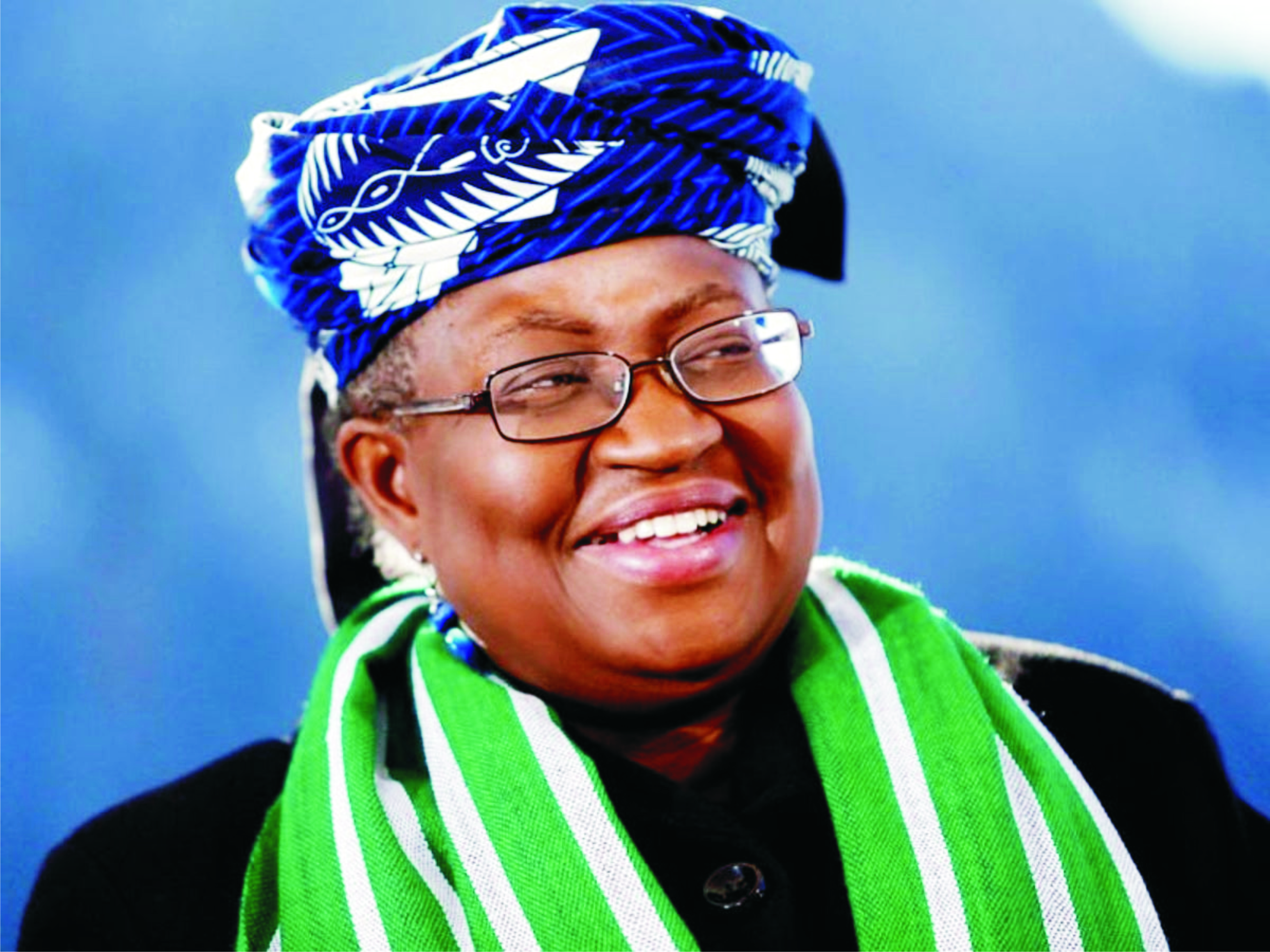
The former Finance Minister, Dr Ngozi Okonjo-Iweala, has appreciated Nigerians for supporting her bid for the job of director-general of the World Trade Organisation (WTO).
Okonjo-Iweala, who made to the third and final stage of the selection process,yesterday, said she could not have made it without the prayers and support of all Nigerians.
Reacting via her verified Twitter handle, she wrote, “Happy to be in the final round of the @WTO DG campaign. Thanks, WTO members for your continued support of my candidacy.
“I could not have made it without the prayers and support of all Nigerians and friends around the world. Thank you @MBuhari and all my friends. Aluta continua!”
The General Council Chair, David Walker of New Zealand and his co-facilitators in the selection process, disclosed that Okonjo-Iweala and Yoo Myung-hee of the Republic of Korea have advanced to the final round of consultations which will determine the next WTO DG.
Walker explained that the two candidates “secured the broadest and deepest support from the membership” and they are of “outstanding qualifications.”
He emphasised that the ultimate objective of the selection process is to secure a consensus decision by members on the next director-general.
“Our aim continues to be to encourage and facilitate the building of consensus among members, and to assist in moving from this final slate of two candidates to a decision on appointment. As this is the final round of the consultation process, it should bring us to the point where we can make a recommendation to the General Council concerning that decision,” Walker said.
“On behalf of the entire membership, I would like to express deep gratitude for their participation in this selection process. It was clear that members consider them individuals of outstanding qualifications. I am sure you will all agree with us that in participating in the selection process, the candidates have all made a significant contribution to the standing and image of the WTO,” he told reporters in Geneva, yesterday.
By advancing two women to the final round of the selection process, the WTO is set to have the first female director-general in its 25-year history.
Okonjo-Iweala served two stints as Nigeria’s finance minister and one term as foreign affairs minister.
She has experience working at international governance bodies as a former managing director of the World Bank, and as a chairman at the Global Alliance for Vaccines and Immunization.
Myung-hee is South Korea’s trade minister.
During her 25-year career in government, she helped to expand her country’s trade network through bilateral accords with the United States, China and the United Kingdom.
The third and final phase of the consultation process will begin later this month and run until November 6, after which the WTO will name a consensus winner of the race.
The General Council is the highest decision-making body of the WTO apart from the Ministerial Conference which meets every two years.



The Rivers State House of Assembly has approved the 2026–2028 Medium Term Expenditure Framework (MTEF) submitted by Governor Siminalayi Fubara.
This reaffirms the lawmakers’ commitment to enacting laws and taking legislative actions geared towards the overall development of the State.
The Assembly gave the approval during its Second Legislative Sitting of the Fourth Session held last Friday.
Speaking on the MTEF document during plenary, the House Speaker, Rt. Hon. Martin Amaewhule, noted that by the provision of Section 10(1)(b) of the Rivers State Fiscal Responsibility Law No. 8 of 2010, the MTEF ought to have been laid before the House in September 2025.
Amaewhule explained that traditionally, the document is expected to be presented four months before the commencement of the next financial year and immediately after the expiration of every three-year fiscal cycle.
He, however, stated that in the interest of the State and its people, the House considered it necessary to deliberate on the document, describing it as a precursor to the 2026 Budget Estimates.
The Speaker expressed concern that the year had already progressed significantly before the presentation of the framework.
During deliberations on the document, members examined the assumptions and projections contained in the MTEF and observed that strict adherence to the outlined fiscal parameters would ultimately serve the interest of Rivers people.
The lawmakers maintained that effective implementation of the framework would promote prudent financial management and enhance developmental planning across the State.
Following the debate and positive consideration by members, the Speaker put the question to the House and members voted overwhelmingly in support of the approval of the MTEF.
Meanwhile, during the same sitting last Friday, the House also received a petition from the Chairman of Obio/Akpor Local Government Council, Dr. Gift Worlu.
The petition was presented by the member representing Obio/Akpor Constituency II, Hon. Emilia Amadi.
According to the petition, concerns were raised over an imminent security breach, threats to lives, destruction of property and alleged forceful takeover of property by some lawless persons within parts of the Local Government Area.
Presenting the petition before the House, Hon. Amadi appealed to the lawmakers to revisit the matter and take necessary steps aimed at safeguarding lives and property in the affected communities.
The House is expected to further deliberate on the petition and consider measures to address the concerns raised in order to sustain peace and security in the area.
King Onunwor
News
Fubara Reaffirms Commitment To Blue Economy, Private Sector Growth …Calls For Protection Of Marine Resources


The Rivers State Government has reaffirmed its commitment towards fostering private sector-driven economic growth and harnessing the vast opportunities within the blue economy to drive national development.
Rivers State Governor, Sir Siminalayi Fubara, made this known during the opening ceremony of the 2026 Annual General Meeting and Conference of the Nigerian Association of Chambers of Commerce, Industry, Mines and Agriculture (NACCIMA), held in Port Harcourt, last Thursday.
Represented by his deputy, Prof. Ngozi Odu, Governor Fubara described the conference theme, “The Gulf of Guinea and Blue Economy: Pathways to Trade, Investment and Security Towards a $1 Trillion Economy,” as both timely and strategic.
?
?The governor welcomed the leadership of NACCIMA, delegates from the 115 Chambers of Commerce across Nigeria, members of the diplomatic corps, captains of industry, investors, and other distinguished guests to Rivers State.
?
?He commended the National President of NACCIMA, Engr. Jani Ibrahim, for choosing Rivers State as the host of the 2026 conference, noting that the decision had drawn national attention to the immense economic opportunities embedded in the blue economy.
?
?Fubara stated that the blue economy possesses the capacity to generate revenue that could surpass earnings from the oil and gas sector if properly developed and managed.
?
?He stressed the need for Nigeria and other countries along the Gulf of Guinea to take deliberate steps toward maximizing the benefits of their maritime resources while guarding against the continued exploitation of coastal assets by foreign operators.
?
?Expressing concern over the activities of foreign fishing trawlers operating in Nigerian waters, the governor noted that many harvest seafood resources without making meaningful economic contributions to the country.
?
?He emphasized the need for stronger monitoring mechanisms and enhanced protection of Nigeria’s marine resources.
?
?”We must wake up and hit the ground running. If we do not capitalize on and utilize our blue economy, other nations will utilize it for us,” he stated.
?
?The governor thanked NACCIMA for what he described as a timely wake-up call on the importance of the blue economy and maritime security, adding that the successful hosting of the conference in Rivers State demonstrates the state’s safety, hospitality, and readiness for business and investment.
?
?Earlier in his remarks, the President of NACCIMA, Engr. Jani Ibrahim, expressed appreciation to the Rivers State Government for hosting the 66th Annual General Conference of the Association and for the warm reception accorded delegates.
?
?He noted that the state’s commitment to hosting the conference reflects its readiness for business and has helped restore investors’ confidence in its economic potential.
?
?According to him, NACCIMA highly values the cordial relationship between the Rivers State Government and the organized private sector, emphasizing that the association remains the foremost voice of the Nigerian business community.
?
?In her welcome address, the President of the Port Harcourt Chamber of Commerce, Industry, Mines and Agriculture (PHCCIMA), Dr. Chinyere Nwoga, described the conference as a historic milestone, noting that it was the first time in the Chamber’s 66-year history that it was hosting the national body of NACCIMA.
Nwoga commended the national leadership for entrusting PHCCIMA with the hosting rights and pledged the Chamber’s continued commitment to advancing the objectives of the association and promoting sustainable economic growth through private sector engagement.

Rivers State Governor, Sir Siminalayi Fubara, has ordered a complete seal-off of the site of a five-storey building which collapsed last Wednesday, killing one person and injuring several others in Port Harcourt.
Fubara gave the order during his visit to the site of the collapsed building last Thursday to assess the situation.
He said the site will remain “completely sealed off” until the government gets to the “root cause” of the incident.
He described the incident as unfortunate but observed that preliminary investigation had shown that the developer had earlier refused to subject his site to inspection by the state authorities and comply with the necessary building regulations.
The governor, who inspected the site alongside the Commissioner for Physical Planning and Urban Development, Sir Amairigha Edward Hart, and the Permanent Secretary of the Ministry of Special Duties, Dabite Sokari George, explained that he couldn’t visit the site the previous day because he was awaiting formal briefing from the relevant agency of government on the situation.
“We’re here to see for ourselves the very unfortunate incident that took place here. I didn’t come yesterday because I wanted to get the report first, and the Commissioner did brief me that the incident site, first, is not as claimed by the developer, that it’s not under the jurisdiction of the state; that it’s under the jurisdiction of the Federal Housing Authority.
“He also informed me that when the project was ongoing, they came here severally to inspect what was happening and also to see the level of compliance. But unfortunately, that the developer kept claiming that we don’t have any right to interfere,” he said.
Fubara said that the issue was no longer about interference but about the life lost to the building collapse and the collateral damage brought upon the family of the deceased.
He extended condolences to the families of the victims, insisting that the incident could have been avoided if the developer had complied with the rules guiding the engineering design and construction of such a structure in the 21st century.
“We feel very sorry and very regretful that such an incident should be happening in this 21st century because technology has advanced, engineering has developed. I wonder what kind of engineer would even allow this kind of project to go on when everything about it from inception has been faulty.
“I think that at this point, nothing is going to happen on this site any more. We are going to make sure that this place is completely sealed off until we get to the root cause of this incident,” the governor said.
-
Rivers2 days ago
Rivers Police Uncovers Firearm Concealed In Loaf Of Bread
-

 Niger Delta2 days ago
Pro-Chancellor Hands Over Okey Onuchuku Peace, Conflict Institute Building
-
Sports2 days ago
Six Nigerians To Play For NBA Teams
-

 News2 days ago
Fubara Reaffirms Commitment To Blue Economy, Private Sector Growth …Calls For Protection Of Marine Resources
-
Business2 days ago
Gas Economy: Decade of Gas, Pi-CNG/ EV Deepen Media Engagement
-
Sports2 days ago
NPFL Warns Newly Promoted Clubs
-
 Business2 days ago
IPMAN Raises Concern Over Delay In Chinese Refinery Deal …Predicts Lower Fuel Prices Through Competition
-

 Politics2 days ago
Senate Defends Passage Of State Police Bill