
Featured
Banditry, Killings In Nigeria: Don’t Deny Seriousness Of Glaring Facts, Anyaoku Tells Buhari …As Jonathan, Senate Back Obasanjo’s Call For National Security Summit …Buhari’s Leadership, Pushing Nigeria To Anarchy -CUPP …Miyetti Allah’s Demand For Obasanjo’s Arrest Nauseating -N’Delta Agitators

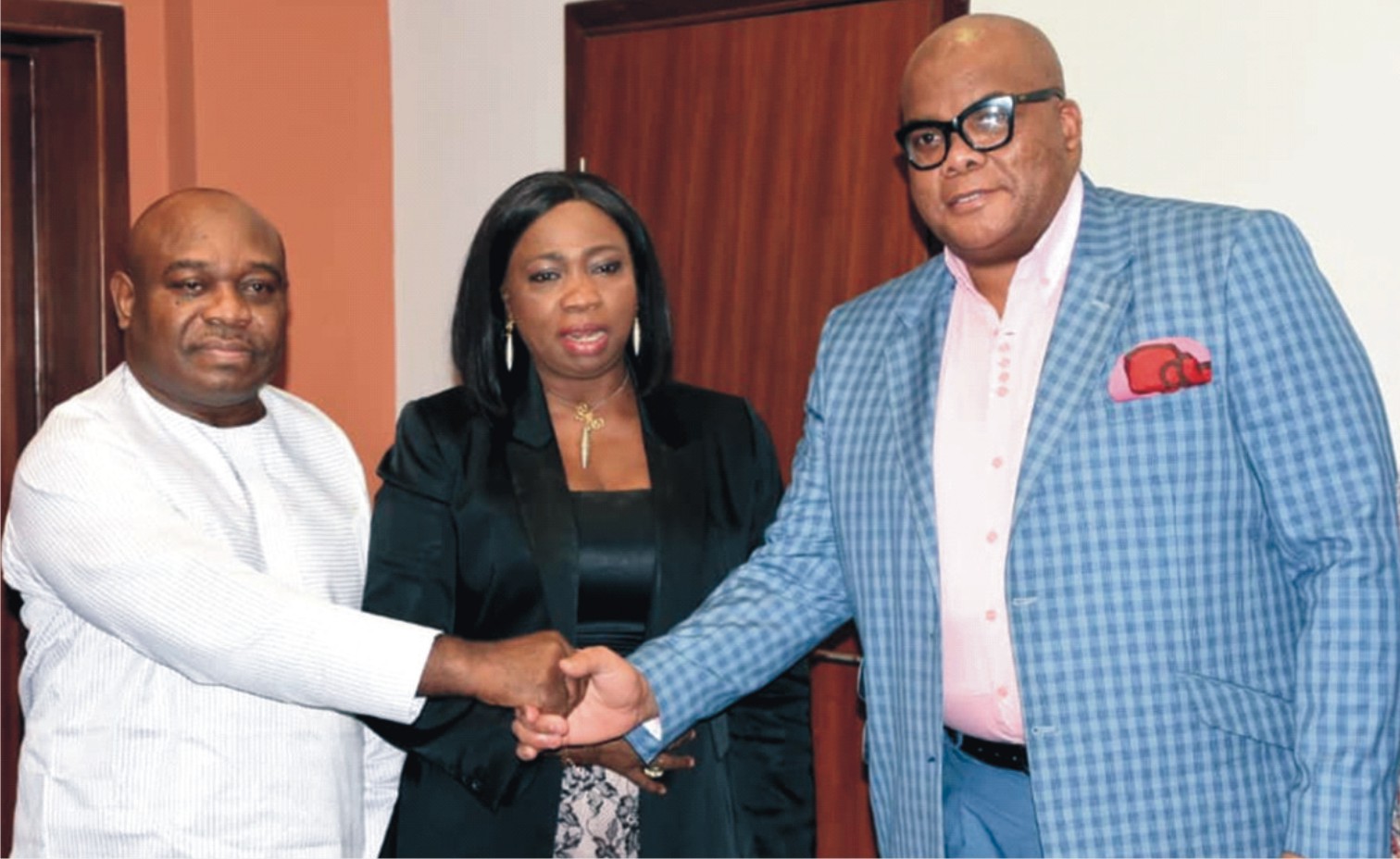
Former Secretary-General of the Commonwealth, Chief Emeka Anyaoku, has sent a blunt message to President Muhammadu Buhari and members of the National Assembly to the worsening security situation in the country and asked them to do something urgently to arrest the drift before Nigeria fails.
Anyaoku, who spoke at a book launch in honour of a former judicial icon, Justice Dadi Onyeama, in Abuja yesterday, pointed out that the emerging scenarios in the land were ominous signs that needed to be checked without further delay.
Anyaoku said: “Let me now come to my message to President Buhari and all members of our National Assembly. The message is two-faced: Nigeria is on the brink, and our foremost national challenge is the management of our country’s diversity.
“Every diverse federal country throughout the world achieves political stability and socio-economic development through successfully managing its national diversity. There are two common keys to this. The first is having an inclusive central government which gives the peoples of the component parts of the federation a sense of belonging that in turn underpins the sense of unity and patriotism in all the citizens.
“The second is having an adequate delegation of powers to the federating units to enable them to handle their internal security and significant aspects of their socio-economic development.
“However today, Nigeria is on the brink. For no objective observer, including those in the government, can deny that the current state of affairs in our country is extremely worrisome.
“We see an unprecedented diminution of national unity; we see an unprecedented level of insecurity of life and property with kidnappings and killings of human beings occurring virtually every day in many parts of the country including the seemingly unchecked violence by Fulani herdsmen which has spawned fractious controversies over the proposed Ruga policy by the federal government.
“For the sake of peace and integrity of the country, the Ruga policy must be handled with circumspection and strictly in accordance with our extant constitution’s provisions on the land tenure.
“And, we see that all these unwholesome developments are accompanied by a worsening level of poverty that is leading to Nigeria fast becoming the poverty capital of the world.
“I call on our president, the members of the National Assembly, the governors, and indeed, on all our political elites not to continue to live in denial of the seriousness of these glaring facts, if not effectively addressed, are bound to push the country over the brink of a national disaster.
The former Commonwealth scribe said that Nigeria is already blessed with what is needed to tackle the security challenges before they get out of hand.
“Fortunately, to provide insightful governance which would facilitate effective tackling of these challenges, Nigeria does not need to reinvent the wheel. If only the people in government and all concerned would learn from our history, thereby avoid validating the saying by the German philosopher, Friedrich, Hegel that “the only thing we learn from history is that we learn nothing from history”.
“Because it is undeniable that Nigeria’s history has demonstrated that the economy attained a greater sense of national unity and faster progress in socio-economic development during its period as a true federal of more viable federating units with greater devolution of powers to them. The period was in the immediate years after the country’s independence under its 1960/63 constitutions.
“As I have stated on many occasions, I believe that the current travails of Nigeria will more effectively tackle if the country’s diversity is managed with a structure of governance that draws not only from the present lessons of successful diverse federations but more importantly, from Nigeria’s own past happier experience during its immediate post-independence years.
The author of the book: Dadi, the Man, the Legend, was written by Dillibe Onyeama and presented today at the Yar’Adua Centre Abuja.
Meanwhile, the former President, Dr. Goodluck Jonathan, yesterday, paid a condolence visit to the leader of the pan-Yoruba socio-political organisation, Afenifere, Pa Reuben Fasoranti over the death of his daughter, Mrs Funke Olakunrin.
Olakunrin was reportedly killed along Ore-Shagamu Expressway by some hoodlums suspected to be Fulani herdsmen, last Friday.
Speaking with journalists, Jonathan described the incident as a painful occurrence to the whole country.
He also described the murder of Olakunrin as an act of terrorism.
Jonathan called on the federal and state governments to be more proactive on the issue of insecurity in the country.
He said, “Every generation of human being face problems and that generation must find ways of solving that problem. Every government faces some unique problems. Insecurity has been with us immediately after the civil war. That was the first time we experienced armed robbery in Lagos. From armed robbery, it graduated to kidnapping.
“The first major kidnapping was described as commercial kidnapping because some money exchanged hands. This happened in 2006 when I was governor of Bayelsa State. From commercial kidnapping, it moved to terrorism in the North and now some kind of terrorist attacks are all over the country when people will just come out of the road and spray bullets on innocent people. That is a terrorist attack. You have no reason to attack somebody you don’t even know, that is terrorism.”
While calling on the Federal Government to implement the report of the 2014 confab, Jonathan said some of the recommendations in the report dealt with the issue of security and the government should apply the recommendations.
The former President stated, “In 2014 when I was president, we had a national conference where a number of things were discussed. The issues of security; state and regional police were discussed.
“I always believe that if the government looks into that report; because it was not written by me, so we should not play politics with national issues. If we look into that report, there are recommendations.
“A lot of things were discussed during the national conference organized during my time as president. The issue of security, state and community policing were discussed. I always believe that the government should look at that report, it was not written by me.
“We should not play politics with a serious national issue. If we look at that report, there are recommendations that bother on security and if there is an area that needs to be expanded because I believe everyday new idea comes, it should be updated.
“There is nothing wrong holding a specific meeting to look at the issue of security. I believe the federal and state governments need to have a new approach, deploy technology and have more money to protect our people.”
He also charged the security operatives in the country to deploy technology to fight insecurity, saying there was a need for the Federal Government to set up a special unit that would specifically tackle insecurity in the country.
“I was there as a President for some time, security challenges were there with me, I also inherited some. But it is getting worse every day. And we cannot continue to use the same old method,” he charged.
Meanwhile, the Senate, yesterday, called on the Federal Government to immediately convene a National Security Summit to address the insecurity ravaging the country.
It would be recalled that President Olusegun Obasanjo had made this call in an open letter to President Muhammadu Buhari, last Monday.
The call followed a point of order raised by Sen. Ayo Akinyelure (APC-Ondo), over the killing of one his constituents, Mrs Funke Olakunrin.
Olakunrin, daughter of Pa Reuben Fasoranti, a leader of the Afenifere Group, was shot dead by gunmen along the Akure-Ore Road in Ondo State, last Friday.
Akinyelure expressed concern over the killing and similar ones, which he described as “increasing and incessant murder of innocent Nigerians by gunmen along major highways in the country.”
He also cautioned that if immediate actions were not taken, the development might lead to ethno-religious crisis, especially in the Southern part of the country.
While urging the Senate to observe a minute silence in memory of the deceased and others who died in similar circumstances, he said the attention of the Federal Government should be drawn to the situation.
Also, Sen. Tolu Odebiyi (APC-Ogun) called on the Senate as an institution to sit down with the Presidency and the security formations in a meeting to take immediate action.
“We have to demand for an action by security forces and the Presidency.
“There’s nothing we do here that is safe if we don’t get our security right. We can’t be coming here every day, mourning and observing one minute silence when Nigerians are being killed.
“As a Senate, we should send a delegation to meet with the Presidency and the security forces to address what is happening.”
However, the Deputy Leader of the Senate, Sen. Ajayi Boroface (APC-Ondo), urged his colleagues to be cautious about linking a particular tribe as perpetrators of the attacks.
“We should approach this matter maturely and encourage the Federal Government to improve on the state of security.
“We should not link a particular tribe with the killings, as being observed in the social media. Yoruba, Igbo, Hausa, Fulani people have all been killed,” he said.
The President of the Senate, Dr Ahmad Lawan, in his submission, equally lamented the situation, which he said was being felt across the country.
He, therefore, said stakeholders should immediately be converged for a robust national security summit to discuss and address the situation.
“The security situation is all over the country. It is very unfortunate just like all our colleagues have said in their contributions.
“We should have one national security summit on this. The summit should be all-
encompassing and all-inclusive, involving other arms of government and various security formations,” he said.
The summit will be coming 17 months after the Eighth Senate organised a similar event where the present President of the Senate, Dr Ahmad Lawan as Senate Leader was the Chairman of the Senate.
Meanwhile, the Senate, in its resolution, “unequivocally” condemned the killings, calling on the Inspector General of Police to extend his dragnet to fish out the perpetrators.
In its reaction, the Coalition of United Political Parties (CUPP) accused President Muhammadu Buhari of dividing the country through his style of leadership.
This came as it asked the president to listen to former President Olusegun Obasanjo and other eminent Nigerians, who have been expressing concerns on the state of the nation with a view to putting the country on the right path.
In a statement, yesterday, by its spokesman, Ikenga Imo Ugochinyere, CUPP alleged that “the unimpressive leadership style of President Muhammadu Buhari has so far led the country to a state of total anarchy and impending disintegration.
“This situation has regrettably led to daily shedding of blood of innocent citizens across the country either in the hands of terrorists, kidnappers, bandits among others”, it added.
Furthermore, a group of Niger Delta agitators, yesterday, dismissed as insolent and infuriating, the call by Miyetti Allah Cattle Breeders Association on the Federal Government to apprehend former President Olusegun Obasanjo over his latest letter to President Muhammadu Buhari, decrying the insecurity in the country.
The Leader of the assembly, 21st Century Youth for Niger Delta and Agitators with Conscience, self-styled “General” Izon Ebi, in a statement, yesterday, said: “It is laughable, very insulting and provocative for a group that is supposed to be proscribed as terrorist issuing such a directive to Nigeria President, who happens to be their patron.
“We are surprised because he has emboldened them with his body language and open defense and support for his people and tribe. How can a primitive and murderous group like the Miyetti Allah talk after committing sacrilege and genocide against the Nigerian people, it still has the audacity to call for the arrest of an elder statesman and patriotic leader like Obasanjo.
“It is the highest joke that cannot be treated with kid-glove. Buhari should know that he is the President of Nigeria, not Fulani or Miyetti Allah. We urge him to do the needful and uphold the Constitution by protecting lives and properties of Nigerians or he should resign before this country collapse finally,” the group added.
It would be recalled that the Peoples Democratic Party (PDP) had last Monday said that former President Olusegun Obasanjo’s open letter to President Muhammadu Buhari on the insecurity has vindicated the party’s position.
Obasanjo, in another open letter to President Buhari, last Monday, lamented about the state of the nation, while calling for urgent actions to tackle Nigeria’s challenges.
Reacting, the PDP, in a statement signed by the National Publicity Secretary, Kola Ologbodiyan, described Obasanjo’s open letter as patriotic and prove that President Buhari has failed as the nation’s chief security officer.
The statement read: “The party notes that President Obasanjo’s letter re-echoes its numerous caution against the violations, insensitivity, impunity, vindictiveness, divisiveness, intolerance and dangerous sectionalism that characterize the Buhari administration and which are jeopardizing our national unity.
“The PDP urges President Buhari to read between the lines and listen to the voice of reason from well-meaning Nigerians at this moment.
“Our party is deeply worried that our nation, which grew in leaps and bounds in all sectors before the All Progressives Congress (APC) took over in 2015, is now dangerously sliding on all fronts under President Buhari, who has shown crass incompetence in managing our national affairs.
“The PDP maintains that had President Buhari heed wise counsel to rejig his parade and respect the wishes and aspirations of Nigerians in the national interest, our nation would not have been on this dangerous bend.
“The fact remains that President Buhari has not demonstrated the capacity to lead a nation as complex as our Nigeria. Events have shown that he cannot handle our diversities and ensure a united and equitable country that guarantees fairness, justice and space to all citizens without fear or favour.
“The PDP, therefore, counsels President Buhari to listen to the pulse of our nation; accept his failure and seek help from other well-meaning Nigerians so as to take back our nation from this imminent precipice.
“The party also calls on all Nigerians across the divides, irrespective of creed, ethnicity and political leaning, to close ranks, eschew all primordial and parochial interests and work together for the stability of our dear nation”.
However, President Muhammadu Buhari, yesterday, took a swipe at those criticising him on the insecurity situation in the country, saying that they were not patriotic.
Former President Olusegun Obasanjo had on Monday written an open letter to President Buhari accusing him of not doing enough to tackle the increasing rate of insecurity in the country among other challenges.
But receiving the National Executives of the Buhari Campaign Organisation (BCO), at the Presidential Villa Abuja, the President said that those criticising the isolated cases of insecurity in the country were not patriotic Nigerians.
According to him, countries around the world were facing one security challenges or the other. He also pointed out that there were new challenges of banditry and kidnapping around the globe.



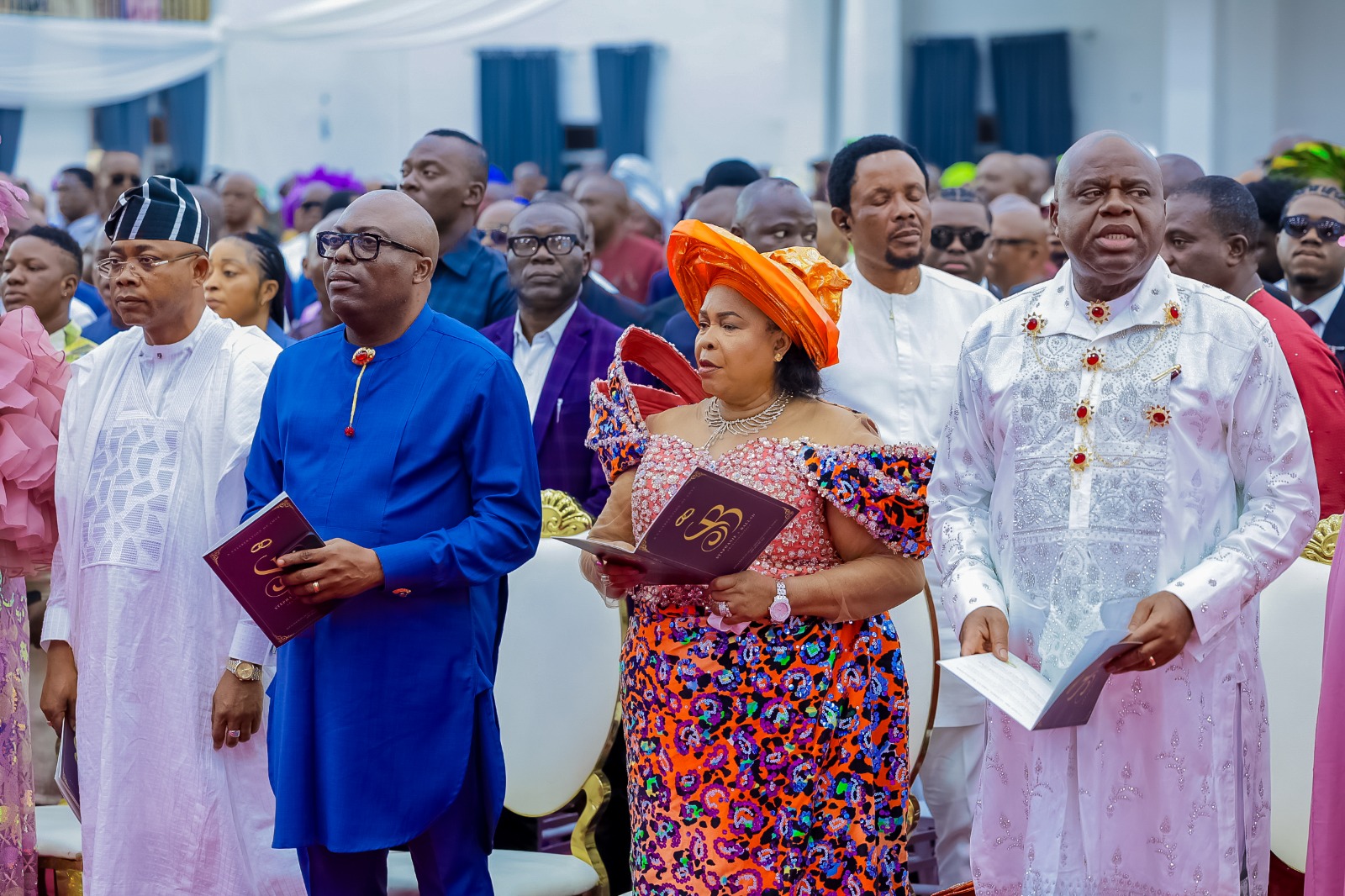
Rivers State, Sir Siminalayi Fubara, has assured members of the National Youth Service Corps (NYSC) of his administration’s commitment to supporting and strengthening the scheme in the State.
Fubara gave the assurance last Friday at the NYSC permanent orientation camp, Nonwa-Gbam, Tai Local Government Area in the State, during the swearing-in ceremony of 2026 Batch B Stream II orientation course.
Represented by the Permanent Secretary, Cabinet Bureau, Office of the Secretary to the State Government, Dr. Promise Oguzie, the governor said the State Government would remain intentional in providing the necessary support to improve the NYSC scheme and enhance the experiences of corps members deployed to the state.
He charged the corps members to be role models and quality nation-builders in their service to the good people of Rivers State in particular, and Nigeria at large.
“I charge you to be exemplary, dedicated and committed in all you do. Take full advantage of all the camp programmes and activities to enrich yourselves”, he said.
In his welcome address, the State Coordinator of NYSC in Rivers State, Mr. Moses Oleghe, urged corps members to see their deployment to Rivers State as a “veritable opportunity to make meaningful contribution to the growth of the State in particular and Nigeria at large.”
He further charged them to serve with all sense of “integrity, discipline, and the fear of God, especially when they will be engaged as INEC ad-hoc staff that will conduct the 2027 general elections.”
A total of 3,584 corps members composed of 1,421 males and 2,163 females were sworn in by the Chief Judge of Rivers State, who was represented by Justice Godspower Aguma.

Governor of Rivers State, Sir Siminalayi Fubara, says Nigeria needs God-fearing leaders for the nation to move in the right direction and make meaningful progress.
The Governor stated this yesterday when he received in audience, the World President of the Seventh Day Adventist Church, Pastor Erton Kohler; his wife, Andriene Marques Kohler; daughter Mariana Marques Kohler and a retinue of ministers of the church at Government House, Port Harcourt.
Fubara who hailed the Seventh Day Adventist Church for its contributions to education and the grooming of future leaders in Nigeria, expressed delight that the Church had over the years, been investing in education at various levels and currently runs two universities in the country.
He commended the church for not only using its institutions to spread the gospel of Christianity but to groom future leaders for the country.
According to him, religion should not be just about defending one’s faith, but also making meaningful impact on the lives of the people.
He said that by floating these educational institutions, the church has demonstrated capacity to support Nigeria in the task of producing not only educated people but a breed of God-fearing leaders.
“Our country is where it is today because we lack the fear of God. If you have the fear of God, there should be a limit to what you can do because you understand the supremacy of God. But when God is not in your equation, you’ll go beyond the line and that is what has brought us to where we are today.
“So, I feel very happy that you are contributing to the development of our future leaders in this country. We need the right people being in the right place; prepared properly with good minds; that is what we need, not just in Nigeria but round the whole world.,” he said.
Governor Fubara further observed that the absence of God-fearing people in high places to take the right decisions that could impact positively on the society, has also given rise to other problems such as social inequality, poverty, corruption and criminality. According to him, Nigeria needs a system where the average parent could afford quality education for their children and a guarantee that upon graduation, the average child will have the capacity to compete favourably with anybody, anywhere in the world.
“If we have a situation where the little money that you’re being paid as wage can also afford you quality healthcare and after working at least for 15-20 years, you have a roof over your head, tell me why you should be involved in any kind of crime? At that point, you’ll feel secured and this attitude of insecurity about the future that leads to all the social vices we have today won’t be there,” he said.
Governor Fubara expressed appreciation to the delegation for the visit and for their prayers for Rivers State, assuring them of his continued support for their programmes in the state.
Leader of the delegation and World President of the Seventh Day Adventist Church, Pastor Erton Kohler said he was in Nigeria for a special conference of the church during which thousands of the church’s ministers will be undergoing an empowerment programme to further equip them for the task of herding their flocks and serving the society.
He expressed gratitude to the Governor for the warm reception accorded his entourage, saying the memory of the visit will linger in his mind for a lifetime.
Kohler disclosed that the Church has over twenty -four million (24,000,000) members and more than 182,000 places of worship, spread across 212 countries of the world.

The Rivers State House of Assembly has approved the 2026–2028 Medium Term Expenditure Framework (MTEF) submitted by Governor Siminalayi Fubara.
This reaffirms the lawmakers’ commitment to enacting laws and taking legislative actions geared towards the overall development of the State.
The Assembly gave the approval during its Second Legislative Sitting of the Fourth Session held last Friday.
Speaking on the MTEF document during plenary, the House Speaker, Rt. Hon. Martin Amaewhule, noted that by the provision of Section 10(1)(b) of the Rivers State Fiscal Responsibility Law No. 8 of 2010, the MTEF ought to have been laid before the House in September 2025.
Amaewhule explained that traditionally, the document is expected to be presented four months before the commencement of the next financial year and immediately after the expiration of every three-year fiscal cycle.
He, however, stated that in the interest of the State and its people, the House considered it necessary to deliberate on the document, describing it as a precursor to the 2026 Budget Estimates.
The Speaker expressed concern that the year had already progressed significantly before the presentation of the framework.
During deliberations on the document, members examined the assumptions and projections contained in the MTEF and observed that strict adherence to the outlined fiscal parameters would ultimately serve the interest of Rivers people.
The lawmakers maintained that effective implementation of the framework would promote prudent financial management and enhance developmental planning across the State.
Following the debate and positive consideration by members, the Speaker put the question to the House and members voted overwhelmingly in support of the approval of the MTEF.
Meanwhile, during the same sitting last Friday, the House also received a petition from the Chairman of Obio/Akpor Local Government Council, Dr. Gift Worlu.
The petition was presented by the member representing Obio/Akpor Constituency II, Hon. Emilia Amadi.
According to the petition, concerns were raised over an imminent security breach, threats to lives, destruction of property and alleged forceful takeover of property by some lawless persons within parts of the Local Government Area.
Presenting the petition before the House, Hon. Amadi appealed to the lawmakers to revisit the matter and take necessary steps aimed at safeguarding lives and property in the affected communities.
The House is expected to further deliberate on the petition and consider measures to address the concerns raised in order to sustain peace and security in the area.
King Onunwor
-

 News4 days ago
RSG Targets Nine Million Residents in Mosquito Net Distribution Campaign
-

 Oil & Energy4 days ago
Aiyedatiwa Signs New Electricity Bill
-

 Oil & Energy4 days ago
NLNG Commissions Research And Innovation Centre In RSU
-

 Maritime4 days ago
Marine Minister Commends President Tinubu On NPERA Bill Assent
-

 News4 days ago
KenPoly Holds Eight Convocations, August 29
-

 News4 days ago
RSG Begins Another Phase of Projects Commissioning Today
-

 News4 days ago
RMAFC Completes Revenue Sharing Review, Proposes New Pay
-

 Maritime4 days ago
NAGAFF Petitions IGP Over Alleged Maritime Police Harassment