
Featured
Guber Primaries: Crisis Engulfs APC In Lagos, Imo, Others …As Party Declares Sanwo-Olu Winner Of Guber Primary

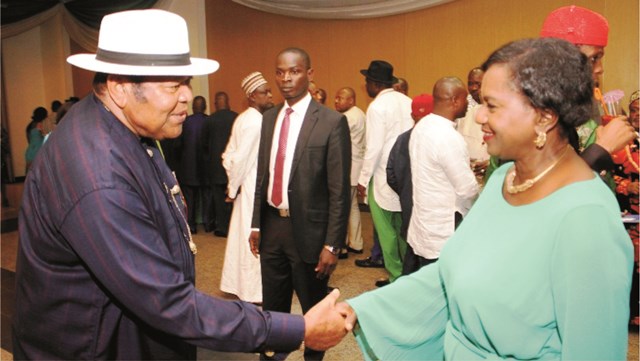
The All Progressives Congress (APC) has found itself in further crisis as party bigwigs flex musles over who picks the governorship ticket of the party in various states.
Delegates and some members of National and State Houses of Assembly, yesterday, protested the postponement of Adamawa governorship primary election by the National Working Committee (NWC) of the All Progressives Congress (APC).
The party’s NWC also shifted governorship primaries in Lagos, Zamfara and Enugu states.
A statement issued by the acting National Publicity Secretary of the party, Mr Yekini Nabena, announced the rescheduling of governorship primaries for Adamawa, Enugu and Lagos states.
The governorship primaries for Adamawa and Enugu have been shifted to tomorrow, while those of Lagos and Zamfara hold, today.
In Zamfara, the Chairman of the APC Primary Committee, Dr. Abubakar Dari, said the gubernatorial primary election had been shifted to today after it was postponed from Sunday to yesterday.
It was observed that APC members thronged the primary election centres in Zamfara as early as 7:00am for the election.
Our correspondent reports that delegates who were gathered for the exercise, expressed disappointment over the shift.
Addressing journalists after a stakeholders meeting held at the State Police Command, the committee chairman said the postponement of the election to today was a decision reached by the stakeholders, including all the gubernatorial aspirants of the party.
In Adamawa, the state Governor, Mohammed Bindow, while addressing protesting delegates at Ribadu Square, urged them to take it easy and accept whatever happened as an act of God.
He said, “I want to apologise to you over the development and to thank you for your patience and cooperation as we await further directive from the party.
“I remain loyal to the party and urge every party member in Adamawa to be calm and loyal party member”.
Also speaking, Chairman of House of Representatives Committee on Information, Abdulrazak Namdas, urged the delegates and lawmakers to remain calm, adding that whatever the situation, be it direct or indirect primaries, it is the people of Adamawa that will vote for the candidates of their choice.
“We are not afraid of facing direct or indirect primaries,” Namdas said.
The APC primaries initially scheduled for Sunday ran into a hitch when two of the three aspirants, Mallam Nuhu Ribadu and Dr Mahmood Halilu contesting with Bindow announced their withdrawal over the method of primaries and choice of venue.
In rescheduling the governorship primaries in Lagos, Enugu and Adamawa states, the APC NWC also changed the mode of primaries for Enugu and Adamawa from indirect to direct primaries.
It was learnt that the primaries for Lagos and Imo were earlier slated for Monday.
The National Working Committee of the All Progressive Congress sent from Abuja to monitor the party’s governorship primary in Lagos State has nullified the exercise held across the 20 local government areas of the state, yesterday.
The Chairman of the committee, Mr. Clement Ebri, who addressed the press around 4.30pm at Protea Hotel, Alausa, said the election could not have held because the committee was still expecting the list of representatives of one of the two aspirants.
The primary is being contested by Babajide Sanwo-Olu and the state Governor, Akinwunmi Ambode.
Ebri, however, did not mention the camp that defaulted on the modalities for the election.
He explained that the governorship primary election in Lagos State may be rescheduled.
The committee had earlier dissociated itself from the ongoing primary.
Ebri explained the confusion that trailed the exercise.
“We want a victory that will be credible, and will be in line with the guidelines and rules. We are now ready to do the ground running.
“In the next few minutes, I will contact the national office to inform them that we are now ready for the primary.”
Displaying the result sheet to be used for the primary, Ebri added: “We were waiting for the Lagos APC chairman to provide some information, but it came barely an hour ago.
“We have the electoral materials here but considering the Lagos situation, traffic and all, we will wait on the national office for action.”
When asked what would happen to votes cast all day, he said: “I contacted the national office and I was asked to realign with the position on ground”, before admitting that “we may have to reschedule the exercise”.
The Lagos State Deputy Governor, Dr Idiat Oluranti Adebule, yesterday, abandoned Governor Akinwunmi Ambode to support Mr Babajide Sanwo-Olu in the two-horse race to pick the ticket to represent the All Progressives Congress (APC) in the 2019 governorship election.
Adebule told newsmen at Ward A and D, in Iba Local Council Development Area of Lagos where she participated in the governorship primary of the APC, that she would endorse the candidate chosen by the party.
“The party has chosen a man and it is that man that I will support and follow,” she said.
Sources said that when the deputy governor arrived at the ward, some of her aides came with Sanwo-Olu’s posters and banners.
At the ward, accreditation started at about 10.36 a.m. as party electoral officials arrived.
There was no formal announcement of the results as the accreditation was brief.
Many party members at the venue started singing the praises of Sanwo-Olu.
However, hours after he withdrew from the race, former EFCC chairman, Malam Nuhu Ribadu yesterday made a U-turn and indicated interest to participate in the rescheduled Adamawa APC governorship primary election.
The Director-General, Ribadu campaign organisation, Alhaji Salihu Bawuro, made the announcement at a news conference in Yola. Ribadu withdrew from the primary election on Sunday evening as the exercise was about to start but the exercise was cancelled and rescheduled for Thursday.
Bawuro said the Ribadu campaign organisation was satisfied with the decision taken by the party’s national headquarters on the cancelation and rescheduling of the governorship primaries in the state.
“Now that the national headquarters had intervened to correct the abnormalities surrounding the Sunday’s unsuccessful primaries, Malam Nuhu Ribadu will be in full contest now that it is the direct primaries,’’ Bawuro said.
He said that the organisation was well prepared to participate in the election, adding that it would do everything possible to ensure free and fair primaries.
Meanwhile, the governorship primary election of the All Progressives Congress (APC) in Imo State yesterday witnessed chains of scuffles that led to violence between members of the camp loyal to Rochas Okorocha known as Ugwumba Movement and those of the opposition called Coalition Alliance.
As at press time, two persons were feared killed from the fracas that ensued.
Our correspondent who monitored the exercise observed that there was late arrival of electoral materials at the party secretariat in Okigwe Road.
The party secretariat was besieged by anxious party members, even as party bigwigs stayed back in Abuja and were nowhere to be seen in the state.
At the Uzii layout primary school within Owerri Municipal Council, party members arrived as early as 8:30am for accreditation, which however did not commence till 11am.
In virtually all the wards in the Ohaji/Egbema/Oguta local government areas, irate party members rabidly opposed to the planned imposition of Uche Nwosu as the party’s governorship candidate by Governor Okorocha impounded all vehicles on sight bearing the Ugwumba Movement inscription and diverted them to unknown destination.
In the Mbaitoli local government area where the deputy governor, Prince Eze Madumere, hails from, some vehicles belonging to the movement were reportedly set ablaze.
But as at press time, yesterday, sources said that Senator Hope Uzodinma had emerged winner of the APC governorship primary in Imo State, amid confusion.
In another development, Lagos APC has declares Sawoolu winner of Lagos guber primary. The chairman of the All Progressives Congress, APC, Lagos State Chapter, Alhaji Tunde Balogun has declared Babajide Sanwo-Olu the winner of the Gubernatorial primary election, held Tuesday, across the 245 wards of the 20 Local Government Areas of the state. By this declaration, Sanwoolu has emerged as APC flag-bearer for the 2019 governorship elections in Lagos State.
Balogun, who described the exercise as free, fair and credible, maintained that it would be unfair to disenfranchised the 1.7 million registered members of APC following conflicting reports that has trailed the conduct of the exercise.
The panel of the National Working Committee from Abuja deployed to oversee the conduct of the election earlier denied any knowledge of any conduct of election in the state yesterday.
However, Balogun, announcing the results said, the incumbent Governor Akinwumi Ambode of Lagos State polled a total votes of 72,901, while Sanwoolu polled total votes of 970, 851 to emerge winner of the contest.
He said: “We thank the members for participating in the election to peacefully select APC standard bearer for next year’s election.
“They did this with enthusiasm and dedication To be clear, an APC primary election was held in Lagos and this was in accordance with the party constitution.
“In pursuant to the constitution, it was stated that the primary would be conducted in direct open system where each voters would queue behind their preferred candidate.”
Meanwhile, the National Chairman of the All Progressives Congress (APC), Adams Oshiomhole, yesterday described the results being circulated as the outcome of the Imo governorship primaries as fake. Oshiohmole stated this while fielding questions from State House correspondents after a closed door meeting with President Muhammadu Buhari at the Presidential Villa, Abuja, yesterday.
The APC chairman also revealed that the party had disbanded the Ahmed Gulak-led Committee that conducted the party’s governorship primaries in Imo.
According to him, another committee will be set up immediately for the conduct of fresh primaries in the state before the end of the week.
“Imo was not too good news for today, but not surprising they have to learn to begin to comply with rules, they have two fake results, none of them is genuine.
“We will disband and we will appoint a fresh committee (electoral panel) that will conduct transparent direct primaries that reflect the will of members of APC in Imo regardless of the interest and powers that are behind any of the groups.
“The truth does not require supporters club to stand, it has its hands and legs and we will do just that”. Oshiohmole, who said he was in the villa to update President Buhari on the developments in the APC, ruled out the possibility of honouring parallel results from states.
On the conduct of the APC primaries in Lagos State on Tuesday, the APC chairman disclosed that the National Working Committee (NWC) was in charge of the primaries and that every situation had been put under control.
“ I told the president that the primaries held as planned and everything is being done to ensure there is no violence because democracy doesn’t flourish with violence.
“Nigerians must begin to learn how to differ in opinion and in choice without fighting; this is something people have to acquire over time. “For me, I’m excited that if we can do it in Lagos it can be done anywhere.
“Everything that is being done is done under the control, supervision and direction of the NWC.’’ Oshiohmole maintained that no matter how highly a member may be, he or she must subject himself/herself to the constitution of the party.
It would be recalled that the APC National Working Committee (NWC) panel had yesterday announced the cancellation of the Lagos governorship primary election, saying the preparatory process for the election had just been concluded.
The Chairman of the panel, Chief Clement Ebri, made this known when he spoke at a news conference in Alausa, Ikeja. He said : “The preparatory process had just been concluded for the primaries.
The primary is to begin anytime soon. “There was no election. Election materials are being sorted. “The stage is set and election begins anytime from now. We have guidelines and we will stick to the guidelines.
“Because of the political tension in the state, we decided to be very careful, very methodical. As party men, peace is more important to us than victory. “We want a kind of victory that will be celebrated by both parties.
“We want an election that will be credible and in line with the guidelines, the extant rules and the laws of the country.
“And that is what we have done. We are ready to go to the field and execute this so that at the end of the day, we will not be accused of partisanship. Lagos is very important to us and it is a flagship of the APC.’’



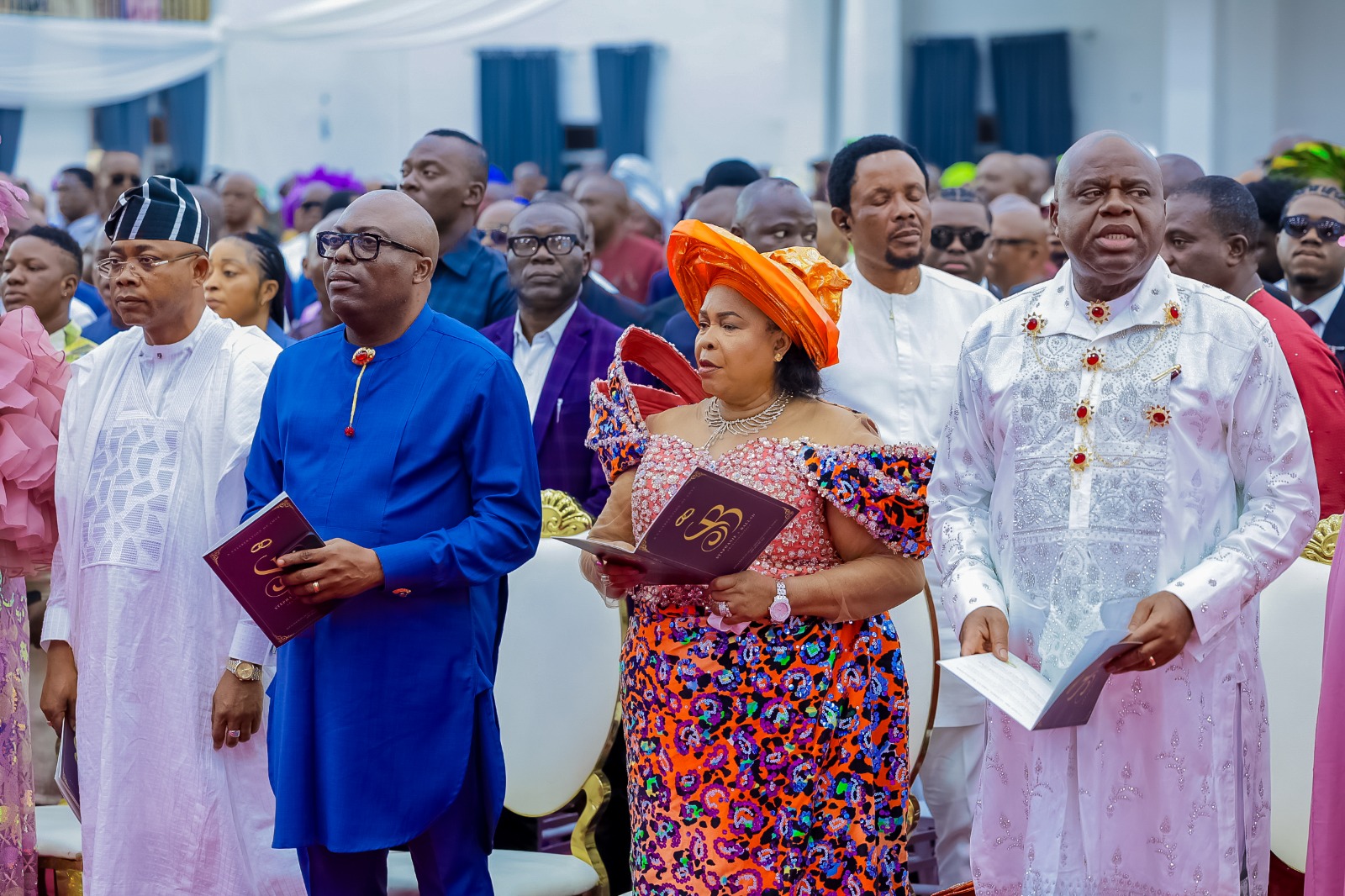
Rivers State, Sir Siminalayi Fubara, has assured members of the National Youth Service Corps (NYSC) of his administration’s commitment to supporting and strengthening the scheme in the State.
Fubara gave the assurance last Friday at the NYSC permanent orientation camp, Nonwa-Gbam, Tai Local Government Area in the State, during the swearing-in ceremony of 2026 Batch B Stream II orientation course.
Represented by the Permanent Secretary, Cabinet Bureau, Office of the Secretary to the State Government, Dr. Promise Oguzie, the governor said the State Government would remain intentional in providing the necessary support to improve the NYSC scheme and enhance the experiences of corps members deployed to the state.
He charged the corps members to be role models and quality nation-builders in their service to the good people of Rivers State in particular, and Nigeria at large.
“I charge you to be exemplary, dedicated and committed in all you do. Take full advantage of all the camp programmes and activities to enrich yourselves”, he said.
In his welcome address, the State Coordinator of NYSC in Rivers State, Mr. Moses Oleghe, urged corps members to see their deployment to Rivers State as a “veritable opportunity to make meaningful contribution to the growth of the State in particular and Nigeria at large.”
He further charged them to serve with all sense of “integrity, discipline, and the fear of God, especially when they will be engaged as INEC ad-hoc staff that will conduct the 2027 general elections.”
A total of 3,584 corps members composed of 1,421 males and 2,163 females were sworn in by the Chief Judge of Rivers State, who was represented by Justice Godspower Aguma.

Governor of Rivers State, Sir Siminalayi Fubara, says Nigeria needs God-fearing leaders for the nation to move in the right direction and make meaningful progress.
The Governor stated this yesterday when he received in audience, the World President of the Seventh Day Adventist Church, Pastor Erton Kohler; his wife, Andriene Marques Kohler; daughter Mariana Marques Kohler and a retinue of ministers of the church at Government House, Port Harcourt.
Fubara who hailed the Seventh Day Adventist Church for its contributions to education and the grooming of future leaders in Nigeria, expressed delight that the Church had over the years, been investing in education at various levels and currently runs two universities in the country.
He commended the church for not only using its institutions to spread the gospel of Christianity but to groom future leaders for the country.
According to him, religion should not be just about defending one’s faith, but also making meaningful impact on the lives of the people.
He said that by floating these educational institutions, the church has demonstrated capacity to support Nigeria in the task of producing not only educated people but a breed of God-fearing leaders.
“Our country is where it is today because we lack the fear of God. If you have the fear of God, there should be a limit to what you can do because you understand the supremacy of God. But when God is not in your equation, you’ll go beyond the line and that is what has brought us to where we are today.
“So, I feel very happy that you are contributing to the development of our future leaders in this country. We need the right people being in the right place; prepared properly with good minds; that is what we need, not just in Nigeria but round the whole world.,” he said.
Governor Fubara further observed that the absence of God-fearing people in high places to take the right decisions that could impact positively on the society, has also given rise to other problems such as social inequality, poverty, corruption and criminality. According to him, Nigeria needs a system where the average parent could afford quality education for their children and a guarantee that upon graduation, the average child will have the capacity to compete favourably with anybody, anywhere in the world.
“If we have a situation where the little money that you’re being paid as wage can also afford you quality healthcare and after working at least for 15-20 years, you have a roof over your head, tell me why you should be involved in any kind of crime? At that point, you’ll feel secured and this attitude of insecurity about the future that leads to all the social vices we have today won’t be there,” he said.
Governor Fubara expressed appreciation to the delegation for the visit and for their prayers for Rivers State, assuring them of his continued support for their programmes in the state.
Leader of the delegation and World President of the Seventh Day Adventist Church, Pastor Erton Kohler said he was in Nigeria for a special conference of the church during which thousands of the church’s ministers will be undergoing an empowerment programme to further equip them for the task of herding their flocks and serving the society.
He expressed gratitude to the Governor for the warm reception accorded his entourage, saying the memory of the visit will linger in his mind for a lifetime.
Kohler disclosed that the Church has over twenty -four million (24,000,000) members and more than 182,000 places of worship, spread across 212 countries of the world.

The Rivers State House of Assembly has approved the 2026–2028 Medium Term Expenditure Framework (MTEF) submitted by Governor Siminalayi Fubara.
This reaffirms the lawmakers’ commitment to enacting laws and taking legislative actions geared towards the overall development of the State.
The Assembly gave the approval during its Second Legislative Sitting of the Fourth Session held last Friday.
Speaking on the MTEF document during plenary, the House Speaker, Rt. Hon. Martin Amaewhule, noted that by the provision of Section 10(1)(b) of the Rivers State Fiscal Responsibility Law No. 8 of 2010, the MTEF ought to have been laid before the House in September 2025.
Amaewhule explained that traditionally, the document is expected to be presented four months before the commencement of the next financial year and immediately after the expiration of every three-year fiscal cycle.
He, however, stated that in the interest of the State and its people, the House considered it necessary to deliberate on the document, describing it as a precursor to the 2026 Budget Estimates.
The Speaker expressed concern that the year had already progressed significantly before the presentation of the framework.
During deliberations on the document, members examined the assumptions and projections contained in the MTEF and observed that strict adherence to the outlined fiscal parameters would ultimately serve the interest of Rivers people.
The lawmakers maintained that effective implementation of the framework would promote prudent financial management and enhance developmental planning across the State.
Following the debate and positive consideration by members, the Speaker put the question to the House and members voted overwhelmingly in support of the approval of the MTEF.
Meanwhile, during the same sitting last Friday, the House also received a petition from the Chairman of Obio/Akpor Local Government Council, Dr. Gift Worlu.
The petition was presented by the member representing Obio/Akpor Constituency II, Hon. Emilia Amadi.
According to the petition, concerns were raised over an imminent security breach, threats to lives, destruction of property and alleged forceful takeover of property by some lawless persons within parts of the Local Government Area.
Presenting the petition before the House, Hon. Amadi appealed to the lawmakers to revisit the matter and take necessary steps aimed at safeguarding lives and property in the affected communities.
The House is expected to further deliberate on the petition and consider measures to address the concerns raised in order to sustain peace and security in the area.
King Onunwor
-
 Sports5 days ago
Arsenal Fans Converge, Interact In PH
-

 Sports5 days ago
SEVEN Countries Qualify for 2027 WOMEN’S W/CUP Play-Off
-

 Sports5 days ago
SWIMMING: Liebmann, Douglass Dismantle World Records
-
 Sports5 days ago
Arokodare Tipped To Shine At Ajax
-
 Sports5 days ago
Fans, ex-internationals demand NFF board overhaul
-
 Sports5 days ago
Falcons Coach Not Afraid Of Sack
-
 Sports5 days ago
No excuses for Man Utd’s performance against Milan – Carrick