
Featured
Galadima, Oshiomhole Draw Battle Line : Buhari’s Govt, Total Failure -R-APC …I Don’t Care About Galadima -Oshiomhole …As APC Lawmakers Move To Dump Party

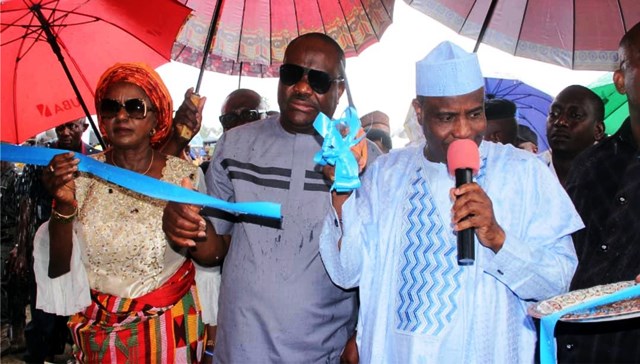
The crisis rocking the ruling All Progressives Congress (APC) has forced the collapse of the Muhammadu Buhari-led party with the announcement of the emergence of the Reformed APC (R-APC), last Wednesday.
An engineer from Gashua, Yobe State, and former secretary of the defunct Congress for Progressive Change, Alhaji Buba Galadima, was introduced as the National Chairman of the group.
He told a press conference at the Sheraton Hotel in Abuja that the R-APC includes all the progressive forces in the APC, without mentioning the names, except the parade of paperweight politicians who were named as ‘officers’.
A major political player, chairman of the New Peoples Democratic Party that had joined the APC in 2014, Alhaji Kawu Baraje, was at the conference.
He said last Sunday in Ilorin that the New PDP would make its stand known this week.
His presence may, therefore, be taken that the R-APC and n-PDP are one and the same.
Galadima, who had expressed frustrations very early in the life of the APC government, claimed members of the R-APC included most of the leading members of the defunct new Peoples Democratic Party (nPDP), Congress for Progressive Change (CPC), All Nigerian Peoples Party (ANPP), Action Congress of Nigeria (ACN) and others.
Galadima recalled that in the build up to the 2015 general elections, some political parties and groups came together, and formed a brand called the APC.
He said Nigerians however entrusted power to the APC based on its promises and potentials.
“We are sad to report that after more than three years of governance, our hopes have been betrayed, our expectations completely dashed
The leadership of the All Progressives Congress, (APC) may have shelved its conciliatory stance towards its aggrieved chieftains who last Wednesday created a parallel group, ReformedAPC, (rAPC).
The aggrieved chieftains made up of members of the new Peoples Democratic Party, (nPDP) the All Nigerian Peoples Party, (ANPP) and the defunct Congress for Progressive Change, (CPC) announced Alhaji Buba Galadima as chairman of the (RAPC).
An indication that the Comrade Adams Oshiomhole-led national working committee was determined to adopt a belligerent position emerged yesterday in a statement issued by its national publicity secretary, Mallam Bolaji Abdullahi.
Meanwhile, Chairman, Kaduna State Reformed All Progressive Congress, R-APC, Col. A. D. Gora (rtd), has stated that the emergence of the factional party was owing to the failure of the ruling party, APC, to meet the yearnings and aspirations of Nigerians.
Briefing newsmen in Kaduna yesterday, the chairman said, “You are all aware of the reasons informing the emergence of the Reformed All Progressives Congress (R-APC) from the All Progressives Congress (APC). You are equally aware of how different political platforms collapsed to form the APC prior to the 2015 general elections. Sadly, the yearnings and aspirations of our people have not come to fruition both at the national level and in our dear Kaduna State in particular.
“Our people entrusted power to the APC based on its promises and potentials. We were made to believe that we were dealing with democrats, and so we entrusted them with our votes, little did we know that we were casting our votes to unleash the worse form of dictatorship on the hapless people of Kaduna State. As far as the politics of the North is concerned, Kaduna remains the bastion of democracy.
“Today, those ideals of democracy which include the right to vote and be voted for in free, fair and credible elections have all been stultified. The votes of the electorates no longer matter as there is no compliance with the Electoral Act.
“The dictatorship and its cronics, apologies and sundry criminally minded characters have arrogated to themselves the power to sit wherever is convenient to them to draw up list of winners of elections which never took place. This was the case with the 3-Man non-elective delegates election, the Ward Congresses and the fraudulent Local Government polls. Fundamentally there can be no democracy without the people. Any politician worth his/her salt must go to the people to seek their votes; anything short of this is fraudulent.
“The schism in the old Progressives Congress began to manifest not long after the swearing-in ceremonies in 2015 when it became apparent that many of the people who invested their time, resources and good will were abandoned in a political wilderness.
“There were complaints, petitions to the APC National Headquarters which were swept under the carpet or shredded, sending a clear message that the petitioners/complainants were no longer required in the Party.
“As a result of disagreements within the party, parallel congresses were held in not less than 24 States namely; Abia, Adamawa, Bauchi, Bayelsa, Benue, Borno, Cross Rivers, Delta, Enugu, Imo, Jigawa, Kaduna, Kano, Katsina, Kebbi, Kogi, Kwara, Lagos, Niger, Ondo, Oyo, Rivers, Sokoto and Zamfara. These Congresses in Wards and Local Governments all over the Federation produced different sets of delegates. We therefore had a situation where the Party was seriously factionalised, in the 36 States and the FCT.
“Article 20(1) of the APC Constitution states, “unless otherwise provided for all party posts prescribed or implied by this Constitution shall be filled by democratically conducted elections”. This was not the case in all the Party elections in the State.
“Even before these illegal exercises, which have alienated many members, there has been widespread disenchantment with the manner the party has run particularly in Kaduna State.
“Perceived opponents of the state government have been systematically been targeted as demonstrated by the demolition of properties of the then APC Vice Chairman, North West Zone along Yakubu Avenue as well as No. 11B Sambo Road Kaduna.”
“The Government believes in intimidating its perceived opponents using rouged elements in the uniform of the security forces, and when it is expedient hired thugs under its pay-roll in this circumstances, who is safe in our State?”
It lamented that the government of El-Rufai seeks to blackmail critics by calling them names that were demeaning, adding that, “The government consistently being saying that the opponents are only seeking that the State funds be shared to them while also accusing them of being power seekers.
“While people oriented projects have been commissioned in other more focused States, there are no such projects which will impact positively on the lives of our people. The campaign slogan of making Kaduna State great again is therefore a huge fraud.”
R-APC observed, “Our followership are fore-warned of the possibilities of more harassment, intimidation and blackmail as a survival strategy by the government but because we are focused we must therefore collectively stand together, so that we can wither the storm.
“The case of Kaduna State is particularly pathetic, given that prominent and founding members of the party in the state including two distinguished Senators were no longer found worthy of consultation in the party and the governance process. The worse form of arrogance has been on display since assumption of office of the present state government. worse of it all, the APC State Executive became an appendage of the state government and therefore rendered ineffectual.
“Our revered traditional rulers have been shown complete contempt, our educational system is in complete chaos and the civil service which used to be the envy of other States is now lying prostrate. Thousands of civil servants sacked without their entitlements paid. The above exemplifies the recklessness of the present government of Kaduna State.”
He assured that the R-APC would work with like-minded political parties and platforms to offer good governance to the people come 2019.
“We will in concert with others offer real change to Kaduna State; we are done with this fake change which the APC has offered to our party, while we despire we are yet hopeful that with you (the people) behind us we shall salvage our Sate and make it truly Great Again,” he assured.
In his reaction, the National Chairman of the All Progressives Congress (APC), Adams Oshiomhole, has said he cannot lose sleep over the breakaway faction of the ruling party.
Oshiomhole, while addressing journalists at the National Assembly after a marathon meeting with the APC caucus in the House of Representatives, described members of the Reformed All Progressives Congress (R-APC) as hired mercenaries.
The former Governor of Edo State said he had been engaging “real stakeholders” of the party, as part of measures of resolving the crisis in APC.
“There is no breakup in our party. If one Galadima is not happy, that is fine. He has a right not to be happy.
“If he chooses to call himself whatever he wants to call himself, that is not the issue. I will not lose my sleep over that. We know those who are in the system. Those who are seeking breakup that is their problem. We are engaging real stakeholders. I mean between the executive and the two arms of the national assembly.
“We have very important influential leaders we are engaging. If people are being sponsored by those who thought our convention will be a failure, those who were expecting implosion, so be it. If you reviewed the headlines before the convention, there were stories like people are going to walk out of the convention; people will boycott the convention.
“In the end, they were shocked to find out the president was seated, the senate president was seated, the speaker was seated and the national leaders were seated. Our chairman was seated. All the governors were seated. They were like what do we do next? If after two weeks of living in pains that they are disappointed, they find mercenaries who are willing to be hired for a purpose, they have right to be hired but will not cause any distraction within the core of APC leaders,” Oshiomhole said.
Similarly, the Senator representing Kaduna North on the platform of All Regressive Congress (APC)a, Sen. Suleiman Hunkuyi has disclosed that his membership of the the All Progressives Congress (APC) is on a very shaky state an end as plans on whether or not he would defect from APC would soon be concluded.
Hunkuyi made this known when he received a delegation of the Peoples Democratic Party(PDP) from Kaduna North.
The Senator who has been having a running battle with his state Givernir , Nasir El – Rufai said he had detailed discussion with the delegation on how to work together to salvage Kaduna State from poor governance.
Hunkuyi and the other two Senators of the state had accused Governor El Rufai of injustice and high handedness.
Hunkuyi had also been attacked at different political fora in the state allegedly by party members who are sympathetic to El-rufai.
His campaign party office was also allegedly destroyed by the state government.
Senate’s non-approval of a foreign loan of 350 million dollars request by the state further affected the already strained relationship between the governor and the lawmaker.
Responding to questions from pressmen after the meeting with the PDP delegation from Kaduna State, Sen. Hunkuyi said the delegation are first his kinsmen before any other thing and that what it may be,that the story of PDP in the state can never be complete without his name.
His words “ The PDP members that visited me today are my kin and kin because no story of the party will be complete in Kaduna State without my name featuring prominently at one point or the other.
“The political arena as we know guarantees freedom of participation, association and very shortly we will come up with a position on the direction for our polity, to correct the anomalies in the state.
“The essence of participatory politics in democracy is to create a sense of belonging as no one person is an island and a tree cannot make a forest.
“I am committed to building and developing Kaduna State.
Hunkuyi further expressed concern over the crisis in the All Progressive Congress in general, saying the formation of the Reformed APC was a serious blow to the party.
“ The crisis in the APC is nothing new. Everyone is aware of it, and what happened yesterday signifies the climax of the crisis in the party.
“We discussed a lot of things and it is not an understatement to say that we are all unhappy with the situation in the state.
“We discussed on how to seek solution to the challenges in the state.
“We will not stand firm and strong in finding solutions to the challenges,” he said.
A member of the House of Representatives, Rep. Musa Soba who also played host to the PDP members said they would inform Nigerians of their intention in no distant time.
He said, “they are our bothers and sisters from the Northern Senatorial District of Kaduna State
“They are PDP party executive members from Kaduna State that came to seek our support to salvage our state.
“They want us to join hands with them to do what is right for our people regardless of party affiliation.
“ You know we are politicians, it is either you woo me or I woo you.
Soba said the crisis in the APC was unfortunate, adding that the PDP was already taking advantage of it to woo politicians.
He said, “they have seen the division in APC in the state and they want to exploit that avenue because they know our antecedent and where we started from and they know what we want to realise as a people.



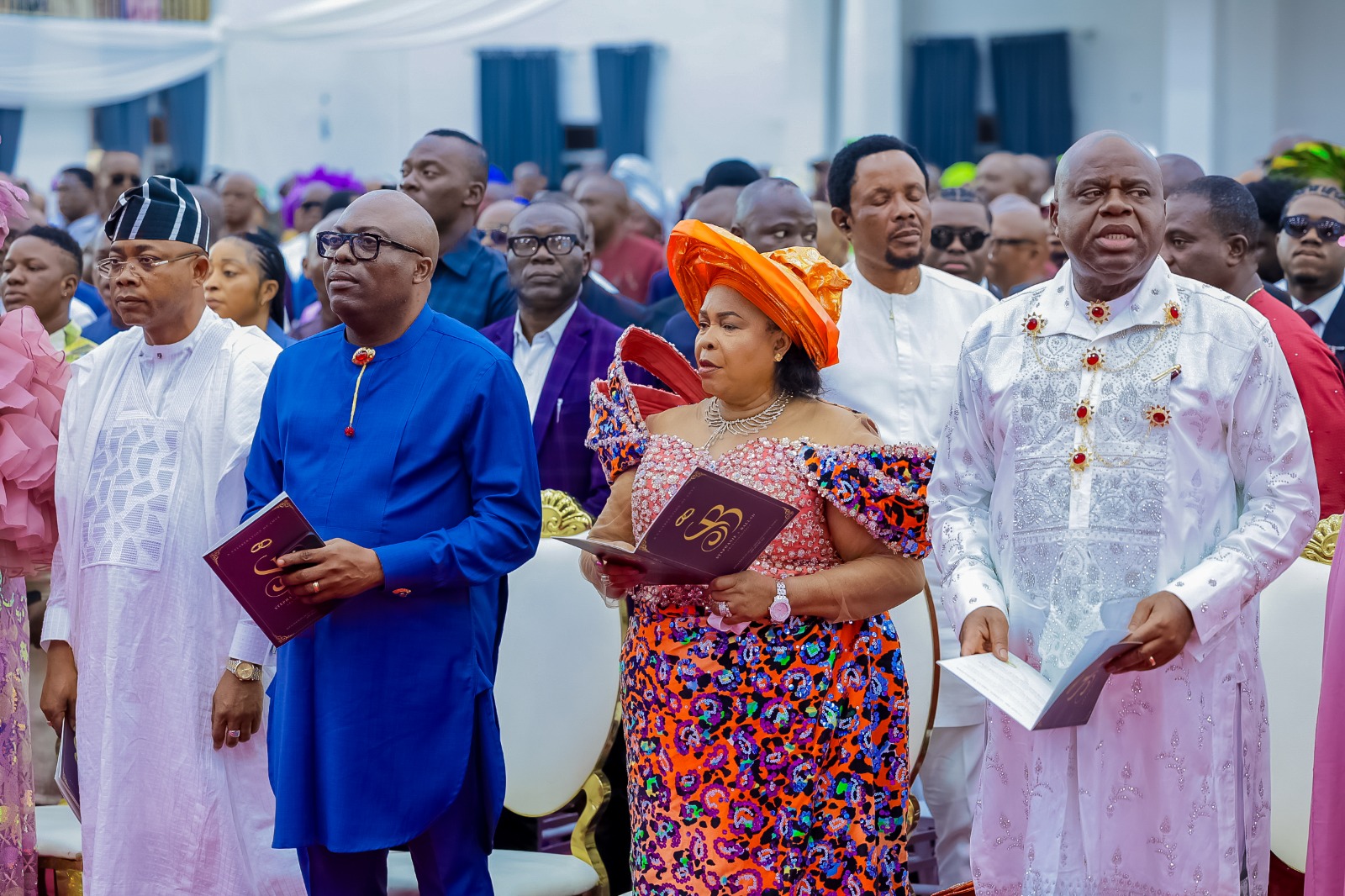
Rivers State, Sir Siminalayi Fubara, has assured members of the National Youth Service Corps (NYSC) of his administration’s commitment to supporting and strengthening the scheme in the State.
Fubara gave the assurance last Friday at the NYSC permanent orientation camp, Nonwa-Gbam, Tai Local Government Area in the State, during the swearing-in ceremony of 2026 Batch B Stream II orientation course.
Represented by the Permanent Secretary, Cabinet Bureau, Office of the Secretary to the State Government, Dr. Promise Oguzie, the governor said the State Government would remain intentional in providing the necessary support to improve the NYSC scheme and enhance the experiences of corps members deployed to the state.
He charged the corps members to be role models and quality nation-builders in their service to the good people of Rivers State in particular, and Nigeria at large.
“I charge you to be exemplary, dedicated and committed in all you do. Take full advantage of all the camp programmes and activities to enrich yourselves”, he said.
In his welcome address, the State Coordinator of NYSC in Rivers State, Mr. Moses Oleghe, urged corps members to see their deployment to Rivers State as a “veritable opportunity to make meaningful contribution to the growth of the State in particular and Nigeria at large.”
He further charged them to serve with all sense of “integrity, discipline, and the fear of God, especially when they will be engaged as INEC ad-hoc staff that will conduct the 2027 general elections.”
A total of 3,584 corps members composed of 1,421 males and 2,163 females were sworn in by the Chief Judge of Rivers State, who was represented by Justice Godspower Aguma.

Governor of Rivers State, Sir Siminalayi Fubara, says Nigeria needs God-fearing leaders for the nation to move in the right direction and make meaningful progress.
The Governor stated this yesterday when he received in audience, the World President of the Seventh Day Adventist Church, Pastor Erton Kohler; his wife, Andriene Marques Kohler; daughter Mariana Marques Kohler and a retinue of ministers of the church at Government House, Port Harcourt.
Fubara who hailed the Seventh Day Adventist Church for its contributions to education and the grooming of future leaders in Nigeria, expressed delight that the Church had over the years, been investing in education at various levels and currently runs two universities in the country.
He commended the church for not only using its institutions to spread the gospel of Christianity but to groom future leaders for the country.
According to him, religion should not be just about defending one’s faith, but also making meaningful impact on the lives of the people.
He said that by floating these educational institutions, the church has demonstrated capacity to support Nigeria in the task of producing not only educated people but a breed of God-fearing leaders.
“Our country is where it is today because we lack the fear of God. If you have the fear of God, there should be a limit to what you can do because you understand the supremacy of God. But when God is not in your equation, you’ll go beyond the line and that is what has brought us to where we are today.
“So, I feel very happy that you are contributing to the development of our future leaders in this country. We need the right people being in the right place; prepared properly with good minds; that is what we need, not just in Nigeria but round the whole world.,” he said.
Governor Fubara further observed that the absence of God-fearing people in high places to take the right decisions that could impact positively on the society, has also given rise to other problems such as social inequality, poverty, corruption and criminality. According to him, Nigeria needs a system where the average parent could afford quality education for their children and a guarantee that upon graduation, the average child will have the capacity to compete favourably with anybody, anywhere in the world.
“If we have a situation where the little money that you’re being paid as wage can also afford you quality healthcare and after working at least for 15-20 years, you have a roof over your head, tell me why you should be involved in any kind of crime? At that point, you’ll feel secured and this attitude of insecurity about the future that leads to all the social vices we have today won’t be there,” he said.
Governor Fubara expressed appreciation to the delegation for the visit and for their prayers for Rivers State, assuring them of his continued support for their programmes in the state.
Leader of the delegation and World President of the Seventh Day Adventist Church, Pastor Erton Kohler said he was in Nigeria for a special conference of the church during which thousands of the church’s ministers will be undergoing an empowerment programme to further equip them for the task of herding their flocks and serving the society.
He expressed gratitude to the Governor for the warm reception accorded his entourage, saying the memory of the visit will linger in his mind for a lifetime.
Kohler disclosed that the Church has over twenty -four million (24,000,000) members and more than 182,000 places of worship, spread across 212 countries of the world.

The Rivers State House of Assembly has approved the 2026–2028 Medium Term Expenditure Framework (MTEF) submitted by Governor Siminalayi Fubara.
This reaffirms the lawmakers’ commitment to enacting laws and taking legislative actions geared towards the overall development of the State.
The Assembly gave the approval during its Second Legislative Sitting of the Fourth Session held last Friday.
Speaking on the MTEF document during plenary, the House Speaker, Rt. Hon. Martin Amaewhule, noted that by the provision of Section 10(1)(b) of the Rivers State Fiscal Responsibility Law No. 8 of 2010, the MTEF ought to have been laid before the House in September 2025.
Amaewhule explained that traditionally, the document is expected to be presented four months before the commencement of the next financial year and immediately after the expiration of every three-year fiscal cycle.
He, however, stated that in the interest of the State and its people, the House considered it necessary to deliberate on the document, describing it as a precursor to the 2026 Budget Estimates.
The Speaker expressed concern that the year had already progressed significantly before the presentation of the framework.
During deliberations on the document, members examined the assumptions and projections contained in the MTEF and observed that strict adherence to the outlined fiscal parameters would ultimately serve the interest of Rivers people.
The lawmakers maintained that effective implementation of the framework would promote prudent financial management and enhance developmental planning across the State.
Following the debate and positive consideration by members, the Speaker put the question to the House and members voted overwhelmingly in support of the approval of the MTEF.
Meanwhile, during the same sitting last Friday, the House also received a petition from the Chairman of Obio/Akpor Local Government Council, Dr. Gift Worlu.
The petition was presented by the member representing Obio/Akpor Constituency II, Hon. Emilia Amadi.
According to the petition, concerns were raised over an imminent security breach, threats to lives, destruction of property and alleged forceful takeover of property by some lawless persons within parts of the Local Government Area.
Presenting the petition before the House, Hon. Amadi appealed to the lawmakers to revisit the matter and take necessary steps aimed at safeguarding lives and property in the affected communities.
The House is expected to further deliberate on the petition and consider measures to address the concerns raised in order to sustain peace and security in the area.
King Onunwor
-

 News4 days ago
RSG Targets Nine Million Residents in Mosquito Net Distribution Campaign
-

 Oil & Energy4 days ago
Aiyedatiwa Signs New Electricity Bill
-

 Oil & Energy4 days ago
NLNG Commissions Research And Innovation Centre In RSU
-

 Maritime4 days ago
Marine Minister Commends President Tinubu On NPERA Bill Assent
-

 News4 days ago
KenPoly Holds Eight Convocations, August 29
-

 News4 days ago
RMAFC Completes Revenue Sharing Review, Proposes New Pay
-

 News4 days ago
RSG Begins Another Phase of Projects Commissioning Today
-

 Maritime4 days ago
NAGAFF Petitions IGP Over Alleged Maritime Police Harassment