
Featured
Wike Visits Mgbuoshimini Murder Scene …Orders Fish Out Of Killers


The Rivers State Government has condemned the killing of some innocent persons in the early hours of last Monday in Mgbuoshimini community in Obio/Akpor Local Government Area of Rivers State by gunmen who came through the waterways. The government vowed that it would leave no stone unturned in apprehending and bringing those behind the dastardly act to justice.
The government consequently directed the police and security agencies to fish out the perpetrators of the heinous crime at all cost.
This was contained in a statement issued last Monday in Port Harcourt by the Rivers State Commissioner for Information and Communications, Barrister Emma Okah.
The statement said, “the State Government is ready to spare nothing to support the security agencies get these killers, irrespective of where they are found. Even in their holes, smoke them out from there and you should have no rest until we get to the end of the case, until we see justice”.
Charging the security agencies to redouble their efforts in combating cult-related violence and killings, Okah noted that the Rivers State Government will not give in to criminals and their sponsors.
According to the statement, “The Rivers State Government commiserates with the families of the deceased and promise that this case will not be accepted.
“This sad incident underscores the stand of Rivers State Government that security and crime prevention are the concern of everybody, and should not be politicised so that the state can grow. A moment like this calls for a collective effort on the part of all,” he added.
The statement further added that “this sudden breakdown of security architecture is a fallout of the activities of some politicians in Eleme Local Government Area at the weekend where over 1,000 policemen and other security agents as well as some Armoured Personnel Carriers (APC) were redeployed from their duty posts.
“The Rivers State Government calls on the public to stand up and cooperate with the police and other security agencies in their duties.
“Rivers State Government will continue to give the security agencies all the support they require to ensure the security of our state and reduce incidence of crime”, he said, adding that “to whom much is given, much is expected.”
The Tide recalls that residents of Mgbuoshimini, near Rumueme were rattled by sporadic gun shots from a suspected cult group in the early hours of last Monday, in what some described as reprisal attack following another killing spree three days earlier, which claimed the lives of two young men in the community.
The gunmen had attacked the community through the nearby waterway, leaving on their trail, about 15 persons dead.
The Tide reporter, who visited the scene in the early hours of Monday, counted 12 corpses on the ground before visiting a nearby Saint Margaret’s Clinic, Mgbuoshimini, where a doctor confirmed another three dead.
The attack also left one in a critical condition at the clinic, while a three-month old baby girl, Precious Maxwell was found in her mother’s pool of blood, amidst smoke and fire.
The Tide reports that the baby was later taken home by her relatives.
The Tide recalls that barely five months ago, Chief Minikwu Chukwu and an Ogoni boy were murdered in cold blood, just as last Thursday, two others were gunned down in the Oro-Akwor axis of the community.
Speaking at the scene of the incident, Rivers State Commissioner of Police, Zaki Ahmed expressed worry over the spate of violence and killings in the area.
“I am worried over this type of violence, and every well meaningful person should be worried. 12 dead bodies are on ground as gunmen came and started shooting sporadically. Investigations have commenced, as we have interviewed some eyewitnesses. Soonest, the law will catch up on them, and all those perpetrating these evils would be brought to book,” the commissioner promised.
The state commissioner of police also declared eight suspected members of the Icelander cult group wanted in connection with the killings in Mgbuoshimini community.
Ahmed, who did not disclose the names of the suspects, simply said that the detectives have been given marching orders to fish out the suspects wherever they may be, and arraign them before a court of competent jurisdiction, so that justice can take its course.
The Obio/Akpor LGA Caretaker Community Chairman, Hon Goodnews Clinton Amadi expressed sadness at the deterioration of security in the community, and assured that the council would give total support to security agencies to ensure all those responsible for the killings were brought to book.
“As we all can see, this is a security matter, and we, as a council are doing all we can to support the security agencies to ensure the murderers are brought to book,” she added.
Also reacting, member representing Obio/Akpor Constituency II in the Rivers State House of Assembly, Hon Michael Chindah said what happened was unfortunate and unacceptable.
Chindah commiserated with members of the bereaved families, and advised them not to take laws into their hands as security operatives were on top of the situation to unravel the killers and bring them to justice.
The victims include Yeeka Mgbor from Ogoni; Maduka Anaebo from Imo State; Mrs Glory Monday from Cross River and her husband, an Andoni man simply identified as Manlorlor. They were said to have been killed while asleep inside a mosquito net.
Others are Masuru Muhammad and Mammuda Ibrahim both Hausa; Prince Godwin Julius (a.k.a Junior) and his wife, Abigail both from Andoni; Mrs Atisi Maxwell, whose three-month old girl, Precious Maxwell survived the massacre; Emeka James from Etim-Ekpo Local Government Area, Akwa Ibom State. Two other unidentified corpses were also seen at the waterfront.
Blessing Edidiong from Akwa Ibom State was in a critical condition at the clinic as at the time of filing this report, with no relative to care for him.
The brother of one of the deceased, Loveday Anaebo told The Tide that his brother worked with the Nyeche Dredging Company as a welder and had lived in the building where he met his untimely death for over 10 years.
He said his brother’s corpse was not one that should be taken to the mortuary, but would be buried immediately, because the fire had burnt him beyond recognition.
Founder and Medical Director of St Margaret’s Clinic, Dr Funso Agiginni told The Tide that four victims were brought to the clinic, but added that three died while only one, Blessing Edidiong from Akwa Ibom, was still receiving treatment at the clinic.
Agiginni listed the names of those brought to the clinic as Blessing Edidiong, who was still alive; and Emeka, Nneka and Latti whom he confirmed dead, adding that the deceased families had taken their corpses for burial before the arrival of the police.
He appealed the state government to take over the treatment and off-set the cost of medical treatment for the only surviving victim at the clinic.
The Tide investigations revealed that the present violence escalated following disagreements over who should be responsible for the collection of operational permits from ‘Keke’ operators in the area.
It was learnt that those saddled with the responsibility of collecting the ‘Keke’ drivers’ dues had refused to render account of money collected to the Community Development Committee, and instead of showing remorse, went on the offensive, warning the chiefs and elders of the community to steer clear of the crisis in the youth leadership in the community.
The Tide reports that the community had been embroiled in land dispute between two families, which resulted in the murder of the Secretary of the Rumueme Council of Chiefs, Chief Minikwu Chukwu and one Optimist Jaja in May.
In a swift reaction, the state Governor, Chief Nyesom Wike had ordered the government takeover of the parcel of land at Mgbuoshimini Junction, near Nigerian Agip Oil Company office, and directed the construction of a school and health centre at the site.
Just about four months ago, one Chief Mgbor and an Ogoni boy were killed by suspected cultists in the community.
Also on July 30, Baridule Cletus Dunle was shot dead while Godspower Aligbo and Dickson Gogo-Jaja were killed on October 4, 2017.
The Tide reports that casualties of the last Monday attack included 15 innocent residents, who were petty artisans in the community, and a building which was completely razed.
Meanwhile, Rivers State Governor, Chief Nyesom Wike, yesterday declared that the perpetrators of the Mgbuoshimini massacre would be brought to justice.
He made the declaration when he led members of the State Security Council on an on-the-spot assessment of the area.
Wike said: “This is most unfortunate. Those involved in this dastardly act will not go scot-free. The security agencies have been empowered to go after them.
“Everybody should remain calm as we are taking measures to ensure that our people are protected from such ugly attacks”.
He said that initial security report indicated that it was a cult-related violence, and wondered why the perpetrators would unleash mayhem on innocent persons.
He promised that his administration will build a police station and quarters in the area to check the activities of criminals as part of measures to forestall a reoccurrence of the unfortunate attack.
The governor said that government will assist the families of the deceased, and called on members of the public to cooperate with security agencies through the supply of relevant information to check criminal activities.
“We will not leave any stone unturned. We will fight the cultists to the point that they will know that Rivers State is not a safe haven for them.
“But we require the support of the public. The security agencies have given us the assurances that they will do their best. For some time, we have had relative peace before this unfortunate incident”, the governor said.
The Tide reports that the governor had personally led security agencies to demolish homes of cult leaders at Mgbuoshimini.
The governor was accompanied on the visit by Rivers State Commissioner of Police, Mr. Zaki Ahmed and Commander, Nigerian Army, 6 Division Garrison, Brig-Gen K.N. Garba.
Chris Oluoh, Susan Serekara-Nwikhana & Sylvester Onyeazor



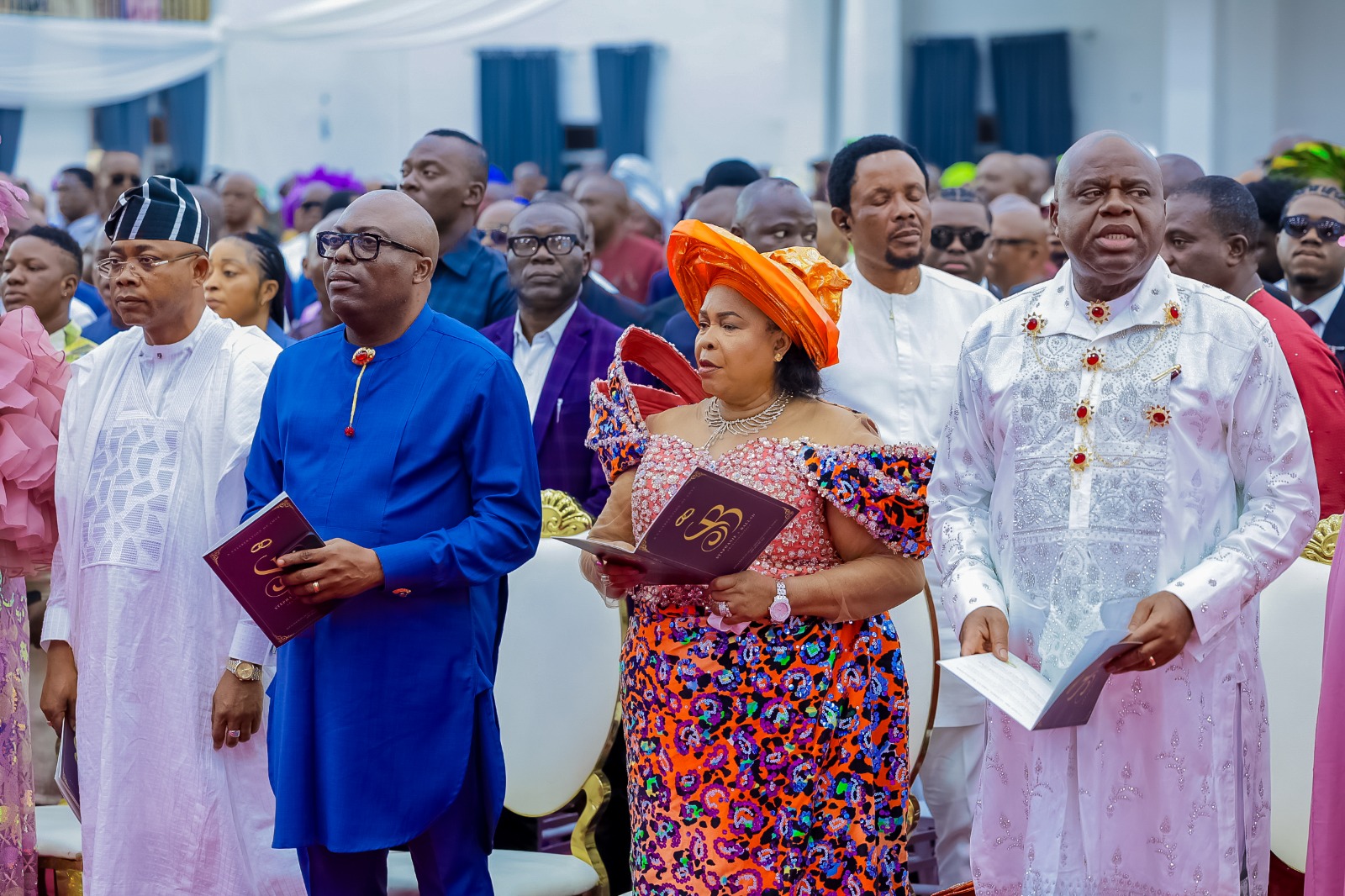
Rivers State, Sir Siminalayi Fubara, has assured members of the National Youth Service Corps (NYSC) of his administration’s commitment to supporting and strengthening the scheme in the State.
Fubara gave the assurance last Friday at the NYSC permanent orientation camp, Nonwa-Gbam, Tai Local Government Area in the State, during the swearing-in ceremony of 2026 Batch B Stream II orientation course.
Represented by the Permanent Secretary, Cabinet Bureau, Office of the Secretary to the State Government, Dr. Promise Oguzie, the governor said the State Government would remain intentional in providing the necessary support to improve the NYSC scheme and enhance the experiences of corps members deployed to the state.
He charged the corps members to be role models and quality nation-builders in their service to the good people of Rivers State in particular, and Nigeria at large.
“I charge you to be exemplary, dedicated and committed in all you do. Take full advantage of all the camp programmes and activities to enrich yourselves”, he said.
In his welcome address, the State Coordinator of NYSC in Rivers State, Mr. Moses Oleghe, urged corps members to see their deployment to Rivers State as a “veritable opportunity to make meaningful contribution to the growth of the State in particular and Nigeria at large.”
He further charged them to serve with all sense of “integrity, discipline, and the fear of God, especially when they will be engaged as INEC ad-hoc staff that will conduct the 2027 general elections.”
A total of 3,584 corps members composed of 1,421 males and 2,163 females were sworn in by the Chief Judge of Rivers State, who was represented by Justice Godspower Aguma.

Governor of Rivers State, Sir Siminalayi Fubara, says Nigeria needs God-fearing leaders for the nation to move in the right direction and make meaningful progress.
The Governor stated this yesterday when he received in audience, the World President of the Seventh Day Adventist Church, Pastor Erton Kohler; his wife, Andriene Marques Kohler; daughter Mariana Marques Kohler and a retinue of ministers of the church at Government House, Port Harcourt.
Fubara who hailed the Seventh Day Adventist Church for its contributions to education and the grooming of future leaders in Nigeria, expressed delight that the Church had over the years, been investing in education at various levels and currently runs two universities in the country.
He commended the church for not only using its institutions to spread the gospel of Christianity but to groom future leaders for the country.
According to him, religion should not be just about defending one’s faith, but also making meaningful impact on the lives of the people.
He said that by floating these educational institutions, the church has demonstrated capacity to support Nigeria in the task of producing not only educated people but a breed of God-fearing leaders.
“Our country is where it is today because we lack the fear of God. If you have the fear of God, there should be a limit to what you can do because you understand the supremacy of God. But when God is not in your equation, you’ll go beyond the line and that is what has brought us to where we are today.
“So, I feel very happy that you are contributing to the development of our future leaders in this country. We need the right people being in the right place; prepared properly with good minds; that is what we need, not just in Nigeria but round the whole world.,” he said.
Governor Fubara further observed that the absence of God-fearing people in high places to take the right decisions that could impact positively on the society, has also given rise to other problems such as social inequality, poverty, corruption and criminality. According to him, Nigeria needs a system where the average parent could afford quality education for their children and a guarantee that upon graduation, the average child will have the capacity to compete favourably with anybody, anywhere in the world.
“If we have a situation where the little money that you’re being paid as wage can also afford you quality healthcare and after working at least for 15-20 years, you have a roof over your head, tell me why you should be involved in any kind of crime? At that point, you’ll feel secured and this attitude of insecurity about the future that leads to all the social vices we have today won’t be there,” he said.
Governor Fubara expressed appreciation to the delegation for the visit and for their prayers for Rivers State, assuring them of his continued support for their programmes in the state.
Leader of the delegation and World President of the Seventh Day Adventist Church, Pastor Erton Kohler said he was in Nigeria for a special conference of the church during which thousands of the church’s ministers will be undergoing an empowerment programme to further equip them for the task of herding their flocks and serving the society.
He expressed gratitude to the Governor for the warm reception accorded his entourage, saying the memory of the visit will linger in his mind for a lifetime.
Kohler disclosed that the Church has over twenty -four million (24,000,000) members and more than 182,000 places of worship, spread across 212 countries of the world.

The Rivers State House of Assembly has approved the 2026–2028 Medium Term Expenditure Framework (MTEF) submitted by Governor Siminalayi Fubara.
This reaffirms the lawmakers’ commitment to enacting laws and taking legislative actions geared towards the overall development of the State.
The Assembly gave the approval during its Second Legislative Sitting of the Fourth Session held last Friday.
Speaking on the MTEF document during plenary, the House Speaker, Rt. Hon. Martin Amaewhule, noted that by the provision of Section 10(1)(b) of the Rivers State Fiscal Responsibility Law No. 8 of 2010, the MTEF ought to have been laid before the House in September 2025.
Amaewhule explained that traditionally, the document is expected to be presented four months before the commencement of the next financial year and immediately after the expiration of every three-year fiscal cycle.
He, however, stated that in the interest of the State and its people, the House considered it necessary to deliberate on the document, describing it as a precursor to the 2026 Budget Estimates.
The Speaker expressed concern that the year had already progressed significantly before the presentation of the framework.
During deliberations on the document, members examined the assumptions and projections contained in the MTEF and observed that strict adherence to the outlined fiscal parameters would ultimately serve the interest of Rivers people.
The lawmakers maintained that effective implementation of the framework would promote prudent financial management and enhance developmental planning across the State.
Following the debate and positive consideration by members, the Speaker put the question to the House and members voted overwhelmingly in support of the approval of the MTEF.
Meanwhile, during the same sitting last Friday, the House also received a petition from the Chairman of Obio/Akpor Local Government Council, Dr. Gift Worlu.
The petition was presented by the member representing Obio/Akpor Constituency II, Hon. Emilia Amadi.
According to the petition, concerns were raised over an imminent security breach, threats to lives, destruction of property and alleged forceful takeover of property by some lawless persons within parts of the Local Government Area.
Presenting the petition before the House, Hon. Amadi appealed to the lawmakers to revisit the matter and take necessary steps aimed at safeguarding lives and property in the affected communities.
The House is expected to further deliberate on the petition and consider measures to address the concerns raised in order to sustain peace and security in the area.
King Onunwor
-

 News1 day ago
RSG Targets Nine Million Residents in Mosquito Net Distribution Campaign
-

 Oil & Energy1 day ago
Aiyedatiwa Signs New Electricity Bill
-

 Oil & Energy1 day ago
NLNG Commissions Research And Innovation Centre In RSU
-

 Maritime1 day ago
Marine Minister Commends President Tinubu On NPERA Bill Assent
-

 News1 day ago
KenPoly Holds Eight Convocations, August 29
-

 News1 day ago
RSG Begins Another Phase of Projects Commissioning Today
-

 News1 day ago
RMAFC Completes Revenue Sharing Review, Proposes New Pay
-

 Maritime1 day ago
NAGAFF Petitions IGP Over Alleged Maritime Police Harassment