Connect with us

Business

‘Nigeria Needs To Address Constraints Of Exportable Commodities’

Published

on

The Minister of Budget and National Planning, Sen. Udoma Udo Udoma, has said that to build a competitive global economy, the nation needs to address constraints of other exportable commodities.
He said this during the public consultation on the 2018-2020 Medium Term Expenditure Framework, (MTEF) and Fiscal Strategy Paper, (FSP) with Civil Society Organisations (CSOs), the media and organised private sector in Abuja, Thursday.
According to him, the key thrusts of the framework are consistent with the Economic Recovery and Growth Plan,(ERGP) which is aimed at moving the nation away from dependence on a single commodity to run on multiple engines.
He affirmed that the nation was on track to achieving full recovery and growth, adding that, it needs to look inwards to boost non oil revenues and observe fiscal prudence at all levels.
“It is important that we build a globally competitive economy because this dependence on crude oil for our foreign exchange is not sustainable and so we have to get other commodities to export.
“In order to export them, they have to be competitive.
“Therefore, we have to address all the constraints that are not making our goods competitive so that we can grow what we eat, produce what we consume and have enough for export.”
Udoma said the key assumptions and macro-framework of the 2018 budget were predicated on oil production of 2.3 million barrels per day (mbpd), oil price of 45 dollars per barrel and an exchange rate of N305 to one dollar.
He also said the inflation rate was pegged at 12.42 per cent and Gross Domestic Product (GDP) growth rate was 4.8 per cent.
It was projected in the MTEF that oil production would be 2.4 mbpd in 2019, 2.5 mbpd in 2020, while exchange rate was retained at N305 to one dollar for 2019 and 2020.
Inflation was projected to stay at 13.39 per cent in 2019 and 9.90 per cent in 2020.
Udoma said the medium term fiscal policies were directed at achieving macro-economic stability, accelerating growth, intensifying economic diversification and promoting inclusiveness.
“We are focusing on stabilising the macro-economic environment, align monetary, trade and fiscal policies, accelerate non-oil revenue generation, drastically cut costs and privatise selected public enterprises and assets.”
He also said the Federal Government would enhance oil revenues and accelerate non-oil revenues through policies by transitioning from the traditional Joint Venture (JV) cash call budget to the self funding mechanism.
Other objectives are improved tax and customs administration, tightening of tax exemptions (including duty waivers), possible review of Value Added Tax (VAT) rate and excise duty, commencing with luxury items.
He recalled that the acting President, Prof. Yemi Osinbajo recently signed an Executive Order giving amnesty for voluntary compliance with tax, adding that he believes that Nigerians would come forward to pay their taxes.
Udoma also said the Federal Government aims to address recurrent and capital spending imbalance with continuous allocation of at least 30 per cent of its budgeted expenditure on capital projects.
“It will also maintain deficit and debts within sustainable limits,” he said.
Director-General, Debt Management Office (DMO), Ms Patience Oniha, said the nation had to fund its budget through borrowing, adding that, it was not defaulting in its debt responsibilities, rather it was capable of paying what it owed.
She, however, said the nation was not borrowing outside the limits set for it by the Fiscal Responsibility Commission (FRC) as it was still within it, which means that the debt it had incurred was sustainable.
She also said if the nation could increase its revenue significantly to enable implementation of the budget then it could achieve the growth it was looking at.
Some of the CSOs applauded Federal Government’s efforts in involving them and other Nigerians in the preparation of the document, adding that it would enhance transparency and accountability in the process.
The MTEF/FSP is a three-year planning tool that defines government’s economic, social and development objectives and priorities.


Continue Reading

Business

Niger Delta Investment Summit Targets $5bn Inflows, 500,000 Jobs

Published

on

The Niger Delta Chambers of Commerce, Industry, Trade, Mines and Agriculture (NDCCITMA) has unveiled the plans to host a major economic and investment summit aimed at attracting five billion dollars, ( N7 trillion) investments in addition to creating about 500,000 jobs over the next five years.
The Chairman of NDCCITMA Board, Ambassador Idaere Ogan, disclosed this in Port Harcourt, recently.
Ogan stated  that the initiative is designed to reposition the Niger Delta as a viable destination for sustainable economic growth and development.
He explained the summit would bring together investors, policymakers, manufacturers and business leaders from within and outside Nigeria to explore opportunities across key sectors of the regional economy.
According to him, the event is expected to attract high-profile participation, with President Bola Tinubu billed as Special Guest of Honour, while the Prime Minister of Barbados, Mia Amor Mottley, is expected to deliver the keynote address.
Ogan said the summit would focus on critical sectors including agriculture, manufacturing, logistics and the blue economy, which he described as areas with significant untapped potential.
He called on state governments, development partners and private sector stakeholders to support the initiative, stressing that collective efforts are required to unlock the region’s economic prospects.
 NDCCITMA chairman further stated that improving security conditions and increasing economic confidence in the Niger Delta have made the region more attractive to both local and foreign investors.
He emphasised that ongoing economic reforms at the national level have also contributed to creating a more favourable investment climate.
Also speaking, the Chairman of the Summit Organising Committee, Dr. Solomon Edebiri, said the event would prioritise the growth of small and medium-scale enterprises (SMEs) across the region.
He noted the summit would provide a strategic platform for networking, business partnership and policy dialogue aimed at strengthening the private sector.
Edebiri disclosed that findings from a recent business roundtable revealed significant untapped investment opportunities, which the summit seeks to harness through targeted collaborations.
He revealed that the event would feature exhibitions of viable projects, facilitate business-to-business and business-to-government engagements, and also promote innovations across multiple sectors.
According to him, the expected outcomes of the summit include job creation, increased industrial activity and improved livelihoods for people in the Niger Delta.
To build momentum ahead of the event, NDCCITMA said the body would embark on awareness roadshows across states in the Niger Delta, as well as in Lagos and Abuja, to attract broad participation.
King Onunwor
Continue Reading

Business

NPA Targets N1.489tn Revenue In 2026

Published

on

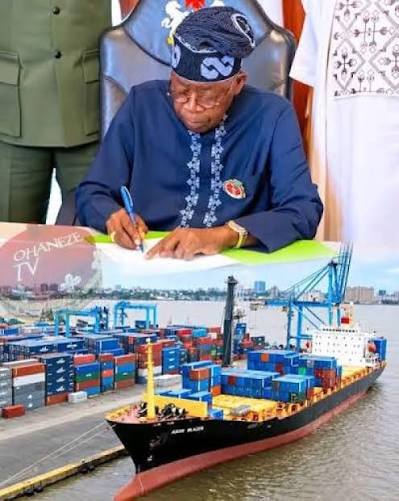
The Management  of Nigerian Ports Authority (NPA) has set N1.489 trillion as its Internally Generated Revenue (IGR) target for the 2026 fiscal year.
NPA says the figure represents an increase of N21 billion over the N1.468 trillion target for 2025, which the agency exceeded with an actual revenue of N1.97 trillion.
 The Managing Director NPA, Dr Abubakar Dantsoho, stated this  during the agency’s 2026 budget defence before the Senate Committee on Marine Transport.
Dantsoho said  the authority was set to begin groundbreaking projects for the modernisation of Apapa and Tin Can Island ports to enhance global competitiveness.
According to him, of the projected revenue: N945 billion is allocated for capital projects, N447.5 billion for operating expenses, and
N90.6 billion for remittance into the Consolidated Revenue Fund (CRF).
The MD explained that the budget was anchored on the mantra, “Consolidation, Renewed Resilience and Shared Prosperity.”
Dantsoho said that the modernisation of Apapa and Tin Can Island ports were flagship projects aimed at boosting revenue.
“Apapa and Tin Can Island ports are old and no longer adequate for modern global port operations.
“Apapa Port is about 100 years old, while Tin Can Island Port is over 50 years old, with limited capacity for handling modern vessels and cargo volumes.
“Groundbreaking for their modernisation will commence within the next two to three weeks,” he added.
On the Treasury Single Account (TSA), Dantsoho said all revenues generated by the NPA are paid directly into the account managed by the Central Bank of Nigeria (CBN).
“We do not retain any funds. The Central Bank is the signatory and we must apply for funds whenever needed,” he explained.
Earlier in his remarks,Chairman of the Senate Committee on Ports, Sen. Wasiu Eshinlokun (Lagos Central), said the committee’s oversight function was collaborative rather than adversarial.
“Our goal is to work with you to strengthen institutional capacity, eliminate inefficiencies and ensure that every naira appropriated serves the public interest,” he said.
Chinedu Wosu
Continue Reading

Business

NPF Disburses ?21.68m  To Fallen Heros’ Families …Reinforce Welfare Commitment 

Published

on

Nigeria Police Force has disbursed a total of ?21,678,120 to the deceased police officers families in Rivers State as part of ongoing welfare interventions by the force.
The gesture formed a major highlight of the activities marking  the 2026 National Police Day celebration in the state, underscoring renewed institutional focus on personnel welfare and post-service support systems.
The Commissioner of Police, Olugbenga Adepoju, who presided over the cheque presentation ceremony, said the initiative reflects the Force’s commitment to honouring officers who paid the ultimate price in their line of duty.
He explained that the financial support is designed to cushion the economic burden faced by bereaved families, while also reinforcing confidence among serving personnel about the Force’s long-term welfare structure.
Adepoju conveyed the sympathy of the leadership of the Nigeria Police Force to the beneficiaries, noting that the sacrifices of fallen officers remain invaluable to national security and public safety.
The police boss further stressed that sustained welfare interventions are critical to boosting morale, enhancing productivity, and strengthening institutional loyalty within the Force.
He reiterated that the welfare scheme aligns with broader reforms aimed at repositioning the Nigeria Police Force as a responsive and people-oriented institution.
Beneficiaries of the cheques commended the Inspector-General of Police, Olatunji Rilwan Disu, for prioritising the welfare of officers and their families through consistent and impactful interventions.
They described the initiative as timely and compassionate, noting that it would go a long way in alleviating financial pressures arising from the loss of their loved ones.
The families also acknowledged ongoing reforms under the current police leadership, which they said have strengthened trust, improved service delivery, and enhanced the overall image of the Force.
The Rivers State Police Command reaffirmed its commitment to sustaining similar initiatives as part of efforts to uphold the dignity, sacrifice, and legacy of officers who served the nation with distinction.
King Onunwor
Continue Reading

Trending