
Nation
THE STATES

Adamawa
The Adamawa House of Assembly, last Thursday passed a bill empowering the state government to acquire loan from the capital market.
The House passed the bill into law at plenary, presided over by the Speaker, Alhaji Ahmadu Fintiri. The bill was passed by the legislators after it was introduced for third reading by the Majority Leader, Alhaji Ishaq Bala and seconded by the Deputy Minority Leader, Mr Simon Isa .
The law now empowers the state government to raise loan from the capital market through the issuance of debt securities in the form of registered bonds, for projects implementation.
An earlier report on the bill, submitted by the Deputy Speaker, Mr Laori Kwamoti (PDP-Numan) and which was adopted by the assembly, said the aim was to open new sources of funds to finance development projects in the state.
Benue
The Benue Government on Wednesday expressed its willingness to collaborate with the Canadian Government on training of teachers.
The state’s Deputy Governor, Chief Steven Lawani, who made the announcement when the Canadian High Commissioner to Nigeria, Mr Chris Butter, paid him a courtesy visit in Makurdi. He said that the State Government was interested in the training of teachers in order to upgrade the standard of education in the state.
Lawani who commended the cordial relationship existing between Nigeria and Canada , expressed optimism that teachers from the state would be given adequate training by Canadian experts.
Earlier, Butter said that the Canadian Government was sending over 200 teachers to Nigeria for training exercises annually.
Kaduna
The Federal Road Maintenance Agency (FERMA) on Thursday advised its top officials to adopt best information management practice, in line with the Freedom of Information Act.
Managing Director of FERMA, Gabriel Amuchi, gave the advice in Kaduna at a two-day seminar on the Act, with the theme, “ Information Management and Security of Document”, organised for Zonal Directors and Engineers under the agency.
He said, “although the Freedom of Information Act was to make public records and information more freely but as top officials your documents should be safe and secure at all times.”
Amuchi added that the Act covers all public agencies, including FERMA, but cautioned the officials on the adverse consequences of mismanaging information.
Kano
As part of the country’s Democracy Day activities, the Kano State Government said last Wednesday that it registered 16,000 commercial tricycle operators.
Commenting on the development, the Managing Director of the state Road and Traffic Control Agency (KORATA), Alhaji Mohammed Diggol, said that the policy was to replace the ban on commercial motorcyclists in February.
Diggol said the decision to register the tricycles was due to government’s desire to regulate the activities of the operators and ensure sanity in the business.
He said the tricycles were issued with code numbers for easy identification due to the security challenges facing the state.
Katsina
A total of 157 students have been registered to begin 40 days programme on the memorisation of the Hadith, Sheikh Shuaibu Abubakar, Coordinator, Centre for the Memorisation of Hadith, has said.
Hadith are compilations of the sayings and deeds of Prophet Muhammad and is the second most important source of knowledge on Islam after the Holy Qur’an.
Abubakar, told newsmen on Thursday in Katsina that the participants were drawn from the 36 states and the Federal Capital Territory, Abuja, adding that the programme was designed for those who had memorised the Holy Qur’an, have appreciable level of proficiency in Arabic and had obtained a minimum of Senior Secondary School Certificate.
Kebbi
Chairman, Kebbi Chapter of National Association of the Local Government Chairmen of Nigeria (ALGON), Alhaji Musa Dan-Illela, says the nation’s mineral deposits are not optimally exploited.
He said in Birnin Kebbi on Thursday that many state governments were not harnessing their mineral deposits to generate revenue and create employment.
Dan-Illela suggested that governors should partner with their local governments in the extraction and utilisation of mineral resources for their economic development.
“Kebbi State is endowed with gypsum, bitumen, iron ore as well as precious stones in commercial quantities.
Kwara
The Senator representing Kwara South Senatorial District, Sen. Simeon Ajibola, has advised politicians to shun politics of deceit and make the well-being of the electorate their priority.
Ajibola gave the advice in Ilorin on Saturday while presenting an 18 seater bus to Kwara South chapter of the Peoples Democratic Party (PDP).
He said that only sincerity of purpose and harmoniousworking relationship between political office holders and their constituents would ensure speedy development.
“It is only sincerity of purpose and total avoidance of politics of deceit that can fast-track development. “Closeness to the people at the grass roots as well as the general well-being of the electorate should be given greater attention,’’ he said.
Jigawa
The Chairman , Rice Farmers Association of Nigeria (RIFAN) in Jigawa State, Alhaji Adamu Maigoro, has commended the efforts of the government in revamping the agricultural sector.
Maigoro who gave the commendation in Dutse on Thursday said that the state government, in collaboration with the Federal Government, had distributed 7,200 tonnes of fertiliser and 2,000 tonnes of improved rice seeds, to encourage paddy rice production in the state.
He added that the state government also made available about 2,000 tube wells and hand pumps to irrigation farmers and called for the adoption of practical measures to encourage the establishment of rice mill, to add value to the local produce.
Kogi
The wife of Kogi Governor, Hajia Halima, has promised to work with the National Association of Women Journalists (NAWOJ) in order to improve upon the life of people of the State.
Wada who made the promise in Lokoja on Friday at the opening ceremony of the Zonal Delegates Conference of the association enjoined the association to extend its activities to the rural areas to further promote the cause of women, children and the less privileged.
She commended the association in the state for touching the lives of the people through its activities and lauded it for getting the people well informed about happenings around them
Nasarawa
The Executive Chairman, Nasarawa State Universal Basic Education Board (SUBEB), Malam Abdulkarim Abdullahi, has commended the state government for transforming its education sector.
Abdullahi who made this known in an interview in Lafia last Thursday, said that the transformation had improved the standard of education for the overall development of the state during the last two years.
“Gov. Tanko Al-Makura deserves commendation for giving top priority attention to education sector by improving the standard of primary, secondary and tertiary education in the state.
Osun
The Osun Waste Management Agency says it arrested 200 persons, including 50 whom it prosecuted for contravening the state sanitation laws between January and May, 2013.
The agency’s General Manager, Mr Ganiyu Oyeladun, who made this known in an interview in Osogbo, last Thursday said that the offenders, who were tried by mobile courts, paid penalties ranging from N2, 500 to N5, 000 fines.
“Although our service is not to necessarily fine or punish, we are interested in enforcing total compliance. “The period of grace is over and we want total compliance with environmental laws,’’ he said.
He said that the bi-monthly sanitation exercise in Osun had paid off, adding that there had been a drastic reduction in incidences of communicable diseases related to poor environmental management.
Sokoto
The Chairman, Wurno Local Government in Sokoto State, Alhaji Shehu Chacho, said recently that his administration spent N45 million to construct Almajiri schools in different parts of the state.
Chacho in Sokoto that the council spent N1 million to construct each of the schools, and that the programme was part of the council’s resolve to prevent street begging among youths in the area.
He said that local teachers charged with the responsibility of teaching the youth had been placed on monthly allowance.
Chacho added that the administration was also working on modalities to provide lunch for the students.
Plateau
Sen. Joshua Dariye (LP-Plateau Central) has advised politicians to look beyond 2015 elections and work for better and united Nigeria.
Dariye gave the advice in an interview in Jos last Thursday, said “Whether 2015 comes or not, we should look beyond it. This one wants to be, the other wants to be that, I don’t think this should be the case,” he said.
The Senator, however, expressed delight that the country’s 14 years of unbroken democracy was on course, in spite various challenges confronting the nation.
Dariye, one-time Governor of Plateau, also expressed optimism that the country’s democracy would thrive, if the mistakes made were identified and corrected.



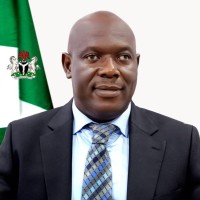
The Hydrocarbon Pollution Remediation Project (HYPREP) has commemorated the 15th anniversary of the release of the United Nations Environment Programme (UNEP) Environmental Assessment Report on Ogoniland, reaffirming its commitment to restoring the environment and improving the livelihoods of affected communities.
In a statement signed by the Project Coordinator, Prof Nenibarini Zabbey, to commemorate the anniversary, HYPREP described the anniversary as a significant milestone in Nigeria’s environmental restoration efforts, noting that the project has made remarkable progress in implementing the recommendations of the landmark UNEP report released on August 4, 2011.
The UNEP report had revealed extensive oil pollution across Ogoniland, severe environmental degradation, and serious public health risks resulting from decades of petroleum operations. It also recommended an initial $1 billion fund to commence the cleanup of the affected communities.
According to HYPREP, the Federal Government formally launched the Ogoni clean-up in 2016, while the Project Coordination Office was established in 2017 to drive the implementation of UNEP’s recommendations.
Zabbey said the current administration has continued to prioritise the project under the Renewed Hope Agenda.
Providing an update on the cleanup, the Project Coordinator disclosed that 30 of the 65 contaminated sites identified by UNEP have been fully remediated, while work is ongoing at several medium- and high-risk locations. It also stated that more than 1.5 million mangrove seedlings have been planted as part of what it described as the world’s largest restoration of oil-degraded mangroves, with over 1,000 hectares of shoreline already rehabilitated.
Zabbey further revealed that 49 Ogoni communities have been connected to potable water schemes through multiple water projects and booster stations aimed at providing safe drinking water across the region.
In the health sector, he said the 100-bed Ogoni Specialist Hospital in Kpite and the 43-bed Cottage Hospital in Buan are nearing completion, adding that several existing health facilities have been upgraded with modern medical equipment, while five ambulances have been donated to improve emergency healthcare services. The Project Coordinator also disclosed that a three-year human health biomonitoring study is being conducted in collaboration with the World Health Organization’s International Agency for Research on Cancer (IARC).
On economic empowerment, Zabbey stated that the Project has created more than 8,000 direct jobs and trained thousands of Ogoni youths and women in various vocational and technical skills, including software development, cybersecurity, aviation, commercial diving, seafaring, mechatronics, and creative arts. The project also reported awarding scholarships to more than 1,000 students, providing grants to small businesses, and supporting persons living with special needs through skills acquisition programmes.
The statement further highlighted ongoing legacy projects, including the Ogoni Power Project and the Centre of Excellence for Environmental Restoration, which it said is about 96 per cent complete. HYPREP also welcomed the recent designation of the Ogoni Wetland as a Ramsar Site of International Importance and pledged to continue promoting biodiversity conservation and sustainable management of the ecosystem.
Marking the anniversary, Zabbey said the progress achieved over the past 15 years demonstrates the collective commitment of government, development partners, stakeholders, and local communities to restoring Ogoniland. He called for renewed collaboration to sustain the cleanup effort, promote environmental sustainability, and support the long-term development of the region. 3
-

 News1 day ago
RSG Targets Nine Million Residents in Mosquito Net Distribution Campaign
-

 Oil & Energy1 day ago
Aiyedatiwa Signs New Electricity Bill
-

 Oil & Energy1 day ago
NLNG Commissions Research And Innovation Centre In RSU
-

 Maritime1 day ago
Marine Minister Commends President Tinubu On NPERA Bill Assent
-

 News1 day ago
KenPoly Holds Eight Convocations, August 29
-

 News1 day ago
RMAFC Completes Revenue Sharing Review, Proposes New Pay
-

 News1 day ago
RSG Begins Another Phase of Projects Commissioning Today
-

 Maritime1 day ago
NAGAFF Petitions IGP Over Alleged Maritime Police Harassment