
Featured
Politics Of Oil, Solid Minerals …A Case Of Numbers Being Strength

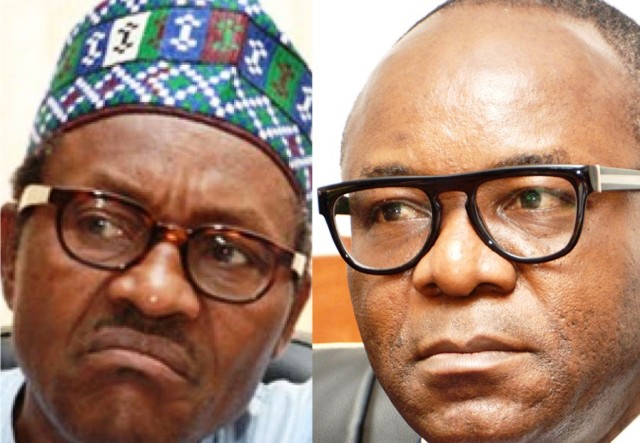
The agitation for economic integration, political relevance and environmental protection by individuals and interest groups within the Niger Delta did not start today. Before it snow-balled into full-blown insurgency, well-meaning elite and indeed political and environmental activists had at various times made the case for the respect of the universal law on land ownership and why Nigeria’s Land Use Decree was an enactment of oppression.
Men like Chief (Senator) Melford Okilo, Chief Harold Dappa Biriye and Ken Saro Wiwa among others of blessed memory were civil in their agitations, arguments that drew global support for their noble cause. They insisted that the act of denying land owners proceeds of their inheritance was barbaric, suffocating, marginalizing and indeed oppressing.
Even with facts of history on the issue of derivation, the level of environmental hazards occasioned by oil prospection and production, the pollution of the people’s rivers and swamps, the threat to their major occupations, fishing and farming and above all, the discrimination against the youth of the affected areas, the political class weighed heavily in favour of the majority tribes dismissed the people’s agitation with a wave of the hand.
So frustrating, even the issue of derivation was also politicised. Infact, it was a case of persistent civil protest from one government to another, both civilian and military. At some point under the Buhari military leadership, derivation was as low as 1.5 percent, even with all the environmental degradation suffered by the people.
What was most annoying was that the people of the rural areas, where, oil was daily being drilled, saw electricity light in house-boats and estates of oil companies but used kerosene lamps.
The people saw oil company workers drinking bottled water and threw the wastes into their rivers, which also obstructed fishing, but drank from wells and sometimes stagnant water.
That two-class syndrome also ignited the vulnerability of the girl-child, who became play thing for highly paid oil workers. The freebies such vulnerable girls got from the predatory pastime of the red-eyed workers encouraged easily prostitution and sent many out of schools.
Employment of the males was also a pipe dream. Each oil company involved in the production of oil went to the rural communities with their own work force, and ensured sustenance of the status quo by manipulating posting of youth corps members from their own tribes who are eventually employed, instead of the qualified many within the community and state.
Even the Act providing low level jobs for locals was observed in the breach. With that, the frustrated youth thus became mere tools in the hands of oil workers, to whom they served as pimps, for cutting grass at the estates of the companies, sparingly as night guards and at other times for clearing of gutters.
Interestingly, because operational modus was signed directly with the Federal Government, the oil bearing communities, with all their environmental stakes were insulated from the operations or got peanuts. Like the proverbial man surrounded by water with none to drink, the Niger Delta youth saw unbridled affluence and financial rascality daily flaunted by oil workers to lure their sisters, aunts and even mothers out of matrimony, but could not touch.
That indeed further fuelled the violent agitation. With nothing to rely on for sustenance, since their rivers and seas were covered by oil wastes and sometimes leaks from their pipes with devastating effects on all sea creatures, sea foods like periwinkles, oysters, shrimps and mangrove crabs among others daily exterminated by pollutants and with no hope of change, what was once a civil debate, humble protest, mature agitation and simple appeal by the elite turned to violent threats, militancy and insurgency.
The major demand became Resource Control, and arrangement which would allow the people and governments of oil producing communities and states to control the resources from their God-given land, as obtains everywhere in the free world. The youth wanted true and practical federalism which would force states to pay taxes through the management of their own resources.
But for over 50 years, that simple request remains unanswered. Each time, their protestation turned to a violent kind, given that a hungry man is near-frequently an angry man, the oppressors would demonstrate their heavy handedness through the deployment of arms and ammunition to quell any insurrection while the central issue remained unsolved.
In all these years, the argument put forward by the political elite of the majority North and their South Western collaborators has been that oil is a gift from God and so belongs to all, therefore, primary owners of the land, being Nigerians, cannot lay claim of singular ownership to such resources. According to them, since the treasure remained buried beneath the land, within Nigerian geographical space, it belongs to all Nigerians, and so must be centrally manage, as if the Niger Delta became Nigeria by choice.
With that conclusion, proceeds from oil go faraway Abuja to sustain even states that contribute little or nothing, apart from being lucky to be under the protection of the majority.
That is also why the Petroleum Industry Bill (PIB) has not been passed for nearly six years. Part of the bill seeks to make paltry allowance for oil bearing communities, not just to give them a sense of belonging but also instill in them the need to protect oil company assets located in their arears, since they are direct beneficiaries.
That too appears to the strong majority opposition too much of a sacrifice, since oil is simply a gift from God. But to whom? The same God that gave the North more fertile land for agricultural and livestock activities and rivers and swamps to Rivers, Bayelsa, Delta, Akwa Ibom, Cross River, Delta, Edo, among others for fishing? With such rivers, seas and swamps polluted by production of a commodity that now belongs to all, would the North also willingly share proceeds of their agricultural earnings?
Each time these questions are raised, the answer has remained the same. Oil, being buried beneath the land within Nigeria’s territory, remains a gift from God. But in their comfort zone, they forget that those who make peaceful change impossible make violent change inevitable, as the sages say.
Could that have accounted for the large scale insurgency under the Yar’Adua Presidency and subsequent pronouncement of amnesty? Unfortunately, all other projects that went with the amnesty, especially the East West Road still remain uncompleted. Still too much infrastructural deficit. Still too much discrimination against qualified manpower of Niger Delta origin.
Bottomline, Niger Deltans cannot claim benefits from their own lands, because everything sourced therefrom is a gift from God, and belongs to all.
That is why it came to me as a rude shock last week, to read that the Adamawa State Government, in Northern Nigeria is to start exporting solid minerals including uranium, gold, lead, diamond and platinum, according to that state’s Commissioner for Solid Minerals, Shanti Shashi.
Infact, Commissioner Shashi said BTP, a Swiss company has signed a $56bn contract for solid minerals exploration in a very short while.
When did gold, lead, diamond, platinum and uranium become cash crops? What different law excludes these products, buried beneath the land as Gift from God? Or is it simply a green light for resource management and control?
It is most unlikely, because even as recent as last week, President Muhammadu Buhari alluded to the fact that with all the talk about diversification of the economy, oil production still remains the mainstay of the Nigerian economy, and so would do everything humanly possible to improve production and by extension, improved earnings.
My Agony is that it is very likely that the policy of resource control would come into effect, now through the back door, and later officially only when oil in the Niger Delta dries up completely. That will be when, Borno State begins oil production in large quantities.
Here, perhaps is a window for state governments in oil bearing Niger Delta to go into partnerships with willing foreign investors to start oil prospection and production before oil dries up.
Let’s not dismiss this merely as view thought out in recession, with a near empty stomach. It is a window shut for over 50 years of oil exploration.
Soye Wilson Jamabo



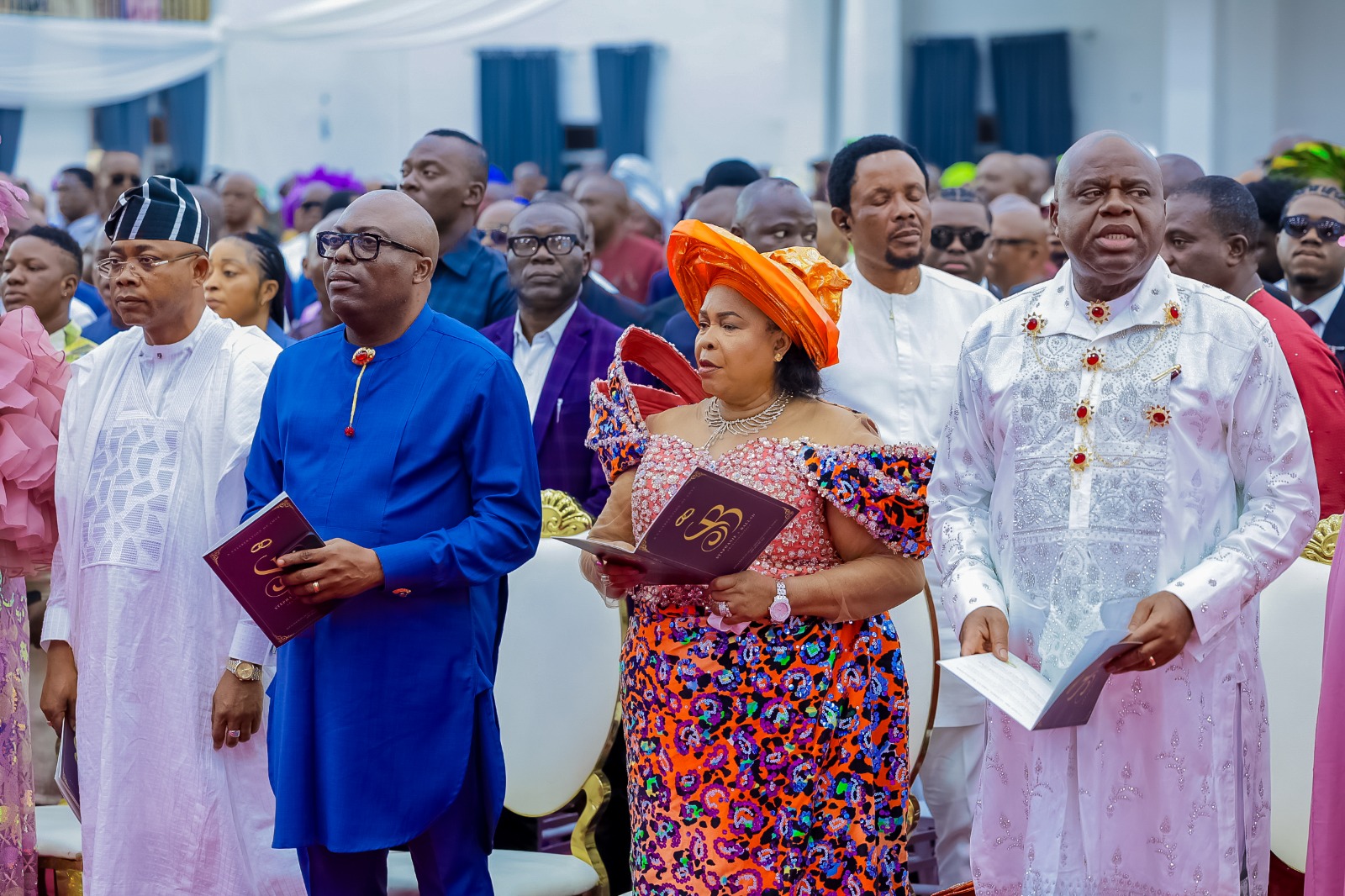
Rivers State, Sir Siminalayi Fubara, has assured members of the National Youth Service Corps (NYSC) of his administration’s commitment to supporting and strengthening the scheme in the State.
Fubara gave the assurance last Friday at the NYSC permanent orientation camp, Nonwa-Gbam, Tai Local Government Area in the State, during the swearing-in ceremony of 2026 Batch B Stream II orientation course.
Represented by the Permanent Secretary, Cabinet Bureau, Office of the Secretary to the State Government, Dr. Promise Oguzie, the governor said the State Government would remain intentional in providing the necessary support to improve the NYSC scheme and enhance the experiences of corps members deployed to the state.
He charged the corps members to be role models and quality nation-builders in their service to the good people of Rivers State in particular, and Nigeria at large.
“I charge you to be exemplary, dedicated and committed in all you do. Take full advantage of all the camp programmes and activities to enrich yourselves”, he said.
In his welcome address, the State Coordinator of NYSC in Rivers State, Mr. Moses Oleghe, urged corps members to see their deployment to Rivers State as a “veritable opportunity to make meaningful contribution to the growth of the State in particular and Nigeria at large.”
He further charged them to serve with all sense of “integrity, discipline, and the fear of God, especially when they will be engaged as INEC ad-hoc staff that will conduct the 2027 general elections.”
A total of 3,584 corps members composed of 1,421 males and 2,163 females were sworn in by the Chief Judge of Rivers State, who was represented by Justice Godspower Aguma.

Governor of Rivers State, Sir Siminalayi Fubara, says Nigeria needs God-fearing leaders for the nation to move in the right direction and make meaningful progress.
The Governor stated this yesterday when he received in audience, the World President of the Seventh Day Adventist Church, Pastor Erton Kohler; his wife, Andriene Marques Kohler; daughter Mariana Marques Kohler and a retinue of ministers of the church at Government House, Port Harcourt.
Fubara who hailed the Seventh Day Adventist Church for its contributions to education and the grooming of future leaders in Nigeria, expressed delight that the Church had over the years, been investing in education at various levels and currently runs two universities in the country.
He commended the church for not only using its institutions to spread the gospel of Christianity but to groom future leaders for the country.
According to him, religion should not be just about defending one’s faith, but also making meaningful impact on the lives of the people.
He said that by floating these educational institutions, the church has demonstrated capacity to support Nigeria in the task of producing not only educated people but a breed of God-fearing leaders.
“Our country is where it is today because we lack the fear of God. If you have the fear of God, there should be a limit to what you can do because you understand the supremacy of God. But when God is not in your equation, you’ll go beyond the line and that is what has brought us to where we are today.
“So, I feel very happy that you are contributing to the development of our future leaders in this country. We need the right people being in the right place; prepared properly with good minds; that is what we need, not just in Nigeria but round the whole world.,” he said.
Governor Fubara further observed that the absence of God-fearing people in high places to take the right decisions that could impact positively on the society, has also given rise to other problems such as social inequality, poverty, corruption and criminality. According to him, Nigeria needs a system where the average parent could afford quality education for their children and a guarantee that upon graduation, the average child will have the capacity to compete favourably with anybody, anywhere in the world.
“If we have a situation where the little money that you’re being paid as wage can also afford you quality healthcare and after working at least for 15-20 years, you have a roof over your head, tell me why you should be involved in any kind of crime? At that point, you’ll feel secured and this attitude of insecurity about the future that leads to all the social vices we have today won’t be there,” he said.
Governor Fubara expressed appreciation to the delegation for the visit and for their prayers for Rivers State, assuring them of his continued support for their programmes in the state.
Leader of the delegation and World President of the Seventh Day Adventist Church, Pastor Erton Kohler said he was in Nigeria for a special conference of the church during which thousands of the church’s ministers will be undergoing an empowerment programme to further equip them for the task of herding their flocks and serving the society.
He expressed gratitude to the Governor for the warm reception accorded his entourage, saying the memory of the visit will linger in his mind for a lifetime.
Kohler disclosed that the Church has over twenty -four million (24,000,000) members and more than 182,000 places of worship, spread across 212 countries of the world.

The Rivers State House of Assembly has approved the 2026–2028 Medium Term Expenditure Framework (MTEF) submitted by Governor Siminalayi Fubara.
This reaffirms the lawmakers’ commitment to enacting laws and taking legislative actions geared towards the overall development of the State.
The Assembly gave the approval during its Second Legislative Sitting of the Fourth Session held last Friday.
Speaking on the MTEF document during plenary, the House Speaker, Rt. Hon. Martin Amaewhule, noted that by the provision of Section 10(1)(b) of the Rivers State Fiscal Responsibility Law No. 8 of 2010, the MTEF ought to have been laid before the House in September 2025.
Amaewhule explained that traditionally, the document is expected to be presented four months before the commencement of the next financial year and immediately after the expiration of every three-year fiscal cycle.
He, however, stated that in the interest of the State and its people, the House considered it necessary to deliberate on the document, describing it as a precursor to the 2026 Budget Estimates.
The Speaker expressed concern that the year had already progressed significantly before the presentation of the framework.
During deliberations on the document, members examined the assumptions and projections contained in the MTEF and observed that strict adherence to the outlined fiscal parameters would ultimately serve the interest of Rivers people.
The lawmakers maintained that effective implementation of the framework would promote prudent financial management and enhance developmental planning across the State.
Following the debate and positive consideration by members, the Speaker put the question to the House and members voted overwhelmingly in support of the approval of the MTEF.
Meanwhile, during the same sitting last Friday, the House also received a petition from the Chairman of Obio/Akpor Local Government Council, Dr. Gift Worlu.
The petition was presented by the member representing Obio/Akpor Constituency II, Hon. Emilia Amadi.
According to the petition, concerns were raised over an imminent security breach, threats to lives, destruction of property and alleged forceful takeover of property by some lawless persons within parts of the Local Government Area.
Presenting the petition before the House, Hon. Amadi appealed to the lawmakers to revisit the matter and take necessary steps aimed at safeguarding lives and property in the affected communities.
The House is expected to further deliberate on the petition and consider measures to address the concerns raised in order to sustain peace and security in the area.
King Onunwor
-

 News3 days ago
RSG Targets Nine Million Residents in Mosquito Net Distribution Campaign
-

 Oil & Energy3 days ago
Aiyedatiwa Signs New Electricity Bill
-

 Oil & Energy3 days ago
NLNG Commissions Research And Innovation Centre In RSU
-

 Maritime3 days ago
Marine Minister Commends President Tinubu On NPERA Bill Assent
-

 News3 days ago
KenPoly Holds Eight Convocations, August 29
-

 News3 days ago
RSG Begins Another Phase of Projects Commissioning Today
-

 News3 days ago
RMAFC Completes Revenue Sharing Review, Proposes New Pay
-

 Maritime3 days ago
NAGAFF Petitions IGP Over Alleged Maritime Police Harassment