Connect with us

Business

Global Energy Transition Must Be Sensitive To Africa’s Priorities -Osinbajo

Published

on

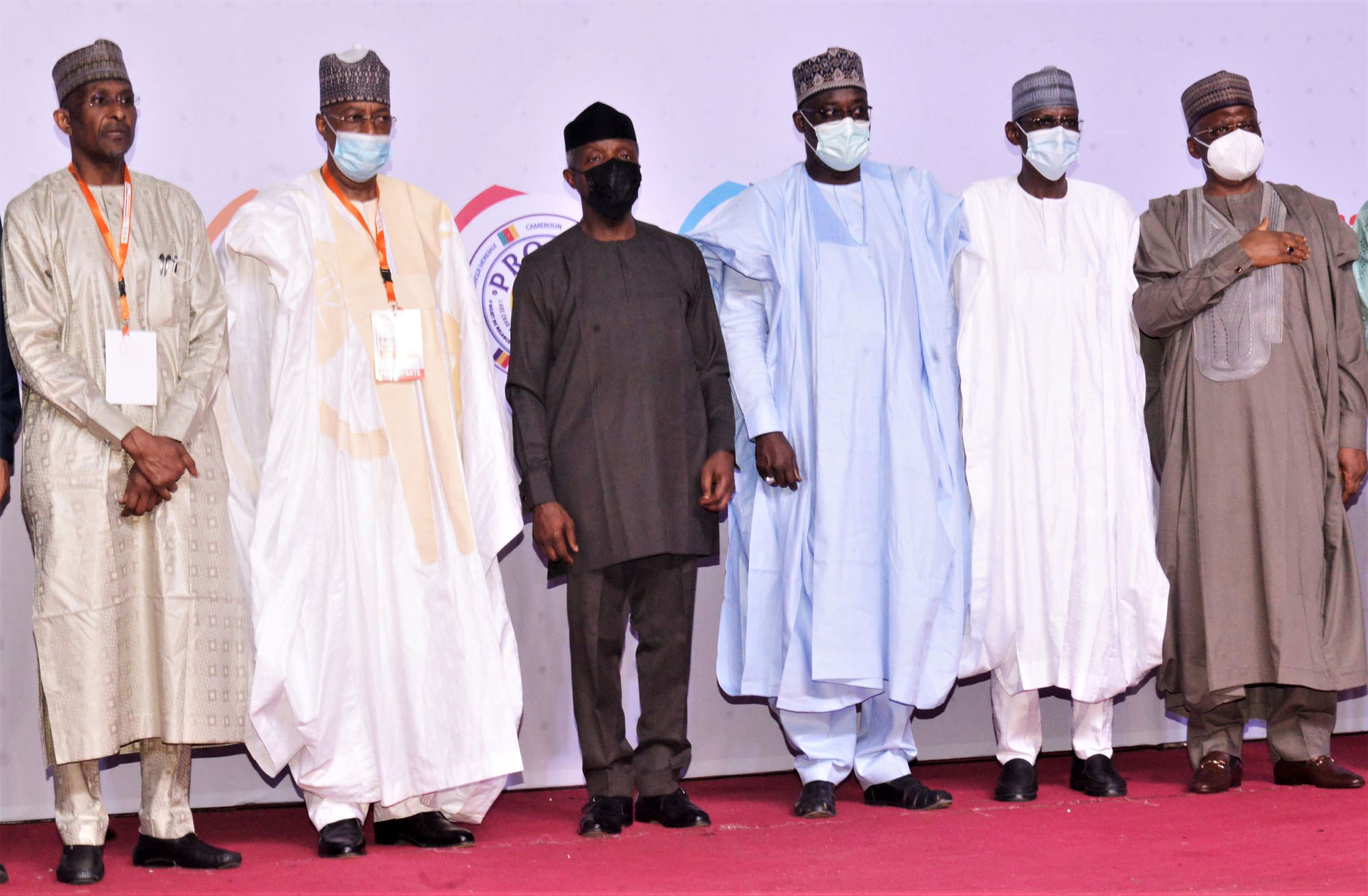
The Vice President, Prof Yemi Osinbajo, has said that the global energy transition must be managed in a way that is sensitive to Africa’s priorities.
In a statement, yesterday in Abuja, Osinbajo’s spokesman, Laolu Akande, said the vice-president spoke virtually at the 2022 Standard Bank Climate Summit themed, “Africa’s Path to Carbon Neutrality”.
Osinbajo’s focus was on how to manage the energy transition to net-zero in the context of Africa’s unique challenges, such as energy poverty.
The vice-president said that the current global energy transition was both an opportunity for the preservation of the earth, unlocking the potential and livelihoods of millions of people, especially those in developing countries.
“The current energy transition is an opportunity like none other for the preservation of the planet.
“But, it can also be a vehicle for unlocking the development potential and livelihoods of millions of people; there is no reason why we cannot have both.
“The global community must account for diverse realities and accommodate various pathways to net-zero, particularly for African nations.
“This is because they need financial and technical support as well as the flexibility to develop as swiftly as possible,” he added.
According to Osinbajo, this will ensure a fair and balanced energy transition that leaves no one behind.
The vice-president said: “How we manage the global energy transition must be sensitive to Africa’s priorities.
“The global energy transition must place energy access for both consumptive and productive uses at the heart of climate action.”
Osinbajo said that to ensure a global energy transition that was favourable, African nations needed to engage more critically and vocally on the matter.
The vice-president made reference to Nigeria’s Energy Transition Plan(ETP) as a leading light.
“The value of having a nation-specific, data-driven plan as the basis of our activities and engagements cannot be overemphasised.
“The plan provides a clear financial estimate for the achievement of Nigeria’s energy access and transition goals.
“The ETP finds that an additional 10 billion dollars over business as usual is required annually till 2060 to shift the entire economy to a net-zero pathway; we hope to see more of such plans on the continent,” Osinbajo said.
He said that efforts were being made to have a pan-African position on energy transition.
Osinbajo said: “This is underway with certain countries including Nigeria developing and signing on to the Kigali Communiqué which came out of the Sustainable Energy for All Forum in June, and outlines principles for a just and equitable energy transition.
“We must take ownership of our transition pathways and design climate-sensitive strategies that address our growth objectives.
“We must clearly and thoroughly articulate our priorities, strategies and needs.
“Though Africa’s current unmet energy needs are huge, future demand will be even greater as populations expand, people move into the middle class and rapid urbanisation continues.”
The vice-president recalled that in 2020, Sub-Saharan Africa had 568 million people without access to electricity.
Osinbajo said that the aforementioned represented more than three-quarters of the world’s total un-electrified population.
According to him, most developed nations have 100per cent energy access.
The vice-president said: “Surely, the race to net-zero must not leave people in the dark.
“Also, Sub-Saharan Africa remains the only region in which the number of people without access to clean cooking fuels and technologies is rising.
“19 of the 20 countries with lowest clean cooking access rates are in Africa.
“Limiting the development of gas projects, as a critical energy transition pathway for Africa, violates enshrined principles of equity and justice.
“It also poses dire challenges for African nations while making an insignificant dent in global emissions.”
Osinbajo said Africa had contributed the least of any global region to greenhouse gas emissions and currently emits under 4 per cent of global emissions.
The vice president said that under no plausible scenario were Africa’s emissions a threat to global climate targets.
“Unfounded predictions should not serve as excuses to limit our energy technology options.
“Limiting financing of gas projects for domestic use in Africa would pose a severe challenge to the pace of economic development, delivery of electricity access and clean cooking solutions, and the scale-up and integration of renewable energy into the energy mix,” he added.
On financing energy transition, Osinbajo said a balanced and just approach to the energy transition recognised that finance was key.
He said that lack of access to finance remained the biggest challenge for accelerating action on energy access and climate goals in Africa.
The vice-president restated the call on developed countries to bridge the disparity in energy investments.
“Of the $2.8trillion invested in renewable energy from 2000 to 2020, only about 2per cent, $60billion came to Africa.
“It has been estimated by the International Energy Agency that Africa will need around $133billion annually in clean energy investment to meet our energy and climate goals between 2026 and 2030,’’ he said.
The Standard Bank Group, which hosted the event, had committed to achieving net zero carbon emissions from its own operations for newly built facilities by 2030.
The group also said it would be targeting net zero emissions for existing facilities by 2040, and from its portfolio of financed emissions by 2050.


Continue Reading

Business

Pipeline Explosion In Abua Odua, LGA Chair Calls For Calm

Published

on

Fresh explosions have hit oil and gas pipelines in Odau Community, in Abua/Odual Local Government Area of Rivers State, triggering a major security and  environmental crisis that has forced residents to abandon their homes.
The first incident occurred  along the Kolo Creek – Rumuekpe crude oil pipelines, operated by Renaissance Africa Energy Company Limited.
This was followed by a gas pipeline explosion on the Ogboinbiri – Obirikom Gas Pipeline, operated by Oando Plc, in the same week.
In a statement by the Abua/Odual Council Chairman, Hon. Owolobi Michael Ofori said  the blasts, suspected to be the handiwork of militants, have unleashed persistent gas leakage in the area, raising fears of fire outbreaks and toxic exposure as residents of Odau have largely deserted the community due to the dangerous situation.
According to him, some residents of the area have been hospitalised after inhaling the leaking gas, adding that the impact has spread to neighbouring communities, including Obedum, Emirikpoko, and Anyu in Abua/Odual LGA, as well as Oruma and Ibelebiri in Bayelsa State.
Hon. Ofori expressed deep concern over the plight of the affected residents and urged the operating companies to act swiftly.
The Council expressed its deepest sympathy to all affected persons and communities and remained gravely concerned about the safety, health, and welfare of residents whose lives and livelihoods have been disrupted by these incidents.
“We call on Renaissance Africa Energy Company Limited and Oando Plc to immediately deploy all necessary technical and emergency response resources to contain the fires, halt the gas leakage, secure the affected pipeline corridors, and mitigate further environmental and public health risks.” the Council Chairman Said.
The chairman also appealed to the two oil firms to provide immediate humanitarian assistance and relief materials to the displaced residents while work continues to restore normalcy.
The Council Chairman said he is working closely with security agencies and emergency responders to monitor the situation and coordinate necessary interventions.
The Council Boss advised Residents of the Local Government Area to remain calm, cooperate with authorities, and adhere strictly to safety directives.
Ofori further called on the National Emergency Management Agency (NEMA), the National Oil Spill Detection and Response Agency (NOSDRA), the Rivers State Government, and other relevant bodies to intervene urgently to prevent  loss of lives and environmental damage.
Hon. Ofori assured that the council remains committed to the protection and welfare of its people and will continue to engage all stakeholders to resolve the crisis.
Enoch Epelle
Continue Reading

Business

Fidelity Bank Collaborates YEIDEP To Empower Nigerian Students

Published

on

Fidelity Bank Plc has reaffirmed its commitment to youth empowerment, financial inclusion and entrepreneurship through a strategic partnership with the Youth Economic Intervention and De-radicalization Programme (YEIDEP), a Federal Government-backed initiative aimed at equipping young Nigerians with the skills, support and opportunities needed to build sustainable livelihoods.
Under the partnership, the bank will support the enrolment of students and young people into the YEIDEP programme, which is designed to tackle youth unemployment, promote enterprise development and expand economic participation among Nigeria’s growing youth population.
The next phase of the initiative is scheduled to end today at Nnamdi Azikiwe University, Awka, where the enrolment exercise for students and youths across the South-East that started since July 1st would be concluded at the university’s Convocation Arena.
The exercise is expected to reach more than 60,000 regular undergraduate students.
Speaking on the partnership, Fidelity Bank’s Divisional Head, Product Development, Osita Ede, said youth empowerment remains central to the bank’s vision of building a more inclusive and prosperous society.
He noted that Nigeria’s youths represent the country’s greatest asset and stressed that providing them with the right skills, opportunities and financial support is critical to unlocking their potential and driving national development.
According to Ede, the bank continues to provide young Nigerians with tools for success through its digital banking platforms, financial literacy initiatives, youth-focused products and strategic partnerships.
He added that Fidelity Bank recognises that limited access to funding, mentorship and business development support remains a major challenge for many aspiring entrepreneurs, and is committed to creating pathways that will help them overcome these barriers.
The bank said its support for YEIDEP aligns with its longstanding commitment to empowering Micro, Small and Medium Enterprises (MSMEs), which it described as key drivers of economic growth and job creation in Nigeria.
Interested students and youths have been encouraged to open Fidelity Bank accounts and register for the programme through the bank’s dedicated online portal.
Nkpemenyie Mcdominic, Lagos
Continue Reading

Business

NPA Launches Multi-Agency Taskforce To Combat Apapa Traffic Gridlock

Published

on

The Nigerian Ports Authority (NPA) has launched a multi-agency task force to combat the resurgence of traffic gridlock choking the Lagos Port access roads, in a fresh push to restore seamless cargo evacuation and sustain recent gains in Port efficiency.
The intervention followed a stakeholders’ meeting convened by the Managing Director of  NPA, Dr. Abubakar Dantsoho, on June 23rd, 2026, where security agencies, freight forwarders, truck operators and representatives of the Lagos State Government agreed on coordinated measures to eliminate the bottlenecks disrupting cargo movement.
At the meeting, stakeholders identified illegal extortion points, overlapping responsibilities among security agencies and other operational distortions as major factors responsible for the renewed congestion along the port corridor.
Speaking on the outcome of the meeting, the NPA’s General Manager, Corporate and Strategic Communications, Mr. Ikechukwu Onyemakara, said the Authority’s overriding priority is to guarantee the unhindered movement of cargo to and from the nation’s seaports.
According to him, the task force comprises the NPA, the Police, the National Association of Government Approved Freight Forwarders (NAGAFF), the Association of Nigerian Licensed Customs Agents (ANLCA), the Federal Road Safety Corps (FRSC), the Maritime Workers Union of Nigeria (MWUN), the Nigerian Association of Road Transport Owners (NARTO) and the Association of Maritime Truck Owners (AMATO).
“The responsibility of the task force is to monitor truck movement on the Port access roads on a regular basis, identify any disruption capable of causing gridlock and immediately resolve such challenges,” Onyemakara said.
He stressed that members of the task force would not establish checkpoints along the corridor but would maintain strategic presence at designated locations to ensure compliance without obstructing traffic.
To enhance rapid response, Onyemakara disclosed that the task force has created a dedicated WhatsApp platform through which members can instantly report infractions or emerging traffic issues for immediate intervention.
On the long-delayed renewal of the Electronic Truck Call-Up (ETO) system contract, the NPA spokesman said the Authority is reviewing the terms to ensure a more robust contractual framework before awarding a fresh agreement.
He explained that although the previous contract had expired, the ETO platform remains operational under the management of the Truck Transit Parks (TTP) pending completion of the procurement process.
He expressed confidence that the renewal would be concluded soon.
Reaffirming the Authority’s commitment to maintaining free-flowing Port access roads, Onyemakara said efficient logistics remain central to the NPA’s drive to improve Nigeria’s Port competitiveness and preserve its growing international reputation.
“We are more interested in the free flow of logistics into our ports than anyone else because it is in our own interest,” he said
Nkpemenyie Mcdominic, Lagos
Continue Reading

Trending