
Politics
Make NDDC Accountable To Niger Delta People – INC Boss

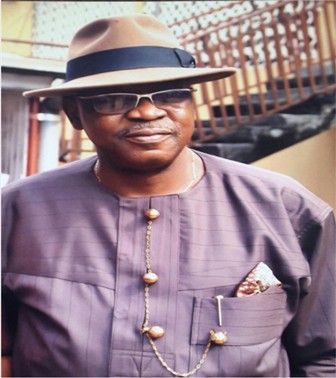
Alabotubo Charles Harry is the President of the Ijaw National Congress (INC) worldwide. During a live Radio programme in Port Harcourt last Monday, he stated the position of the Ijaw apex organisation on the forensic audit of the NDDC ordered by President Muhammadu Buhari, insisting that the Interim Management Board of the commission led by Dr. Joy Nunieh should not be tampered with. He also spoke on the just concluded Governorship election in Bayelsa State. The Tide correspondent, Dennis Naku who monitored the programme presents this report. Excerpts.
Would you say happenings in Ijaw land in the last couple of months have been a good tiding for the people?
Elections are for the people to decide for themselves where they want to go whether we like where they have gone or not is not the issue here. What is an issue here is that the will of the people have taken place in Bayelsa and Bayelsa State cannot and will not be ruled through surrogates or God-fathers. For me I think where the people want to be is good tidings. A lot of people have few constraints here and there about what they feel about the elected or the Governor-elect. But I think that is not an issue.
What is the view of the INC on the forensic audit of the NDDC ordered by President Muhammadu Buhari?
I think it is a welcome development. I mean the Ijaw nation considering the 13 per cent derivation, the NDDC, the Amnesty Programme and the Ministry for the Niger Delta should have done much way better than it is doing. It is doing really poorly and I think an audit into the NDDC in particular, which is an interventionist agency to take care of certain developmental aspect of the Ijaw nation and the Niger Delta in general is a core place to begin.
Many Ijaw sons have held sway at NDDC, yet nothing seems to be coming to the Ijaw nation?
The real problem with the NDDC is the constitutional arrangement put in place. The NDDC act is set to fail. It is created in such a way that it puts a lot of power and puts the helmsmen in the NDDC under too much strain from extraneous quarters where they must kow tow to the dictates of the people who beat the drum, the senators, members of the House of Representatives, people in the executive. And you laden it up also with extraneous bodies like directors from the North East, North Central, North West, South West etcetera. All these things were time bombs that are now playing themselves out. I think the essence of this audit on the affairs of the NDDC is necessary because we need to find out why so much money has been pumped into the NDDC and it is not working. And the problem we are facing today, the fight against the Interim Management Board is because the same powers that be do not want that audit to succeed. Because if it does, maybe, we will get to a position where the NDDC Act will be amended to remove the overbearing influences that curtail its abilities to achieve its set aims.
The region has NDDC and Ministry of Niger Delta, one may be tempted to ask how come you are complaining of underdevelopment or do you think it is an orchestration to blackmail the region?
I will want to say that a lot of the faults belong to us at home here (Niger Delta). We must take the bull by the horns and accept responsibility for a great number of the things that have gone wrong. We have members representing us at the National Assembly who should have asked for an amendment of the laws blackmail, yes it is because if the Niger Delta Ministry cannot build the East West Road in over, it is close to 10 years since that Ministry was created and one major artery that takes the bulk of the products because the industrial hub of Nigeria sits here into the developed quarters of Lagos and the Ports cannot be fixed, then something is deliberately wrong. I believe and I am not in any way controverted to say that there is more to it than meets the eye.
You said one of the biggest challenge is the NDDC Act itself though you support the forensic audit. Do you think the rot might not go away unless the NDDC Act is changed?
Correctly so. The truth of the matter is that I even see the process of amending the NDDC Act being truncated because we saw the hurry with which the National Assembly went on to confirm a list that in itself is an abrogation of the principles and practices of the NDDC Act itself. People were put there surreptitiously and now an Interim Management Board was put in for one purpose. Not to issue contract, but to go and try to find out what is the problem going on there. The Interim Management Board as led by Dr. Joy Nunieh is supposed to just go in there and create an enabling environment for internationally reputed companies to do a forensic audit and see why trillions of Naira has been put into this place (NDDC) and it is not working.
It is not working because the budget of the NDDC is approved by the National Assembly. The two Houses and their oversight bodies always scream of and do not carry out the contracts.
Don’t you think people that the Niger Delta should also share the blame for the underdevelopment of the region rather than trading blames?
I have agreed that there is need for the forensic audit. But what I am insisting on is that the Interim Management Board must not be tampered with because the source of the problem is the oversight function that has been given through the Act to certain people. The Interim Management Board does not owe its loyalty to the National Assembly. Its job is clear and distinct, go clear the rot. But I am saying that after the rot is cleared, let us also clear the debilitating factors. Let us deal with what is causing this problem ab initio and not the causative reactions. The problem if you remember under the Onene, I believe the first Managing Director of the NDDC, the problem was not much, but now every NDDC leadership owes all its life to some people in the National Assembly. That is unacceptable.
The NDDC was established and put under the presidency for a reason. It wanted to address the issue of underdevelopment and agitations in the region so that we can have a seamless way of producing oil and selling our oil. We in the Niger Delta are complaining of degradation, of dehumanization. That is what NDDC should take care of. What has happened to the master plan that came out from Timi Alaibe? It’s been dumped. All they do in NDDC is issue contracts without milestones. Knowing what have we achieved, where are we going and what should be done? Joy Nunieh’s board is not to take us forward. It is to look behind because the truth remains, and it is incontrovertible that until and unless the foundation on which we build the superstructure called NDDC is sustainably corrected, that is why I go to the Act, nothing good can be put on it. That is my position.
What will you want changed in the present NDDC Act?
First and foremost the NDDC Act must make the NDDC accountable to the Niger Delta itself. Once you make it accountable to the National Assembly, then it cannot carry what it is set up to achieve. Check the North East Development Commission today, the Act setting it up is quite different from the NDDC Act, why is that? There are no extraneous bodies in that commission. But for today, all I am interested in is that let a forensic audit be carried out and let those fat cows sitting at the National Assembly be put to the knife so that we can see whether they were doing their job of oversight or becoming cake sharers and developers of their own pecuniary interest rather than the interest of the Niger Delta. The Niger Delta is at fault. We have been slovenly, we have been very lazy in our intellectual and idiosyncratical attitude towards the NDDC. We only ask for crumbs to come to us rather than to ask where is that trillion? Where is that development? And challenge to know who are the contractors, what are the timelines and why is it not delivered? That is the crux of the matter!
That is the way to go because we have what it takes. We have the will to do it. So I am saying we will call a coalition of intellectual thinkers together that can think out a way through to solve this problem because we cannot continue to play the ostrich and sit down and watch what is going on go wrong. All we want from the Federal Government for now is that the Interim Management Board should not be hampered and that Dr. Joy Nunieh who I know personally as an amazon with a great heart can do this job without fear or favour. She will unearth the rot.



The Independent National Electoral Commission (INEC) has extended the deadline for political parties to submit the list of candidates for the 2027 governorship and state Houses of Assembly elections from Saturday, August 8, to Tuesday, August 11, 2026.
The commission announced the extension in a statement issued on Saturday and signed by the National Commissioner and Chairman of its Information and Voter Education Committee, Mohammed Haruna.
According to INEC, the decision followed appeals by political parties for additional time to complete the submission process through the dedicated online portal.
“The submission window, which according to the revised Timetable and Schedule of Activities for the General Election was originally scheduled to close on Saturday, 8th August, 2026, has been extended to Tuesday, 11th August, 2026,” the commission said.
In a a related development, INEC announced the suspension of PVC collection in Osun State ahead of the August 15 governorship election.
The commission said voters who applied for replacement of lost, damaged or defaced Permanent Voter Cards would have until midnight on Sunday, August 9, to print downloadable copies of their cards.
The electoral body explained that the deadline was necessary to enable it compile data on downloaded PVCs and produce final statistics on the total number of cards collected ahead of the election.
INEC said PVC collection in Osun commenced at the Registration Area level from July 22 to 28, 2026, but was extended to July 31 following complaints about large crowds and difficulties experienced by voters at collection centres.
The exercise subsequently moved to the local government level and ran from August 1 to 7.
The commission also disclosed that replacement downloadable PVCs had been made available to voters in Odo-Otin and Ife Central Local Government Areas following the theft of cards during attacks on the two collection centres.
It stressed that the stolen cards could not be used to vote.
INEC reassured Osun residents of its preparedness for the August 15 governorship election.
“The commission reiterates that the stolen cards cannot be used to vote.
“INEC reassures the people of Osun State of its readiness to conduct a free, fair, credible and inclusive governorship election on 15th August, 2026,” the statement said.
The commission said the deadline, initially set for Saturday, 8 August, has been extended to Tuesday, 11 August 2026, following appeals from political parties for more time.
INEC also announced that the window for voters who applied to replace lost, damaged or defaced PVCs to download their replacement cards will close at midnight on Sunday, 9 August.
The move is to enable the commission compile final PVC collection figures ahead of the 15 August Osun governorship election.
INEC said replacement downloadable PVCs have also been provided to affected voters in Odo-Otin and Ife Central Local Government Areas after hoodlums carted away cards from two collection centres, stressing that the stolen cards cannot be used to vote.
The commission reaffirmed its readiness to conduct a free, fair, credible and inclusive election in Osun State.
Gov. Kefas made the remarks over the weekend at the Federal Medical Centre (FMC), Jalingo, during the flag-off of the second phase of the Renewed Hope Medical Outreach in Taraba State, organised as part of activities marking Prof. Yilwatda’s 58th birthday.
The governor commended Prof. Yilwatda for choosing to mark his birthday by providing medical care to people in need.
“What Professor Nentawe did is a powerful demonstration of what leadership should be,” Gov. Kefas said.
He assured that his administration would continue to support initiatives that complement government efforts to improve healthcare delivery and the wellbeing of residents.
Speaking at the event, Prof. Yilwatda called on Nigerian leaders to embrace the culture of giving and use their positions to touch the lives of the less privileged.
He said his decision to celebrate his 58th birthday in Taraba State was deliberate and informed by the needs of underserved communities, particularly people who face difficulties accessing healthcare because of distance and financial constraints.
According to him, the intervention followed a needs assessment and was extended across the three senatorial districts of the state.
He said the exercise commenced on August 3 at Takum General Hospital and covered the Federal University Teaching Hospital, Wukari; First Referral Hospital, Sunkani, Ardo-Kola Local Government Area; General Hospital, Bali; General Hospital, Gembu; and FMC Jalingo.
Prof. Yilwatda said the intervention provided medical services to thousands of beneficiaries, including people who required surgical procedures.
He said sustainable national development could only be achieved when strong institutions placed Nigerians at the centre of development.
“Leadership is about service,” he said, urging political and public leaders to make giving back to society an important part of their responsibilities.
He reaffirmed his commitment to serving Nigeria and its people, saying his personal vision was to make every day of his life useful to humanity.
“Every day that I live, the vision is: let it be useful to humanity,” he said.
The Taraba State Commissioner for Health, Dr. Bordiya Buma, commended the initiative, saying it was consistent with the Renewed Hope agenda and efforts to strengthen healthcare delivery in the state.
Dr Buma said the second phase followed the successful completion of the first phase, which was conducted simultaneously in six local government areas, with two LGAs selected from each of the three senatorial districts.
According to him, more than 10,000 patients were attended to during the first phase, including people with medical and surgical conditions.
He disclosed that 327 general surgeries, 71 eye surgeries and 575 dental procedures were carried out during the exercise.
The commissioner expressed appreciation to President Bola Tinubu for the Renewed Hope Medical Outreach and thanked Prof. Yilwatda for supporting the initiative and choosing Taraba State as a beneficiary.
The Minister of Health and Social Welfare, Prof. Muhammad Ali Pate, also commended Prof. Yilwatda for choosing Taraba State to mark his 58th birthday through a medical outreach.
Prof. Pate said making healthcare the centrepiece of the birthday celebration was significant because health affects everyone.
-

 News2 days ago
RSG Targets Nine Million Residents in Mosquito Net Distribution Campaign
-

 Oil & Energy2 days ago
Aiyedatiwa Signs New Electricity Bill
-

 Oil & Energy2 days ago
NLNG Commissions Research And Innovation Centre In RSU
-

 Maritime2 days ago
Marine Minister Commends President Tinubu On NPERA Bill Assent
-

 News2 days ago
KenPoly Holds Eight Convocations, August 29
-

 News2 days ago
RSG Begins Another Phase of Projects Commissioning Today
-

 News2 days ago
RMAFC Completes Revenue Sharing Review, Proposes New Pay
-

 Maritime2 days ago
NAGAFF Petitions IGP Over Alleged Maritime Police Harassment