
Featured
Nigeria’ll Break Up, North’ll Suffer, Sheikh Gumi Predicts …Violent Extremism, Greatest Challenge Facing Islam –Buhari …Focus Attention On Economy, Security, Reps Minority Caucus Tells Buhari

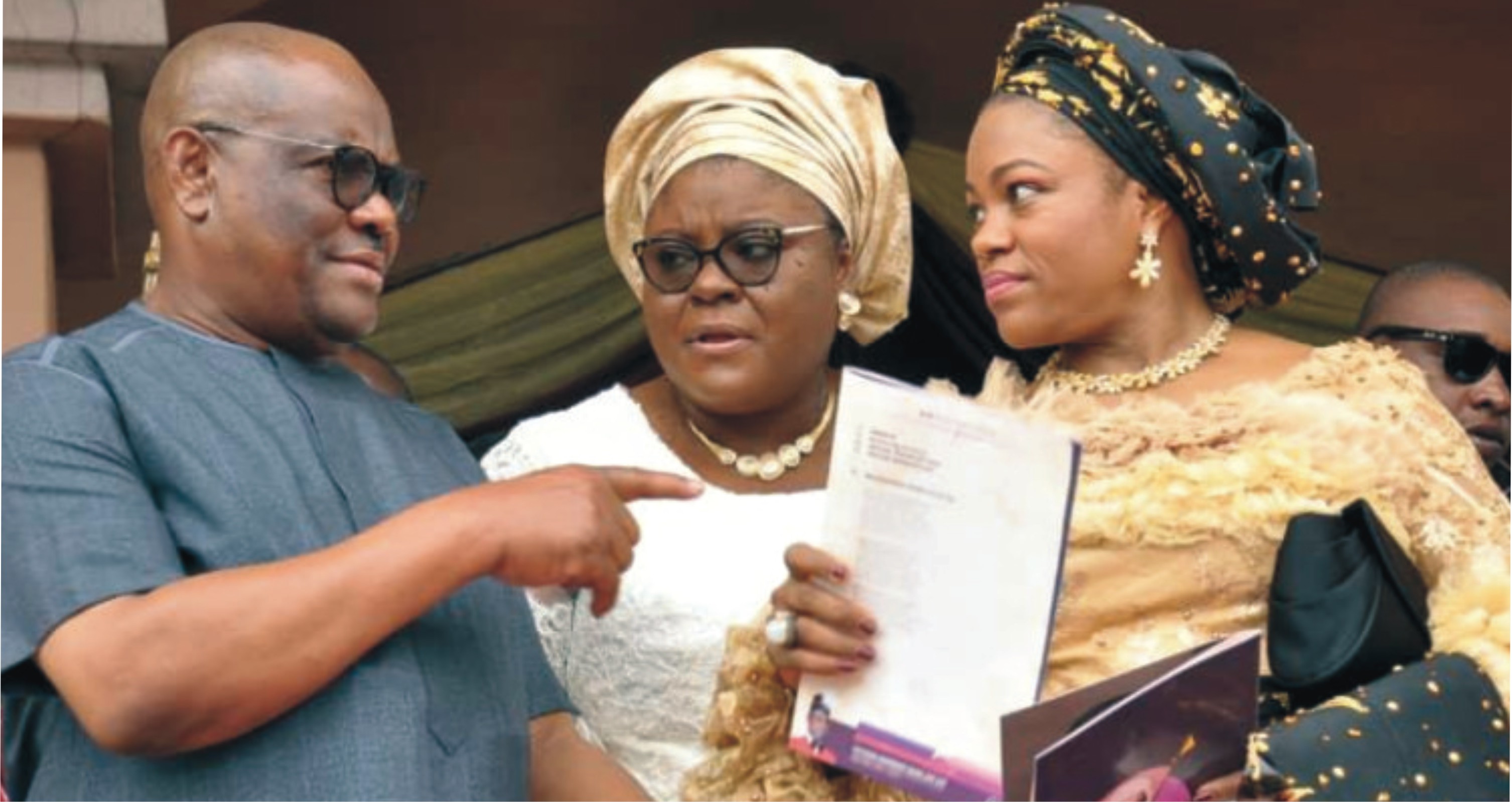
A prominent Islamic scholar, Dr Ahmad Abubakar Mahmud Gumi, has predicted that Nigeria will disintegrate and that the North will suffer most compared to the other regions.
According to him, in the face of a possible break up, the South-West will be relatively stable; South-East will be stable, but the North will be volatile.
Narrating what Nigeria will be like if it disintegrates, the cleric said, “I see chaos and probably Nigeria can even disintegrate. And disintegration will be bad for Nigeria”.
“Let me tell you about the North if there is disintegration. The worst thing any country will like is to have an unstable country as a neighbour.
“So, South-West will be relatively stable; South-East will be stable, but the North will be volatile. How can we contain Boko Haram in the North-East? No way.
“How can we contain the problem of the herdsmen in the North? We cannot contain them.
“In fact, the little weight the South-West and South-East are adding to fight them is what is suppressing them, but if you go and leave us with them, we will just eat ourselves and you have a very volatile North and I do not think we will have peace there because the borders are not barbed-wires and there are so many inter-marriages.
“In fact, Nigeria will just be like another Lebanon or Yemen. Nobody can control the North because nobody has monopoly of power in the North.
“The herdsmen, if they have any iota of political acumen, even if they are evil since your man is in power what do you do? You lie low to allow him to have the power.
“You don’t become so virulent that you end up destroying the northern power by attacking people everywhere not caring who is there. Let me tell you this.
“Nobody is in control of the North now. No northern politician has that clout to embrace everybody in the North.
“Everybody in the North is with his clique and that is a very dangerous situation for the country. The South-West is divided into two equal houses, and nobody is in control there too, but generally, the people there are not violent.
“They can negotiate and stay in peace. The people of the South-East seem to understand each other because their own is business. I see it to be more stable even though the Kanu IPOB people are there because generally the population there can understand and negotiate.
“They can only have population problem if people ask them to go back to their region. But the North? So, you can just imagine.”
Meanwhile, President Muhammadu Buhari has described violent extremism as the biggest challenge facing Islam.
In his Eid-el-Kabir message to Muslims, yesterday, the president said that the only way to neutralise the evil influence of extremism is for Muslims to distance themselves from the activities and teachings of those who preach indiscriminate violence against innocent people.
According to Buhari, the greatest commitment to Islam is for Muslims to put its good virtues into practice, and by making justice and righteousness the guiding principle of their everyday life.
“We should be the mirror through which others see the good virtues of our faith,” he said.
“Islam is a religion of peace, and we should avoid violent extremist ideas that give Islam a wrong name because our conducts leave more lasting positive impressions than what we say by word of mouth.”
The president regretted that “violent extremism is the greatest challenge facing Islam today and the only way we can neutralise its evil influence is to distance ourselves from the activities and teachings of those who preach indiscriminate violence against innocent people. And this flies in the face of the teachings of Islam.”
In a statement signed by his Senior Special Assistant on Media and Publicity, Mallam Garba Shehu, Buhari, advised parents to “protect their children from the deadly exposure to violent extremists who manipulate and exploit those children for their own evil agenda.”
The President noted that “Boko Haram became a deadly force and a major security scourge because Muslim societies were indifferent from the beginning to the activities of extremist preachers who manipulate innocent and gullible followers.”
He said that “extremism is like a cancer, which must be detected and destroyed from its early stages of growth.”
He, however, assured Nigerians that the Boko Haram terrorism, kidnappings and other forms of banditry “would be dealt with uncompromisingly until we see the back of these evils plaguing our country.
“Despite occasional setbacks, the Boko Haram militants have been so militarily weakened and scattered by our Armed Forces that they are no longer in a position to occupy any part of Nigeria, let alone hoist their flag and impose their reign of terror longer than 24 hours.
“As our armed forces get more equipped and trained, in addition to being more motivated and reinvigorated, this administration is relentlessly committed to protecting Nigerians no matter what it takes to bring a permanent end to this evil.”
He advised Muslims to be tolerant and continue to work for peace, unity, national integration, and peaceful coexistence.
Also in his message, Sultan of Sokoto and President-General of the Supreme Council for Islamic Affairs (NSICIA), Muhammad Sa’ad Abubakar felicitated with Muslims on the occasion of 2019 Eid-el-Kabir celebrations.
In a statement by the Deputy Secretary General, NSCIA, Prof Salisu Shehu, yesterday, the Sultan prayed to Allah to grant faithful the opportunity to witness many more of it.
The statement read, “the Nigerian Supreme Council for Islamic Affairs (NSCIA), under the leadership of its President-General and Sultan of Sokoto, His Eminence, Alh. Muhammad Sa’ad Abubakar, felicitated with the Nigerian Muslim Ummah and indeed the entire Muslim world on the auspicious occasion of the 1440 AH ‘Eidel Adha celebrations. We beseech Allah to grant us the opportunity to witness many more of it.
“According to the Sunnah of the noble Prophet Muhammad (PBUH), Muslims who are not on pilgrimage in the Holy Land are encouraged to fast on the day of ‘Arafat and engage themselves in acts of worship and veneration to Allah, believing that with sincerity of intentions, He will forgive their transgressions and overlook their short-comings of the preceding and succeeding years as well as admit them to His Jannah.
“We, therefore, ask Allah to accept our ‘Ibadat, increase our ‘Iman and grant us protection, contentment and grateful hearts throughout the first ten days of this month and most especially on the Arafat Day.
“Fellow servants of Allah, in celebrating this year’s ‘Eidel Adha, we must not lose sight of the moral and spiritual reasons for the season. ‘Eidel Adha is a period of introspection and soul searching. It symbolizes sacrifice, which was sufficiently demonstrated by our patriarch – Prophet Ibrahim (PBUH).
“Making sacrifice for the collective good of all and posterity (a key component that is missing in our national life, which is partly responsible for the quagmire we have found ourselves in) is one of the major themes for ‘Eid. Our patriarch was willing to let go (sacrifice) that which he cherished most – his only son, Isma’il — as sacrifice in obedience to Allah’s dictates. (Q37:102)
“In the same vein, the council fervently appeals to our millions of brothers and sisters to continue to emulate the example of Prophet Ibrahim (PBUH) in making the needed sacrifice to keep the country united and to honour the labour of our heroes past.
“The council is worried that the security situation in the country has degenerated rapidly from a state of benign manageability to that of intractable malignancy in recent times. This situation, which seems to preoccupy the attention of the Federal Government at the expense of other issues in the socio-political and economic spectra, appears increasingly problematic.
“The situation is further exacerbated by the political polemics and hate speeches by separatists disguised as statesmen, which have greatly undermined social cohesion and eroded our shared values as Nigerians.
“The council hereby calls on the Federal Government to be decisive in dealing with those who are bent on heating the polity with hate speeches in the country, no matter how highly placed they may be.
“It is on this note that we urge Muslims in the country to be security conscious while they also remain very prayerful as they celebrate ‘Eidel Adha. NSCIA appeals to the relevant authorities to beef up security for all Nigerians especially in the places of worship and places of important events and gatherings during the Eid celebrations.
“The council calls on all Muslims in Nigeria to be good ambassadors of Islam as we continue to promote peace, and eschew all forms of any anti- social behaviour that may be inimical to peace, national cohesion and stability.
“Finally, we beseech Allah to restore peace and stability to all the troubled parts of our great country and the world at large. Also, we pray that Allah grant our President, Muhammadu Buhari, sound health and divine wisdom to lead our great nation to enviable heights”.
The Senate President, Dr Ahmad Lawan, also urged Nigerians to be steadfast in the process of nation-building, as they join the rest of the world to celebrate the Eid-el-Kabir.
Lawan, in his Sallah message, enjoined Nigerians to always remember their shared heritage and destiny of national greatness and be guided by the Nigerian spirit of firm confidence as they tackle the contemporary challenges of nation-building.
He also congratulated Muslims from Nigeria who joined their brothers and sisters in participating in the rites of the Hajj in Saudi Arabia.
Muslims, he stressed, should remember the purpose of the celebration, which is to commemorate the trials and triumph of Prophet Ibrahim.
He said: “I urge all to take inspiration from the exemplary virtues demonstrated by Prophet Ibrahim through his sacrifice, patience, steadfastness, generosity and obedience to Allah’s command and constituted authority.”
The Senate president is currently in the Saudi Arabia on pilgrimage.
Also, the All Progressives Congress (APC) asked Nigerians to shun disruptive and divisive utterances and actions emanating from some unpatriotic quarters lately.
The party, in a statement signed by its National Publicity Secretary, Mallam Lanre Issa-Onilu, said that in the spirit of the Sallah celebration, Nigerians should learn to exhibit the pan Nigerian spirit anywhere they find themselves.
“As we celebrate the Sallah feast with family, friends and loved ones, Muslim faithful and indeed all Nigerians are implored to show love to neighbours and cater for the less privileged around us,” he said.
He added: “In our national life, Eid-ul-Adha is a reminder for us to make our individual and collective sacrifices for the well-being, unity, peace and development of our dear country, Nigeria.
“We must, therefore, shun the disruptive and divisive utterances and actions emanating from some unpatriotic quarters lately.
“In our private capacity, official duties, wherever we find ourselves, we must all exhibit the pan-Nigerian spirit. We should embrace our country’s diversity and harness it for good. We must see every Nigerian as a brother. We should take advantage of his strength, help him with his weakness. That is the only way we can grow as a country.”
In its message, the Peoples Democratic Party (PDP) asked Nigerians, particularly Muslims, to use this year’s Eid-el-Kabir to imbibe the life of total trust in the Almighty God in all spheres of life.
The party’s spokesman, Kola Ologbondiyan, said the occasion of Eid-el-Kabir “offers us great lessons on selflessness and absolute trust in God, as exemplified in the life of Prophet Ibrahim.”
All compatriots, he said, should use the occasion to particularly pray for the nation, reach out and share with the less privileged, the deprived as well as victims of escalated insecurity in various parts of our country.
Besides, the PDP charged leaders in all walks of life, including public office holders, faith-based and community leaders, captains of industry and employers of labour to “note that their positions are bestowed on them by God for service to humanity, and for which they must give account.”
The party prayed for the unity, peace, stability and development of Nigeria.
Meanwhiile, the Emir of Daura, Umar Faruq Umar, has prayed for Buhari, assuring him that he will continue to triumph over all his enemies.
The Emir made the prayer at the Eid-el-Kabir prayers which took place at Kofar Arewa praying ground, yesterday.
President Muhammadu Buhari, along with his guest, the Guinean President Alpha Conde, had joined other Muslims in Daura, Katsina State, yesterday morning to observe the Eid-el-Kabir prayers at Kofar Arewa praying ground.
Buhari and his guest arrived the praying ground in a black Mercedez Limousine at about 9.35 am.
The President was in Khaki colour flowing robe (Babanriga), brown cap and a pair of brown shoes.
The two Raqat prayers were immediately observed.
The Chief Imam of Daura, Sefiyanu Yusuf led the prayers and read the sermons, which revolved around the importance of the Sallah as a demonstration of Muslims’ loyalty and obeisance to almighty Allah.
In his brief comments, the Emir of Daura, Umar Faruq Umar, lauded Buhari’s administration, assuring him of the support of people of the state.
The Emir said, “We are proud of you; we are proud of your administration and we shall continue to pray for you.
“You will continue to triumph over your enemies.”
In his remarks, Katsina State Governor, Hon Aminu Masari, who also attended the prayer session, praised President Buhari for his strong attachment to the people of the state.
He urged him to continue in his efforts at re-positioning the country.
Buhari and the Emir, later at the praying ground, performed the traditional slaughtering of the Sallah rams.
Similarly, minority caucus of the House of Representatives has urged President Muhammadu Buhari to release the social activist, Omoyele Sowere from the state detention facility.
The caucus also asked the president to direct the attention and the resources of the Federal Government to the economic and security challenges facing the country with a view to finding permanent solutions to them.
The caucus said that their demands were hinged on the spirit of Eid-el-Kabir which entails the display of love and sacrifices to humanity.
It would be recalled that Sowere was arrested in Lagos last week sequel to his call for a national protest under the banner of #RevolutionNow#.
Interpreted to mean revolution against the sitting democratic government, the Department of State Service (DSS), arrested him.
The State Department subsequently obtained a court order to detain Sowere for 45 days to properly investigate his call for a “revolution”.
In their goodwill message to the Muslim faithful issued by the Minority Leader, Hon. Ndudi Elumelu, the caucus also called on Nigerians to imbibe the spirit of love, forgiveness, and sacrifice in order to move the nation forward.
The lawmakers stated the challenges bedeviling the country were surmountable if the government could rally round all Nigerians to work together as one people.
The lawmakers also wished the Muslim faithful a memorable Sallah celebration.
“The House Minority Caucus felicitates with the Muslim faithful at Eid-el-Kabir. We also call on our Muslim brothers and sisters to use the occasion of Eid-el-Kabir to pray for the peace and wellbeing of our nation. There is the need to reflect on and imbibe the exemplary legacies of the Prophet Mohammed, especially his life of love, forgiveness, and sacrifice.
“In the same vein, we urge President Mohammadu Buhari to order the release of the activist, Mr. Omoyele Sowere, in the spirit of Eid-el-Kabir and in deference to democracy.
“Nigeria is currently besieged by enormous economic and security challenges and we expect the Federal Government to direct its attention, energies, and state resources at surmounting them. And in doing so, we expect the government to rally Nigerians across political, religious, and ethnic divides to work as one people to salvage the nation”, the caucus said in a statement made available to journalists in Abuja on Sallah Day”, Elumelu said in the statement.















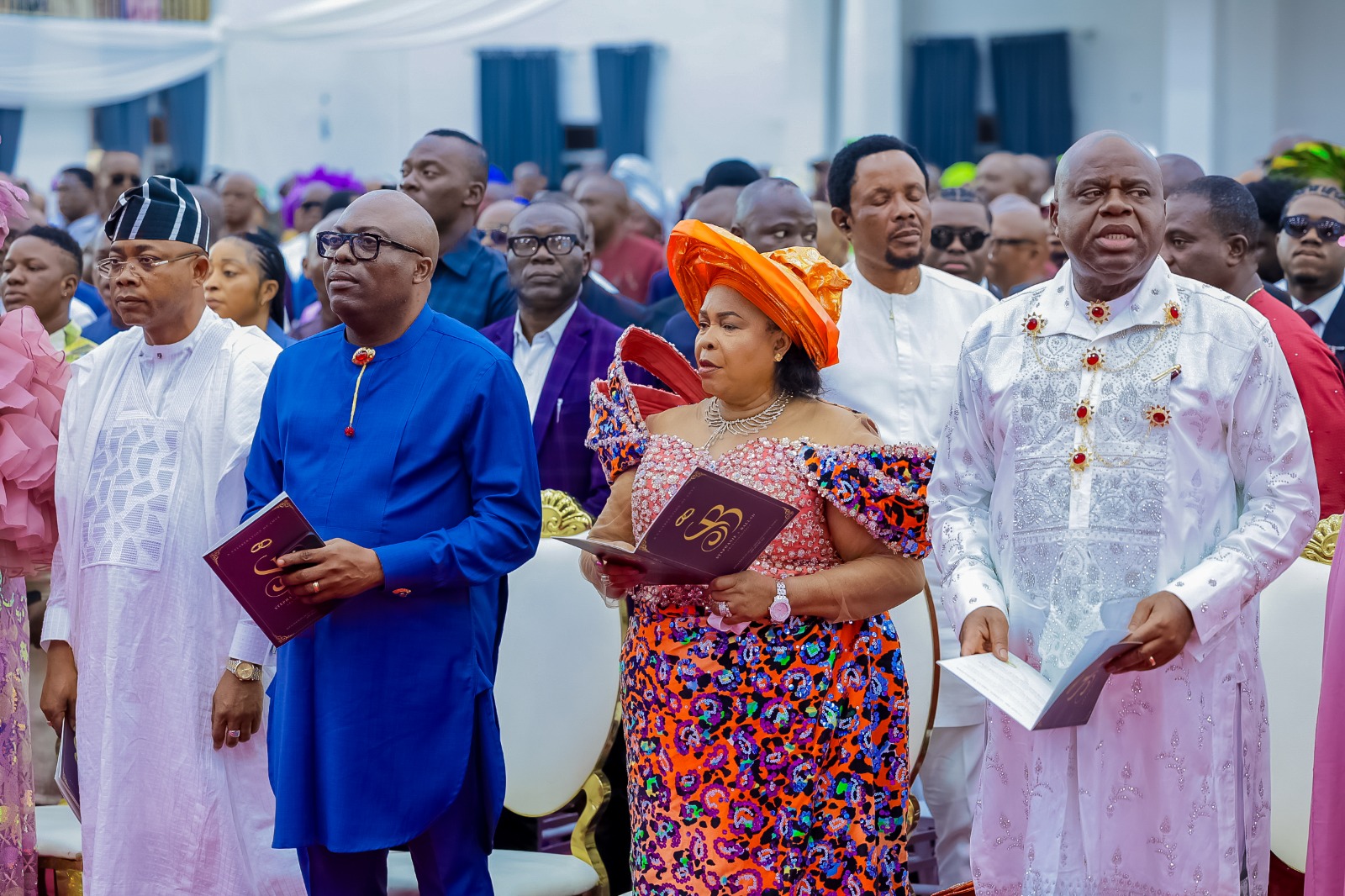
Rivers State, Sir Siminalayi Fubara, has assured members of the National Youth Service Corps (NYSC) of his administration’s commitment to supporting and strengthening the scheme in the State.
Fubara gave the assurance last Friday at the NYSC permanent orientation camp, Nonwa-Gbam, Tai Local Government Area in the State, during the swearing-in ceremony of 2026 Batch B Stream II orientation course.
Represented by the Permanent Secretary, Cabinet Bureau, Office of the Secretary to the State Government, Dr. Promise Oguzie, the governor said the State Government would remain intentional in providing the necessary support to improve the NYSC scheme and enhance the experiences of corps members deployed to the state.
He charged the corps members to be role models and quality nation-builders in their service to the good people of Rivers State in particular, and Nigeria at large.
“I charge you to be exemplary, dedicated and committed in all you do. Take full advantage of all the camp programmes and activities to enrich yourselves”, he said.
In his welcome address, the State Coordinator of NYSC in Rivers State, Mr. Moses Oleghe, urged corps members to see their deployment to Rivers State as a “veritable opportunity to make meaningful contribution to the growth of the State in particular and Nigeria at large.”
He further charged them to serve with all sense of “integrity, discipline, and the fear of God, especially when they will be engaged as INEC ad-hoc staff that will conduct the 2027 general elections.”
A total of 3,584 corps members composed of 1,421 males and 2,163 females were sworn in by the Chief Judge of Rivers State, who was represented by Justice Godspower Aguma.

Governor of Rivers State, Sir Siminalayi Fubara, says Nigeria needs God-fearing leaders for the nation to move in the right direction and make meaningful progress.
The Governor stated this yesterday when he received in audience, the World President of the Seventh Day Adventist Church, Pastor Erton Kohler; his wife, Andriene Marques Kohler; daughter Mariana Marques Kohler and a retinue of ministers of the church at Government House, Port Harcourt.
Fubara who hailed the Seventh Day Adventist Church for its contributions to education and the grooming of future leaders in Nigeria, expressed delight that the Church had over the years, been investing in education at various levels and currently runs two universities in the country.
He commended the church for not only using its institutions to spread the gospel of Christianity but to groom future leaders for the country.
According to him, religion should not be just about defending one’s faith, but also making meaningful impact on the lives of the people.
He said that by floating these educational institutions, the church has demonstrated capacity to support Nigeria in the task of producing not only educated people but a breed of God-fearing leaders.
“Our country is where it is today because we lack the fear of God. If you have the fear of God, there should be a limit to what you can do because you understand the supremacy of God. But when God is not in your equation, you’ll go beyond the line and that is what has brought us to where we are today.
“So, I feel very happy that you are contributing to the development of our future leaders in this country. We need the right people being in the right place; prepared properly with good minds; that is what we need, not just in Nigeria but round the whole world.,” he said.
Governor Fubara further observed that the absence of God-fearing people in high places to take the right decisions that could impact positively on the society, has also given rise to other problems such as social inequality, poverty, corruption and criminality. According to him, Nigeria needs a system where the average parent could afford quality education for their children and a guarantee that upon graduation, the average child will have the capacity to compete favourably with anybody, anywhere in the world.
“If we have a situation where the little money that you’re being paid as wage can also afford you quality healthcare and after working at least for 15-20 years, you have a roof over your head, tell me why you should be involved in any kind of crime? At that point, you’ll feel secured and this attitude of insecurity about the future that leads to all the social vices we have today won’t be there,” he said.
Governor Fubara expressed appreciation to the delegation for the visit and for their prayers for Rivers State, assuring them of his continued support for their programmes in the state.
Leader of the delegation and World President of the Seventh Day Adventist Church, Pastor Erton Kohler said he was in Nigeria for a special conference of the church during which thousands of the church’s ministers will be undergoing an empowerment programme to further equip them for the task of herding their flocks and serving the society.
He expressed gratitude to the Governor for the warm reception accorded his entourage, saying the memory of the visit will linger in his mind for a lifetime.
Kohler disclosed that the Church has over twenty -four million (24,000,000) members and more than 182,000 places of worship, spread across 212 countries of the world.

The Rivers State House of Assembly has approved the 2026–2028 Medium Term Expenditure Framework (MTEF) submitted by Governor Siminalayi Fubara.
This reaffirms the lawmakers’ commitment to enacting laws and taking legislative actions geared towards the overall development of the State.
The Assembly gave the approval during its Second Legislative Sitting of the Fourth Session held last Friday.
Speaking on the MTEF document during plenary, the House Speaker, Rt. Hon. Martin Amaewhule, noted that by the provision of Section 10(1)(b) of the Rivers State Fiscal Responsibility Law No. 8 of 2010, the MTEF ought to have been laid before the House in September 2025.
Amaewhule explained that traditionally, the document is expected to be presented four months before the commencement of the next financial year and immediately after the expiration of every three-year fiscal cycle.
He, however, stated that in the interest of the State and its people, the House considered it necessary to deliberate on the document, describing it as a precursor to the 2026 Budget Estimates.
The Speaker expressed concern that the year had already progressed significantly before the presentation of the framework.
During deliberations on the document, members examined the assumptions and projections contained in the MTEF and observed that strict adherence to the outlined fiscal parameters would ultimately serve the interest of Rivers people.
The lawmakers maintained that effective implementation of the framework would promote prudent financial management and enhance developmental planning across the State.
Following the debate and positive consideration by members, the Speaker put the question to the House and members voted overwhelmingly in support of the approval of the MTEF.
Meanwhile, during the same sitting last Friday, the House also received a petition from the Chairman of Obio/Akpor Local Government Council, Dr. Gift Worlu.
The petition was presented by the member representing Obio/Akpor Constituency II, Hon. Emilia Amadi.
According to the petition, concerns were raised over an imminent security breach, threats to lives, destruction of property and alleged forceful takeover of property by some lawless persons within parts of the Local Government Area.
Presenting the petition before the House, Hon. Amadi appealed to the lawmakers to revisit the matter and take necessary steps aimed at safeguarding lives and property in the affected communities.
The House is expected to further deliberate on the petition and consider measures to address the concerns raised in order to sustain peace and security in the area.
King Onunwor
-

 News1 day ago
RSG Targets Nine Million Residents in Mosquito Net Distribution Campaign
-

 Oil & Energy1 day ago
Aiyedatiwa Signs New Electricity Bill
-

 Oil & Energy1 day ago
NLNG Commissions Research And Innovation Centre In RSU
-

 Maritime1 day ago
Marine Minister Commends President Tinubu On NPERA Bill Assent
-

 News1 day ago
KenPoly Holds Eight Convocations, August 29
-

 News1 day ago
RMAFC Completes Revenue Sharing Review, Proposes New Pay
-

 News1 day ago
RSG Begins Another Phase of Projects Commissioning Today
-

 Maritime1 day ago
NAGAFF Petitions IGP Over Alleged Maritime Police Harassment