Connect with us

Environment

Conserving Biodiversity In Niger Delta

Published

on

Akwa Ibom, Bayelsa, Delta and Rivers States are the four states in the Niger Delta region of Nigeria that are currently benefiting from the Niger Delta Biodiversity Conservation programme of the United Nations Development Programme (UNDP).
The Niger Delta Biodiversity Conservation programme was launched by the UNDP in 2014 to protect the region’s flora and fauna from extinction.
The first phase of the programme, according to the organization will end in 2019. Information made available by the organisation listed key aspects of the programme as the protection of some sacred forests in the region, through a reforestation programme, protection of some wildlife in the region and protection of sacred grooves in the region, among others.
It would be noted that the UNDP is seriously concerned about the continuous destruction of the mangroves at Mogho in Gokana Local Government Area of Rivers State. The sacred Onura forest in Alesa-Eleme is being reafforested with the planting of trees and the Oko-ohia Afara forest in Afara community in Etche, all in Rivers State.
In Akwa-Ibom State, the organization is working hard to protect the Etem Okuku forest and its sacred monkeys in Eket, Akai Ikwolt forest and its sacred monkeys and grasscutters in Ikot Uso Akpan in Itu local government, and the Odoro Enan Eket forest which is alleged to be rich in biodiversity.
In Delta State, the UNDP is in the process of declaring the West African Dwarf crocodiles in Emu community, Ndokwa West Local Government Area as an endangered specie.
The crocodile which is known in the native language of the people as “Onye Emu” or “Nne Emu” is sacred to the Emu ethnic nationality. Moreover, the Onuku Shrine located at the source of the River Ethiope in Umuaja Akoku Kingdom in Ukwuani, Local Government Area, all in Delta, is being revered by the organization.
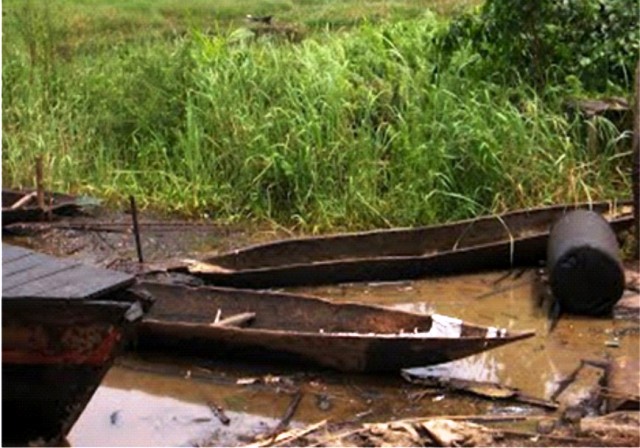
Conducting newsmen round the sites, the National Coordinator of the Niger Delta Biodiversity Conservation programme, Dr Mathew Dore, said that the UNDP is deeply concerned about the continuous destruction of the Niger Delta biodiversity resources by oil pollution.
Dr Dore said that the focus of the UNDP is for the preservation of these resources for future conerations of the respective communities, adding that the organization was taking journalists round the various states to showcase to the world, the rich biodiversity resources of the Niger Delta.
According to him, the effort was also meant to compel both national and state governments to invest in these areas with the view to turning them into world tourism sites.
The National Coordinator also said that the organization had already sensitized local communities on both the cultural and economic importance of these resources.
At the Etcem Okuku forest in Eket, Akwa-Ibom State, the people told journalists that they regard the sacred monkeys in the forest as their mothers and therefore are not hunted for either food or commercial purposes.
They, however, complained that the activities of multinational oil companies are now driving the monkeys to extinction and called for government intervention to save the animals.
Similarly, at Alesa community in the Eleme Local Government Area of Rivers State, the Paramour Ruler, HRH Emperor J.D. Nkpe told newsmen that despite the on-going reafforestation programme, the activities of property developers are affecting the forest.
Emperor Nkpe who told newsmen that the forest which is over 50 hectares is already being encroached upon by the people said that his palace is already lobbying some members of the state legislature to enact relevant laws to preserve the forest.
At the Oko-ohia Afara in Etche Local government Area, the community said that the forest is sacred as it is the abode of a goddess which protects it.
According to the Eze Ala Afara, Cyril Nwankwo, Oko-ohia-Afara is a deity that protects the community from time immemorial from evil attacks.
At Emu community in Ndokwa West Local Government Area, the people said that “Nne Emu” which is a specie of the West African dwarf crocodile is sacred to the community.
Chief Anthony Enyabego, a member of the Emu Kingdom Council of Chiefs, Ndokwa West Local Government Area, the crocodile has a historical linkage with the foundation of the kingdom.
He said that because of the crucial role played by the animal in ancient inter-tribal wars, no Emu man dares the animal either at home or abroad.
At the Onuku groove in Muaja Ukwuani Local Government Area, Delta State, Chief Odise Menogor, the Onochieze of Akoku Kingdom urged for the declaration of the shrine as a world heritage site.
The significance of the programme is that apart from its crude oil resources which is the mainstay of the Nigerian economy, the Niger Delta region can also boast of other natural resources that can surpass oil in revenue generation.
It is against this background that stakeholders across the region are urging the government to key into the UNDP conservation programme through funding and legislations.


Continue Reading

Environment

AEPB Reaffirms Commitment To Improved Waste Management, Sanitation Standards

Published

on

The Abuja Environmental Protection Board (AEPB) has reaffirmed its commitment to environmental sustainability by improving waste management infrastructure, and enforcing public health sanitation standards in the territory.
The Director of AEPB, Mrs Kate Ogbonna, said this at the 2026 FCT World Environment Day Commemoration Symposium on Friday in Abuja.
“As the custodian of the FCT environment, AEPB remains committed to promoting environmental sustainability through effective environmental monitoring, pollution control and waste management amongst others.
“Today, we join millions of people across the globe in commemorating World Environment Day, the United Nations’ foremost platform for promoting environmental awareness and action.
“The theme for this year’s commemoration: Climate Change and Urbanisation – Building Resilient Cities,” is particularly relevant to our rapidly changing world,” Ogbonna said.
She said that while cities remained centres of economic growth, innovation, and human development, they are also increasingly exposed to climate-related challenges such as flooding, pollution and environmental amongst others.
“We engaged 54 waste management service contractors to further strengthened environmental sanitation across the city.
“Ongoing infrastructural development in satellite towns and sub-urban communities is improving connectivity and reducing development pressure on the city centre,” the AEPB director said.
She explained that these interventions aligns closely with the objectives of 2026 theme and demonstrates practical steps towards building resilient and sustainable cities.
She stated that the participation of schools in this annual commemoration remained a vital component of the environmental education efforts.
“By engaging young people in environmental conversations and activities, we are helping to nurture a generation that is better equipped to champion sustainable development and environmental stewardship,” Ogbonna said.
Also speaking, Chief Felix Obuah, Coordinator of the Abuja Metropolitan Management Council, said that climate change was no longer a distant concern and noted that Abuja, as Nigeria’s capital, was not insulated from its realities.
“World Environment Day provides an important opportunity for governments, institutions, communities, and citizens to reflect on environmental challenges and recommit themselves to sustainable solutions that will safeguard our common future.
“While urbanisation has brought significant economic opportunities, technological advancement, and improved access to services, it has also placed unprecedented pressure on natural resources, infrastructure, and the environment.
“Across the world, cities are experiencing rising temperatures, more frequent flooding, extreme weather events, declining biodiversity, and growing pressure on public infrastructure.
Obuah stated that these impacts threaten livelihoods, public health, economic productivity, and overall quality of life.
“The rapid expansion of residential communities, commercial activities, transportation networks, and supporting infrastructure has increased the demand for land, water, energy, and environmental services.
“At the same time, changing weather patterns have heightened concerns relating to flooding, erosion, and pressure on drainage infrastructure, while rapid urban growth continues to place additional demands on waste management systems and green spaces.
“The choices we make today in urban planning, environmental management, and climate adaptation will not only shape the future of the FCT but can also serve as a model for other cities across the country.”
He urged residents to build cities that are not only economically vibrant and socially inclusive but also environmentally sustainable and resilient to climate-related shocks.
“Resilient cities are cities that can anticipate risks, withstand disruptions, adapt to changing conditions, and recover quickly while maintaining essential services and protecting their citizens.
“The FCT Administration under the leadership of the FCT Minister, Nyesom Wike, remains committed to creating a modern, functional, and environmentally sustainable capital city.
“Through strategic investments in infrastructure, environmental sanitation, urban planning, drainage improvement, landscape enhancement, and regulatory enforcement, the Administration continues to strengthen Abuja’s capacity to respond to emerging environmental challenges.”
The coordinator assured that AMMC is working through its departments and agencies, AEPB to implement programmes aimed at promoting environmental sustainability and improving the quality of life of residents.
He urged the media to educate and mobilise the public adding that communities and residents must adopt environmentally responsible behaviours and actively participate in protecting their surroundings.
“As we deliberate during this symposium, I encourage all participants to engage constructively, share innovative ideas, and explore practical pathways for strengthening climate resilience within the FCT.
“Let this symposium serve as a catalyst for practical actions, stronger partnerships, and innovative solutions towards building a more resilient FCT.
“Together, we can build an Abuja that remains a model capital city for Nigeria, Africa, and the world; a city that balances development with environmental responsibility and leaves a lasting legacy for future generations,”Obuah said.
In a message to the symposium, Antonio Guterres, UN Secretary-General, said climate change has brought great harm to the ecosystem.
Guterres who was represented by Mrs Bolanle Elumekor, a Management Assistant at the United Nations Information Centre (UNIC) in Lagos, said that it was pertinent to fulfill climate financing promises to the developing countries.
Continue Reading

Environment

Group Marks World Environment Day with Tree Planting, Awareness Campaigns 

Published

on

Green Planters and Trimmers Union together with students from various secondary schools in Bonny, Rivers State commemorate the 2026 World Environment Day with a call for environmental protection and sustainable living.
The event, held over the weekend at the Auditorium of the Bonny Youth Federation (BYF), featured participation from Bonny National Grammar School (BNGS), Universal Basic Education (UBE), Heaven on Earth Academy, Government Girls Secondary School (GGSS), and Finima Bonny Senior Secondary School.
National President, Green Planters and Trimmers Union, Henry Jumbo
Activities at the celebration included an interactive session with students, moderated by the Chairman of the Union, symbolic tree planting by participating schools alongside the union’s executive members, and group photographs with school delegations.
In his keynote address, founder and National President of the Green Planters and Trimmers Union, Henry Jumbo, emphasised the significance of green environments to human survival and development.
He noted that World Environment Day is celebrated annually on June 5, adding that the union, established in 2020, remains committed to promoting environmental sustainability through awareness and action.
Jumbo stressed that “wherever you see green, it is bounded to fruitfulness,” highlighting the connection between nature and human well-being. He described green plants as vital sources of oxygen, food, and economic resources, while also playing a crucial role in maintaining ecological balance.
He however warned against the dangers of deforestation, stating that the indiscriminate cutting down of trees leads to erosion, flooding, landslides, loss of animal habitats, air pollution, and a decline in air quality.
According to him, the depletion of forests also contributes to economic hardship and loss of livelihoods, particularly for communities that depend on natural resources.
The environmental advocate further explained that trees help regulate water flow and prevent natural disasters, noting that the absence of forests increases the risk of flooding, especially in riverine areas like Bonny.
Jumbo urged students and residents to embrace nature and take deliberate steps to protect the environment, including planting trees and maintaining cleanliness in their surroundings.
The event underscored the importance of grassroots sensitisation, with the union encouraging young people to become active participants in environmental conservation.
The Green Planters and Trimmers Union adopted the slogan “Evergreen! Ever Fruitful!!” as a reminder of the continuous need to preserve and sustain the environment for future generations.
Continue Reading

Environment

Climate Change Group Charged To Plate Trees 

Published

on

World Environment Day, a group, Journalists For Sustainable Development Initiative (JSDI) has called on all and sundry to imbibe the habit of planting trees to combat the effect of climate change on the environment.
?
?Executive Director of of the Group, Dr. Parry Saroh Benson gave the charge while adressing journalists on the sideline of  a symposium to mark the day, organised in partnership with the Federal University of Environment Technology, Ogoni and the Centre for Climate Change and Forest Resources, Rivers State University, in Saakpenwa, Tai Local Government Area of Rivers State.
?
?He said the impact of climate change is now glaring, hence the need for everyone to double efforts in ensuring trees are planted on a daily basis.
?
?”Every man should learn to plant a tree. Planting trees is an exercise that should be done on daily basis because we all are now experiencing the impact of climate change. It has come to stay.
?
?”Everybody is complaining there is heat, there is so much sun. In fact, since January up until now, we do not know when it’s rainy season and when it’s dry season here in Rivers state like we used to experience. This is because of  climate change, ” he said.
?
?
?Benson appealed to people of Rivers State and South South Region in particular who suffer much from air pollution due to exploration activities to plant trees around their environments.
?
?He noted that tree planting would enable the region have clean air to breathe.
?
?
?”We are appealing to everyone here in the South-South; plant a tree every day because tree planting  will enable us have clean air. Trees around bring about clean air, ” he appealed.
?
?The climate ambassador further urged residents of the region to take activities around their environment seriously saying that whatever affects the environment, affects everyone.
?
?”Our message is that we must plant trees, and everyone should be concerned about his environment. This is not the time to act like “I don’t care”, “I don’t know what is happening”. No. We all must know what is happening in our environment because climate change has come to stay, ” he maintain.
Continue Reading

Trending