
Business
Nigerians Laud FG Over Cut In Foreign Imports

Some residents of the Federal Capital Territory (FCT) have lauded the Federal Government’s decision to cut down on the importation of goods into the country.
The respondents told newsmen in Abuja on Wednesday that if government would keep faith with the policy, it would encourage local manufacturers and boost employment.
President Goodluck Jonathan had on December 1 announced a cut on imported goods to cushion the effects of falling oil prices on the Nigerian economy.
While announcing the ban, the President said that the falling prices of oil on the global market were a reminder that the country could no longer rely on the commodity as its major foreign exchange earner.
Speaking with The Tide source, Mr Odion Obasa, a car dealer noted that the position taken by government was in the right direction, adding that it should be implemented to its logical conclusion.
“The decision by government to cut down on the importation of foreign goods will create job opportunities for our teeming youths seeking employment,’’ he said.
Another respondent, Prince James, a Pastor, said that no economy in the world could thrive on the importation of goods.
He criticised Nigerians for their over-reliance on imported goods to the detriment of locally made goods which, he said, were more genuine than some imported goods.
“The decision by government to cut importation of goods is a good one. If Nigerians can support government, the policy will be a success,’’ he said.
James urged the government to cut the cost of governance by reducing the number of aides of public office holders and their remuneration.
“The large number of presidential and governors’ aides is a waste-pipe that should be plugged,” he said.
Mr Damilola Oke, a businessman, said that the policy would work only if the leaders initiating it would not interfere with its implementation.
He, however, said that the policy would go a long way to reposition the economy in the face of the dwindling oil prices.
Mr Moses Iwodi, a clergy, said that the policy would afford government the opportunity to focus on local manufacturers to boost the economy.
He said that government should not stop at just announcing the policy but should ensure that it was implemented.
“I hope this will not be the usual lip service that we are used to over the years,” he said.
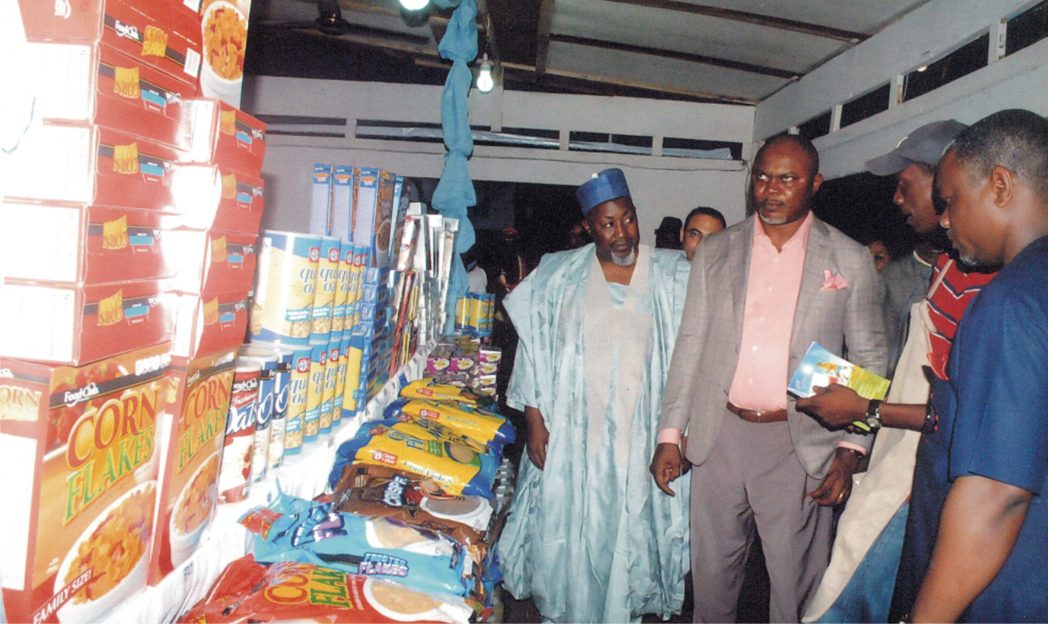
Commissioner for Commerce Rivers State, Hon. Chuma C. Chinye representing Governor of Rivers State Rt. Hon. Chibuike Rotimi Amaechi (middle) inspecting some business stand. With him, National President NACCIMA Alhaji Mohammed Bodaru Abubakar (left) and Chairman, Port Harcourt International Trade Fair, Chief Allison Ogidiben at the official opening ceremony of 9th Port Harcourt Trade Fair at Isaac Boro Park, recently. Photo: Egberi A. Sampson



Business
Jonathan, Diri, Others Laud Firm’s Milestone in Bayelsa …Says Project Will Drive Industrialisation, Create Jobs



-

 News5 days ago
RSG Targets Nine Million Residents in Mosquito Net Distribution Campaign
-

 Oil & Energy5 days ago
Aiyedatiwa Signs New Electricity Bill
-

 Maritime5 days ago
Marine Minister Commends President Tinubu On NPERA Bill Assent
-

 Oil & Energy5 days ago
NLNG Commissions Research And Innovation Centre In RSU
-

 News5 days ago
KenPoly Holds Eight Convocations, August 29
-

 News5 days ago
RSG Begins Another Phase of Projects Commissioning Today
-

 News5 days ago
RMAFC Completes Revenue Sharing Review, Proposes New Pay
-

 Maritime5 days ago
NAGAFF Petitions IGP Over Alleged Maritime Police Harassment