
City Crime
Talibans’ War Of Beards

In European history there is the War of Jenkin’s Ear, and in current history of Afghanistan, there is the War of Beards. In Nigerian colloquial Lingo, beards can be called bia-bia, and for the Taliban regime of Afghanistan, bia-bia is a symbol of compliance with and acceptance of Shariah law. To drive home the symbolism, the Talibans enacted a law which demands that hair dressers must not shave off any bia-bia from a bearded man. A hair dresser who goes contrary to that law stands the risk of having his arm amputated. Draconic law?
Going by the level of lawlessness and recalcitrance in modern societies, the need for Draconian laws may not be questioned seriously. In ancient Athens when lawlessness became unbearable, a law-giver called Draco, provided very severe penalties for offenders, as a measure to reduce lawlessness. It was another lawmaker, Solon (635-560 B.C.) who repealed all the Draconian laws because of their harshness and the excessively heavy penalties they carried. When a youngman’s reproductive organ was chopped off, for rape, there came the remark that Draco’s code was written in blood, not in ink. Draco was not a Taliban.
Apart from ancient Athens and Draconian laws, various countries and regimes adjusted their laws according to the demands and circumstances of the times. There was a time that debtors could be hanged in their state of insolvence, or their children sold away as slaves. Human consciousness and value orientations are progressive, rather than static; so also is the legal system etc. Change rules human existence.
Penalties such as stoning offenders to death on the spot or amputation of limbs, where crowds were allowed to watch such orgies, were quite common in various societies. Religious organisations and their leaders were in the forefront in the implementation and encouragement of such barbaric penalties. But soon it was discovered that lawmakers and those who implemented the laws were quite hypocritical and had sought to instill fears and docility in the masses. The level of hypocrisy and double standards became so glaring that silent protests arose in every society.
Hypocrisies in the administration of laws and penalties became such that Shakespeare in The Life and Death of King John, said: “When law can do no right, let it be lawful that law bar no wrong”. Similarly, “Thieves for their robbery have authority when judges steal themselves”. The history of law itself provided for such immunity that makes the law an ass, with the old axiom that laws are made by superiors for the inferiors to obey. A situation where there are such immunities, impunities and abuses, obviously hypocrisy advances into dogmatism, for the purpose of using power and fear as instruments to shield hypocritical institutions, or rulers.
All the wars in human history have brought to light the shenanigans of power merchants, whereby what cannot be achieved through “politics” is taken to the battlefield, as another arena of power politics. In this sense, “politics” is the soul of leadership; from monarchy, democracy, ecclesia, to gangsterism, whose sole goal is power. Millions of people can die in the politics of war, that power merchants may inherit power or sell weapons of war for gold. Thus there is a circle of hypocritically-induced conflicts, wars, losses and inheritance of power.
Obsession with power takes various forms, including fanatical adherence to ideologies, creed, belief system and several other propensities or vaulting ambitions. Such obsessive propensities, when coupled with charisma and ego, would know no bounds, neither would any obstruction be spared. It often happens that at the initial stage, followers and supporters or sponsors of such obsessive power monger, would rarely know the driving force behind their hero. But much later signs of mental aberration begin to show, perhaps after much harms had already been done.
Research works into power-obsessed phenomenon, have always shown that victims of such mental aberration rarely function alone as individuals, but serve as outlets for the flow of some radiations. Then a structure or some institutions serve as the arena for the maintenance and management of the influx of power. It happens that operators and loyalists of the structure or institution sponsoring the power enigma, show uncanny zeal, fanaticism and devotion that a cult system grows around the power structure. One power or group leads, with numerous foot soldiers.
In reality the enigma of power obsession is complex but it takes possession of the brain and then infects a wider audience in the form of passion and fanatical commitment or idolisation. There were some Nigerians who swore that they would commit suicide if late General Sani Abacha did not become life President of Nigeria. Thus, mass hysteria gives fuel to power passion, at the end of which a cult or belief system serves as the instrument of the exercise of power, whether or not one individual is the arrow-head of the mission. Once established, a power structure becomes intimidating.
When it comes to a belief system, fanatical or fundamentalist power structure can become monstrous. If religion and politics combine as the structure to express fundamentalism, then those who have different worldviews are heretics. Such opponents or unbelievers would be panel-beaten to an acceptable shape through laws with stiff penalties. An alternative is to accept and embrace the fundamentalists’ version of faith. Like Emperor Nero’s army, foot soldiers, including radical students, are handy for war.
When Reverend Jim Jones degenerated from radical evangelism into a monster in Guyana, many of his followers did not know, until they all perished in a forest swamp. In matters of religion and politics, coercive arms of the establishment are usually handy and ready to do great exploits in the service of power structures. Radical and fundamentalist adherents of faiths and politics soon develop a mindset, obsession and fixation, whereby they assume the posture of soldiers at war with those of different worldview. Symbol of radical fundamentalism is beard, moustache or bia-bia.
In the case of the Talibans of Afghanistan, avid enforcement of the beard culture is a visible evidence of a true and committed devotee. Culture of fundamentalism goes with adoption of the peculiar lifestyle of the founding hero. For example, adherents and admirers of Fidel Castro’s ideology cultivated beards, while fans of Odumegwu Ojukwu would sing songs about “Ojukwu bia-bia”, etc. Even university students copy the lifestyles of their role models.
Dr Amirize is a retired lecturer from the Rivers State University, Port Harcourt.


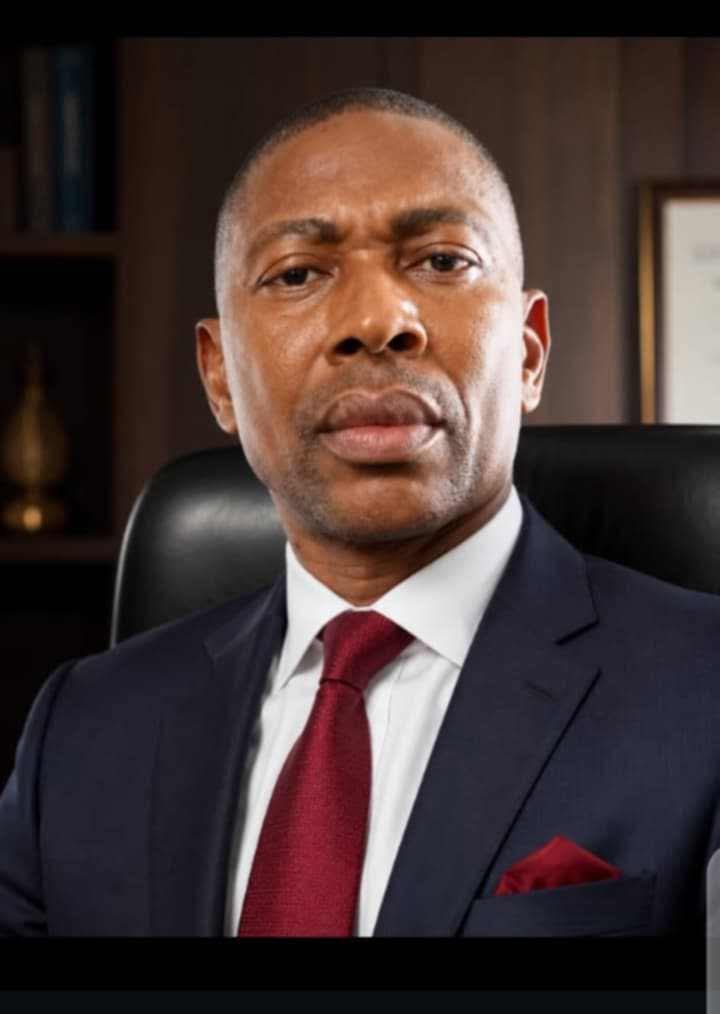
Akwaowo’s appointment follows the expiration of the second tenure of the former Registrar, Chemist Jwalshik Wilford.
According to a letter released from the office of the Minister of State for Health and Social Welfare dated August 5, 2026, the Minister of State for Health and Social Welfare, Dr. Iziaq Adekunle Salako, said the appointment was with immediate effect.
The minister had earlier announced Akwaowo’s appointment during a meeting with the Permanent Secretary, Heads of Departments, and Directors in June 10, 2026 in the Minister’s Conference Room.
He said the appointment was automatic and effective 1st June, 2026 following the satisfactory handover that followed the succession procedure.
The Minister nullified the earlier process put in place for a substantive appointment, citing it as a contravention of the provision of the ICCON Act.
He further directed that the appointment letter be issued without further delay.
The Minister admonished the new ICCON Chief Executive to take charge and ensure that the Institute is on the path of peace and progress to deliver her mandates.
In his response, Akwaowo thanked the the Federal Government for the appointment which, he said, has laid every uncertainty surrounding the leadership of the Institute to rest.
He pledged his unalloyed loyalty to the Federal Government and the Minister and promised to work with his Management Team to align with the policy directives of the Ministry as well as the renewed hope agenda of the Federal Government.
Akwaowo joined ICCON in 2005 as a pioneer staff, rose through the ranks and served in many capacities transcending virtually all the departments in the Institute including HOD, Administration/Accounts & Finance.
Most recently, he served as the pioneer Team Lead and the Registrar/CEO Representative in the National Chemical Personnel Audit excercise to Chemical companies and Chemistry Departments in Tertiary Institutions as part of the Institute’s regulatory mandates.
He has attended several courses and workshops and represented the Institute at various conferences and fora.
Akwaowo is a Chartered Chemist and also a member of a number of professional bodies.
He rose to the rank of Director, Scientific in 2025, and was until his appointment, the Coordinator, Zonal Offices of ICCON.
City Crime
Bayelsa Water Coys Raise Alarm Over Business Threats …Set To Resist Multiple Levies Amid High Production Cost

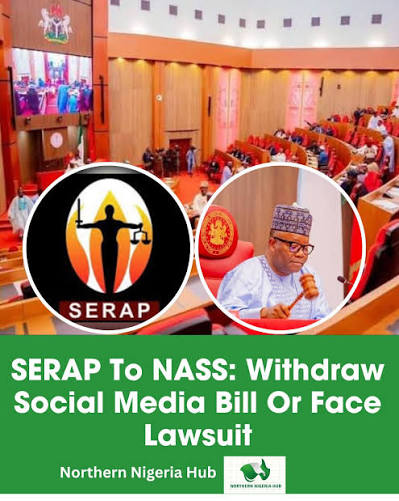
SERAP warned that it would institute legal action if the bill is passed in its current or substantially similar form.
The bill, sponsored by Senator Ned Nwoko (APC, Delta North), seeks to compel social media platforms, data controllers and data processors operating in Nigeria to establish physical offices in the country.
It also empowers the Nigeria Data Protection Commission to shut down or prohibit the operations of any entity that fails to comply within 30 days.
In a letter dated July 18, 2026, and addressed to Senate President Godswill Akpabio and Speaker of the House of Representatives Tajudeen Abbas, SERAP said the proposed amendment posed a threat to constitutionally guaranteed rights.
The letter, signed by SERAP Deputy Director Kolawole Oluwadare and issued on Sunday, read in part, “Requirements compelling technology companies to establish local offices would increase government leverage over platforms, facilitate political pressure, make censorship demands easier and expose local employees to retaliation.
“The Bill would create sweeping powers capable of shutting down or excluding social media platforms from the Nigerian market and expose millions of Nigerians to serious violations of their constitutionally and internationally guaranteed human rights.”
SERAP argued that the bill revives previous attempts to regulate social media that attracted widespread public opposition.
“The current Bill revives substantially similar proposals previously introduced by Senator Nwoko, raising renewed concerns that localisation requirements are being used as a vehicle for expanding governmental control over digital platforms and online expression,” it said.
The organisation warned that it would challenge the legislation in court if enacted.
“Should the Bill be enacted into law in its current or substantially similar form, SERAP shall promptly take all appropriate legal actions to challenge its legality in the public interest and to ensure that Nigerians’ fundamental rights are fully protected,” the letter stated.
According to SERAP, the proposed legislation would give the Nigeria Data Protection Commission excessive powers to block digital platforms without adequate procedural safeguards.
“The Bill constitutes a backdoor attempt to regulate social media and increase governmental control over online expression through corporate localisation requirements rather than through transparent and constitutionally permissible regulation,” it said.
The group argued that the bill lacks provisions for prior judicial authorisation, meaningful opportunities for compliance beyond the proposed 30-day period, and safeguards to protect the rights of millions of Nigerians who rely on digital platforms.
SERAP also cited the judgment of the ECOWAS Court of Justice on Nigeria’s suspension of Twitter, arguing that the proposed amendment could produce similar consequences by indirectly excluding social media platforms from operating in the country.
“The Bill also risks recreating the very dangers previously condemned by the ECOWAS Court of Justice. In SERAP and Others v. Federal Republic of Nigeria, the Court held that the suspension of Twitter violated the rights to freedom of expression, access to information and media freedom protected under the African Charter.
“Although the present Bill differs from the Twitter suspension in form, it creates the possibility of achieving the same result indirectly by empowering regulators to prohibit digital platforms from operating in Nigeria.
“The National Assembly should not enact legislation capable of producing, through indirect regulatory means, the very restrictions on fundamental rights that regional human rights law prohibits,” the organisation said.
It maintained that while governments have a legitimate interest in regulating digital platforms, such measures must comply with constitutional guarantees and international human rights standards.
The organisation further warned that mandatory localisation requirements would increase compliance costs for technology companies, startups, educational institutions and artificial intelligence developers.
“The proposed amendment conflicts directly with the objectives of the Nigeria Startup Act 2022 and the National Digital Economy Policy and Strategy.
“Mandatory localisation requirements substantially increase compliance costs, particularly for startups, open-source projects, educational institutions, research organisations, AI developers and smaller technology companies, while reducing Nigeria’s attractiveness as a destination for innovation and investment.
“No major democratic jurisdiction requires every social media platform to establish a physical office as a blanket precondition for providing services.”
SERAP added, “The National Assembly should immediately reject and withdraw the Bill, as it is manifestly incompatible with the Nigerian Constitution and Nigeria’s obligations under the African Charter on Human and Peoples’ Rights and the International Covenant on Civil and Political Rights.”
-

 News1 day ago
RSG Targets Nine Million Residents in Mosquito Net Distribution Campaign
-

 Oil & Energy1 day ago
Aiyedatiwa Signs New Electricity Bill
-

 Maritime1 day ago
Marine Minister Commends President Tinubu On NPERA Bill Assent
-

 Oil & Energy1 day ago
NLNG Commissions Research And Innovation Centre In RSU
-

 News1 day ago
KenPoly Holds Eight Convocations, August 29
-

 News1 day ago
RSG Begins Another Phase of Projects Commissioning Today
-

 News1 day ago
RMAFC Completes Revenue Sharing Review, Proposes New Pay
-

 Maritime1 day ago
NAGAFF Petitions IGP Over Alleged Maritime Police Harassment