
Business
AMCON, EFCC Collaborate On Debt Recovery

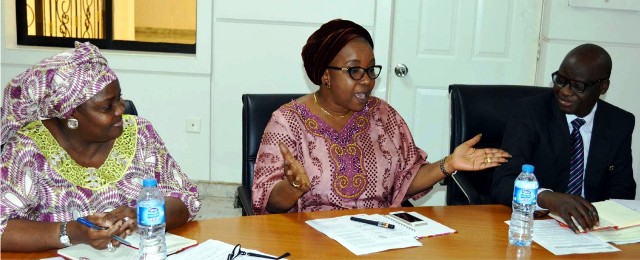
The Asset Management Corporation of Nigeria (AMCON), says it is collaborating with the Economic and Financial Crimes Commission (EFCC) as strategy to recover N4.6 billion from debtors across the country.
The corporation said this in a statement issued after a meeting with the management of the EFCC last Thursday in Lagos.
It said the decision was for both agencies to consolidate on the gains in the areas of investigating, prosecuting and compelling all obligors of AMCON in accordance with the relevant statutes.
The agencies said they were working on taking another look at some banks and their officials that were instrumental to the abuse and violation of internal processes that led to the huge non-performing loans in AMCON’s portfolio.
“The agencies are planning to revisit, reinvestigate and duly prosecute such banks and the responsible officials,” the statement said.
The EFCC Acting Chairman,Mr Ibrahim Magu, who welcomed the Managing Director,AMCONMr Ahmed Kuru, and his team described the assignments of both agencies of government as “very tough, overwhelming and challenging.”
He however added that he was happy that AMCON under Kuru is doing everything within its mandate to confront the obligors with all the risks involved in the process of doing so.
He said it was for that reason that EFCC established AMCON Desk with dedicated EFCC officials that ensured that all AMCON related cases in EFCC received speedy attention.
Magu assured Kuru that the AMCON Desk at EFCC would continue to be functional adding that the EFCC was willing to increase the number of personnel on the desk if so required.
He said that the agency would be willing to establish a Lagos branch if necessary to make sure these huge loans are recovered in the interest of the Nigerian economy.
The EFCC boss affirmed that some of those obligors “who took loans without the intention of paying back” did not envisage that someday an agency like AMCON would come knocking on their doors seeking to recover the loans.
Magu, therefore, condemned the impunity with which those transactions were done.
According to him, giving the similarity in the objectives of both agencies, the acting EFCC boss said there was need for joint training towards fostering better understanding between AMCON and the EFCC.
While reaffirming the commitment of the EFCC to cooperate and provide the much needed support to AMCON, Magu urged AMCON to ensure justice is done in all cases.
He said that was because most of the obligors might not have acted alone in their unwillingness to repay, but might involve the connivance of some of the bank officials whose motive was to cheat the banks ab-initio.
He, however, disclosed that “in appropriate circumstances, these bankers would also be called upon to account for their roles in granting these questionable facilities.”
Kuru thanked the Acting Chairman of EFCC for receiving the AMCON delegation and appreciation for his passion and cooperation in the collaboration with AMCON toward recovering the enormous bad debts from recalcitrant obligors of AMCON.
He also thanked the acting chairman for creating that unit that had led to several recoveries.
while appreciating the contribution of the AMCON Desk at EFCC.
He said that AMCON was willing to provide the required support to the AMCON Desk at EFCC by providing information, logistics and training to the team.
Recounting AMCON’s role in the economy especially in the banking sector, Kuru said that since its establishment, AMCON acquired debts from 22 banks worth N3.7 trillion and provided financial accommodation to 10 banks of about N2.2 trillion.
He observed that despite AMCON’s recovery efforts, the corporation still holds unresolved loans in excess of N4.6trillion which represents about 75 per cent of total national budget.
The managing director expressed concern that failure on the part of AMCON to resolve the debts will have far reaching implication for the nation at large.Edited By Hajia Sani/Idris Abdulrahman



Business
NAFDAC Decries Circulation Of Prohibited Food Items In markets …….Orders Vendors’ Immediate Cessation Of Dealings With Products


Importers, market traders, and supermarket operators have therefore, been directed to immediately cease all dealings in these items and to notify their supply chain partners to halt transactions involving prohibited products.
The agency emphasized that failure to comply will attract strict enforcement measures, including seizure and destruction of goods, suspension or revocation of operational licences, and prosecution under relevant laws.
The statement said “The National Agency for Food and Drug Administration and Control (NAFDAC) has raised an alarm over the growing incidence of smuggling, sale, and distribution of regulated food products such as pasta, noodles, sugar, and tomato paste currently found in markets across the country.
“These products are expressly listed on the Federal Government’s Customs Prohibition List and are not permitted for importation”.
NAFDAC also called on other government bodies, including the Nigeria Customs Service, Nigeria Immigration Service(NIS) Standards Organisation of Nigeria (SON), Nigerian Ports Authority (NPA), Nigerian Maritime Administration and Safety Agency (NIMASA), Nigeria Shippers Council, and the Nigeria Agricultural Quarantine Service (NAQS), to collaborate in enforcing the ban on these unsafe products.
-

 Politics4 days ago
Senate Receives Tinubu’s 2026-2028 MTEF/FSP For Approval
-

 Sports4 days ago
New W.White Cup: GSS Elekahia Emerged Champions
-
Sports4 days ago
Players Battle For Honours At PH International Polo Tourney
-

 Sports4 days ago
AllStars Club Renovates Tennis Court… Appeal to Stop Misuse
-

 News4 days ago
RSG Lists Key Areas of 2026 Budget
-
 News4 days ago
Dangote Unveils N100bn Education Fund For Nigerian Students
-
Sports4 days ago
NFF To Discuss Unpaid Salaries Surrounding S’Eagles Coach
-

 News4 days ago
Tinubu Opens Bodo-Bonny Road …Fubara Expresses Gratitude


