
Nation
THE STATES

Adamawa
The Adamawa Police Command has mobilised 4,000 personnel to ensure security for the two-day campaign visit of President Goodluck Jonathan to Yola, scheduled for today and tomorrow.
The state Commissioner of Police, Mr Akelere Shinaba, disclosed this in Yola on Monday while addressing newsmen.
Shinaba said various units of the police, including Bomb Squad, Mounted troop, Police Dog and a detachment of Mobile Police from Enugu, had been mobilised for the presidential campaign visit.
“We are going to be civil, courteous but very firm in the discharge of our duty.
“We are not out to intimidate anybody but we will deal with anyone who tries to foment trouble,” Shinaba said.
He advised the public to cooperate with the police and other security operatives that would direct them on moving in and out of Ribadu Square, venue of the campaign rally, to avoid incidents such as stampede.
The Commissioner also assured journalists of unfettered access to cover Jonathan’s presidential campaign.
Bauchi
The Bauchi State Government has approved the implementation of 27.5 per cent allowance for teachers in the state and local government employ, one year after some states had implemented.
Following agreement reached between the national body of the NUT and the 36 governors, the latter had agreed to pay the 27.5 per cent in the allowances of teachers as from January 2010.
This was contained in a statement signed by the Permanent Secretary, Civil Service, Establishment and ServiCom Matters, Alhaji Hudu Yunusa, in Bauchi yesterday.
The statement said that government had approved the new allowances and incentives for teachers in secondary schools in addition to the already existing Teachers Salary Scale (TSS).
“The allowances include the 20 per cent Inducement, 10 per cent Rural, Examination/ Supervision, 10 per cent Learning Society and five per cent Responsibility.
Others are the five per cent Hazard, five per cent English, 10 per cent Mathematics and 10 per cent Science Courses Allowances,” it said.
Benue
Chief Obadiah Ando, the Minister of Water Resources, has laid the foundation stone of a N17 billion multi-purpose earth dam in Otobi, Otukpo Local Government Area of Benue.
Ando said on the occasion that the dam, billed for completion in two and a half years, had the capacity to supply 30 million cubic metres of water.
He said the hydro-power component of the dam had the capacity to generate five megawatts of electricity for the people of Otukpo and its environs.
“The Otukpo multi-purpose dam is designed to supply water to several communities and irrigate 2,000 hectares of land downstream of the dam,” the minister said on Monday.
He said the Federal Government had committed a lot of resources to the development of dams and irrigation projects nationwide to boost economic activities ensure food security and enhance the wellbeing of the people.
FCT
Justice Hussein Baba of the FCT High Court yesterday in Abuja threatened to send out any lawyer who is “shabbily” dressed.
Baba, who expressed his disappointment at the way some lawyers appeared in court, said there was an urgent need for change in the dress code of lawyers in Abuja.
“I will not tolerate counsel who dress shabbily to court. You are supposed to wear your white stiff wing collar with bands hanging down the front of the neck.
“You are also supposed to wear either a black double-breasted suit or with a waist coat if single-breasted or a black coat and waist coat and grey pin striped trousers.
“These are the basic things you were taught in Law School. This is a High Court. Your appearance matters here,” Baba said.
Meanwhile, Baba has fixed May 8 for judgment in a murder case filed against an accused, Paul Owolo, by the State (Ministry of Justice).
Katsina
The Katsina State Transport Authority (KTSTA) has released N2.7 million to the families of 11 passengers who died in a recent accident involving one of its buses.
Presenting cheques totalling N1.7 million to the second batch of seven families in Katsina on Tuesday, the General Manager of the authority, Alhaji Sirajo Makera, said four families had earlier received N1 million.
He explained that each deceased passenger’s family received N250,000 being part of the insurance scheme entered between the authority and an insurance company for the safety of passengers.
The manager said the payment was not meant to compensate the families of the deceased, but was a palliative measure.
Kebbi
Governor Saidu Dakingari of Kebbi State has promised to provide more amenities to the people of Gwandu Local Government Area if re-elected.
The governor, who is the PDP flag bearer in the April election, made the pledge while addressing party supporters in Gwandu on Monday.
“The provision of 20 kilometres of roads in this area would be executed during my second tenure,” he said.
He said in the last four years, N820million was spent on the provision of a new General Hospital and township roads.
“The hospital was provided at N685million while N135million was spent on roads. “If you elect me in April 2011, my focus would be on improvement of amenities for better living conditions as well as youth empowerment.
“Job opportunities would be created to promote self reliance,” he added. He appealed to youths in the area to shun politics of violence and money.
Kogi
Workers in Kogi began an indefinite strike on Monday to protest alleged government refusal to fulfill agreements on the payment of allowances to them, labour said.
A statement, issued by Abdulsalami Ojanaun, on behalf of NLC and TUC in Lokoja yesterday, described the strike as a last resort by the workers.
Labour recalled that the issues in dispute were the same on which government and labour agreed last year but that the government had reneged its part of the bargain.
The statement recalled that the government issued a circular on February 17, stating that “Federal circulars not adopted or domesticated would not apply in the state.”
The workers are demanding the payment of salary relativity to core civil servants and the Consolidated Medical Salary Structure (CONMESS) to health workers.
Lagos
Doctors in federal hospitals in Lagos on Monday embarked on strike in sympathy with their striking colleagues in Lagos State Government-owned health institutions.
The Nigerian Medical Association (NMA) last Friday directed doctors in all federal hospitals, apart from those in the Federal Medical Centre (FMC), to join the strike.
The NMA said the strike, beginning from Monday, was in support of their colleagues in Lagos State hospitals, following the refusal of the state government to meet their demands.
Doctors in the state hospitals on October 4, 2010 began a strike to press for the implementation of the Consolidated Medical Salary Structure (CONMESS), a reduction of tax and the re-instatement of a dismissed colleague. Our correspondent, who visited the Lagos University Teaching Hospital (LUTH), Idi-Araba, and the Psychiatric Hospital, Yaba, on Monday reports that there were no doctors to attend to patients in the two institutions, and only nurses were available at the psychiatric hospital.
A nurse at the psychiatric hospital, who elected to remain anonymous, said that the doctors were not around, adding, “we have only nurses and nurse assistants working in the hospital today and we are doing the work of the doctors,” she said.
It was discovered that resident doctors also abandoned their duty posts at the LUTH, leaving only nurses and consultants to attend to patients.
Plateau
Eight residents of the Tin Mines Quarters, Jos, have appeared before a Kabong Upper Area Court for alleged conspiracy and unauthorised entry into some houses without the manager’s consent.
The accused persons are Musa Silas, Pam Chuwang, Chuwang Silas, Yohanna Davou, Challom Sho, Mrs Kachallom Silas, Gyang Pam and Rwang Chollom.
The manager of the quarters, Mr Charles Abeh, told the court that the accused persons broke into the houses without his knowledge.
He claimed that the accused persons conspired and broke into two houses which were locked after the tenants who lived there had left. Abeh said that since 1980, he had been managing the quarters which were given to him by the Amalgamated Tin Mines of Nigeria to handle.
He told the court that the accused persons claimed they had been given the right to move into the houses by the Consolidated Tin Mines Association which, he said, lacked the right to do so.
“I have every document to show that I am still the manager of the houses. “My Lord, I am here to move the motion for the suit; the motion is supported by a 14-paragraph affidavit.
Sokoto
Ahead of President Goodluck Jonathan’s scheduled campaign visit to Sokoto State today, about 5,000 police personnel have been deployed to provide security in the state.
Alhaji Adeola Adeniji, the state Commissioner of Police, told newsmen in Sokoto on Monday that an operational order had been issued to the officers and men, to provide effective security network during the presidential visit.
He said the command had evolved a system that would enhance the security situation during and after the visit.
He said the command expected reinforcement from Kebbi, Zamfara and katsina states to effectively cover the state.
The Commissioner called on politicians to eschew violence, warning that any one caught in the act would be prosecuted.
“Sokoto state is one of the peaceful states in the federation and a formidable security mechanism has been put in place to sustain the tempo,” he said.
Yobe
The Yobe State Government is to disburse a N178 million as grants to women associations in 17 local government areas to empower them.
Gov. Ibrahim Gaidam announced this yesterday at Yusufari town in Yobe while inspecting some projects.
He said the amount would be released next week to the local government councils through their Committee of Trustees set up by the chairmen of the councils.
According to him, the objective of the grant is to improve the income of rural women, especially in agriculture and livestock farming as well as encourage them to participate in politics.
Gaidam added that “we all know how our mothers suffer to keep the family, especially in this difficult time.”
The governor said that the money would be disbursed in accordance with the committees’ recommendations, which must be based on peculiarity needs and job description.
“Under the arrangement, each group from a ward will receive N1 million as grant,” Gaidam said.
He said that last year, the government bought and distributed sewing, tailoring and baking machines as well as computer sets to 500 youths in the state.



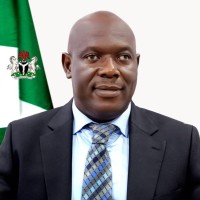
The Hydrocarbon Pollution Remediation Project (HYPREP) has commemorated the 15th anniversary of the release of the United Nations Environment Programme (UNEP) Environmental Assessment Report on Ogoniland, reaffirming its commitment to restoring the environment and improving the livelihoods of affected communities.
In a statement signed by the Project Coordinator, Prof Nenibarini Zabbey, to commemorate the anniversary, HYPREP described the anniversary as a significant milestone in Nigeria’s environmental restoration efforts, noting that the project has made remarkable progress in implementing the recommendations of the landmark UNEP report released on August 4, 2011.
The UNEP report had revealed extensive oil pollution across Ogoniland, severe environmental degradation, and serious public health risks resulting from decades of petroleum operations. It also recommended an initial $1 billion fund to commence the cleanup of the affected communities.
According to HYPREP, the Federal Government formally launched the Ogoni clean-up in 2016, while the Project Coordination Office was established in 2017 to drive the implementation of UNEP’s recommendations.
Zabbey said the current administration has continued to prioritise the project under the Renewed Hope Agenda.
Providing an update on the cleanup, the Project Coordinator disclosed that 30 of the 65 contaminated sites identified by UNEP have been fully remediated, while work is ongoing at several medium- and high-risk locations. It also stated that more than 1.5 million mangrove seedlings have been planted as part of what it described as the world’s largest restoration of oil-degraded mangroves, with over 1,000 hectares of shoreline already rehabilitated.
Zabbey further revealed that 49 Ogoni communities have been connected to potable water schemes through multiple water projects and booster stations aimed at providing safe drinking water across the region.
In the health sector, he said the 100-bed Ogoni Specialist Hospital in Kpite and the 43-bed Cottage Hospital in Buan are nearing completion, adding that several existing health facilities have been upgraded with modern medical equipment, while five ambulances have been donated to improve emergency healthcare services. The Project Coordinator also disclosed that a three-year human health biomonitoring study is being conducted in collaboration with the World Health Organization’s International Agency for Research on Cancer (IARC).
On economic empowerment, Zabbey stated that the Project has created more than 8,000 direct jobs and trained thousands of Ogoni youths and women in various vocational and technical skills, including software development, cybersecurity, aviation, commercial diving, seafaring, mechatronics, and creative arts. The project also reported awarding scholarships to more than 1,000 students, providing grants to small businesses, and supporting persons living with special needs through skills acquisition programmes.
The statement further highlighted ongoing legacy projects, including the Ogoni Power Project and the Centre of Excellence for Environmental Restoration, which it said is about 96 per cent complete. HYPREP also welcomed the recent designation of the Ogoni Wetland as a Ramsar Site of International Importance and pledged to continue promoting biodiversity conservation and sustainable management of the ecosystem.
Marking the anniversary, Zabbey said the progress achieved over the past 15 years demonstrates the collective commitment of government, development partners, stakeholders, and local communities to restoring Ogoniland. He called for renewed collaboration to sustain the cleanup effort, promote environmental sustainability, and support the long-term development of the region. 3
-

 News2 days ago
RSG Targets Nine Million Residents in Mosquito Net Distribution Campaign
-

 Oil & Energy2 days ago
Aiyedatiwa Signs New Electricity Bill
-

 Maritime2 days ago
Marine Minister Commends President Tinubu On NPERA Bill Assent
-

 Oil & Energy2 days ago
NLNG Commissions Research And Innovation Centre In RSU
-

 News2 days ago
KenPoly Holds Eight Convocations, August 29
-

 News2 days ago
RSG Begins Another Phase of Projects Commissioning Today
-

 News2 days ago
RMAFC Completes Revenue Sharing Review, Proposes New Pay
-

 Maritime2 days ago
NAGAFF Petitions IGP Over Alleged Maritime Police Harassment