
Business
How Maritime Sector Fared In 2020

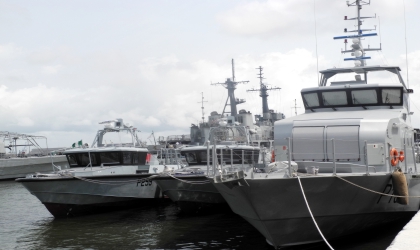
Activities in the Nigerian maritime sector in 2020 were greeted with mixed feelings as the sector witnessed a lot of ups and downs.
In the first quarter of 2020, the sector recorded great improvement across the nation’s seaports as maritime activities boomed. Container traffics across the nation’s six seaports were on the increase due to local and foreign patronage by investors.
The ports within the period recorded high volume in foreign vessels. In the two ports in Rivers State – Onne and Rivers Port Complex, for instance, the volume of container traffic was so high that importers and clearing agents were smiling to the banks. It also generated huge revenue for the Nigerian Ports Authority (NPA) and the government.
The outbreak of the Coronavirus pandemic in the first quarter of the year, however, halted the progress being made in the sector. For nearly four months, activities at the ports ceased, while move-ment of vessels and personnel were restricted due to the lockdown imposed by the government as a result of the pandemic.
In a nutshell, the sector was confronted by three major challenges that generally hampered socio-economic development in the country. These are piracy, Corona-virus pandemic and EndSARS protests across the country.
An x-ray of the above challenges would assist in knowing how the maritime industry feared in 2020.
Piracy:
Piracy constituted one of the major setbacks to the maritime industry in 2020. The sector witnessed a decline in operations due to incessant attacks on ship owners by sea robbers. The menace became a daily norm in the indu-stry, scaring away foreign investors and reducing investments in the sector.
Many stakeholders, investors and vessel owners abandoned the nation’s ports and relocated to other African countries for safety of their crews and vessels.
Over 138 crew members, vessel owners and other personnel were kidnapped in the Gulf of Guinea by rampaging pirates in the year under review. Many died in the process while huge ransom were paid to rescue some from the hands of hoodlums.
Here in Rivers State, over 15 persons, including passengers, were hacked down on their way to Bonny, Andoni, Bille and other riverine communities with their valuables worth millions of Naira carted away by sea hoodlums.
Sea robbers within the year under review, also stole over 16 speed boat engines and other personal items, frustrating operators to do business and rendering the sector unproductive.
This situation forced many foreign ship owners to hire at a huge cost the services of the Nigerian Navy to escort their vessels to the points of destination.
Coronavirus:
Coronavirus is a global pandemic that wreaked havoc on the socio-economic activities of the entire globe. Beside causing death, it led to the closure of industries and restriction of goods and services.
The maritime sector had its own share of the adverse effects of the pandemic. Due to lull in maritime activities, many dockworkers lost their jobs, while seafarers, ship owners, crew members and vessels were stranded at sea for months. Some were quarantined and many lost their lives to the pandemic. Vessels laden with cargoes were suspended on high sea while most perishable goods got spoilt.
#EndSARS Protests:
The EndSARS protests that rocked the nation in the month of October affected operations at the nation’s ports. For instance, the headquarters of the Nigerian Ports Authority (NPA) in Lagos was set ablaze by hoodlums that hijacked the End-SARS protests in Lagos. The attack led to the destruction and looting of some of the NPA’s valuables worth millions of Naira. Over N807 million had been earmarked to rehabilitate the port.
Maritime activities were also disrupted in all the six seaports in the country including Apapa and Tin Can ports, Lagos; Onne and Rivers ports in Rivers State; Warri and Calabar ports, thereby depriving the sector a huge billions of naira.
Any Hope For The Sector In 2021?
Notwithstanding the numerous challenges that confronted maritime industry in 2020, there is a ray of hope for the sector in the coming year going by several efforts being made to reposition the sector.
It would be recalled that the Federal Government had, earlier in 2020, approved the construction of Port Har-court to Maiduguri Eastern narrow gauge railway with new branch lines and trans shipment facilities to boost and facilitate maritime operations in the country.
Approval has also been given for the construction of deep seaport at Bonny, Rivers State by the Federal Government at a cost of over $46.924.369 to boost operations in the sector.
Meanwhile, the National Inland Waterways Authority (NIWA) has commenced the trial movement of containers from Onne Port to Onitsha River Port by barges with the aim of decongesting Onne Port and boosting maritime activities in the eastern zone.
In a bid to curb insecurity on the waterways, the Nigerian Navy is planning to acquire two warships to tackle piracy in the Gulf of Guinea in 2021 and make the water more navigable and safer for ship owners.
In recognition of the leadership role being played by Nigeria in tackling insecurity in the Gulf of Guinea, the International Maritime Organisation (IMO) through its Secretary General, Kitsch Lum, wrote a commendation letter to the Federal Government through IMO Director, Maritime Safety Division, Heike Daggim.
There are also good news from the International Transport Workers Federation (ITF) through its African Regional Secretary, Muhammed Safiyanu, that Nigerian seafarers would henceforth be assisted to secure jobs with foreign vessels.
Another window of opportunity for the sector to bounce back was the training of over 500 dockworkers and seafarers by the Nigerian Maritime Administration and Safety Agency (NIM-ASA) across the nation’s ports to boost maritime activities in the country.
The NPA has also earmarked over N807 million for the rehabilitation and repair of the damaged facilities at the NPA headquarters during the EndSARS protests in Lagos.
It is also noteworthy that the West African Containers Terminal (WACT) has acquired two mobile Harbour Cranes at Onne Port to boost marine operations.
There is no gainsaying the fact that all these efforts are geared towards putting the maritime sector on a good footing in the Year 2021, beginning from today. But the success of these efforts in the maritime sector depends on the political will and sincerity of all the players in the sector, especially the government.
By: Chinedu Wosu



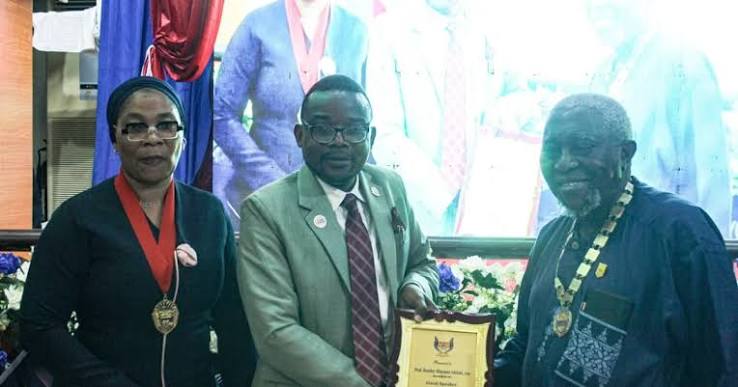
The NIM president also identified integrity, accountability, probity, honesty and efficiency as essential principles that needed to be strengthened in Nigeria’s workplaces and economy.
He argued that management failures extended beyond businesses to households and the wider society, making the promotion of sound management practices increasingly important.
Mustapha also renewed the institute’s call on the Federal Government to recognise 19 November as National Management Day, saying such recognition could strengthen its campaign for the United Nations to declare the date International Management Day.
The institute adopted 19 November for its annual celebration in 2016 to coincide with the birthday of Peter Drucker, widely regarded as the father of modern management.
Mustapha said the institute believed that official recognition by the Federal Government would strengthen its appeal to the United Nations to establish an international observance dedicated to the management profession.
The lecture featured Executive Director of the University of Lagos Business School, Prof. Sunday Adebisi, as guest speaker.
Other attendees included the Registrar and Chief Executive of NIM, Taiwo Olusesi, and a former president of the institute, Akinbayo Adenubi.

The Chief Executive Officer (CEO) of Moniepoint Microfinance Bank Babatunde Olofin, says transaction volume of the bank has hit one trillion naira daily.
Olofin said this at the unveiling of the bank’s North Central office in Abuja on Friday.
He said the bank also served a customer base of about 21 million and provided more than one million jobs in the country.
”Moniepoint is proudly Nigerian, owned by a Nigerian and managed by Nigerians.
?”With ?????????????????????our solid technologies and tailored-made products for businesses in Nigeria and retail customers as well, we are the bank to reckon with,” he said.
The CEO said the bank might be considering upgrade to a full-fledged commercial bank if the business required so.
According to him, this is a strategic decision which if the business requires it, we will communicate.
Fielding questions from newsmen, Edidiong Uwemakpan, the Vice-President Corporate Affairs of the bank, said the bank had been supporting agricultural activities to impact households.
”Moniepoint has always been hyper local and if you look at how we scaled our business, we understood how much Nigerians wanted to be able to interact with humans.
”From the very beginning, we built this distribution network of people that can be trusted, I think this is just an extension of our hyper-local strategy, getting closer to people,” she said.
-
News3 days ago
Bayelsa Boat Mishap: Tinubu Donates N250m As Death Toll Hits 29
-
News3 days ago
Odu Pays Tribute To Late Chinwah, Describes Him As Courageous, Selfless Academic
-
 Maritime3 days ago
Nigeria, Russia Customs Sign MOU To Trade Facilitations
-

 Sports3 days ago
World marathon champion gets three-year doping ban
-
 Maritime3 days ago
South-South Governors Urges To Shake Off Collective Lethargic To Embrace Blue Economy
-
 Maritime3 days ago
Oyetola Woos Investors With Nigeria’s Seabed Resources, Marine Biotechnology
-

 Business3 days ago
Moniepoint MfB transaction volume hits 1trn daily — CEO
-

 Oil & Energy3 days ago
Global Oil Market May Witness Supply Surplus Before The End Of 2026 …… Report