
Politics
100 Days In View …Wike: Living The ‘Talk Na Do’ Philosophy

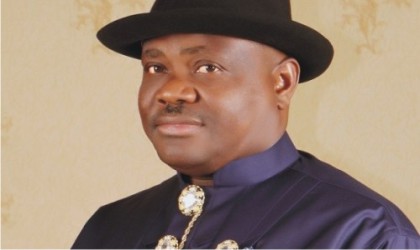
Governor Wike
In the next few days,
Chief (Barrister) Nyesome Wike will be 100 days in the saddle as the governor of Rivers State. Without doubt, history will judge Wike as the most outstanding governor of the first one hundred days of this dispensation. The facts speak for themselves.
This is contrary to the predictions of his predecessor, Mr Rotimi Amaechi that Wike would fail to deliver.
Hear Amaechi celebrating the trap he set for Governor Wike during a thanksgiving service held by the Greater Together Campaign Organisation (GTCO), the campaign
outfit of the Rivers All Progressives Congress (APC) governorship candidate, Dr.Dakuku Peterside: : “ I think Nyesom Wike is coming, we are waiting. He will look for money for salary; there is none. But when he pays out salary, we will see if anyof them can do what we did in this state: whether they can build the schools, the roads, even to get a loan’’.
It was under this precarious situation planned and executed against the Rivers people that Governor Wike took up the reins of leadership. It was a very gloomy period. The courts were closed, the State Assembly crippled, the state bureaucracy was in coma, the roads were death traps and insecurity was at the worst imaginable level. Civil servants were owed for two months, pensioners owed for six months and the entire Port Harcourt City was a huge dump site because Amaechi owed refuse clearing service providers several months of unpaid fees running into billions.
Worse still, the former Governor did not hand over any documents and refused to set up a transition committee to interface with the then incoming administration.
Instead, Amaechi turned a drummer boy at the Eagle Square, Abuja on May 29.
As an apostle of the “Talk na Do” political philosophy, Wike refused to be cowed by the political booby traps set for him. He was overwhelmingly elected because the people believed in his capacity to surmount the obstacles of treachery and wanton theft of state resources as exemplified by Amaechi’s administration. All through the campaign trail, the song was the same in all languages – “Wike na talk na do.”
The governor himself amplified it at every spot, both at the riverine and upland communities. ”My word is my bond. What I say I will do, I will do”.
With Wike’s exemplary administration in the last ninety-five days, the people have realised that they were right to have embraced the “talk na do”, political philosophy over the politics of treachery and corruption.
On his very first day in office, Governor Wike revived the judiciary, initiated operation zero pothohes and kick-started the process of rebuilding the state civil service. On June 1, he swore in the State Acting Chief Judge and the State Acting President of the Customary Court of Appeal. He also proclaimed the State House of Assembly at the Assembly Complex the same day.
Governor Wike has instituted constitutional separation of powers in the state with all arms of government functioning optimally. Indeed, former Governor Amaechi had to use the State High Court recently, even though he shut it down for one year.
The Rivers State House of Assembly is now one of the most active in the country, passing critical bills and doing legislative business at its complex.
Today, Rivers State is now a huge construction site. The economy is waxing stronger and the State is working again.
Two construction giants, Julius Berger and CCECC are handling the reconstruction and rehabilitation of Port Harcourt roads which spans two local government areas with a great percentage of the state’s population and economic infrastructure. The success recorded so far is mind boggling.
Wike has redefined project execution in Rivers State. Even under the rains, which was the indefensible excuse of Amaechi’s government, the roads are springing to life in areas such as Diobu, Borokiri, Iwofe road, GRA, Akpajo, Eliopranwo, Tombia extension, Eagle Island and other key communities in the state capital.
Several other construction companies are working on roads in different parts of the state to open up the state to the rest of the country.
Theonce deplorable Eleme-Onne Junction of the East West road leading to the Onne sea port is now motorable and work is still ongoing. Same for the Industry/NPA road to the Port in Port Harcourt City.
These interventions to rehabilitate two key federal roads are in line with his promise to make the ports functional for the economic revival of Rivers State.
The Abonnema -Obonoma link road in Akuku-Toru LGA has been completed while work on Andoni-Opobo Unity road as well as the Trans-Kalabari road is billed to commence shortly.
Through the Greater Port Harcourt Development Authority, the governor has started the construction of a facility to move auto-mechanics and spare parts dealers out of the city centre to further beautify Port Harcourt.
Governor Wike has also strengthened the security architecture of the state. He intervened in the equipping of the police and other security agencies, supplying 64 security vans with high class communication gadgets to track down criminals.
Beyond the donation of the vehicles, Governor Wike initiated a compensation scheme where families of security agents who die in active service fighting criminals will receive N5million, while residents who supply credible information that will lead to the arrest of kidnappers, armed robbers and cultists will get N1million.
The governor sent the state anti-kidnapping bill to the State Assembly, which has been passed and assented to by him.
In the housing sector, Governor Wike has completed the Iriebe Housing Estate of 50 units of two and three bedroom flats. He promised to replicate this model across the state.
For the first time in many years, Rivers State hosted an international football match. It hosted the U23 match Olympic Qualifier Match between Nigeria and Congo. It has been given the hosting rights of three Super Eagles matches beginning with the match against Tanzania. He has cleared the backlog of salaries of Sharks and Dolphin Football Clubs players.
Within this period too, he has commenced the process of rehabilitating prominent schools across the state. The hitherto abandoned state of the art Law Faculty building at the Rivers State University of Science and Technology has been completed.
The health sector is about to receive a revival pill. The governor has established the framework for the equipping of major general and zonal hospitals in the state.
Regarding economic development, Governor Wike took the most ambitious step. He started the process to end multiple taxation by involving all stakeholders across the state.
He has in the last three months opened functional lines of engagement with the diplomatic community, local and international business concerns. He has renewed partnerships with Shell, NLNG, NPA, Indorama, INTELS, NNPC, just to name a few. The governor has already attracted a Visa Centre of the South African Government and is working out international programmes with the British, the Irish, the Chinese and the US.
Rivers State is now a hub of development and collaboration as institutions, companies and entrepreneurs are now coming to the state to benefit from expanding business opportunities with the multiplier effects on jobs, economy and social stability.
Governor Wike has, in line with his promise to the people, effectively commenced the creation of a New Rivers State. He has given them back their voice and ensured that their resources work for them.
Even his few opponents who are presently on self exile in Abuja have commended him on his programmed revival of decayed infrastructure across the state.
Wike is no doubt, a political phenomenon. His ‘Talk na Do ‘ brand of politics is hinged on the people and the vision to improve their living standard. It is anchored on protecting them from external resource predators and ensuring that their God-given resources are judiciously deployed for all round development. It is about giving Rivers State a pride of place in the comity of states. So far, so great.
Nwakaudu is a Special Assistant (Media )to the Rivers State Governor.
Simeon Nwakaudu




Justice Peter Lifu of the Federal High Court in Abuja on Monday brushed aside the order of the Court of Appeal in Abuja which ordered him to stay proceedings in a suit that sought deregistration of the African Democratic Party (ADC), Accord Party and three others.
The Court of Appeal in a unanimous decision of a panel of three Justices had on May 22, 2026 directed the Federal High Court Judge not to proceed with the suit until an appeal pending before them and filed by Accord Party is resolved.
In a Certified True Copy Enrol Order of the Superior Court, Justices Mohammed Danjuma, Adebukola Banjoko and Oyejoju Oyewumi asked the lower Court Judge to stay proceedings until all issues on the appeal filed by the Accord Party were resolved
Governor Ademola Adeleke of Osun State had, through the Accord Party, applied to justice Lifu to join him as a defendant in the deregistration legal battle instituted by a group of former legislators.
The contention of the Osun State governor was that he had a stake in the Accord Party, being the platform he was seeking re-election in the August 15 gubernatorial poll in the state.
In his ruling, Justice Lifu on April 27 ruled against the Osun State governor, rejecting his request to be joined in the suit to defend his own position and interest.
Not satisfied with the Federal High Court decision, the Osun State governor, through his lawyer, Musibau Adetunbi (SAN), moved to the Court of Appeal in Abuja where he challenged the Justice Lifu decision to refuse to allow him join the suit.
After listening to the argument canvassed, especially that he has interest to protect as Accord Party gubernatorial candidate for Osun State governorship election, the three Justices of the Court of Appeal, unanimously directed Justice Lifu to allow them look into the grievances of the governor.
In specific terms, the Court of Appeal Justices directed Justice Lifu not to proceed further with the matter and fixed October 27 to determine the interlocutory appeal of the appellant.
However, when the certified enroll order and notice of appeal were served on Justice Peter Lifu by Mr Adetunbi (SAN), the judge rejected it on the ground that it was a ploy to arrest his judgment in the matter.
Although the judge had adjourned his judgment delivery in the matter indefinitely, he finally made a dramatic turn around on Monday and proceeded to deliver the judgment that has now proscribed the five political parties.

Actor turned politician, Mr Kenneth Okonkwo, has rejected the choice of former Rivers State Governor, Mr Rotimi Amaechi, as the running mate to Alhaji Atiku Abubakar in the 2027 presidential election on the platform of the African Democratic Congress (ADC).
In a statement on Monday, Mallam Bolaji Abdulllahi, the National Publicity Secretary of the ADC, announced the party’s choice of Mr Amaechi.
However in a statement, Mr Okonkwo said that the choice of Mr Amaechi from the South South strengthens the continued marginalization of people from the South East.
According to the former spokesperson of the Labour Party, any arrangement that would not factor a person from the South East either as president or vice president in the party is anti-Igbo.
He contended that Chief Raph Nwosu, who founded the ADC in 2005 and willingly surrendered it’s leadership to Senator David Mark did not do so to entrench Igbo marginalization in the party.
The former actor said: “I heard from the social media that ADC has picked its vice presidential candidate from the South-South. If this is true, it is unfortunate, as this will continue the crude marginalisation of the South-East.
“This geo-political zone has neither produced a president or vice president since 1999. To deny the South-East the opportunity to produce the president or vice president in the ADC in 2027, will amount to perpetuating the marginalisation.
“The ADC was founded by Ralphs Nwosu from the South-East in 2005. He made the sacrifice to give up the party in 2025 for the coalition to usher in a better Nigeria. He couldn’t have made that sacrifice to marginalise his own people.
“I did not join the coalition to assist in marginalisation of my own people further. I am of the opinion that if we made a sacrifice to give up the national chairman and the president, it will amount to unpardonable injustice to deny us the vice president in 2027.
“I joined politics to fight for a better Nigeria where no region, geo-political zone, or person will be marginalised.
“The only favour I asked Atiku Abubakar, who openly declared that he is the pathway to the presidency of the South-East, is to show it by choosing someone from the South-East to be his vice.
“If it is confirmed that he has chosen a candidate from the South-South, I wish him well. I am not favourably disposed to campaigning for any presidential ticket that does not have a person of South-East origin as president or vice in 2027”

The National Chairman of the All Progressives Congress (APC), Professor Nentawe Yilwatda, on Monday said that the numerous projects being executed by President Bola Tinubu across the states in the southeast will give him upper hand over other presidential candidates during next year’s general elections.
Prof. Yilwatda stated this at the Abakaliki Township Stadium during a mega rally organized by the Ebonyi State government and Minister of Works, Senator David Umahi, during which President Tinubu and other APC candidates for the 2027 general elections were adopted.
According to the APC National Chairman, no President had done for the southeast region what President Tinubu has done for them and expressed the confidence that the president would not only win in Ebonyi State but in the entire South East.
Prof. Yilwatda also used the occasion to address growing insinuations in some quarters that Ebonyi State had been conceded to the Peoples Democratic Party (PDP) ahead of the 2027 general elections.
Dismissing the claim, Prof. Yilwatda said the state would not allow the PDP to win any position in the forthcoming general election.
“We will return President Bola Ahmed Tinubu and Francis Nwifuru as Governor of Ebonyi State in 2027.
“We want to return all APC senators, members of the House of Representatives and House of Assembly candidates in 2027.
“Nobody has conceded Ebonyi to the PDP. Therefore, there is no vacancy in Ebonyi State. Ebonyi PDP has no place, and there is no vacancy at all in the Government House come 2027,” the APC National Chairman declared.
He commended the people of the state for their support for President Tinubu and urged them to re-elect him in the next presidential election in appreciation of what he has done for the state and the entire South-East through infrastructural transformation and human capital development.
Governor Francis Nwifuru, who also spoke at the event, said the state had no other presidential candidate for the 2027 general elections apart from President Tinubu.
He declared that Ebonyi remained a stronghold of the APC and vowed that the party would deliver the President in the state.
Gov. Nwifuru said President Tinubu had shown exceptional commitment to the state and deserved total support for appointing Senator Umahi as Minister of Works, a role he said Senator Umahi had performed creditably.
“Ebonyi has no other presidential candidate apart from President Bola Ahmed Tinubu, and we will return him in the presidential election.
“We are standing here today to tell the whole world, especially those using the President’s name to orchestrate division and confusion in this great state, that we have only one party, and that is the APC.
“This statement became necessary because some people are going around claiming they have discussed with Mr President and that he has handed Ebonyi over to the PDP. They are also saying that Chief Nyesom Wike is their leader and that Wike said the President has given Ebonyi to him.
“Ebonyi is not for sale. We are restraining ourselves because the people are with us. Nobody should push us because we have what it takes to confront anyone trying to destabilise us.
“We want to tell Mr President that he has earned our votes. He gave us what we had never had in Eastern Nigeria — the office of the Minister of Works. And this Minister of Works is not sitting idle; he is working,” he stated.
Senator Umahi, in his remarks, said President Tinubu had done what no other President had done for Ebonyi State and the entire South-East by executing numerous projects across the state and the region.
“Ebonyi State is a one-party state under Governor Francis Ogbonna Nwifuru. We are not going to repeat the mistakes of the past.
“President Bola Ahmed Tinubu has done a lot, not just for Ebonyi State but for the entire South-East and other geopolitical zones,” he said.