
Featured
NDDC’s New Debt Recovery Exercise


The recent initiative of the Nige Delta Development Commission (NDDC) to engage debt collectors for the purpose of recovering debts owed it and which is reported to be as high as N1.2 trillion,is a development of interest, with a promise to change the narrative of the commission. That is if such is executed effectively without any tinge of politicisation of the process from sundry external influences, as well as the ever present possibility of sabotage from in-house, insidious power-play schemes across its rank and file. Recently, the commission appointed a debt collector – Paris Trust Limited (PTL) to tackle its debtors who are in the main oil and gas companies, operating in the Niger Delta region. The debt collector has reportedly swung into action by sending demand notices to the defaulting companies conveying a seven-day ultimatum on the latter, to address their respective cases of indebtedness.
This is a positive development by the commission pursuant to repositioning itself for more predictable business activities in respect of its statutory obligation of driving development in the Niger Delta. Created in 2000 as an interventionist agency by the Federal Government under President Olusegun Obasanjo, the NDDC had its operational mandate clearly identifying the oil and gas companies operating in the Niger Delta region as statutory contributors to its war chest. In the 2000 Act establishing the commission, the designated oil and gas companies were assigned the responsibility of contributing just 3% of their annual operating budgets to the purse of the commission. Other sources of funding for the NDDC include 15% of the monthly statutory allocation to member states from the Federation Account and 50% of the Ecological Fund. The foregoing funding sources are to be augmented with other options such as business profits, loan and gifts, to name a few.
The initiative of recovering debts from defaulting oil and gas companies is therefore a legitimate exercise that is backed by law and contemporary best fit business practice. The denial of the commission of its due revenue by the offending debtors translates into its compromised capacity to deliver on its commitments to the host states. This, however, is not to state that the failure of the debtors to oblige it has been the only problem of the commission with respect to delivering on its mandate to member states. Beyond the indebtedness of the oil and gas companies lies the bigger debt by the Federal Government itself, which the commission has demonstrated incapacity or otherwise to recover. Meanwhile, efforts to exploit other sources of funding which are market based, like returns on investible funds are yet to feature on the commission’s portfolio.
In this state of financial miasma plays out the proclivities of some potentates since 2015, to make Rivers State the ‘whipping boy’ of the commission’s operational incontinences. While the commission had since its inception battled with issues around both the operation of the funding set up as well as the process of accounting for whatever funds that accessed its coffers, the period from 2015 to date has been a season of concern with respect to its relationship with the state. The coincidence of the low points of this period with the control of the Federal Government by the APC and associated animosity towards the PDP government in the state was not difficult for any observer to associate with the victimisation of the state.
The plight of the Rivers State in this unsavoury situation has been highlighted in several instances. A typical case is the running matter of tax evasion by the NDDC in respect of which the Rivers State Internal Revenue Service (RIRS) sealed off in April this year, the commission’s corporate headquarters in Port Harcourt over an outstanding tax sum of N50 billion through a court order. While the commission protested against the action, its case was weakened as it was acting on a compromised financial operational template that provided scant transparency even with respect to its founding NDDC Act 2000. While the Act under consideration provides that the commission produces an audited report of its operations not later than six months after the end of each year, such a report from the NDDC has remained largely in the terrain of the voodoo, as far as the public is concerned.
It is therefore for good measure that Governor Nyesom Wike conveyed the pain of the State from its unfair treatment by the commission, to its Managing Director, Professor Nelson Brambaifa during the latter’s visit to mend fences. Wike had raised the issue of the commission’s slips as including the failure to pay up on its counterpart funding obligations, in respect of the Mother and Child Hospital project in the state after the government had delivered on its end.
It is hoped that dividends from the current debt recovery exercise will benefit Rivers State in addressing some of the debts owed it by the NDDC.







The Rivers State Ministry of Culture and Tourism has floated a culture content platform in collaboration with digital television group, Multichoice.
Permanent Secretary, Ministry of Culture and Tourism, Mr. Freddy Ndigbara, disclosed this after a meeting with MultiChoice Head of Content Acquisition, Don Dotun Ojon, in Port Harcourt.
He assured that content entrepreneurs and film makers would enjoy the platform by promoting culture and other contents to sell the states tourism potentials.
He said MultiChoice M-net was now open to increase its patronage for content shots on locations in Rivers State, describing the State as one that has numerous potentials for film tourism.
“We were privileged to have Don Ojon with us at the Rivers International Film Festival (RIFF) at the weekend in Bonny and he saw, first hand, the numerous sites and opportunities that are open to creatives in the State. After that, we felt it was important to deepen the conversation and he obliged. This is a cheering news for the sector in the State,” he said.
Ndigbara stated that “Rivers State has many more untold stories to tell, many more contents to reel out and the assurances from the M-net Acquisition Manager is an indication that the industry in the state will soon enjoy a new lease of life”.
The Permanent Secretary thanked Ojon for the visit and assured that creatives in the State would grap this opportunity and show the world that Rivers State is a major hub for film tourism in Nigeria.
On his part, Ojon said the visit was to discuss on ways of promoting tourism in the State using creatives and film.
Ojon said although the company has recently been acquired by canal+ France and is undergoing restructuring, he would promote the chances of Rivers State to host the MultiChoice talent factory in the State.
With Asaba, capital of Delta State, being saturated, Ojon said the next port is Rivers State, which he said is capable of building fresh crop of creatives, new locations, new story lines and concepts.
He, therefore, called for collaboration from stakeholders in the State.
Kevin Nengia
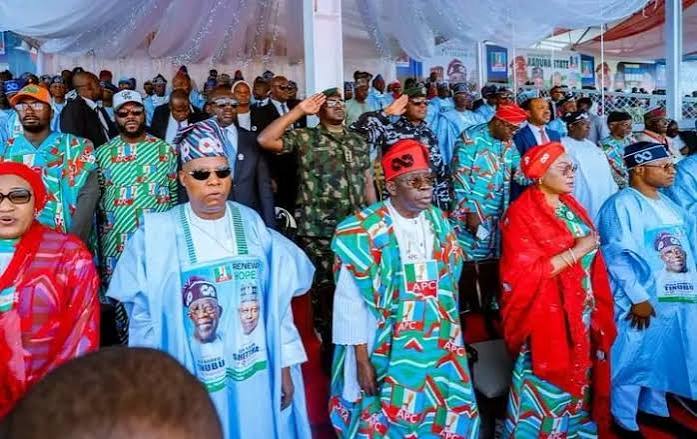
Barring last minute changes, the presidential campaign train of the All Progressives Congress (APC) will storm Port Harcourt, Rivers State capital, tomorrow.
This is according to a campaign timetable released by the APC Campaign Council last month.
The Tide reports that the APC presidential campaign kicked off in Kaduna on October 24 with President Bola Tinubu in attendance.
The campaign train later moved to Cross River, Gombe, Nasarawa, and Ekiti on November 2, 3, 4 and 5 respectively with the Vice President, Kashim Shettima representing the President at the rallies.
President Tinubu is personally scheduled to attend 12 states including Rivers, Kaduna, Plateau, Oyo, Borno, Enugu, Bauchi, Sokoto, Delta, Kano, Adamawa and Lagos.
The Rivers State rally, scheduled to hold at the Adokiye Amiesimaka Stadium, Port Harcourt, is expected to witness a large crowd of party supporters drawn from a coalition of political parties in the State.
The party is expected to round off its presidential campaign in Lagos State on January 9, 2027.
The Tide reports that Tinubu has not visited Rivers State as President since he assumed office in May 2023. His last physical visit to the State was before his inauguration on Wednesday, May 3 – Thursday, May 4, 2023, when he was hosted by then Governor Nyesom Wike in Port Harcourt to commission the Rumuola/Rumuokwuta Flyover and the Magistrates’ Court Complex.
Tomorrow’s visit will be his first to the State since assuming office.
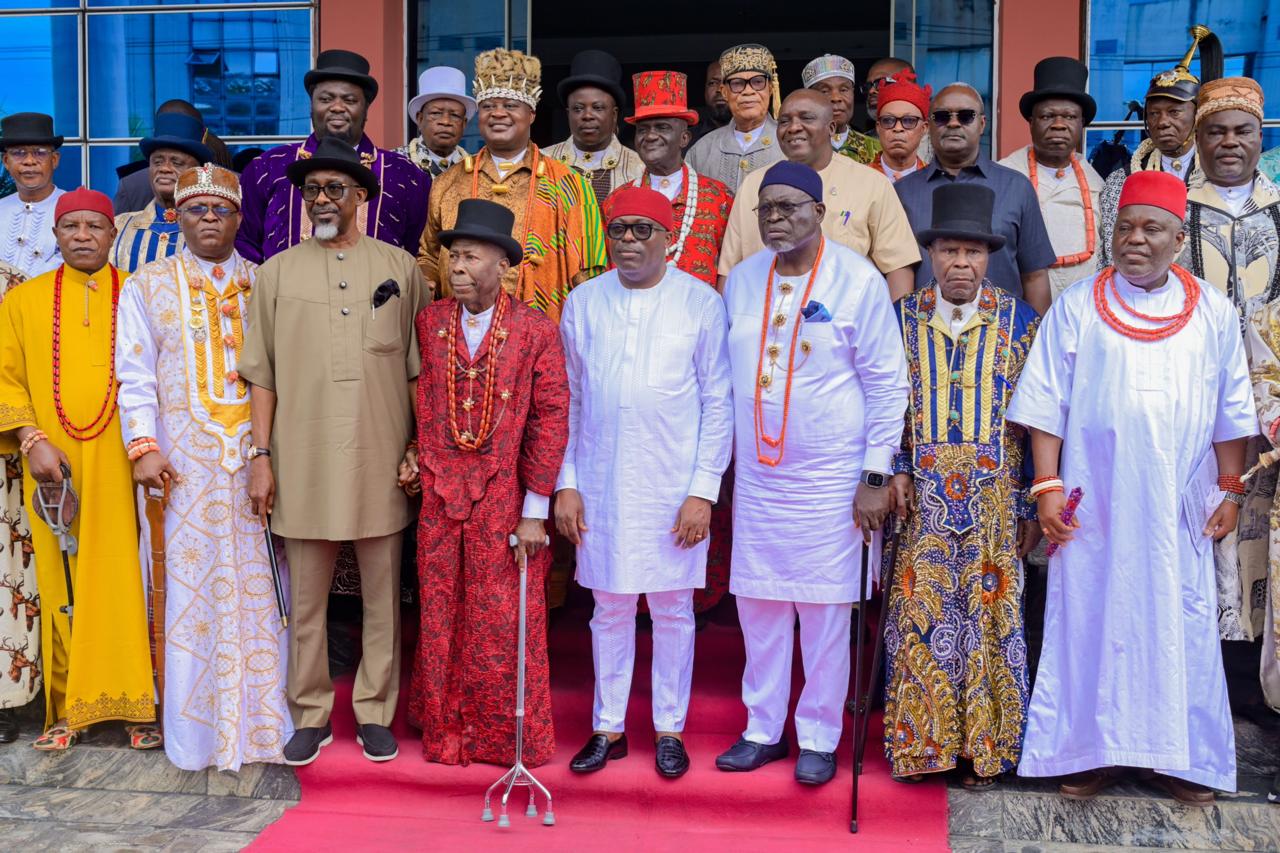
Rivers State Governor, Sir Siminalayi Fubara, has charged traditional rulers in the State to maintain neutrality, ensure fairness and uphold peace in their domains as the country prepares for the 2027 general elections.
Fubara gave the charge on Wednesday while declaring open the 126th, 127th and 128th Combined Quarterly Meeting of the Rivers State Traditional Rulers Council, in Port Harcourt.
The governor said the primary function of traditional rulers is to administer justice and ensure fairness, saying their conduct must not lead to division and unmanageable crises.
“Let me therefore, request, if that is the right word to use, that please, as we are entering into this political season actively, everyone should ensure that your conduct promoted peace in your place. Your actions should not be what would lead to the division and multiple crisis that we cannot manage as a government.
“I think with that, we can all live as one and we can also continue to make this progress that we are trying with all our mind, our body and our soul, to ensure that we deliver to our dear State,” he said.
Fubara urged the royal fathers to abide by the oath and constitution they swore to before ascending their respective stools, in the interest of stability and progress of the State.
He also enjoined them to set aside individual sentiments and place the interest of Rivers State above personal considerations, noting that this principle has guided his own day-to-day governance of the State.
“I want to enjoin everyone to keep aside issues of individual sentiments and ensure that the interest of our state supersedes whatever thing that we have in our mind. This is not just what I’m saying here, it is what I’ve also practiced and displayed in my day-to-day life in the governance of our dear State,” he said.
On the appeal for improved welfare for traditional rulers, the governor clarified that the delay in actualising some of the requests they made in the past was not from the government but from the inability of the Council to put its house in order.
Fubara explained that the issue of stipends paid to the traditional rulers by the local government councils, was a statutory benefit provided for in the constitution and not what a state governor can change by mere verbal pronouncements.
He assured that he remains a man of his word and will fulfill his promises to the traditional rulers before leaving office, next year.
He reaffirmed his respect for the traditional institution as custodians of culture and the closest link to the people, thanking them for their prayers and support.
The governor urged the royal fathers to ensure that the combined quarterly meeting featured fruitful deliberations that will strengthen peace and development in the State.
Earlier, the Chairman of the Rivers State Council of Traditional Rulers and Paramount Ruler of Apara Kingdom, His Royal Majesty, Eze Chike Amadi Worlu Wodo, expressed profound gratitude to the State Government for its efforts in maintaining a cordial relationship with the traditional institution.
Wodo highlighted the importance of traditional rulers in conflict resolution, noting that their closeness to the people places them in a strategic position to mediate in disputes involving chieftaincy matters, family disputes and land ownership in their respective communities.
The royal father drew the attention of the State Government to some challenges affecting the performance of the traditional institution, particularly the lack of official utility vehicles and logistical support needed to discharge its responsibilities effectively.
He also appealed for improved monthly stipends and better welfare provisions to reflect prevailing economic realities.
-
Rivers3 days ago
NUJ Set To Attend UNIPORT’s 217th Inaugural Lecture
-
 News3 days ago
NJC Suspends Three Judges, Sanctions Eight Others
-
Politics3 days ago
Atiku Kicks-Off 2027 Campaign, Promises To Tackle Nigeria’s Challenges
-
 Featured3 days ago
APC Presidential Campaign Storms PH, ‘Morrow
-
News3 days ago
FG Explains Supply Disruption As Power Generation Drops To 3,659MW
-
Metro3 days ago
Port Harcourt Prepares For 10,000 Runners As International Marathon Returns
-
 News3 days ago
Bille Gas Leak: Coalition Tasks FG On Proactive Measures
-

 News3 days ago
IGP Orders Arrest, Prosecution Of Campaign Billboard Vandals