
Featured
As 2018 Winds UP: Nigerians Mourn Economy Under Buhari …Say 2019 Still Uncertain

Despite the rise in the Manufacturing Purchasing Managers’ Index (PMI) at 61.1 index points for December 2018, as against 57.9 index points recorded in November, analysts say at the weekend that the outgoing year will not be forgotten in a hurry due to other negative indicators like high unemployment, dearth of credit by banks to critical sectors of the economy and high inflation in the midst of low purchasing power.
Bismarck Rewane, Chief Executive, Financial Derivatives Company’s December Lagos Business School’s publication sees 2019 as a year of “Trepidation and Growing Uncertainties,” adding that “The Nigerian economy may succumb to pressures of an oil price (down by 40%) to $53pb range and a cut in production to 1.67mbpd. The lower oil revenue and a growing deficit will erode the fiscal consolidation policies of the government.
With banking industry fragility and a naira under speculative pressure, 2019 will be a year of technological and investment opportunities but serious political and policy challenges.
The amicable settlement between Nigeria and MTN after an avoidable saga is a good way to end an eruptive year. A listing of MTN is the much needed booster shot the Nigerian stock market badly needs.”
According to the foremost economist, Nigeria’s 2019 election is being greeted with the classical reaction of an economic indifference curve, which is a combination of choices between commodity A and B which gives a consumer the same level of satisfaction or dissatisfaction.
‘Talking to a cross section of young people between the ages of 20 and 30, most respondents were unenthusiastic, indifferent and apathetic. Some considered it an Hobson’s choice. Based on this, we are anticipating voter apathy and a low turnout in the February election,’ he said.
Lagos Chamber of Commerce and Industry, Muda Yusuf, Director-General would like “foreign exchange management framework that reflects the market fundamentals, the acceleration of the economic diversification agenda, normalization of Lagos ports environment, the oil and gas sector reform, especially the petroleum industry bill; better debt management strategy to ease the burden of debt service, reduction in the cost of governance at all levels; improvements in the domestic revenue (particularly independent revenue) to reduce volatilities in government revenues,” in the new year.
President of the Nigerian Employers’ Consultative Association (NECA), Dr Mohammed Yinusa says the implementation of Nigeria’s 2018 budget, benchmarked at $60 per barrel could also suffer should the slump persist in the oil price at the international market persists.
Consequently, Yinusa says, “Nigeria’s economy which is currently stabilising on boost in crude oil price, could be adversely affected as crisis in foreign exchange, primarily sourced from the oil sector was projected to worsen.”
Yusuf believes that the non-passage of the Electoral Act and Petroleum Industry Bill (PIB), are considered as sore points for the economy and polity, adding, the “downstream sector as currently constituted is unstructured and largely uncompetitive.”
In the last quarter of this year, the globa oil industry witnessed steady decline in prices of crude oil prompting several oil producing countries especially OPEC to consider production cuts.
In fact, OPEC, Russia and other producers have agreed to remove 1.2 million barrels per day from the market beginning in January. Consequently, some observers also said price volatility in 2019 may be inevitable considering the conflicting priorities of the three top world producers, namely the US, Saudi Arabia and Russia.
The move follows a more than 30 percent drop in oil prices that saw international benchmark, the Brent crude, fall from more than $86 a barrel to a 13-month low of $57.50 last month.
Apart from the downward movement in the international prices of crude oil in the outgoing year,2018 witnessed a mixed feeling among the stakeholders in the country’s oil and gas industry.
Muda Yusuf said data from the Organisation of Petroleum Exporting Countries (OPEC) shows that oil prices are trending down at $54 p/bl on 22nd December 2018 from its peak of $88p/bl in the month of September and October 2018.
He said this is already below 2019-2021 Medium-Term Expenditure Framework (MTEF) and 2019 budget benchmark of $60p/bl. The declining global oil price will likely distort FG’s economic projections for 2019 as well as impact adversely on its MTEF if the trend is not reversed.
Consequently, Yususf said in 2018, the oil and gas industry was characterized by weak incentive regime to facilitate the penetration of the use of cooking gas in the country as well as high cost of the LG equipment as result of high import tariff. He also said the industry was characterized by the discriminatory VAT imposed on the locally sourced LPG, while imported LPG does not attract VAT.
“Petroleum subsidy debts and non-payment of interest rate and exchange rate differentials to oil marketers is affecting the ability of the oil marketers to meet up with their financial obligations with the banks. This is also having a multiplier effect on the revenue of the banks/lenders. It also has implications for the stability of the banking system and the growth of non-performing loans in the financial system,” he added.
A banker and chieftain of the Peoples Democratic Party (PDP), Dr John Ayuba says the failure of government to provide the much needed enabling environment led to the drought of Foreign Direct Investments (FDIs).
At the home front, Ayuba said the economy did not fare betther as local investors were hounded with harsh and vindictive policies.
According to him, the economy needs a leaders with business acumen and who understands and with a face of business.
Chief executive of Abuja based Muregi Associates, Dr. Husseini Mohammed in his response to inquiry titles his submission “Economic Annus Horriblis.”
As the above indicates, Commenting or writing in assessing the Economic situation of the country in 2018 is not farfetched considering a number of factors, namely, Inflation, Unemployment, Manufacturing, Private Sector Performance and indeed the overall activities of the socioeconomic indicators all proved by and large negative.
Manufacturing sector, which is the engine of economic growth in terms of Capacity utilization, was too low and generally considered unacceptable or unrealistic for any meaningful economic growth. In a way it wouldn’t be out of place to conclude that, the year 2018 is what in Latin we call “Annus Horriblis”.
On the expectations for next year, he said, “we need to be cautious because the current budget of N8.83 Trillion Naira with a production of 2.3 barrel and a benchmark of $60per barrels is already questionable by the current sport market of $53 per barrels and OPEC’S cut in our production to a mere 1.93 barrels.
For the Economy to turn around, we must look inwards in the development of Agriculture and other allied resources with a major emphasis on the small-scale industries as enablers.
Leadership is everything, election is just about a month away, therefore, whoever emerges as the president be it the current leadership or the PDP leadership will have Herculean task in managing the state of affairs of the country.”
Engineer Martin Onovo told our correspondent that the “year, just like the previous years under the current administration, didn’t witness salutary growth because the handlers of the country have no idea of how to pilot it let alone functionalize the nation’s section.
He said the development explains the lingering crisis of confidence between the Minister of State for Petroleum Resources, Ibe Kachikwu and the group managing director of the Nigerian National Petroleum Resources (NNPC),Maikanti Baru, fuel subsidy payment, corruption and all other inherent infractions which ordinarily should have fizzled out given the right leadership.”
On power situation some analysts say despite the recent claim by the country’s Power Minister, Babatunde Fashola, that the current administration has taken power situation to the next level, the Senior Staff Association of Electricity and Allied Companies(SSEAC) and critical stakeholders felt the minister played to the gallery .
National president of the Union, Comrade Chris Okonkwo told newsmen that Nigeria didn’t achieve any substantial growth in the power sector in 2018,adding that the power distribution companies had a field day by imposing estimated billings on customers, denying them prepaid meters and shunning investment in infrastructure that could boost power supply in the country.
A leader of a pressure group organization in Lagos, Comrade Chinedu Bosah corroborated Okonkwo’s position, saying the claim of improved power supply by the current government in 2018 is a mere political gimmick
Consequently, President of the Nigerian Employers’ Consultative Association (NECA), Dr. Yinusa, has recommended that government should see to a logical conclusion its power sector reforms to deliver stable power supply to the populace, while priority should be given to the rehabilitation of deplorable road networks while constructing additional ones across the nation.
He said: “There is the need for close monitoring and regulation of the activities of road concessionaires to ensure optimum benefits from such concessions. The transportation and haulage system is virtually road dependent. This is not good for the economy.
“Development of alternative transport system, particularly the water transport, railway, both intra and interstate, should be accorded high priority.
“We recognise the efforts of government in respect of its rail modernisation programme and recommend that the programme should be accelerated in view of its centrality to the growth of internal trade and industrial competitiveness.”
With the upcoming general elections, he advised Government not to focus solely on politics at the expense of the economy and good governance, but continue to work assiduously to sustain the steady stabilisation of our economy through informed policies to position it for continued growth.
However, on the anti-graft war, the government, according to some analysts was able to change the status quo to an extent, as they all agree that it became obvious that there was a new sherrif in town.
Indeed, one of the landmark strategies initiated by the government was the Whistle-blower policy, which, according to the government, has yielded several recoveries, including, N13.8 billion from tax evaders and N7.8 billion, $378 million, £27,800 in recoveries from public officials targeted by whistleblowers.
It also said the National Economic Council (NEC), under the Chairmanship of Vice President Yemi Osinbajo, approved the audit of key federal revenue generating agencies, which has so far yielded a total sum of N526 billion and $21 billion. The money was underpaid to the Federation Account between 2010 and 2015.
However, while the ruling APC goes to the 2019 polls with some of these achievements, many believe the government may have fallen short of great expectations Nigerians including improving their living standards. But, rather, what they have experienced in the last twelve months was more of despondency and hopelessness



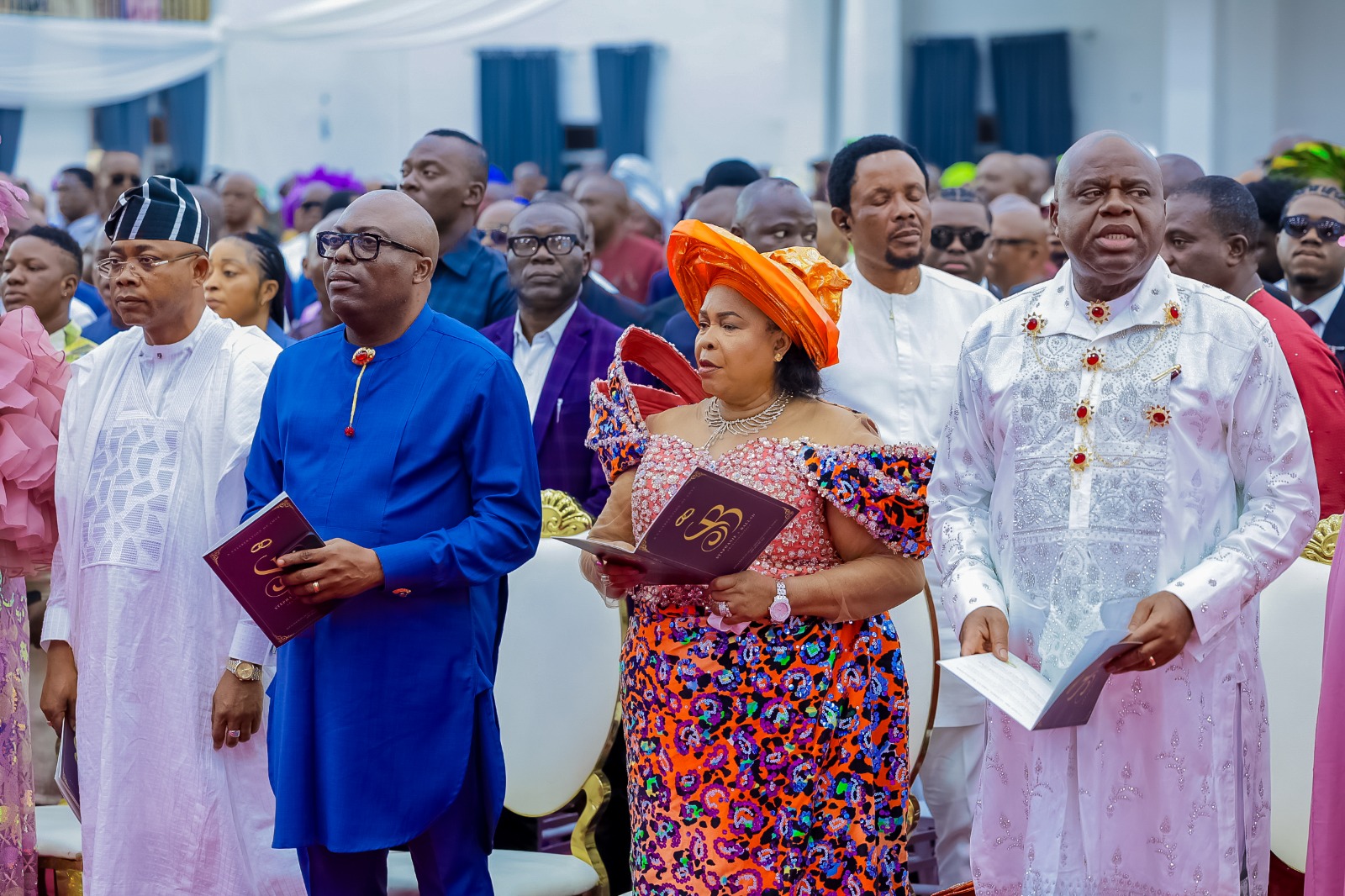
Rivers State, Sir Siminalayi Fubara, has assured members of the National Youth Service Corps (NYSC) of his administration’s commitment to supporting and strengthening the scheme in the State.
Fubara gave the assurance last Friday at the NYSC permanent orientation camp, Nonwa-Gbam, Tai Local Government Area in the State, during the swearing-in ceremony of 2026 Batch B Stream II orientation course.
Represented by the Permanent Secretary, Cabinet Bureau, Office of the Secretary to the State Government, Dr. Promise Oguzie, the governor said the State Government would remain intentional in providing the necessary support to improve the NYSC scheme and enhance the experiences of corps members deployed to the state.
He charged the corps members to be role models and quality nation-builders in their service to the good people of Rivers State in particular, and Nigeria at large.
“I charge you to be exemplary, dedicated and committed in all you do. Take full advantage of all the camp programmes and activities to enrich yourselves”, he said.
In his welcome address, the State Coordinator of NYSC in Rivers State, Mr. Moses Oleghe, urged corps members to see their deployment to Rivers State as a “veritable opportunity to make meaningful contribution to the growth of the State in particular and Nigeria at large.”
He further charged them to serve with all sense of “integrity, discipline, and the fear of God, especially when they will be engaged as INEC ad-hoc staff that will conduct the 2027 general elections.”
A total of 3,584 corps members composed of 1,421 males and 2,163 females were sworn in by the Chief Judge of Rivers State, who was represented by Justice Godspower Aguma.

Governor of Rivers State, Sir Siminalayi Fubara, says Nigeria needs God-fearing leaders for the nation to move in the right direction and make meaningful progress.
The Governor stated this yesterday when he received in audience, the World President of the Seventh Day Adventist Church, Pastor Erton Kohler; his wife, Andriene Marques Kohler; daughter Mariana Marques Kohler and a retinue of ministers of the church at Government House, Port Harcourt.
Fubara who hailed the Seventh Day Adventist Church for its contributions to education and the grooming of future leaders in Nigeria, expressed delight that the Church had over the years, been investing in education at various levels and currently runs two universities in the country.
He commended the church for not only using its institutions to spread the gospel of Christianity but to groom future leaders for the country.
According to him, religion should not be just about defending one’s faith, but also making meaningful impact on the lives of the people.
He said that by floating these educational institutions, the church has demonstrated capacity to support Nigeria in the task of producing not only educated people but a breed of God-fearing leaders.
“Our country is where it is today because we lack the fear of God. If you have the fear of God, there should be a limit to what you can do because you understand the supremacy of God. But when God is not in your equation, you’ll go beyond the line and that is what has brought us to where we are today.
“So, I feel very happy that you are contributing to the development of our future leaders in this country. We need the right people being in the right place; prepared properly with good minds; that is what we need, not just in Nigeria but round the whole world.,” he said.
Governor Fubara further observed that the absence of God-fearing people in high places to take the right decisions that could impact positively on the society, has also given rise to other problems such as social inequality, poverty, corruption and criminality. According to him, Nigeria needs a system where the average parent could afford quality education for their children and a guarantee that upon graduation, the average child will have the capacity to compete favourably with anybody, anywhere in the world.
“If we have a situation where the little money that you’re being paid as wage can also afford you quality healthcare and after working at least for 15-20 years, you have a roof over your head, tell me why you should be involved in any kind of crime? At that point, you’ll feel secured and this attitude of insecurity about the future that leads to all the social vices we have today won’t be there,” he said.
Governor Fubara expressed appreciation to the delegation for the visit and for their prayers for Rivers State, assuring them of his continued support for their programmes in the state.
Leader of the delegation and World President of the Seventh Day Adventist Church, Pastor Erton Kohler said he was in Nigeria for a special conference of the church during which thousands of the church’s ministers will be undergoing an empowerment programme to further equip them for the task of herding their flocks and serving the society.
He expressed gratitude to the Governor for the warm reception accorded his entourage, saying the memory of the visit will linger in his mind for a lifetime.
Kohler disclosed that the Church has over twenty -four million (24,000,000) members and more than 182,000 places of worship, spread across 212 countries of the world.

The Rivers State House of Assembly has approved the 2026–2028 Medium Term Expenditure Framework (MTEF) submitted by Governor Siminalayi Fubara.
This reaffirms the lawmakers’ commitment to enacting laws and taking legislative actions geared towards the overall development of the State.
The Assembly gave the approval during its Second Legislative Sitting of the Fourth Session held last Friday.
Speaking on the MTEF document during plenary, the House Speaker, Rt. Hon. Martin Amaewhule, noted that by the provision of Section 10(1)(b) of the Rivers State Fiscal Responsibility Law No. 8 of 2010, the MTEF ought to have been laid before the House in September 2025.
Amaewhule explained that traditionally, the document is expected to be presented four months before the commencement of the next financial year and immediately after the expiration of every three-year fiscal cycle.
He, however, stated that in the interest of the State and its people, the House considered it necessary to deliberate on the document, describing it as a precursor to the 2026 Budget Estimates.
The Speaker expressed concern that the year had already progressed significantly before the presentation of the framework.
During deliberations on the document, members examined the assumptions and projections contained in the MTEF and observed that strict adherence to the outlined fiscal parameters would ultimately serve the interest of Rivers people.
The lawmakers maintained that effective implementation of the framework would promote prudent financial management and enhance developmental planning across the State.
Following the debate and positive consideration by members, the Speaker put the question to the House and members voted overwhelmingly in support of the approval of the MTEF.
Meanwhile, during the same sitting last Friday, the House also received a petition from the Chairman of Obio/Akpor Local Government Council, Dr. Gift Worlu.
The petition was presented by the member representing Obio/Akpor Constituency II, Hon. Emilia Amadi.
According to the petition, concerns were raised over an imminent security breach, threats to lives, destruction of property and alleged forceful takeover of property by some lawless persons within parts of the Local Government Area.
Presenting the petition before the House, Hon. Amadi appealed to the lawmakers to revisit the matter and take necessary steps aimed at safeguarding lives and property in the affected communities.
The House is expected to further deliberate on the petition and consider measures to address the concerns raised in order to sustain peace and security in the area.
King Onunwor
-

 News1 day ago
RSG Targets Nine Million Residents in Mosquito Net Distribution Campaign
-

 Oil & Energy1 day ago
Aiyedatiwa Signs New Electricity Bill
-

 Oil & Energy1 day ago
NLNG Commissions Research And Innovation Centre In RSU
-

 Maritime1 day ago
Marine Minister Commends President Tinubu On NPERA Bill Assent
-

 News1 day ago
KenPoly Holds Eight Convocations, August 29
-

 News1 day ago
RSG Begins Another Phase of Projects Commissioning Today
-

 News1 day ago
RMAFC Completes Revenue Sharing Review, Proposes New Pay
-

 Maritime1 day ago
NAGAFF Petitions IGP Over Alleged Maritime Police Harassment