
Health
Tackling Yeast Infection Naturally

Stand in front of a mirror, open your mouth and check your tongue, if you have too much white patch and mucus, then, it’s likely that you have a yeast infection.
Yeast does not only affect the mouth, it affects our private parts especially women, in the form of candi. Normally, yeasts are health if they are low. They only cause trouble when they are high and have weakened the body system.
When once yeast overruns the body defences one begins to have diverse symptoms such as frequent catarrh fungus infection on the skin and fingernails, abdominal pains, gas, constipation and diarrhea.
In medical terms, it’s often referred to as “candida albicans”. Candida albicans plays prominent role in making you sick. Sources of yeasts infection can include damp rooms with dirt floors and rugs.
Bathrooms provide a comfortable home for molds, closets, drawers or even matters and beddings sometimes harbour molds that allows yeast to grow.
Natural medicine practitioners usually caution against the use of antibiotics to tackle yeast infection. The reason for this is based on research and finding that antibiotics make the body more vulnerable since they kill other germs and promote the growth of yeast in the body.
It’s believed that broad spectrum antibiotics kill organisms in the body, such that useful normal intestinal and vaginal bacteria are wiped out, giving more room for yeast to grow.
Many people abuse antibiotics such that they take them without prescription. When the body is overwhelmed with over usage of antibiotics, it creates health challenge often worse than those the anti-bacterial drugs were used to prevent.
Using natural means to tackle yeast infection is a gradual process of using both herbs and dieting. In adopting dieting in tackling yeast infection, it’s necessary to understand that dietary requirements vary according to each person’s make up.
Experts advise that diet in curbing candida infection should contain differing amounts of nutritious foods. You should avoid foods, such as breads, to which yeast has been added. You should also avoid yeast containing beverages, especially wine and beer. You should also avoid margarine and “junk foods”.
Foods loaded with sugar or additives should also be avoided if one suspects candida infection, some nutritionists insist on candida control diet that requires cutting down on carbohydrate.
A candida control diet emphasises foods from a wide variety of sources and restricts only those foods which contain yeast, honey, cane sugar, beet sugar, corn sugar, fructose and other refined carbohydrate.
The diet does not limit your in take of good carbohydrate foods such as fresh vegetables and fruits, freshly squeezed juices and whole grains.
Cutting down on diary products such as milk is key in overcoming yeast infection. Diary foods are mucus producing and this makes the inner organs to be damp, thereby encouraging yeasts to multiply.
Some fruits and herbs are effective against yeast infection though it takes time for you to get results. Continuous usage of these herbs will go a long way in clearing the body of yeast.
Lemon and garlic are potent natural yeast fighting herbs; cucumbers, parsley and grapes also help fight yeast. Erential oils from, evening primrose, indeed oil and vitamin (are very effective to keep yeasts at bay in the body.



The Federal Government has begun a scheme to battle malnutrition in children.
Tagged, “Nutrition 774 Initiative”, the programme was unveiled by Vice President Kashim Shettima as it falls within a framework for the Federal Government’s comprehensive vision for a nationwide nutrition programme to address malnutrition and food insecurity in Nigeria.
The proposed programme, “Nutrition 774 Initiative,” aims to improve nutritional outcomes across all 774 local government areas (LGAs) in the country.
Speaking yesterday during a roundtable with development partners at the Presidential Villa, Abuja, VP Shettima said the initiative aligns with President Bola Ahmed Tinubu’s broader focus on food security and availability across Nigeria.”The priority with which His Excellency, President Bola Ahmed Tinubu, has pursued food availability has gone hand-in-hand with our commitment to eradicating malnutrition.
“Our aspiration as a nation goes beyond the mere abundance of food in our barns and warehouses. We cannot claim victory unless there is certainty that each household across Nigeria has access to the preferred and prescribed diets essential for a healthy life,” the vice president stated.
It would be recalled that the 144th meeting of the National Economic Council (NEC) had in September endorsed the Nutrition 774 programme as a primary platform for combating malnutrition within Nigerian communities.
The council encouraged development partners to provide financial and technical assistance to support this initiative.
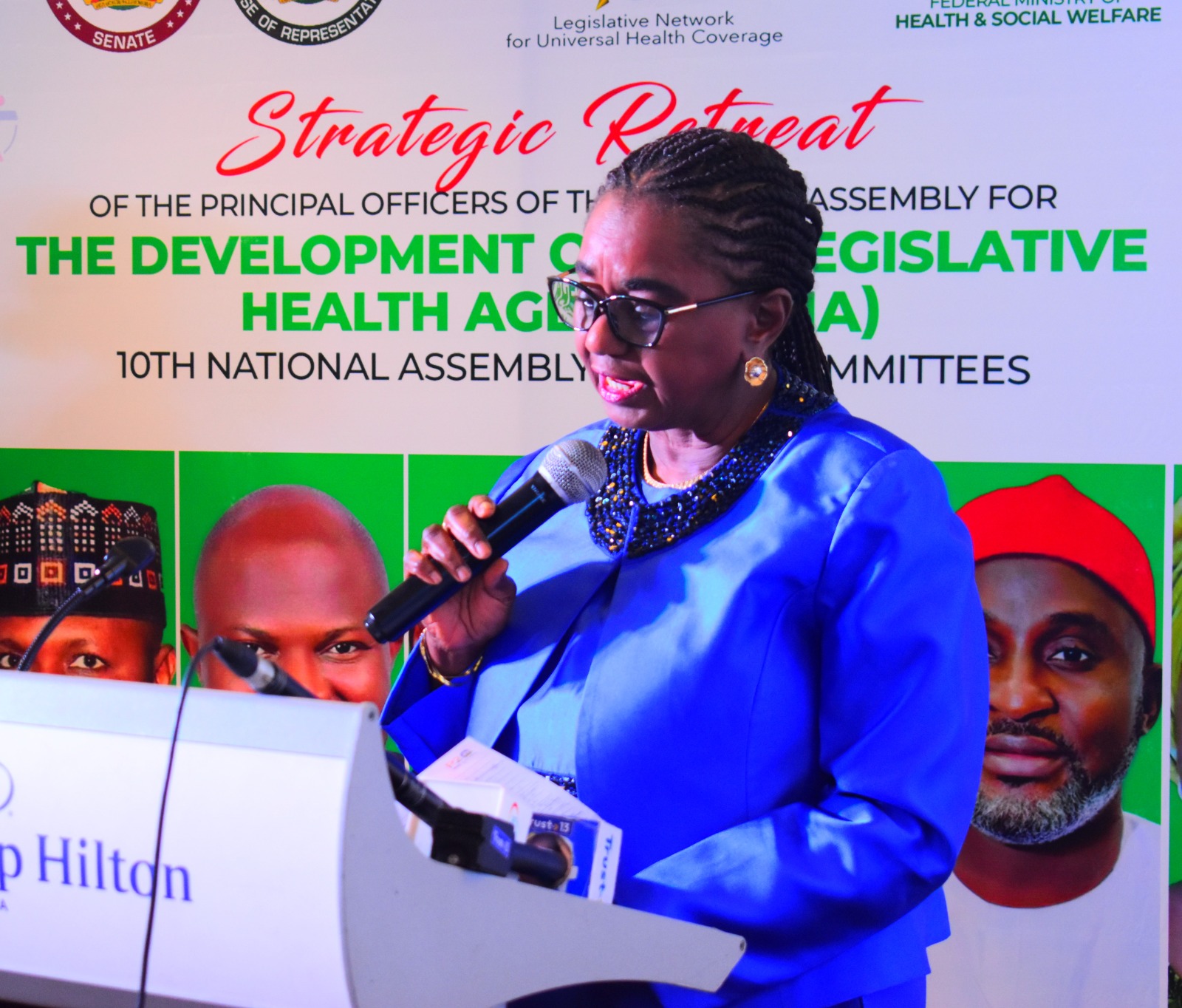
The importance of e-Health devices and digital health solutions in improving Nigeria’s healthcare system has been emphasised by Senator Ipalibo Harry Banigo, Chairman of the Senate Committee on Health, Secondary and Tertiary.
She also stressed that health is a multilayered activity and a multisectoral collaboration that requires legislators to work together to provide legislation, implement policies, and track funds effectively.
Banigo, who represents Rivers West Senatorial District in the National Assembly, made these remarks at the 5th Annual Legislative Summit on Health in Abuja, themed “Improving Legislative Stewardship and Accountability for Universal Health Coverage.”
She highlighted the potential of eHealth devices, especially given Nigeria’s large population and limited healthcare professionals.
“We can develop platforms that can be accessed through simple phones, even in remote villages, to provide health education and interventions,” she said.
“We are not talking about highfalutin things; we are talking about what will impact communities at the grassroots level, particularly pro-poor initiatives that will benefit vulnerable populations.”
Banigo also emphasized the importance of accountability and effective care, encouraging legislators to share knowledge, engage in peer reviews, and exchange information to achieve better health outcomes.
She recalled the cholera outbreak, where basic health education and interventions could have been delivered via mobile phones, preventing preventable deaths.
The 5th Annual Legislative Summit on Health brought together federal and state legislators, the Coordinating Minister of Health and Social Welfare, Prof. Muhammad Pate, the World Health Organisation’s representative in Nigeria, Dr. Walter Mulombo, and other dignitaries.
-

 News2 days ago
RSG Targets Nine Million Residents in Mosquito Net Distribution Campaign
-

 Oil & Energy2 days ago
Aiyedatiwa Signs New Electricity Bill
-

 Maritime2 days ago
Marine Minister Commends President Tinubu On NPERA Bill Assent
-

 Oil & Energy2 days ago
NLNG Commissions Research And Innovation Centre In RSU
-

 News2 days ago
KenPoly Holds Eight Convocations, August 29
-

 News2 days ago
RSG Begins Another Phase of Projects Commissioning Today
-

 News2 days ago
RMAFC Completes Revenue Sharing Review, Proposes New Pay
-

 Maritime2 days ago
NAGAFF Petitions IGP Over Alleged Maritime Police Harassment