
Featured
Electricity Customers Jump To 10.37m

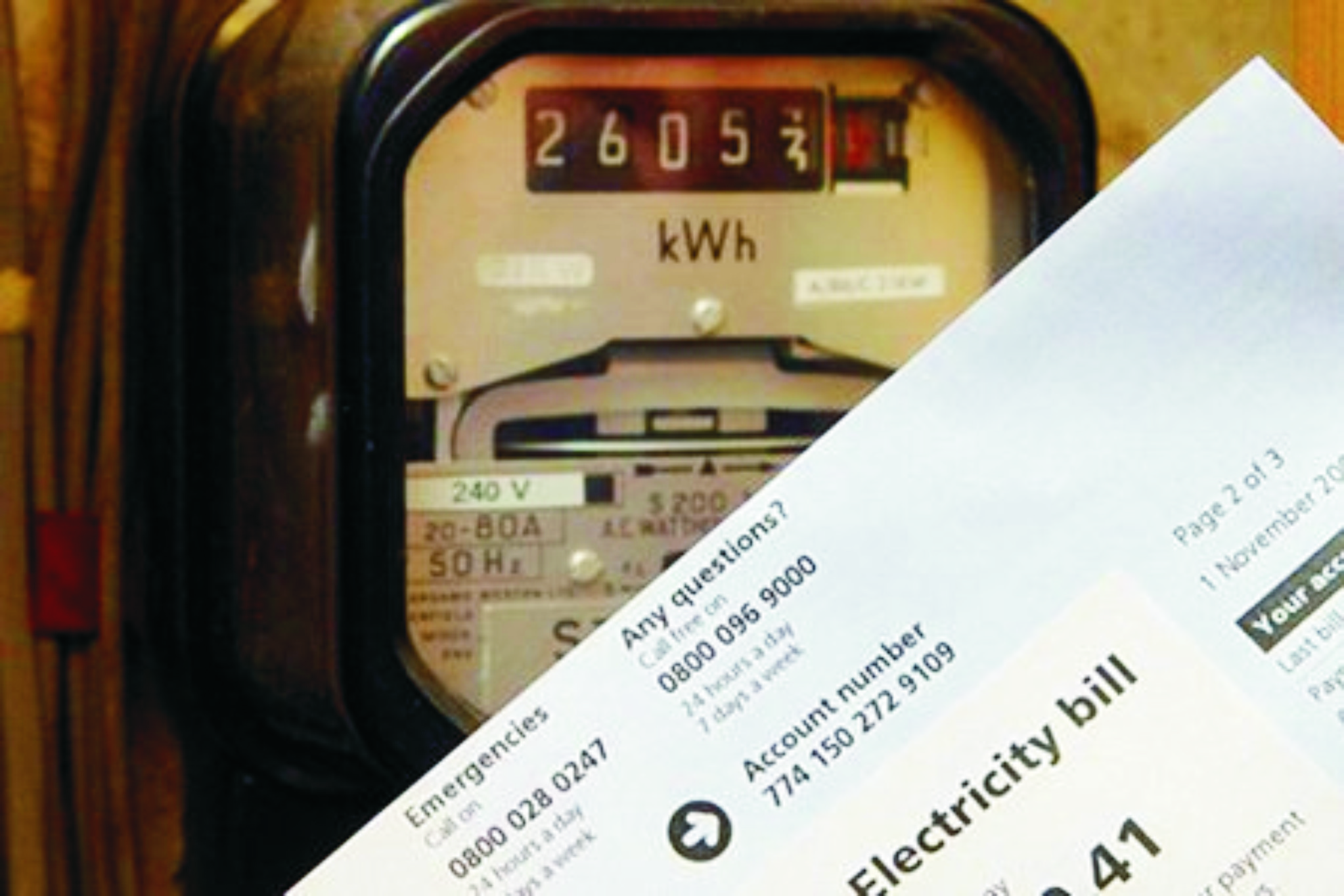
The National Bureau of Statistics (NBS) has said the Electricity Distribution Companies (DisCos) customers’ numbers in Nigeria increased from 6.99million in 2015 to 10.37million in 2020.
This is according to the NBS Electricity Report 2015-2020 released in Abuja, yesterday.
The report focuses on customers numbers, metered customers, estimated billing customers, and most importantly, electricity supply and revenue collected under the reviewed period.
It said the number of customers under the reviewed period (2015-2020) increased successively on a year-on-year basis, with the highest numbers recorded in Ibadan Electricity Distribution Company (IBEDC).
“Generally, the DisCos customers’ numbers in Nigeria increased consecutively over the last six years. In 2015, 6.99million customers were recorded, and the figure rose to 7.35million in the succeeding year.
“This increased further to 7.95million customers in 2017, showing a growth rate of 8.14per cent.
“While the trend continued, 2018 and 2019 recorded 8.63million and 9.55million customers respectively, accounting for an 8.60per cent growth rate in 2018 and a 10.71per cent growth rate in 2019.”
Subsequently, customer numbers in 2020 stood at 10.37million, higher by 8.49per cent relative to 2019.
Similarly, the report showed that the number of metered customers increased consecutively on a year-on-year basis from 3.15million in 2015 to 3.80million in 2019 but declined to 3.51million in 2020.
The report said in 2015, Benin Electricity Distribution Company (BEDC) recorded the highest number of metered customers, while IBEDC stood top between 2016 and 2019.
According to the report, Abuja Electricity Distribution Company (AEDC) recorded the highest number of metered customers in 2020.
“AEDC recorded 693,622 customers, followed by IBEDC with 671,035, while Yola Electricity Distribution Company (YEDC) recorded the least with 71,867.”
The report said the estimated billing customers’ records also showed a year-on-year positive growth rate consecutively from 3.85million in 2015 to 6.86million in 2020.
It said in 2020, the customers’ numbers were highest in IBEDC with 1,282,136, followed by IEDC and Enugu Electricity Distribution Company (EEDC) with 1,121,722 and 762,311, respectively.
It, however, said Eko Distribution Company (EKEDC) recorded the least with 269,022.
The report showed that electricity supplied to customers under the period of review (2015-2020) showed an unstable trajectory.
“In 2015, 20,337.40Gigawatt hours (GWh) were supplied across Nigeria. This fell by 6.36per cent in 2016 when 19,044.30GWh were supplied.
“Also, it rose in 2017 by 2.04 per cent with 19,432.39GWh and further rose in 2018 by 10.55per cent with 21,483.25GWh.
“In total, electricity supplied in 2019 stood at 22,450.67GWh but declined in 2020 by 1.82per cent when 22,042.28GWh were supplied.”
The report said IEDC recorded the highest electricity supplied in 2020 with 4,158.87GWh, followed by EKEDC and IBEDC with 3,097.87GWh and 2,841.08GWh, respectively.
AEDC ranked fourth with 2,388.00GWh, while YEDC recorded the least with 557.00GWh.
The report revealed that revenue generated by the DisCos in 2015 stood at N278,892.01million and rose to N303,029.57million in 2016, showing an 8.65per cent growth rate.
“While in In 2017, revenue had increased by 22.25per cent when N370,455.82million was received. Furthermore, collections rose by 19.48per cent in 2018, recording N442,630.09million.
“In addition, this increased by 9.03per cent in 2019 when N482,610.35million was collected. In 2020, positive growth was recorded with 9.15per cent when N526,769.33million was collected compared to the previous year.”
The report said the highest revenue collected in 2020 was by IEDC with N102,100.09million, followed by EKEDC with N81,387.10million.
The least collection was recorded in YEDC with N10,641.00million.



Governor of Rivers State, Sir Siminalayi Fubara, has reaffirmed the unwavering commitment of his administration to peace, unity, security, and inclusive development as Rivers State marked its 59th anniversary, last Wednesday.
In a goodwill message issued on Wednesday to commemorate the anniversary, Governor Fubara stated that despite the challenges faced over the years, the people of Rivers State have continued to demonstrate resilience, strength, and an enduring spirit of unity that has sustained the state since its creation.
The Governor noted that the strong bond of brotherhood among the various ethnic nationalities of the state, including the Ijaw, Ikwerre, Ogoni, Etche, Ekpeye, Andoni, Kalabari, and others, remains one of Rivers State’s greatest strengths and a critical foundation for peace, stability, and progress.
He further observed that Rivers State has remained a major driver of Nigeria’s economy for decades, not only because of its abundant oil and gas resources, but also because of the exceptional contributions of its people across diverse sectors including academia, jurisprudence, business, entertainment, public service, and sports.
Governor Fubara assured the people that his administration will continue to prioritize policies and programmes that promote peace, protect lives and property, and expand development across all parts of the state. He emphasized that governance must be people centered and impactful, with equal attention given to every Local Government Area of the state.
The Governor also paid tribute to the elders and founding leaders of the state for preserving the spirit of unity and coexistence over the years, while urging the youths to remain hopeful, responsible, and actively committed to building a greater Rivers State through innovation, hard work, and patriotism.
He equally acknowledged the invaluable role of women in strengthening families, communities, and society, describing them as indispensable partners in the continued growth and stability of the state.
Governor Fubara called on all Rivers people to use the occasion of the anniversary as a moment of reflection and renewed commitment to peaceful coexistence, mutual respect, dialogue, and collective progress, stressing that the unity and future of Rivers State must always rise above personal interests and political differences.
Rivers State was created on May 27, 1967, by General Yakubu Gowon.


The Rivers State Government has distributed science equipment and materials to all senior secondary schools across the state to support students during the ongoing West African Examinations Council exams and to strengthen practical learning.
Flagging off the distribution at the Rivers State Senior Secondary Schools Board premises in Port Harcourt, on Monday, the State Commissioner for Education, Dr. Peters Nwagor, said the move demonstrates Governor Siminalayi Fubara’s commitment to improving education standards in the State.
Nwagor said the materials were approved and provided by the state government specifically to boost the teaching and learning of science subjects, describing science education as the foundation for technological advancement, innovation, and national development.
“No society can compete globally without deliberate investment in science and technology,” the Commissioner stated.
He commended the governor for consistently prioritising the education sector by providing tools needed for effective teaching and hands-on learning.
The Commissioner directed principals to ensure that the equipment are used strictly for practical lessons in their schools, warning that any principal or administrator found diverting, hoarding, or selling the materials wil face disciplinary action under public service regulations.
Nwagor also warned against examination malpractice, saying any principal found aiding or encouraging malpractices will be decisively sanctioned.
“We must collectively restore the dignity and credibility of our educational system,” he said.
Also speaking, Chairman, Rivers State Senior Secondary Schools Board, Tony Egwurugwu, urged school heads to make judicious use of the materials for students’ benefit.
He thanked the State Government for providing the resources, and assured that monitoring mechanisms would be put in place to ensure the materials serve their intended purpose.
In his own remarks, a Board Member for Technical Education, Nwisabari Bani Samuel, expressed appreciation to the governor for prioritising education and acknowledged the Commissioner’s role in advancing education development in the State.
He said the distribution covers all senior secondary schools in the State and is intended to improve students’ performance in both internal and external science examinations.
Akujobi Amadi
-

 Rivers2 days ago
Police arrest 3 suspects over killing of driver in Rivers
-
Politics2 days ago
I DIDN’T PROMISE YOU TICKETS, AKPABIO TELLS APC SENATORS WHO FAILED PRIMARIES
-

 News2 days ago
FUBARA ASSURES NUT OF SECURITY OF SCHOOLS IN RIVERS
-

 News2 days ago
NDLEA Arrests Four Notorious Female Drug Dealers In Four States
-

 News2 days ago
WORLD FOOD SAFETY DAY: VETERINARIANS TASK GOVT ON MODERN ABATTOIR IN RIVERS
-

 Sports2 days ago
Okpekpe Road Race Gets Mobility Solutions, Fan Engagement
-
Politics2 days ago
Court Dismisses Rivers PDP Members’ Suit Over LG Election Candidates
-
Politics2 days ago
POST PRIMARIES: IKWERRE MONARCHS ADVOCATE ISSUES-BASED POLITICS IN RIVERS