Connect with us

Maritime

FG Reaffirms Commitment To Stronger Port State Control, Regional Maritime Cooperation

Published

on

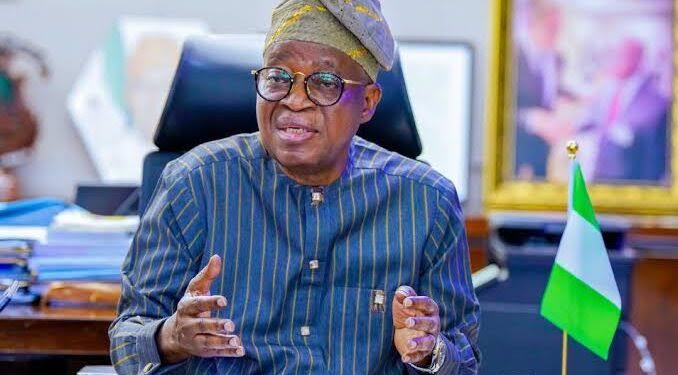
The Minister of Marine and Blue Economy, Adegboyega Oyetola, has reiterated the federal government’s commitment to strengthening maritime safety, environmental protection, and regional cooperation within the framework of the Abuja Memorandum of Understanding on Port State Control (Abuja MoU).

Special Adviser to the Minister on Media and Communications, Dr Bolaji Akinola, made this known in a Statement made available to Newsmen, in Abuja, at the Weekend

According to the statement, Oyetola, who spoke at the 3rd Bureau of Ministers Meeting of the Abuja MoU in Conakry, Republic of Guinea, advancing the collective interests of West and Central Africa in global shipping underscored Nigeria’s determination to align its maritime governance with international standards.

In his address, the Minister commended the Government and people of the Republic of Guinea for their hospitality and for successfully hosting the 15th Port State Control Committee Meeting, which concluded the previous day.

He noted that the technical deliberations of the Committee provided valuable insights into the challenges and opportunities in port state control across the region.

Oyetola reaffirmed Nigeria’s unwavering support for the objectives of the Abuja MoU, highlighting the concrete steps taken by Nigeria to improve its maritime administration, including the enforcement of port state control and the removal of substandard vessels from its waters.

He highlighted the recent approval of Nigeria’s National Policy on Marine and Blue Economy by the Federal Executive Council, a policy, which serves as a comprehensive framework for safer, cleaner, and more sustainable maritime operations, aligns with global best practices and the ideals of the Abuja MoU.

According to the Minister, the policy demonstrates Nigeria’s determination to build a thriving blue economy that balances economic growth with ocean health, job creation, and maritime safety.

Oyetola called on all member states of the Abuja MoU to strengthen enforcement mechanisms within their respective jurisdictions and to support the institutional resilience of the Secretariat.

He cautioned against allowing the region to become a dumping ground for substandard vessels emphasising that poor compliance could lead to accidents and incidents with far-reaching national, regional, and even global implications.

The Minister further noted that effective port state control remains fundamental to unlocking the full potential of the blue economy, particularly in a region where the majority of ships calling at ports are foreign-flagged rather than locally owned.

The Bureau of Ministers, Oyetola explained, would review and endorse the records of the 15th Port State Control Committee Meeting to ensure that officers are well empowered to fulfil their statutory duties, reiterating that the Abuja MoU must continue to act as a catalyst for safer shipping practices, stronger compliance, and deeper technical cooperation among member states.

He assured that Nigeria remains ready to share its expertise and collaborate on initiatives aimed at improving the effectiveness of port state control in West and Central Africa.

The Minister also underscored the need to strengthen the Abuja MoU Secretariat, calling on member states to meet their financial obligations and demonstrate readiness to host its programmes. These contributions, he noted, are vital to sustaining the Secretariat’s efficiency and ensuring that it can effectively coordinate regional efforts.

As part of Nigeria’s broader maritime diplomacy, Oyetola used the opportunity to seek the support of fellow African ministers for Nigeria’s candidature in the forthcoming International Maritime Organization (IMO) Council elections under Category C.


He stressed that Nigeria’s inclusion on the IMO Council would provide a platform to advance the objectives of the Abuja MoU and amplify Africa’s collective voice in global maritime governance.
Continue Reading

Maritime

Workers Welfare Our Priority —MWUN PG

Published

on

The President-General of the Maritime Workers Union of Nigeria (MWUN), Comrade Francis Bunu, has said his administration remains focused on securing better welfare and improved working conditions for maritime workers.
According to him, the union will continue to work for the benefit of its members, with their welfare at the heart of its activities.
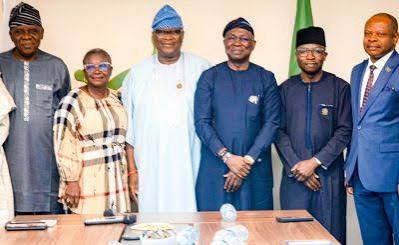
Bunu said this when he received the executives of the Maritime Correspondents’ Organisation of Nigeria (MARCON), led by its President, Ismail Aniemu recently.
He said the union’s primary responsibility is to speak for its members and ensure that their interests remain adequately protected.
Bunu noted that the union will not stop pursuing initiatives capable of delivering tangible benefits to maritime workers, particularly through improved working conditions and better welfare packages.
He said the leadership will also build on the gains already recorded, including achievements secured through Collective Bargaining Agreements (CBAs), to further improve the lives of workers and their families.
According to him, the success of the union should ultimately be reflected in the quality of life and working conditions of its members.
Bunu said MWUN will continue to engage relevant stakeholders and pursue opportunities that will advance the interests and welfare of maritime workers.
By: Nkpemenyie Mcdominic, Lagos
Continue Reading

Maritime

NIMASA DG Harps On Effective Collaboration With MAN ORON 

Published

on

The Director General of Nigerian Maritime Administration and Safety Agency (NIMASA) Dr. Dayo Mobereola, has said  that effective collaboration between Maritime Academy of Nigeria (MAN), Oron and the Agency is key to the development of training of seafarers in Nigeria.
Dr  Mobereola made this known when the Governing Board of the Maritime Academy of Nigeria MAN, Oron, led by its Chairman, Engr. Kehinde Olayinka Akinola, paid a working visit to the management of  NIMASA, at the Agency’s Corporate Headquarters in Lagos to hold talks on seafarers’ training.
The DG announced that the Agency was working on a review of the curriculum of the Standard Training Certification and Watch-keeping STCW, 2017, for Maritime Training Institutions in Nigeria.
“For over 32 years Nigerian training institutions have been operating with obsolete curricula, NIMASA is determined to review the curriculum and benchmark against the very best globally acceptable standard. This is in a quest to ensure that seafarer’s certification in Nigeria enjoys global recognition”, he said.
The DG further reiterated NIMASA’s commitment to supporting the successful training and promotion of Nigerian seafarers through MAN, Oron, while noting that human capital remains one of the most critical components for the development of Nigeria’s Blue Economy.
In his response the Chairman of the Governing Board, Engr. Kehinde Olayinka Akinola stated that the Academy is equipped with state-of-the-art facilities and remains one of the leading maritime training institution in Africa.
While appreciating the management of NIMASA for its continued support to the Academy, the Chairman disclosed that MAN, Oron, has developed a five-year development plan, which includes the acquisition of a training vessel to further enhance practical training for cadets.
He further revealed that the Liberian Maritime Administration and a Liberian maritime training institute, which recently visited the Academy, have expressed interest in collaborating with MAN, Oron, to facilitate opportunities for Nigerian seafarers to undertake sea-time training onboard Liberian-flagged vessels.
The proposed collaboration, he noted, would provide Nigerian cadets with additional opportunities to gain practical experience and strengthen their competitiveness in the global maritime labour market.
By: Nkpemenyie Mcdominic, Lagos
Continue Reading

Maritime

Oyetola Highlights Advantages Of Nigeria Blue Economy Opportunities  

Published

on

Minister of Marine and Blue Economy, Adegboyega Oyetola, has called on Danish investors and businesses to take advantage of the vast investment opportunities in Nigeria’s marine and blue economy, assuring them of attractive incentives, strong returns and a business environment increasingly geared towards private-sector participation.
Oyetola made the call in Copenhagen, Denmark during a bilateral meeting with Denmark’s Minister for Business and Competitiveness, Martin Lidegaard, as Nigeria stepped up efforts to attract Danish investment, technology and expertise into the country’s maritime sector.
The meeting was part of the activities of the official Nigerian Ministerial Delegation to Denmark on Maritime and the Blue Economy, led by Oyetola, with discussions focused on investment, maritime infrastructure, technology, green transition, port efficiency, skills development and sustainable economic growth.
The minister and his delegation also held discussions with other senior representatives of the Danish government and the wider Danish maritime sector.
The minister said Nigeria had moved beyond establishing the institutional framework for the Marine and Blue Economy and was now entering a phase focused on project development, investment mobilisation, improved sector performance and capacity building.
“Nigeria is looking for partnerships that can improve sector performance, attract investment, deploy technology, strengthen skills and safety, advance sustainability and create quality jobs,” Oyetola said.
He emphasised that Nigeria’s marine and blue economy was open for investment, pointing out that opportunities abound across ports and logistics, ship building and repair, maritime services, digital technology, fisheries, green shipping, renewable energy, marine infrastructure, financing and multi-modal connectivity.
According to him, Nigeria’s extensive coastline, inland waterways, large consumer market and strategic location within West and Central Africa provide investors with access to a wide range of opportunities across the maritime value chain, with significant potential for long-term commercial returns.
He noted that the established presence of Danish-origin companies in Nigeria’s maritime sector demonstrates the viability of the market and provides a solid platform for expanding commercial relations between both countries.
“The presence of some Danish companies in Nigeria provides a strong foundation on which we can build. We want to deepen that relationship and create the conditions for more Danish businesses, investors and technology providers to participate in Nigeria’s maritime transformation,” he said.
The minister urged Danish businesses to look beyond existing investments and explore emerging opportunities in Nigeria’s maritime value chain, stressing that the country needs strategic partners capable of bringing capital, technology, expertise and innovation into the sector.
He said the Nigeria-Denmark engagement was designed to move beyond broad diplomatic commitments towards identifying bankable projects and practical partnerships capable of delivering measurable economic outcomes.
For Denmark, which has internationally recognised expertise in shipping, maritime services, logistics, green technologies and sustainable ocean industries, Oyetola said Nigeria presented an opportunity to combine Danish technology and expertise with the scale and commercial potential of Africa’s largest economy.
Lidegaard welcomed the prospect of closer engagement with Nigeria’s Marine and Blue Economy agenda and stressed the importance of practical partnerships involving businesses, government institutions, technology providers and knowledge institutions.
He said such partnerships would be critical to developing solutions that could be implemented, expanded and commercially sustained in both countries.
Continue Reading

Trending