Nation
Minister, CSO Want Justice System Reviewed

Stakeholders in the judicial system have called for a review of laws that punish the poor people far more often and more harshly than the wealthy, through pretrial detention and cash bail.
The stakeholders made the call at a national conference on justice system with the theme ‘Nigerian Criminal Justice System: The Criminalisation of Poverty in Nigeria’, in Abuja, last Thursday.
The conference was organised by a civil society organisation, Rule of Law and Accountability Advocacy Centre (RULAAC) to examine Nigeria’s dysfunctional criminal justice system, which they said unequally and disproportionately affected the poor and the most vulnerable in the society.
Minister of Women Affairs, Mrs Pauline Tallen, said it was imperative to review the justice system to support people faced with economic obstacles, rather than incarcerating them.
Represented by an Assistant Legal Adviser in the ministry, Mrs Kenechi Umeh, Tallen frowned at laws that incarcerate people who are unable to pay debts, fines, bail bond, accentuate poverty rather than solve it.
“Criminalisation of petty offences such as prostitution, common nuisance, alms begging, street hawking, environmental offences and neighborhood disputes accentuate poverty among the poor and vulnerable.
“There is need to re-evaluate and improve awareness on the impact of the justice system as it relates to petty offences, including applying standards and principles of human rights in protecting the poor and promoting equality and fairness”, she said.
Tallen also advocated a well thought-out poverty alleviation programmes that entail technological skills acquisition, vocational training, micro-lending intervention solutions as panacea to poverty.
Also speaking at the conference, the Executive Director, RULAAC, Okechukwu Nwanguma, said that the event was put together with a view to putting an end to the criminalisation of petty offences in Nigeria.
He said this was necessary because the criminal justice system in the country disproportionately affects the poor.
Nwanguma noted that there were situations where people were sent to jail for stealing yam while ‘big men’ who steal huge amount of money get away with their crimes.
He said, “The notion of criminalisation of poverty manifests more in law enforcement than other sectors.
“Whether it is the police providing security cover for the demolition of settlements inhabited by the poor who are thereby rendered homeless while the settlements from which they have been displaced are apportioned to the rich or task forces enforcing bans on street hawking or Okada riding, or on the use of pedestrian bridges.
“While it may be justifiable to demolish certain settlements or enforce certain bans, as long as the legal procedures are followed, the poor are often the victims of law enforcement excesses in the course of the enforcement of these state or federal laws or rules and regulations.
“The poor constitute the majority of those who end up in prison for being unable to pay bribes for bail at police stations’’.
The RULAAC Director also noted that the poor constitute the majority of persons awaiting trial and who may never have the chance to appear in court again after the initial arraignment, as they may be forgotten by the system.
“Petty crimes committed by the poor attract more law enforcement action than big crimes committed by the rich.
“More often, the rich have the means and ways and can hire Senior Advocates or buy their ways through.
“So, criminal justice in Nigeria, just like human rights violation, has a social class bias targeting mainly the poor and the most vulnerable in Nigeria.
“We think that the criminal justice system that criminalises the people needs to be addressed”, he added.
Nwanguma, therefore, said it was imperative to reform the judiciary system to become fair and just, while also ensuring speedy dispensation of justice and equal protection to both the poor and the rich, without discrimination.
The keynote speaker, Prof. Chidi Odinkalu, who spoke on the topic ‘Criminalisation of Poverty in Nigeria, the Dimension, Effects and Solutions’, said that criminal law and its institutions provide the framework to which lawful society defends itself and its values.
Odinkalu stressed the need to train the judiciary, decriminalise the polity and empower citizens to create a more egalitarian society.



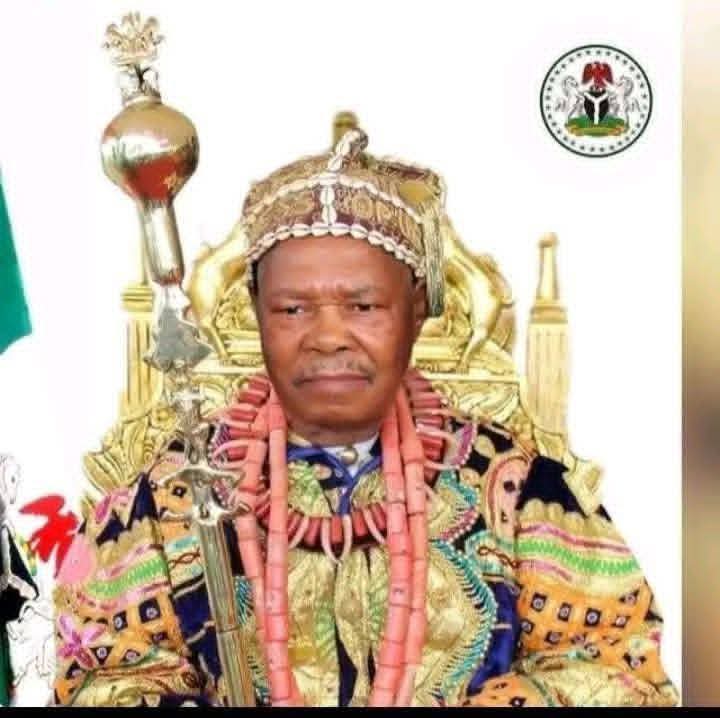
The Etche Area Council of Traditional Rulers and Chiefs has declared seven days of mourning across Etche Nation following the demise of late Eze E.M.B Opurum,the Ochie of Etche land .
The declaration was made by the Chairman of the Council, His Royal Majesty, King Dr. Samuel Ndiwe Amechi, during a condolence visit by a delegation of traditional rulers and chiefs to the family of the late Ochie.
The delegation expressed deep sorrow over the passing of the traditional ruler and commiserated with the bereaved family, while acknowledging the late monarch’s contributions to peace, unity, culture and development in Etche Land.

King Amechi described the death of late E.M.B Opurum as a loss to the traditional institution and the wider Etche community, and prayed for the peaceful repose of the late Ochie of Etche.
He also prayed for divine strength and comfort for members of the bereaved family as they mourned their departed patriarch.
In honour of the late Etche reverend monarch, the Council announced the immediate suspension of the Central Etche Wrestling Festival, directing that the cultural event should not proceed during the mourning period.
The traditional council further ordered that flags should fly at half-mast across Etche Land as a mark of respect for the deceased Ochie of Etche, late king ,Eze E.M.B Opurum and in recognition of his position within the traditional institution.
The seven-day mourning period, according to the Council, is intended to enable the various clans of Etche Nation to collectively mourn the late monarch and honour his memory.
Meanwhile, the Council has warned members of the public against relying on any statement purportedly issued on the letterhead of the late Ochie and attributed to Eze Kenwala.
The Council said such a statement was not authorised, urging the public to disregard it and rely on official communications from the recognised traditional authority concerning matters relating to the late Ochie of Etche.
The warning was contained in an official announcement signed by King Dr. Samuel Ndiwe Amechi, Chairman of the Echei Area Council of Traditional Rulers and Chiefs.
The Council reaffirmed its commitment to ensuring that the mourning period is observed with dignity and respect, while urging the people of Etche Nation to remain united as they honour the memory of their departed traditional ruler.

The Niger Delta Development Commission, NDDC, has charged contractors and consultants handling its projects across the Niger Delta to embrace Alternative Dispute Resolution, ADR, mechanisms to ensure faster and sustainable project delivery.
The Managing Director and Chief Executive Officer of the Commission, Dr Samuel Ogbuku, gave the charge while declaring open a three-day sensitisation programme with the theme: “Enhancing Capacity for Alternative Dispute Resolution” for NDDC contractors and consultants.
Ogbuku, who was represented by the Executive Director, Corporate Services, Hon. Ifedayo Abegunde, said the programme was informed by the recognition that while conflicts are inevitable in project implementation, their escalation can be prevented through early identification and professional management.
He noted that disagreements in the course of execution could arise from issues such as payments, variations, designs, project timelines, quality of work, measurements, access to sites, contractual obligations and relationships with host communities.

According to him, the ability to address such issues promptly could determine whether a problem is resolved within days or allowed to degenerate into a dispute lasting months or years.
The NDDC Chief Executive said the consequences of delayed projects go beyond the Commission and its contractors, stressing that communities waiting for roads, bridges, schools, healthcare facilities and other interventions bear the ultimate burden.
He listed delayed completion, increased project costs, strained relationships, litigation, claims and loss of valuable time among the consequences of unresolved conflicts.
Ogbuku described contractors and consultants as critical first responders in conflict management because of their proximity to project sites, host communities and emerging challenges, and urged them to develop capacity to identify early warning signs and negotiate effectively.
He identified negotiation, mediation, conciliation, adjudication and arbitration as practical ADR mechanisms that could be deployed depending on the nature of disputes, adding that the International Federation of Consulting Engineers, FIDIC, emphasizes early dispute avoidance as key to successful delivery.
He stressed that ADR should not be seen as a means of avoiding accountability or compromising legitimate contractual rights, but as a mechanism for addressing problems intelligently, proportionately and early enough.
Also speaking, the Director of the Alternative Dispute Resolution Department, Mr Godwin Ayewumi Ogedegbe, said the complex social, economic and environmental realities of the Niger Delta often generate tensions which, if poorly managed, could undermine development projects.
He said contractors must understand host community dynamics to ensure their interventions promote inclusion, trust and cooperation, rather than deepening divisions.
Presenting the lead paper, Prof. Isaac Olawale Albert called on the NDDC and its contractors to integrate conflict sensitivity and ADR into everyday project execution, warning that technically sound projects could still fail when community expectations and grievances are poorly managed.
He identified elite capture, exclusion, local-content disputes, land and compensation issues, employment grievances and environmental concerns as major risks, and advocated stakeholder mapping, transparent communication, early-warning mechanisms and accessible grievance channels, declaring that “peace is not an accessory to project delivery; it is part of the infrastructure we are building.”
PRESCO.LG NGX: PRESCO), Nigeria’s leading fully integrated agro-industrial company, today held its 33rd Annual General Meeting (AGM), where shareholders adopted the Company’s audited financial statements for the year ended 31 December 2025 and approved key business and governance resolutions. The AGM also highlighted Presco’s record 2025 performance, its expanded regional platform and priorities for 2026.
Presco delivered record financial performance in 2025. Revenue rose 59.3% to ?330.6 billion, Profit Before Tax (PBT) increased 57.1% to ?177.9 billion and Profit After Tax (PAT) rose 56.1% to ?121.4 billion. EBITDA grew 43.7% to ?211.8 billion, while total assets increased 94.9% to ?926.0 billion. A landmark ?236.7 billion rights issue more than doubled total equity to ?442.7 billion, materially strengthening the balance sheet and supporting the Company’s growth plans.
Shareholders approved a final dividend of ?14.66 per 50 kobo ordinary share, taking the total dividend for FY2025 to ?44.66 per share. The payout reflects Presco’s disciplined approach to balancing reinvestment for growth with consistent cash returns to shareholders.
Commenting on the Company’s performance, Mr. Rasheed Olakanmi Sarumi, Chairman, Presco Plc, said:
“I commend our management teams across the region for their exceptional execution during a transformational year, and I thank my colleagues on the Board for their diligent oversight.
The record performance delivered in 2025 reflects the strategic choices we have made and the stronger regional platform we are building.
As we integrate our operations across Nigeria and Ghana, our focus remains clear: build scale, improve efficiency and create sustainable long-term value for our shareholders and stakeholders.”
The record performance was matched by significant strategic progress. Presco completed the acquisition of the remaining 48% shareholding in Ghana Oil Palm Development Company Limited (GOPDC), taking its ownership to 100%, and acquired Saro Oil Palm Limited (SOP), including the Nsadop and Boki estates in Cross River State.
Together, these transactions expanded the Company’s plantation base and production pipeline, deepened its regional presence and positioned Presco for medium- to long-term volume growth. The successful rights issue further strengthened funding capacity for integration and expansion.
Commenting on the Company’s outlook, Mr. Reji George, Managing Director and Chief Executive Officer, Presco Plc, said: “We enter Presco’s next phase of growth with greater scale, stronger operating capabilities and a more integrated regional platform. Our priority is to convert that scale into measurable efficiencies and stronger performance, while building the people, systems and capabilities required to sustain growth across West Africa.”
The AGM also recorded key governance outcomes. Shareholders ratified the appointments of Mr. Ademola Adebise, Mr. Adewale Arikawe and Mr. Francois VanHoydonck as Directors of the Company, while Mr. Rasheed Olakanmi Sarumi, Mr. Abdul Akhor Bello and Ms. Osayi Alile were re-elected as Directors retiring by rotation.
The Chairman paid tribute to Mr. Felix Nwabuko FCA, a former Managing Director and Chief Executive Officer of Presco and former Group Chief Executive Officer of SIAT, who retired from the Board with effect from 2 January 2026, and expressed the Board’s appreciation for his distinguished service and enduring contribution to the Company.
Looking ahead, Presco is focused on translating its expanded scale into stronger operational performance and sustainable value creation. Immediate priorities include completing operational harmonisation across its businesses, capturing synergies across procurement, production and logistics, optimising the integrated cost base and pursuing disciplined growth opportunities aligned with the Company’s long-term strategy.
With a stronger balance sheet, an increasingly integrated operating model and a growing regional platform, Presco is well positioned to strengthen its competitive position across the West African edible oils value chain and deliver sustainable long-term value for shareholders and other stakeholders.