Business
NERC Lists Challenges Of Power Sector

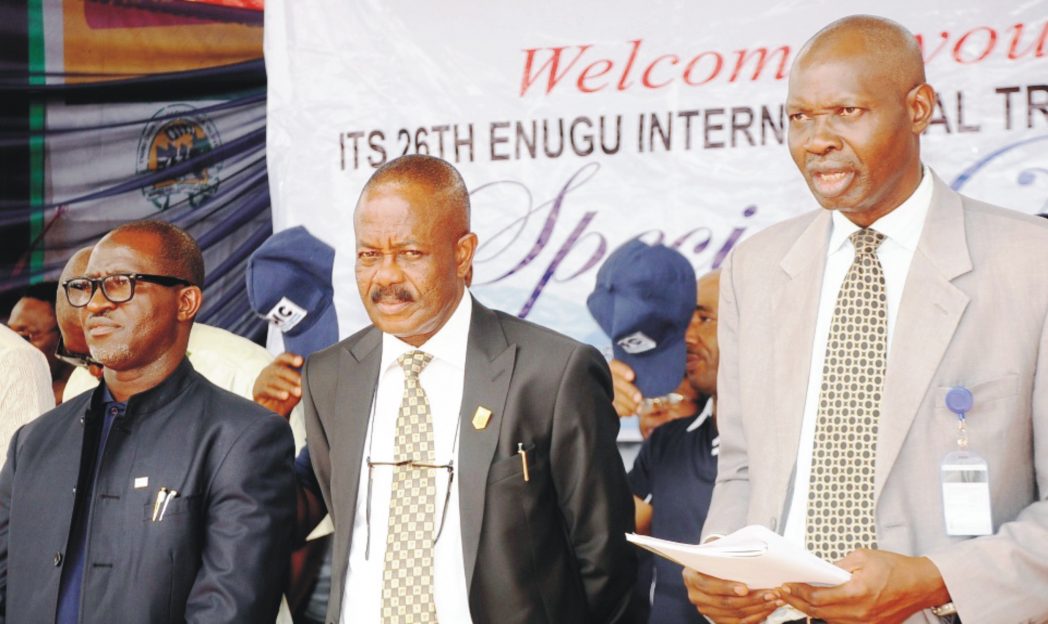
L-R: Assistant Director, Public Affairs, Nigeria Deposit Insurance Corporation (NDIC), Mr Hakeem Bakare, President, Enugu State Chamber of Commerce, Industry, Mines and Agriculture ( ECCIMA), Dr Ifeanyi Okoyi and representative of Managing Director, NDIC, Mr Frank Akinola, during NDIC Special Day at the ongoing ECCIMA International Trade Fair in Enugu, yesterday.
Nigeria’s electricity in
dustry is being hindered by producers’ inability to raise finance and natural gas shortages, curbing companies ability to boost investment in output, as the country suffers from daily blackouts, an energy regulator said.
Peak electricity output of Africa’s biggest economy is about 3,800 megawtts, with another 1,500 megawatts unavailable because of gas shortages, Bloomberg quoted the chairman of the Nigerian Electricity Regulatory Commission Mr Sam Amadi has stated.
South Africa with a third of Nigerian’s population, has eight times more installed capacity, one megawatt is enough to provide energy to 2,000 average European homes or about 333 in Japan.
“There are still issues of credit worthiness, power generation is not coming on board because the distribution companies are weak, they’re not credit worthy and cannot get financing”
Distribution companies are struggling to get consumers to pay their bills and this means that their revenue is so poor that they are unable to pay producers for power, he said.
Nigeria beset by frequent blackouts, dismantled the State monopoly and sold hydro- and gas-powered plants to try bring in investment needed to expand electricity supply.
The industry requires $18 billion to $2 billion to boost supplies to 10,000 megawatts within six years, according to the nation’s privatization agency.
“Power generation and distribution companies can now access a N213 billion ($1 billion) bailout announced by authorities in September to shore up struggling operators Amadi said. The fund is supposed to help them pay off gas-supply debts and meet debt service obligations to lenders on loans of almost N500 billion on which some were falling behind.