Features
Strategies For Effective Rural Reporting

Communication has
been identified as a vital means of development and the level of development in a given society depends on its effective application and delivery.
The strategies for the use of communication in rural development and integration in Africa have until recently been approached from a disorganized perspective.
Although many African nations are aware of the possible role mass communication could play in the transformation of their rural communities, lack of a well designed strategy for the use of the mass media to effect the desired change have obscured efforts at effective rural communication and economic transformation.
Statistics indicate that more than 80 per cent of African settlements are mostly in remote and pristrine conditions. Yet news reporting on the average appears to be centred on the urban and metropolitan cities which are mostly populated by the elitist and privileged class.
Pundits also observe that the lack of effective communication mechanism at the grassroots has been a calculated strategy by the elitist class to undermine the potentialities and practical engagement of rural dwellers in the process of development.
The fact being that; “Strident use and application of effective information process and feedback mechanism would liberate the rural populace from ignorance and get them off the hook of perpetual servitude and stunted economic growth”.
This overconcentration of development programmes in the urban centres has been the greatest disincentive toward sustainable development at the grassroots.
The concept and theory of media ownership has also tended to divert the obligatory and conscientious role of the media from social surveillance towards the projection and delivery of the vested interest of ownership syndicate which decodes prominence in news reporting. Media scholars and other critics have identified the rural populace as the major victim of this tactical institutional flaw.
Critics are of the view that “rural dwellers draw the attention of the elitist class and the wielders of power only during period of political transition and mandate renewal, when the rural dwellers are tossed with pretentious orgies, noble sentiments and patriotic phrases, and unfulfilled promises”.
Mass Communication scholars have, however, argued that Journalists remain the bulwark and greatest agents of advancing grassroots development through an institutional and interventionist approach.
Peter Golding believes that the gap in communication and feedback mechanism between the grassroots and the urban centres, can be filled by “the dispassionate intervention of journalists to constantly remind the wielders of power of the promises of their mandate, their social responsibility towards the society and stewardship of management of public funds, as well as commending government’s effort when such obligations are fulfilled”. This mediating role of the media is believed to be platform of fostering a fledging relationship between the government and the grassroots.
However, beyond what Jeffrey Shrank, a mass communication scholar calls “educated guesses of news managers” and their palpable indifference towards practical engagement and understanding of the intrigues of grassroots reporting, reporters have tended to compromise their role as dispassionate leaders of public opinion and custodians of the conscience of society.
Analysts have attributed the indifference of news reporters towards rural reporting to the privileges and advantages offered by urbanization and city administration. According to Peter Golding, Journalistic apathy towards practical engagement an exploration of development potentials in the rural areas, undermines the moral and professional obligation of journalists as society’s watch dog”.
Golding further advocated for a more liberalized approach towards participatory journalism, a more reflective form of professional commitment. There are, however, obvious challenges that reporters are bound to face in covering the rural areas, one of such major challenges is the absence of basic amenities such as electricity and other elixir for civilised living.
Most rural dwellers live in bare subsistence and as such suffer virtual isolation in terms of basic news coverage. Most reporters believe that rural areas are not news worthy and gloss over the rural populace and concentrate their news report on the already thriving urban centres.
The rural areas however provide countless opportunities for news coverage. Rural areas are noted for a fledging sense of native heritage and cultural values that could be tapped into news.
Using the human interest approach to news reporting, the arts, economy, culture and conditions of living of the rural people can be weaved into prominence in news reporting, with the objective of giving the rural people a sense of belonging. What rural reporters need to effectively comb the rural populace for news is empathy. Rural reporters must have a conscientious appeal by feeling the pulse of the rural dwellers to write about them.
Their living conditions notwithstanding, rural dwellers deserve to be adequately informed and mobilized because they constitute the bulk of the country’s population, and they need accurate and reliable information to function effectively in our fast growing and technology-driven society. Another means of stimulating the interest and strategy in rural reporting is for reporters to avoid guesses and speculative journalism. They must engage in practical and thorough investigation of the rural areas and rouse their sensitivity towards issues affecting their wellbeing.
Since the rural reporter may be of an entirely dissimilar background and orientation from the rural areas he is covering, there is need for indepth research that will help him know the information need of the people.
A rural reporter, who does not indulge in dogged research and familiarization with the development needs of the rural people, will only become an agent of misinformation and disinformation. Such incautious and unguarded reporters end up compounding the development problems of the people and sometimes incite crisis.
Information source is therefore, important to the rural reporter. The most reliable sources of rural information include; agricultural extension workers, rural farmers, rural health workers, libraries, community leaders, traditional and religious leaders and government departments.
According to a renowned Mass Communication Scholar, Prof Ikechukwu Nwosu, “the best way to achieve a high level of accuracy and avoiding the dangers of relying on half-baked information is through an indepth knowledge of investigative journalism”.
Rural reporting therefore requires active involvement and sacrifice on the part of the reporter beyond the conventional news approach. The reporter must seek to break new ground and bring to the fore interesting and challenging aspect of the people’s lives.
Rural reporters must comment on issues of economic interest to the people, such as health, agriculture, education, culture, commerce, transportation, festival, religion, among others. Perhaps, rural reporters are best disposed and at the forefront of mobilizing the rural communities towards achieving the imperatives of national cohesion.
Taneh Beemene
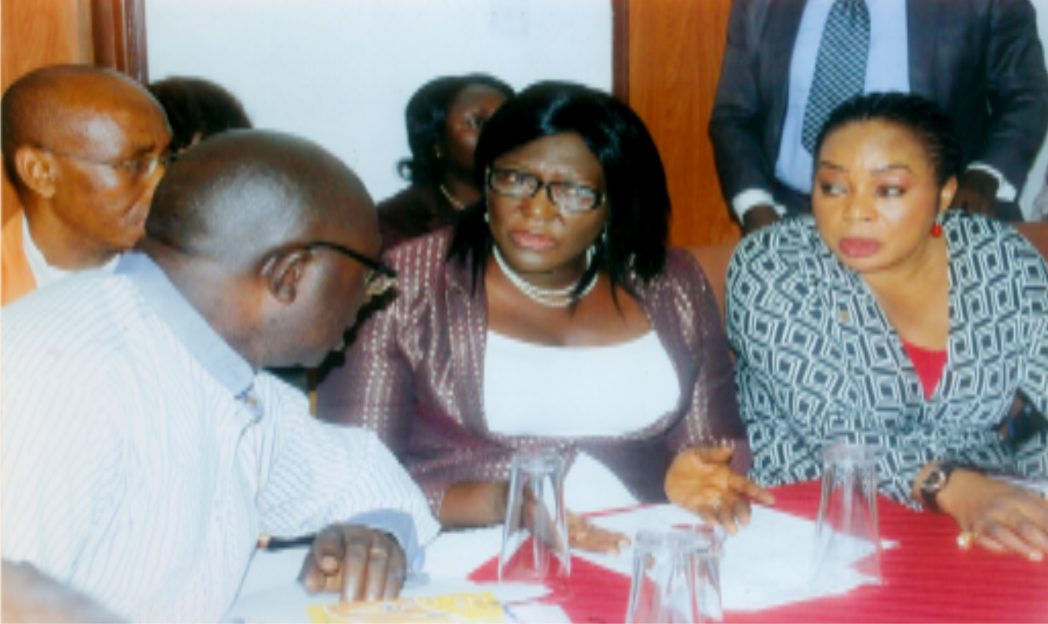
L-R: Former GM, RSNC, Mr. Augustine Nwikinaka, Perm. Sec., Ministry of Information and Communications, Rivers State, Mrs Cordilia Peterside representing Hon. Commissioner for Information and Communications, Mrs. Ibim Semenitari, GM Radio Rivers, Ms Mediline Tador during one day capacity building workshop for broadcast journalist organised by Radio Rivers at Meridian Hotels, Rumuobiakani, Port Harcourt.
Photo: Egberi .A. Sampson