Environment
CEHRD Proposes Post Unep Reparation Remedies For Ogoniland

As the Federal Govern
ment commences the implementation of the United Nations Environment Programme (UNEP), report on the cleanup of Ogoniland, the Centre for Environment Human Right and Development (CEHRD) has proposed a post UNEP reparation remedies for Ogoniland.
This was contained in a report entitled: “Reparation beyond UNEP,” a copy made available to The Tide in Port Harcourt.
The centre said that its proposal was based on the context of human rights as propounded by the United Nations in its basic principles and guidelines on reparation and remedies.
“Whilst the UNEP report represents a huge leap forward in the understanding the role of oil pollution in one area of the Niger Delta and makes significant recommendations for restoring the environment to its past state, it is incomplete if considered in the context of human rights according to the UN’s basic principles and guidelines on reparation and remedies” it said
Some of the reparation programmes proposed by the centre include, restitution which involves restoring the victims to the original situation before the gross violations of international human rights law or serious violations of international humanitarian law occurred, as well as compensation for economically assessable damage as appropriate and proportional to the gravity of the violation.
Also recommended are: rehabilitation involving medical, psychological, legal and social services for victims satisfaction, which include: cessation of violations, public apology, judicial and administrative sanctions against perpetrators as well as guarantee of non repetition.
The rest are: political control of Ogoni affairs by Ogoni people, the right to the control and use of a fair proportion of Ogoni economic resources for Ogoni development.
Speaking on the proposals, the Programme Director of the Centre for Human Rights and Development (CEHRD), Mr. Steve Obodokwe, said that remedy and reparations are a part of international law as the UNEP report only deals with the rehabilitation aspect. Mr. Obodokwe said that the organisation will continue to fight for improvements in the conditions of oil polluted communities in the Niger Delta.
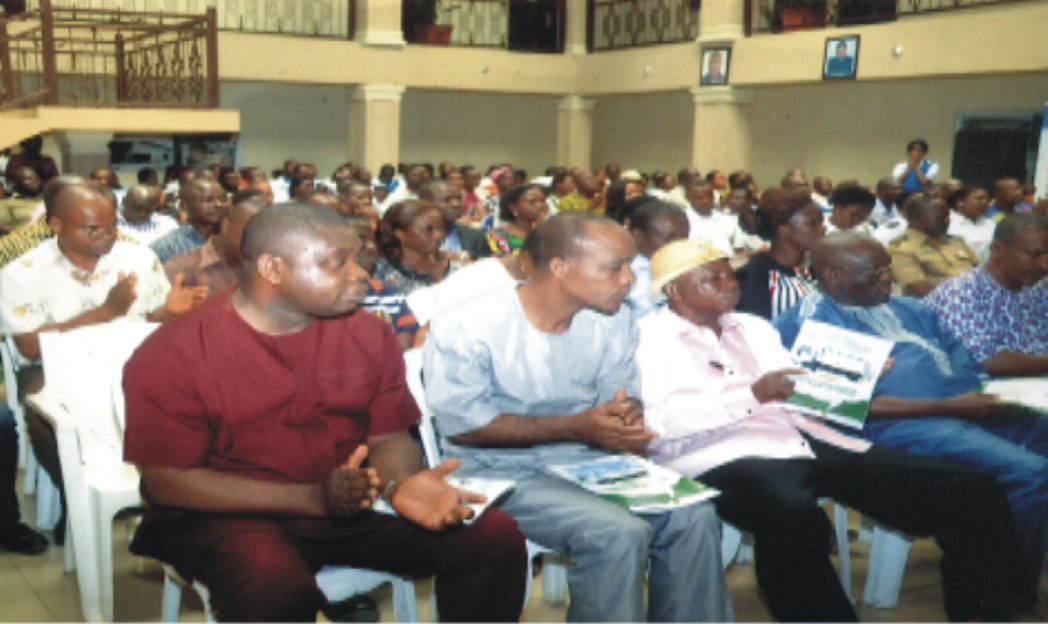
Cross section of Staff of Rivers State Waste Management Agency at the donation of compactor trucks to RIWAMA by Mobil Production, recently in Port Harcourt. Photo: Chris Monyanaga