
Law/Judiciary
Injurious Falsehood Is Damaging

Injurious falsehood is a false and injurious statement
discrediting the reputation of the goods, services or business of another person, thereby causing loss of business and damage to him. It is any oral or written statement or act discreting the product, service or business of another person which causes customers not to partronise the business, thereby occasioning financials loss to the person. It is a slander or libel of title, goods, services or business.
It is a commercial defamation. It is an expression calculated to disparage another persons business and which actually causes damage to the person’s business. The tort of injurious falsehoods is a written or oral falsehood, maliciously published which causes damage to another person’s business. Injurious falsehood is the publication of any damaging statement about a person’s goods, services or business, whereby the persons suffers damage in his business. In Ratcliffe V. Evans (1892) 2QB524 CA, Bowen L. J. in the English Court of Appeal explained injurious falsehood thus: “An action will lie for written or oral falsehoods … where they are maliciously published, where they are calculated in the ordinary course of things to produce and where they do produce actual damage”.
An injurious falsehood may be aimed at or consist of:
Slander of title: slander of title is the discrediting of a plaintiffs title, business, products or services which hampers the offering of such goods or services to the public. It is a statement discrediting a person’s business, which hampers the person in dispensation of goods or services to the public because of bad publicity.
Slander of goods: Slander of goods is the discrediting of teh quality of teh product or services of another person; or
Slander of title and goods: This is a single act of injurious falsehood condemning the title and the quality of goods or services of another person.
Purpose of the Tort of Injurious falsehood
The primary purpose of the tort of injurious falsehood is to protect the goodwill and reputation of a business and its product and services and offer remedy where loss has been suffered due to disparagement of the business. It protects the goodwill and reputation of business which a person has built over time from been destroyed by malicious and envious rivals or persons. Injurious falsehood is any lie which damages a business. Injurious falsehood offers protection and remedy where the goodwill of business has been discredited or damaged. The law of defamation protects the reputation of a person, while injurious falsehood protects the goodwill and reputation of business. Passing off prevents people from wrongly taking advantage and enjoying the goodwill of the business of another by selling their products or services as those of another person.
In Wren V. Nield (1836) 132 ER 453, the defendant falsely and maliciously alleged that the plaintiff was offering certain goods for sale in breach of a patent vested in a third party. The plaintiff brought an action for slander of his products. The court held that the defendant was liable for injurious falsehood.
Examples of Interest Protected By Injurious Falsehood. The tort of injurious falsehood prohibits any malicious falsehood that will damage or destroy the goodwill or reputation of any property, goods, products or services being offered for sale by a person or business organization. Thus, injurious falsehood protects the goodwill of properties such as land whether vested in possession or not; (2) Trademarks, patent, tradename, copy right and other merchandise marks. (3) The title, brandname, or quality of goods or products. (4) The quality of services being offered for sale and company etc.
Chidi Enyie




The protracted Traditional Chieftaincy crisis in Elele Kingdom in Ikwerre Local Government Area of Rivers State, which had defied all solutions, including the intervention of Supreme Council of Ikwerre Traditional Rulers, has finally come to an end with the intervention of the indefatigable, vibrant and hardworking Chairman of Ikwerre Local Government Council, Hon. Samuel Nwanosike.
The Mediation of three- year old Chieftaincy Crisis between His Royal Majesty Eze Jonathan Amadi, Nyewe-Ali Okaniali Ni Alimini and Chief Okechukwu Okah and his group took the diligent LGA Chairman and his committee comprising of erudite sons and daughters of Elele kingdom three consecutive days, lasting up to 8pm each day to resolve.
In an interview with journalists who visited the Ikwerre Local Government Council headquarters at Isiokpo, on a fact finding mission to ascertain the veracity of the panel under his watch, the executive Chairman of Ikwerre Local Government Council, Hon Samuel Nwanosike, stated thus: “Power comes from God; as far as we are concerned, peace has returned to Elele, lot of people misconstrued the disagreement between the persons in the traditional institutions in Elele, I didn’t want to go into the matter because it has been resolved, the Chairman, Elele Kingdom Council of Chiefs are here to thank us for the good works.”
The Ikwerre LGA boss noted that he had taken pains to ensure that total peace reigned in Elele and gave all the glory to God.
According to him, “the committee under my watch resolved that all indiscriminate titles according to the publication by His Royal Majesty on Guardian Newspaper of August 27, 2018 should be dropped.
His Royal Majesty affirmed that he conferred Chief Okechukwu Okah, Chief, (Barr) Emma, Chief (Barr) James O. Amadi as Palace Chiefs while Magistrate (Chief) Justice O. Amadi was conferred as Palace Legal Adviser.
Engineer Nwanosike also added that the palace had warned that no one should attach to himself any title not given to him by the Royal Majesty or state government in any form (either through electronic medium or inscribe such titles in their houses or cars), and noted that the position of the law was clear in Rivers State as only the governor has the instrument of the law to recognise or create stools of Royal Highness even as he confirmed that the panel recommended that the Council of Chiefs should perform the traditional recognition of rites and royalties to his Royal Majesty, Eze Jonathan Amadi, Nyenwe-Ali Okani-ali-Ni-Alimini as well as all meetings should be at the palace of the Royal Majesty.
There was no peace in Elele prior to the intervention of the peace and reconciliation committee set up by Hon. Samuel Nwanosike. The rift between Ngwele stool, His Royal Majesty, Eze J.O.G Amadi JP, Nyenwe- Ali Omenele Ni- Alimini and the Council of Elders (Nde Ohna) on one side and Elele Council of Chiefs (Nde Eze) on the other side was palpable.
Consequently, the Ikwerre Council boss formed a peace panel conmprising of few well-meaning sons and daughters of Elele, drawn from communities that make up Elele Kingdom to consider the remote and immediate causes of the misunderstanding.
The peace and reconciliation committee met with the Council of Elders (Nde Ohna) on 20th May,2021 and the council of Chiefs (Nde Eze) on the 6th and 11th of June, 2021 to consider their grievances, and proffer solutions that will bring a lasting peace. The peace committee, having heard all the parties involved, and reached the following findings and resolutions as hereunder stated:
Council of Elders (Nde-Ohna)
That there exist two factions in the council of Elders (Nde-Ohna), one side for his Royal Majesty, Eze J.O.G., Amadi, (JP) Nyenwe-Ali Omenele Ni-Alimini and the other side for Chief Okechukwu Okah.
That some stools in the Council of Elders (Nde Ohna) are in contention
That the problem started when part of Elele Shrine (Igbo Onino) was acquired and compensation paid to the community by the company dualising Elele- Owerri road and some members of Ohna and Chiefs embezzled the money meant for the fencing of the place.
That a shop was erected at the front of the shrine which exposed the secret altar of the gods of the land which made Ohna Lawrence Elechi to insist that the shop must be removed but the custodian of Ngwele stool refused.
That the council of Elders was induced with money to do Chief Okechukwu Okah’s biddings, to which some of them confessed.
That committee observed that the exorbitant charge on the entrants into the Council of Elders (Nde-Ohna) was very worry-some.
B. Resolution
The Council of Elders (Nde-Ohna) should perform the traditional recognition of rites and royalty to HRM Eze J.O.G Amadi, JP (Ogba- ban obiri, ya-ni orikota)
There should be no division between the Royal Majesty and the Council of the Elders (Nde-Ohna)
There should be no sectional or splinter meetings by any member(s) except the meetings that will be held in the palace of His Royal majesty.
All meetings of Nde-Ohna shall henceforth not be held without the express knowledge and approval of His Royal Majesty.
Person(s) that gained entrance into the Ohna Council due to altercations among the leadership of Omenele are therefore advised to withdraw and allow the bona fide members of the ohna to perform their traditional rites. This decision affects Police Inspector Marcus Elechi of Omukerenyi, Samuel Onyekeozu Ilo of Omuoluma and Samuel Umenwo of Omuohua.
His Royal Majesty should please in that vein accept all members of the council of Elders (Nde- Ohna) back to his fold as the tradtion demands.
- Elele Council Of Chiefs (Nde-Eze)
A. Findings:
That there appears to be many grey areas in the title holdings amongst the chiefs in Elele Traditional Council of Chiefs. These different titles had caused a break down in the unity and peace among the members of Elele Council of Chiefs. Such titles as Eze Ali, His Royal Highness, instead of the palace chiefs and palace legal adviser as conferred on Chief Okechukwu Okah, Chief Barr Emma Okah, Chief Barr James Amadi by His Royal Majesty.
That there exist two factions in the Council of Chiefs (Nde-Eze); one side for his Royal Majesty, Eze J.O.G Amadi (JP) Nyenwe-Ali Omenele Ni Alimini and the other side led by Chief Okechukwu Okah.
That the election conducted by Elele Council of Chiefs as approved by His Royal Majesty was Inconclusive due to ties of 10:10 votes on chairmanship position.
That the committee observed that there were unnecessary lobbying by the two contestants.
That there is a matter in Choba Magistrate Court instituted by Chief Okechukwu Okah and Magistrate (Chief) Justice O. Amadi against His Royal Majesty, Elele Council of Chiefs (Nde-Eze) and Elele Council of Elders (Nde-Ohna). Also, a matter in the Isiokpo High Court by His Royal Majesty challenging the Court releifs granted to Chief Okechukwu Okah and Magistrate (Chief) Justice O. Amadi
The committee observed that the exorbitant charges on the entrants into the Council of Chiefs (Nde-Eze) was worrisome.
In view of the above therefore, the committee resolved as follows;
All indiscriminate titles according to the publication by his Royal Majesty on Guardian Newspaper of August 27, 2018 should henceforth be dropped. His Royal Majesty affirms that he only conferred Chief Okechukwu Okah, Chief (Barr) Emma Okah and Chief (Barr) James Amadi as palace Legal adviser and not the acclaimed “Eze Ali, His Royal Highness or His Highness”, of which Chief (Barr) James Amadi confirmed His Royal Majesty’s position as the true title he conferred on them.
The panel warns that no one should attach to himself any title not given by the Royal Majesty or the State Government in any forms (either through Electronics media, inscribe such titles on their houses or cars etc) because the position of the law is clear in the River State Chieftaincy law which is the exclusive stool of Royal Highness or Highness.
Henceforth, Chiefs coronated by His Royal Majesty either as family chief or ceremonial chief are entitled to attend Elele Council of Chiefs meeting as directed by the Royal Majesty. The hosting of meeting by the Chiefs should be done in order of their date of admission into the Council of Chiefs.
Every Chief must be loyal to the Royal Majesty. Any act of insubordination to the Majesty shall attract disciplinary measures. Hence, the Council of Chiefs cannot take decisions on behalf of his Royal Majesty without his consent or approval.
The council of Chiefs (Nde-Eze) should perform the traditional recognition of rites and loyalty to HRM, Eze J.O.G Amadi, (JP) (Ogba-ban obiri, ya-ni orikota)
There should be no division between the Royal Majesty and Council of Chiefs (Nde Eze) any more: any sectional or splinter meetings by any member except the meetings that will be held in the palace of His Royal Majesty.
All parties concerned should withdraw all matters in courts with immediate effect
Due to the unhealthy lobbying, the two contestants were disqualified in the interest of peace, hence election into chairmanship position was conducted and sir (Chief ) Gilbert Ndah, JP emerged as winner and was sworn in immediately.
All other elections conducted to fill other offices in the Elele Council of Chiefs were upheld.
By: Chidi Enyie
Does NBA really understand the difference between an Annual Conference and a regular Seminar/Workshop/Talkshow?
Dear Benchers, silks, Professors seniors and colleagues, please I have a question.The SPIDEL Annual Conference 2021 has come and gone. Question bothering me are, what specific benefits has the conference brought towards improving or promoting the welfare, security and economic advancement of lawyers in Nigeria? How would the outcome of the conference positively impact the lives of lawyers in Nigeria? Of what benefits to the welfare of members of the NBA, are the topics discussed at the conference? How for example has the presence of Bala Mohammed, Rochas Okorocha, Aisha Yesufu, Dino Melaye, Seyi Makinde, etc contributed to solving or will contribute to solving any one or more of the many challenges facing members of the NBA?
Recall that the NBA was set up primarily to: Advance the interest of lawyers in Nigeria; Create opportunities for lawyers to prosper; Promote peace, unity and oneness among the various segments within the profession. Redress any noticed injustice to any segments of the profession; Assist in making legal education and law practice in Nigeria better; Guard jealously all jobs and rights exclusive to lawyers in Nigeria; Make lawyers more relevant and useful to society; etc. Now, in what ways would the papers delivered and the talkshows witnessed at the Ibadan SPIDEL conference 2021 help achieve any one of these and others objectives of the NBA?
Meanwhile, you are not unaware that (1). Majority of Nigerian Lawyers are jobless, and indeed feel frustrated, disenchanted and disappointed as a result. Meanwhile countless untapped/unopened opportunities exist for employment for many lawyers in Nigeria. Nigeria is the only country without legal departments in LGA’S and without lawyers working as full-time Legal officers in the LGA’s. Nigeria is the only country without legal sections or Legal Departments in its police departments and formations. Happily, section 66 (3) NPFEA, 2020 has directed the mandatory posting of Lawyers as fulltime employees to all police Stations in the country. What is the NBA waiting for to liaise with relevant stakeholders to see that this beautiful mandate is implemented without any delays, with a view to creating job opportunities for lawyers in Nigeria as well as improving the human rights conditions and records of the various Police locations across the country in addition to decongesting our courts by controlling and minimising the filing of frivolous criminal charges? Why didn’t the SPIDEL Conference 2020 look at any of these? In Nigeria, over 90 percent of all the MDA’s (Ministries, Departments and Agencies) have no legal departments and no lawyers in their employment as Legal officers. Over 60 percent of all high and higher schools in Nigeria have no legal departments and no lawyers in their employment as legal officers. Beside these, many aspects of the traditional jobs of the Nigerian lawyers are being taken away (stolen) by intruding non lawyers and foreigners. Very soon, unless something drastic is done to stop this ugly trend, lawyers in Nigeria may have only little or no jobs to call their own. Even deeds, land agreements, tenancies are now drafted by non lawyers with impunity. Lest I forget, illiterate land agents charge and are paid much more than Lawyers are paid in conveyancing which is the lawyer’s traditional job space.
I had suggested and expected that the SPIDEL conference should have been devoted to talking about one or more of the many problems that weigh the NBA and Nigerian lawyers down with a view to dispassionately discussing same in a manner that would bring about some positive results that would directly and positively affect members of the NBA. Same suggestions I had made (without success) in 2019 and in 2020.
In summary, what exactly is the benefit of the just concluded SPIDEL conference to the Nigerian lawyer? Which of the countless problems facing the Nigerian lawyers did the SPIDEL conference look at? Do we really understand the difference between an Annual General Conference of a professional association and a mere seminar/webinar or worshop? I used to think that when an association organises a Conference for its members, it is devoted to looking at the various aspects of the internal affairs of the association and the lives of its members with a view to looking at ways of finding solutions to the association’s challenges and also discussing how to move the association and its members forward. I thought that an annual general Conference is akin to an “annual retreat” where only issues directly affecting the organisation/association and its members are focused on. Occasional webinars, seminars and workshops on the other hand may be devoted to discussing issues generally affecting society, in line with the objects of the affected association. In the case of the NBA, all of its Conferences, webinars, seminars and workshops are organised and devoted almost entirely to discussing problems bedevilling other people, with no or little attention paid to the challenges directly facing the NBA and its members. Please, I pray, can the promising Akpata administration, in line with its campaign promises, try to do something different for the Nigerian lawyers and his profession. My own survey shows that majority of Nigerian lawyers are disappointed with succesive NBA Leaderships, and are therefore disenchanted and rapidly loosing interest in the affairs of the NBA. Major reason: the NBA hardly cares about the internal challenges of its own members, but are more concerned about and fighting vigorously about the headaches of other people. Example: I commend NBA’s efforts towards ensuring financial Autonomy for the Judiciaries in Nigeria; I commend the NBA for assisting JUSUN over 90 percent of whose members are not Lawyers. I support financial autonomy for the Judiciary. But, please, don’t you think that if the NBA should apply the same vigour and energy with which NBA fights for JUSUN, towards fighting to (1) create more opportunities for employment for the teeming population of unemployed/jobless lawyers in Nigeria, things would be better for the profession. If the NBA should devote half of such efforts to fighting off worsening encroachments and intrusions by non lawyers into the legal practice Space, lawyers wouldn’t remain the same in Nigeria. Think about this, especially about the difference between a Conference and a seminar or workshop. My friend says NBA Conferences are achieving their Objectives because NBA Conferences are”for networking and closing deals”. Okay, my answer is this: _”are we saying it is not possible to discuss these critical issues directly affecting the organisization and its members (issues that promote our own welfare) and still do the (1) networking, (2) Closing of deals, (3) etc…? Please note that I am not against conferences. I am a lover of conferences. All I am suggesting is that topics discussed at these conferences ought to focus primarily on issues directly affecting the NBA and its members.” Do not forget, the NBA was set up primarily to make lawyers better. When would the NBA come home to start fighting for its members, as the NBA usually fights for other people—non lawyers? When?
I remain yours faithfully.
By: Sylvester Udemezue
Udemezue is a contributor
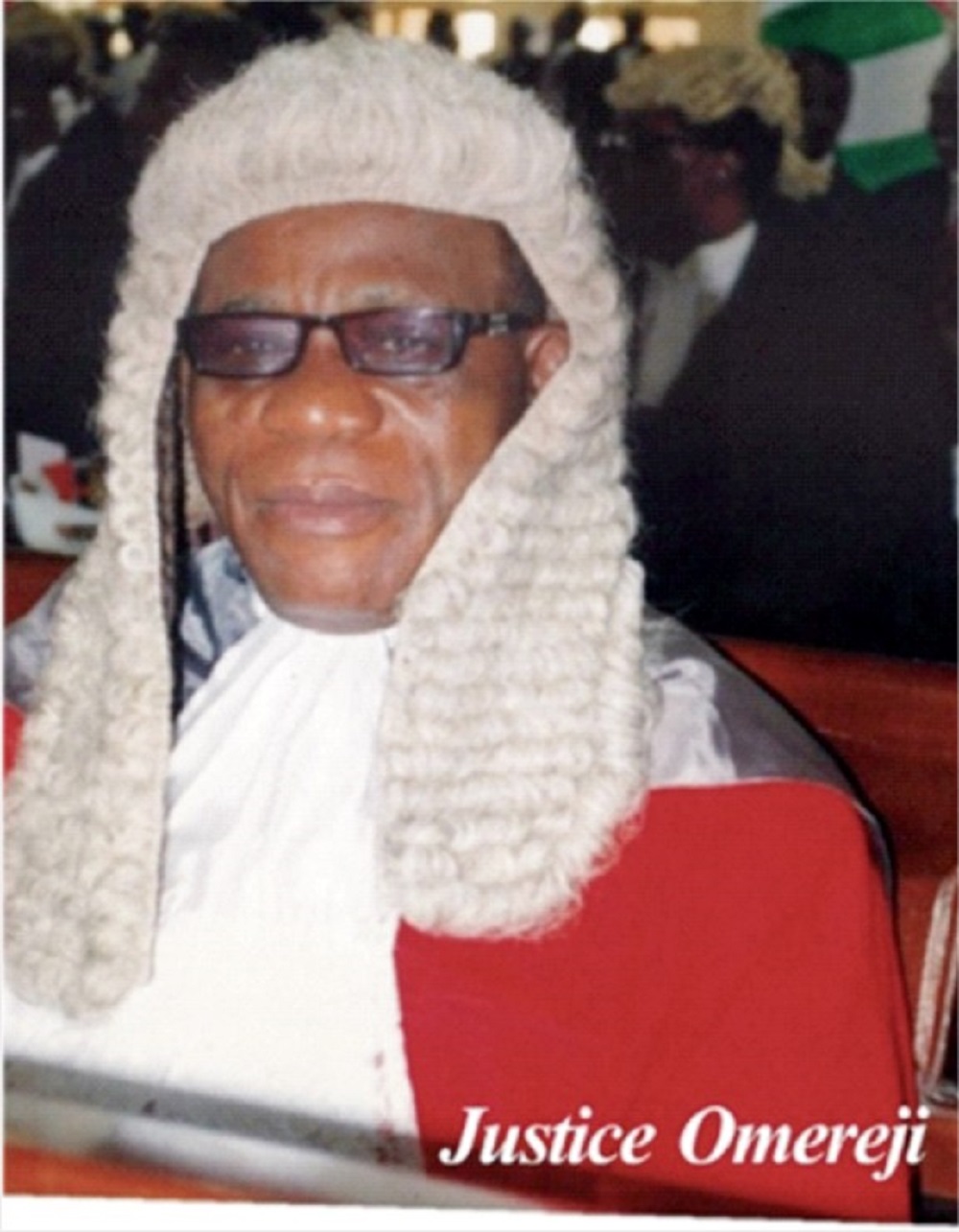
Honourable Justice George Omereji (rtd) is one judge that needs no introduction in the Rivers State Judiciary where he stood out in the bench like a colossus to dispense justice to all.
Justice Omereji was bold, astute and incorruptible. He was well acquainted with the real nitty-gritty of justice dispensation probably because he had served as a magistrate long before he was appointed a judge of the Rivers State Judiciary.
The legal luminary, who hails from Egbeda in Emohua Local Government Area of Rivers State, exuded an aura of discipline at the bench such that no attorney could go to his court unprepared. He also ensured that lawyers maintained both the dress code and courtroom decorum.
Sir Omereji was always in the news while he served as a judge because of his unwillingness to bend. He asserted himself well and carved out a niche in the annals of judicial officers.
The eminent jurist did not only preside over matters with clinical detachment, he taught lawyers what they ought to do or needed to have done in certain circumstances.
Speaking with The Tide in Port Harcourt on Monday, Blessing Enyie (Esq), noted that Justice Omereji while serving in the bench had established himself as a good judge.
Mr. Enyie, who resides at Elele in Ikwerre Local Government Area of the state, pointed out that the eminent jurist displayed proper judicial temperament, patience, courtesy, open-mindedness and tact as he conducted his trials.
He averred that Justice Omereji expounded the law in a manner that brought peace to parties in a conflict or dispute.
Sir Omereji once remarked at one of his court sessions thus; “When you see parties disobeying the law, it is their lawyers that have encouraged them to do so. According to him, the ordinary person fears the coercive powers of the court.
He was ready to bring to book any person no matter how highly placed who was in breach of the law. Indeed, some lawyers dreaded to appear before Justice Omereji.
However, his insistence on propriety and justice belied his benevolence. The legal luminary is a kind man and has touched many who have come in contact with him.
Justice Omereji, a graduate of the University of Lagos, was revered while in the bench because of his sagacity, boldness and forthrightness. He treaded where others could not. He so much believes in justice.
Throughout his career in the bench, the eminent, jurist had neither exhibited acts of nepotism nor tribalism little wonder then, that he was chosen as the Chairman of the judicial commission of inquiry to investigate RT. Hon. Chibuike Rotimi’ Amaechi’s administration over the sale of valued assets of Rivers State and other related matters.
At inception, Justice Omereji had assured that the commission would work within the law and grant parties fair hearing. He is a stickler to principles and an avid adherent to the rule of law.
As a fearless judge, he took over the trial of the alleged killers of Soboma George, the ex-agitator, when some other judges had declined to conduct the trial.
He concluded the trial, convicted and sentenced the three persons charged with conspiracy and murder of the ex-agitator, Soboma George and Joy John Ejims, a groundnut seller in Port Harcourt more than 10 years ago.
Justice Omereji had ruled that the three accused persons, Dougbra Ogbe, Emmanuel Gladstone, Bere Matthew, should be hanged on their necks till they are dead for conspiring and killing Soboma George and Joy John Ejims at a football field in Nembe Street in Borokiri area of Port Harcourt on the 24th of August, 2010.
Another landmark judgement delivered by the eminent jurist was the award of N10 million damages against the Divisional Police Officer of Eneka Police Division, Chief Superintendent of Police (CSP) Yahaya Bello -Sam for the violation of the fundamental human rights of a senior lawyer, Afolabi Olabisi.
He held that the police failed to prove that the lawyer committed any crime before he was detained and pointed out that the action of the police was oppressive.
Omereji described the DPO’s action as a flagrant violation of the law and condemned Olabisi’s detention in the same cell with suspected criminals.
There are a plethora of other judgements in which Justice Omereji awarded damages against the state and Federal Government over violation of individuals’ rights.
During Rt. Hon. Chibuike Rotimi’s administration, he awarded damages against the Rivers State Ministry of Transport for seizure of a truck belonging to a private company.
Justice Omereji is one man who did not mind whose ox was gored, whenever he delivered his judgements so long as justice was served. His lifestyle advocates probity and forthrightness.
He serves justice without fear or favour. He is reputed as one of the boldest judges to have served in the state judiciary. According to him, his mum in blessed memory had taught him how to be bold.
In tribute to his mum, at her funeral on November 7, 2020 Justice Omereji said, “You have taught me that one can only be remembered for what he has done and not by what he has”.
Apart from the fact that his mum had influenced him positively, Justice Omereji is also a devout Christian who believes in leading by example.
His exemplary Christian leadership and contributions to his faith earned him his ordination as a Knight of the Anglican Church.
Interestingly, this belief has helped to make Omereji the diligent and forthright man he is today.
Consequently, when the Rivers State Governor, Chief Nyesom Wike needed an impartial and bold umpire to manage the affairs of Rivers State Independent Electoral Commission (RSIEC) he looked for Justice Omereji and appointed him the chairman of the body.
Sir Omereji immediately swung into action with his commissioners, worked diligently and tirelessly to justify the confidence reposed in him by the people of Rivers State.
Indeed, the eminent jurist conducted the last local government elections in the state which has been hailed for being the only election that was neither marred by violence nor death. The RSIEC chairman was recently given an award by Rivers State youths for conducting a free and fair local council election. Justice Omereji who spoke at the award ceremony expressed gratitude to God for enabling him to achieve the feat.
He also thanked the youths for recognising the achievement of the electoral body.
Omereji, who spoke during the award ceremony, stated that the award though given to him could not have been achieved without the contributions of his able lieutenants and dedicated same to the entire electoral body.
A Port Harcourt-based journalist, Mr. Ralph Echefu, who spoke with The Tide in Port Harcourt at the weekend described Justice Omereji as nice team leader, who carried his lieutenants along.
Mr. Echefu, who also featured at the award ceremony, noted that by the chairman’s speech, he was a good manager and team leader.
There is no doubt, however that the retired judicial officers, has often demonstrated his ability to lead each time an opportunity availed itself.
The jurist was at a time, the chairman of all magistrates in the state. He led the organisation well with an avowed commitment and display of uncommon integrity. As a chairman of the magistrates association, he was then a chief magistrate in the state.
Having served creditably as a chief magistrate, Justice Omereji was found worthy to be appointed the Chief Registrar of the state Judiciary.
During his service as a chief registrar, he was instrumental to the rehabilitation of the state judiciary. He worked with former Chief Judge of the state, Hon. Justice Iche Ndu to bring about far reaching changes in the justice system.
Justice Omereji was later elevated to a judge of the Rivers State Judiciary, a position he held until he turned 65 and retired meritoriously on September 24, 2020, after 35 years of service to humanity.
A Port Harcourt based lawyer, Mr. Chijoke Agi, described Justice Omereji (rtd) as one of the most fearless judges ever to have been appointed to the bench in recent times.
Mr Agi, who spoke with The Tide in Port Harcourt at the weekend, remarked that the current RSEIC chairman is a man well suited for leadership given his track record.
According to him, the eminent jurist is a charismatic leader and there are not many like him in the state.
The Port Harcourt lawyer also described Justice Omereji as an epitome of discipline and noted that he would go places because of his transparency and forthrightness.
He noted that many Port Harcourt-based lawyers who appeared at Justice Omereji’s court would no doubt hold the eminent jurist in high esteem because of the manner in which he dispensed justice.
Also speaking, another Port Harcourt-based lawyer, Endurance Akpelu (Esq) described the retired judge as a man of the people and noted that he was always ready to render a helping hand.
Mr. Akpelu pointed out that Justice Omereji was a man of integrity who would always justify the confidence reposed in him.
He said that the retired judge left legacies every where he went and added that he had begun to do same at RSIEC.
“Men like him are hard to find”, Akpelu stated.
Conclusively, Hon. Justice George O. Omereji, is straightforward, incorruptible, astute person as well as a an avid adherent to rule of law. Posterity will continue to reward him for his firm belief in justice for all.
By: Chidi Enyie