Front Pix
Abuse Of State Power …That Law On Gov’s Retirement Benefits

Until the Akwa Ibom State House of Assembly passed the special bill listing the retirement benefits of a former governor and his deputy not many truly appreciated the nature of robber stamps, state assemblies have become. In a move to enrich Governor Godswill Akpabio long after his exit from office, the Assembly passed into law a bill that lists some of the most unimaginable gifts ever contemplated for a political office holder.
The Governor’s Pension Bill 2004, sought a pension for life at a rate equivalent to the salary of an incumbent governor, for a former governor and former deputy and also provided for the former governor funds to employ a cook, chauffeurs and security guards at a sum not exceeding N5 million per month and N2.5 million per month for a former deputy.
If the cook, two chauffeurs and say four security guards are paid the equivalent of the salary of a Director in a state civil service, say Grade Level 16, each should be earning about N300,000 each per month only, in which case, only N2.1 million will be required. But which director ever becomes a domestic staff?
But that’s not the worst. The former governor will also be entitled to free medical services for his person and spouse at a sum not exceeding N100 million per annum, while a former deputy governor gets N50 million. Why? This means, a former governor needs not be sick all through the year but could pick that huge medical freebie.
If a former governor’s health is such an issue, why should he not make health care a priority while in office, build the best facilities and institutionalise free Heath care for senior citizens, if that for all, will be such a wasteful expenditure? If a former governor alone would have N100 million for medical services, ostensibly medical holidays abroad, what should the ordinary citizens enjoy? But if existing health institutions under his watch were well equipped will a former governor require special treatment different from that enjoyed by the citizenry?
What is most annoying is that the same bill sought to compel government to provide for the former governor a befitting accommodation not below a five bedroom horne either in Abuja or Akwa Ibom State, while offering the deputy, yearly accommodation allowance of 300 percent of annual basic salary.
These are despite the fact that all through their tenure, both officers are fed from the public kitchen, command absolute control over public funds, decide who gets what contracts and indeed receive all manner of gifts from grateful beneficiaries. Not to mention also that a former governor, upon leaving office, is entitled to a severance gratuity of 300 percent of annual basic salary among other things.
All these gifts are lined up for one or two citizens who might have spent between four and eight years in office and who by all standards should lack nothing ever after. Let’s put it in context. What does a civil servant who devotes 35 years of his productive life to service of his state enjoy? What of a security man at the state secretariat who retires at 60 years after putting in 35 years?
These questions are necessary because the funds of each state belong to all and should, at all times, be administered in the interest of the majority. The funds which the Governor’s Pension Bill seeks to appropriate indeed fall short of this expectation. Infact, it cannot benefit a minority.
But I do not blame the ultimate beneficiary of the bill-the governor. The executive bill was debated by members of the State Assembly, after the second reading, after which deputy leader, Dr. Ekaete Okon moved the motion for its passage into law. And with that motion seconded by Mr Aniekan Akpan, member representing Ukanafun State Constituency, the speaker Mr Samuel Ikon simply directed the clerk of the House, Mrs Mandu Umoren to forward a clean copy of the bill to the governor to ascent.
Akwa Ibom State Government House Sources in defence of the law explained that what the state forwarded was an amendment to an existing law which did not provide any ceiling for a former governor’s medical benefits. Rather than remain open-ended, according to them, they decided to provide the N100 million ceiling. Not guilty at all.
But what were Assembly members thinking about? At a time of high unemployment, do the law makers know how many young, unemployed university graduates N100 million can engage and boost the local economy? At a basic salary of N50,000 per month, N100 million can engage 2,000 young graduates to prepare final year post primary wards for WAEC and JAMB exams among other essential services.
Infact, if 2, 000 petty traders are set-up with N50,000 each annually do the law makers know how many families they would end-up empowering? What of using same funds to equip some of the hospitals so that they would be standard enough for a former governor’s patronage.
These are indeed why many suggest that the law makers were greatly compromised with funds to induce compliance. Strong as these rumours are, I do not share in them, even though their eagerness to pass such a bill as quickly as they did leaves a sour taste in the month.
As operators of an arm of government at the state level, they are depended upon to act right, think right and make laws for good governance for the benefit of the majority. To achieve that, they must serve as necessary check on the likely excesses of the executive arm and when victmised take their case before the court of public opinion.
It is true that governors, control state funds including that for constituency projects and no chief executive will waste such funds on an unfriendly legislature. But that’s the beauty of the representative democracy we practice. There are institutionalised checks and balances and each allowed access to seek redress when violated.
Law makers at the state level ought to borrow a leaf from the National Assembly, which disagrees with the executive arm without necessarily being disagreeable. At that level, majority of the actions are grounded in public interest and not that of the executive arm alone. The opposite is true of most state assemblies which have become robber-stamps for the executive.
It is indeed that mindset thatmany believe, hastened the passage of the Governor’s Pension Bill without raising necessary questions. And they are many but lets list a few.
For instance, are the appropriations contained in the bill for only two comfortable men, fair to all? In what way would the benefits boost the economy? Do governors truly deserve or need such freebies in and out of office?
If they do, what is the pension plan for others who gave all of their productive life to the state? How many houses did the governors build for such retiring or retired staff to deserve their own? If the medical services they provide while in office are the best, why seek funds for medical needs to the tune of N100 million?
The Akwa Ibom State example of a Governor’s Pension Bill fails the required integrity test. And should not be replicated by any State. Not only is N100 million medical too huge, it encourages a serving governor to toy with the health needs of his peoples, since he can afford better services abroad after retirement. The best option is to grant the governor free medical services in all public health institutions, that way he will be made beneficiary of the health care system he leaves behind.
Also unacceptable is the appropriation of a whopping N5 million monthly for salaries of domestic staff, like cook, chauffeurs and security guards. That figure translates to N60 million per annum. The question is: What does a cook in a five-star hotel earn? How much does the highest-paid security man in the civil service earn? What indeed does a chauffeur earn?
As earlier canvassed, even if all are to be paid salaries of directors in the ministries in Akwa Ibom State, as much as N39 million will be wasted annually on two very comfortable citizens, except all such domestic servants would be expatriates that would be paid in foreign currencies.
My Agony is that many State Assemblies have outlived their usefulness to our kind of democracy and may need to be remodeled as ministry under the executive arm. That way, public expectation off their services would not be high, and disappointment not as heart breaking as it is in Uyo.
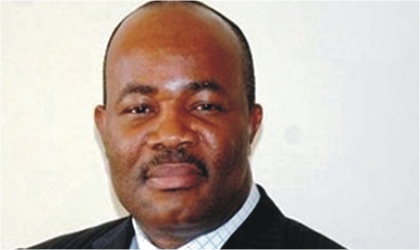
Governor Akpabio