Front Pix
A Battle Lost …As Nigerians Unite In Tears For Ojukwu

If heights were allotted men according to their intellectual worth, charisma, leadership mien and indeed the courage to stand for what they believe in, Dim Chukwuemeka Odimegwu Ojukwu should have stood 1000 feet tall and in death posed a frightening challenge to even the most proficient of undertakers. Though not of that height while alive, his memory among those to whom he was a folk hero, mentor, a voice, leader and father-figure, Ojukwu lies even taller.
Ojukwu died Saturday, last week in a London hospital, losing his final battle, a familiar territory he found himself, all through life to death. But in spite of his many battles, first against colonial domination, later against perceived Igbo marginalization, and then for Igbo sovereignty and finally death, Ojukwu never fell short of religious fellowship and died the strongest rallying point of his people.
His life needn’t have been about battles because he was born with a silver spoon and had the privilege of attending the best schools in the world. His father was Sir Louis Phillipe Odumegwu-Ojukwu, one of the wealthiest Nigerians of his time.
Born Chukwuemeka Odumegwu Ojukwu on November 4, 1933 at Zumgeru, Niger State, the youngman schooled in Lagos and as early as age 11, fought a colonial teacher for degrading a blackwoman. Afraid of likely repercussions, he was taken to Britain where he continued his education at the Epsom College, Surrey.
He finished as Master Degree holder in History from the prestigious Lincoln College, Oxford University and on return to Nigeria in 1956 rather than integrate quickly into his father’s vast business empire, he ultimately joined the army after a brief stint as administrative officer in the then Eastern Nigerian Government.
“My enlistment into the Nigerian Army, to say the least, startled everybody in Nigeria who heard of it. I went to Zaria and enlisted. I did that mainly because I did not want any interference from the well-meaning influence of my father. I joined the Army, signed up, but I wasn’t to be spared the embarrassment because it didn’t take a week before my father was aware of it. And he did everything possible to stop my enlistment.
“That is why, despite my educational background, I was not enlisted as an officer cadet. The general idea was that it was agreed between the Governor-General and my father that the best way actually was to let me go into the army, and I would see for myself what the army truly was. I don’t think that they took into full consideration the level of stubbornness I must have acquired from my father as well because I remember that the question always came to Zaria from Lagos, ‘How is he getting on?” Ojukwu recalled in his book, Because I Am Involved.
That self-confessed stubbornness ran through virtually all his official and social affairs from his rebellion and eventual declaration of the Sovereign Republic of Biafra to his later day political exploits and the choice of a bride in Bianca, a former Beauty Queen whose father would never approve of such union.
As complex as he was while alive, Dim Ojukwu remained an icon of various colourations, and thus evoked in many all manner of loyalties least expected of a man that was at the centre of a bloody civil war in which hundreds of thousands were killed, most of them his kinsmen.
For instance, barely a child during the civil war who witnessed with ease some of the unprintable harm, torture and indignation meted to older members of his family, Tunomie Orisikima, grew up with a burning hatred for Biafran soldiers. To him, that name should be dropped from our history like a bad habit.
Orisikima, a professional electrician and ardent faithful of the All Progressive Grand Alliance (APGA) recalled how Biafran soldiers had ordered his senior cousins to crawl on periwinkle and oyster shells, for daring to fish around the Bolo Community’s shores. And how, even with their bleeding knees, one of his cousins who could no longer endure the pain and lay tired, was shot at and killed.
But as an adult, Orisikima holds the view that without Ojukwu’s courag to stand up against obvious marginalization, deprivation and under-development, the Nigerian state would not have created the number of states that the federation today parades. Besides, he believes that the Biafran Army in parts of Rivers State were many ways what Ojukwu would never have been because in his own view great men abhor acts of cowardice as the kind he witnessed as a child.
Such is the Charisma Dim Ojukwu evokes even among supposed foes who in spite of countless prejudices of the past stuck to his leadership up until his last days.
Little wonder his death has attracted countless kind sentiments from among many well-meaning Nigerians, including General Mohammadu Buhari whose military administration jailed the fallen ex-war lord with other politicians after the fall of the Second Republic.
To his protégés, Ojukwu’s death is more than a fatal blow. It is the silencing of a dreadful voice, of raw courage and of flawless leadership. Governor Peter Obi of Anambra, the Ikemba’s home state captured the true scenario when in response to the death, said, “Lightening and thunder have been silenced: the rope used for dragging the lion has snapped; the Odenigbo of Ngwo has retired to bed, the hero loved by all is ill at ease, the overall king of the Igbo ewoo! If you retire to bed, what shall we do? Who will roar like the lion when we are oppressed. Ewooooo! Dim Chukwuemeka Odumegwu Ojukwu, ewooooo.”
Such is the high esteem Ojukwu is held by his people.
But his popularity went far beyond tribal borders. In fact, at some point in our national life, one was either for or against Ojukwu and even so, none could deny the wealth of the fallen hero’s intellectual worth, his words of wisdom, his perceived commitment to national unity and integration and indeed his rare love for humanity.
Little wonder his demise has attracted from virtually all well-placed Nigerians very kind sentiments of what the ex-Biafran war-lord meant to a united Nigeria.
In his tribute, President Goodluck Jonathan described Dim Ojukwu as one of the greatest contributors to the evolution of modern Nigeria and one whose love for justice, equity and fairness made him lead the Igbos into the civil war.
Others, including Senate President David Mark, the Governors forum headed by Rivers State Governor Chibuike Rotimi Amaechi, Northern Governors’ forum, headed by Niger State’s Governor Mu’azu Babangida Aliyu and Deputy Senate President, Ike Ekweremadu in separate tributes eulogised the Ikemba of Nnewi, popularly called, ‘the Peoples General’.
But perhaps the most touching was that by Governor Obi of Anambra part of which read, “In the traditional Igbo society, the death of Dim Chukwuemeka Odumegwu-Ojukwu would be ordinarily announced by the famous Ikoro drum, reserved for outstanding people in the society once in a century.
On his part, former Head of State, General Yakubu Gowon, who was Ojukwu’s major antagonist during the civil war expressed shock at the news of Ikemba’s death, saying, “Yes, we disagreed to such an extent but we are able to reconcile and agree again to be able to move forward. So we will miss him dearly and I wish him safe repose in the Lord. I am sure he would like Nigeria to be a better place for all Nigerians in the future.”
On his part, Rivers Governor Chibuike Amaechi described Ojukwu as an “Iconic national figure, a man full of courage whose contributions to the nation in spite of the Civil War cannot be over-emphasised.” Such is the outpouring of national nature.
My Agongy is some are already grandstanding to present Late Dim Odumegwu-Ojukwu as an ethnic leader, instead of the respectable national figure he became, years after his return to Nigeria from 13 years exile.
Isn’t it true that the end justifies the means? By last Saturday, ‘yes, it did’.
Soye Wilson Jamabo

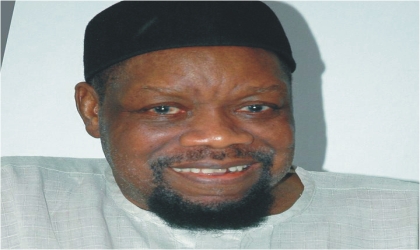
Late Dim Chukwuemeka Odimegwu Ojukwu